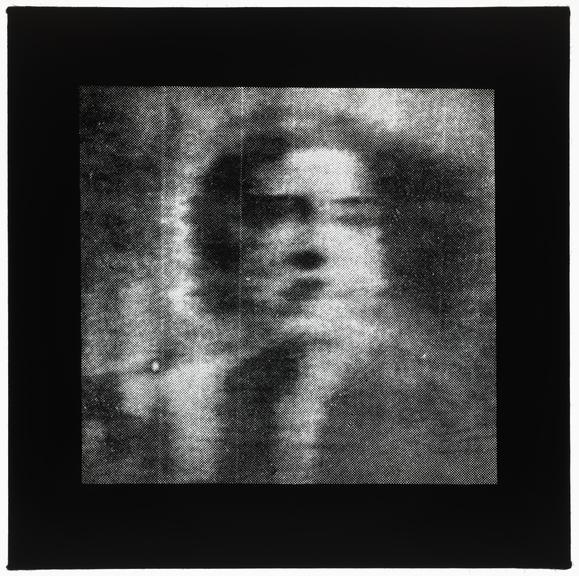
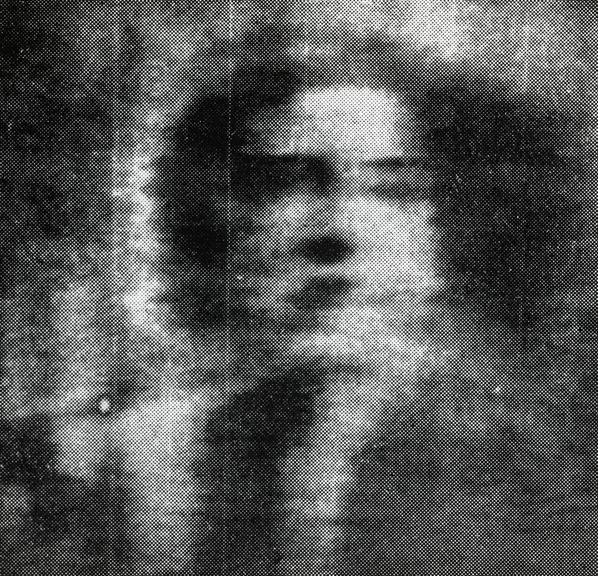
Baird experimental television image
- maker:
- John Logie Baird


 This image is released under a CC BY-NC-SA 4.0
Licence
This image is released under a CC BY-NC-SA 4.0
Licence
License this image for commercial use at Science and Society Picture Library
LicenseThis image is released under a CC BY-NC-SA 4.0
Licence
License this image for commercial use at Science and Society Picture Library
License
Science Museum Group
© The Board of Trustees of the Science Museum
Science Museum Group
© The Board of Trustees of the Science Museum
One lantern slide from a collection of 270 depicting subject matter relating to John Logie Baird and his early television experiments and demonstrations. Shows an early broadcast image, head and shoulders of a woman.
The first television images were tiny flickering pictures. Early viewers were fascinated to see something far away, as it happened, even on a screen only a few centimetres wide. Inventors such as John Logie Baird put on impressive demonstrations to show off the new technology and drum up interest, especially from investors. Audiences had flocked to cinemas and bought thousands of radio receivers, so businesses were keen to be part of a new technology that could bring moving images into people’s homes.
Scottish inventor and entrepreneur John Logie Baird made a breakthrough with his successful demonstration of television in 1926. His curious machine was made of bits of a recycled hat box and a bicycle lamp. It astonished the assembled crowd as they watched moving images being transmitted from one room to another. A few years later, Baird worked with the BBC on its first television broadcasts. Following the trials, the BBC and other major broadcasters adopted a different system, but Baird’s efforts had helped to popularise a new way of sharing news and entertainment.
Details
- Category:
- Television
- Object Number:
- 2000-5015/1
- Materials:
- paper (fibre product) and glass
- Measurements:
-
overall: 82 mm x 82 mm x 3 mm,
- type:
- lantern slide
Related Objects
Frank Gallagher's Shirt from Channel 4's 'Shameless'
Frank Gallagher's T-Shirt from Channel 4's 'Shameless'
Frank Gallagher's Jacket from Channel 4's 'Shameless'

Frank Gallagher's Jacket from Channel 4's 'Shameless'
