
Circumferentor with mahogany case

Made:
c.1750 in London
Circumferentor with mahogany case Circumferentor with mahogany case Circumferentor with mahogany case

Creative Commons LicenseThis image is released under a CC BY-NC-SA 4.0 Licence

License this image for commercial use at Science and Society Picture Library

License

Creative Commons LicenseThis image is released under a CC BY-NC-SA 4.0 Licence

License this image for commercial use at Science and Society Picture Library

License

Creative Commons LicenseThis image is released under a CC BY-NC-SA 4.0 Licence

License this image for commercial use at Science and Society Picture Library

License

Science Museum Group Collection
© The Board of Trustees of the Science Museum
Science Museum Group Collection
© The Board of Trustees of the Science Museum

Science Museum Group
© The Board of Trustees of the Science Museum
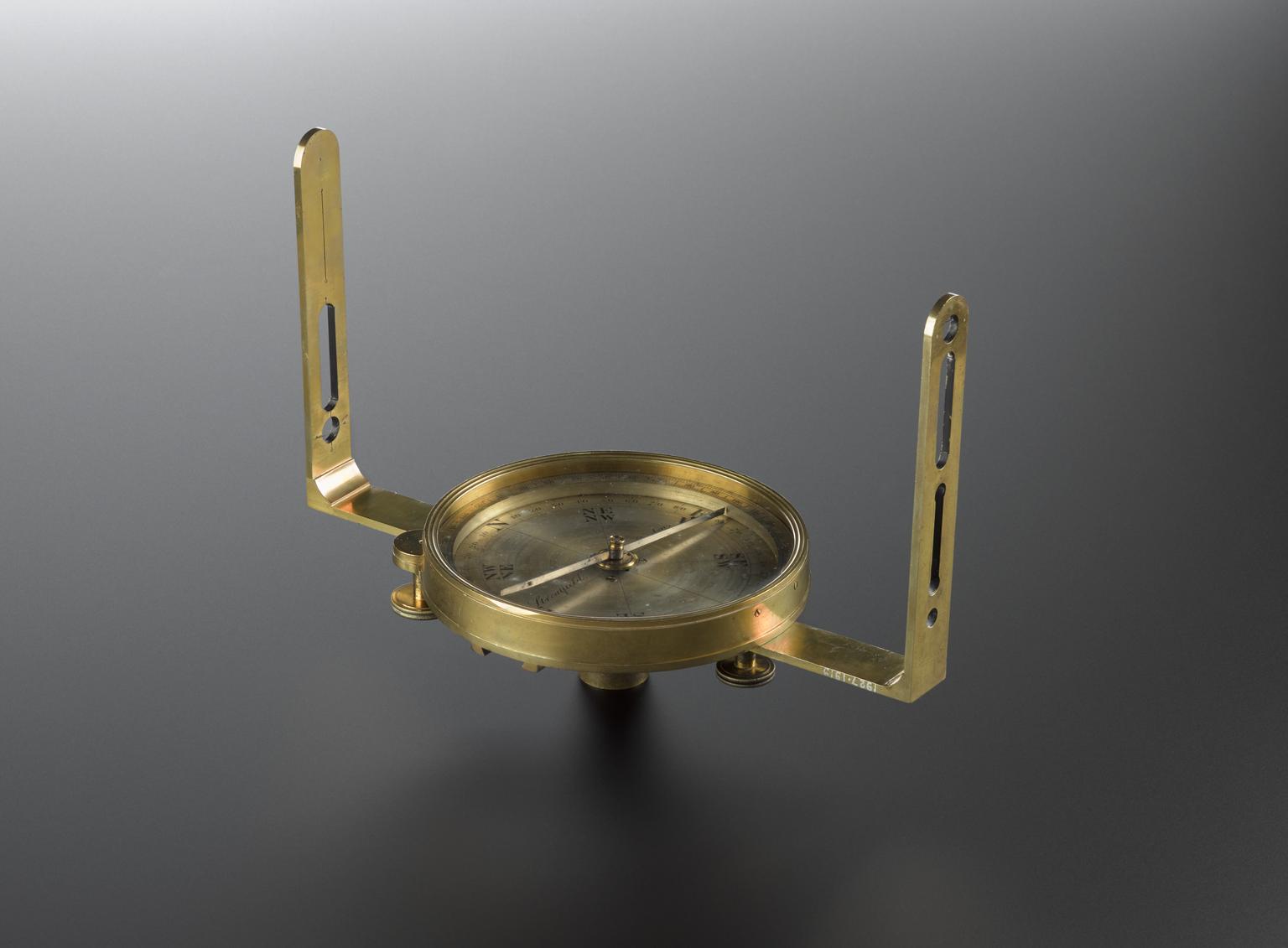
Circumferentor with mahogany case, made by Streatfield, London

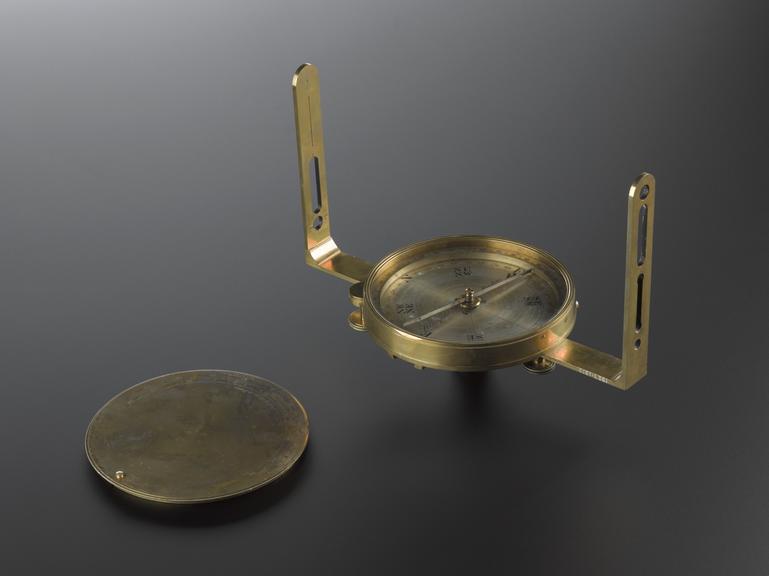
This circumferentor was used to measure horizontal angles and bearings between points on the ground. The surveyor sighted along the two arms toward a landmark and read its bearing from the compass dial. A series of these bearings, combined with distances measured by chain, allowed a surveyor to plot the shape of a piece of land.

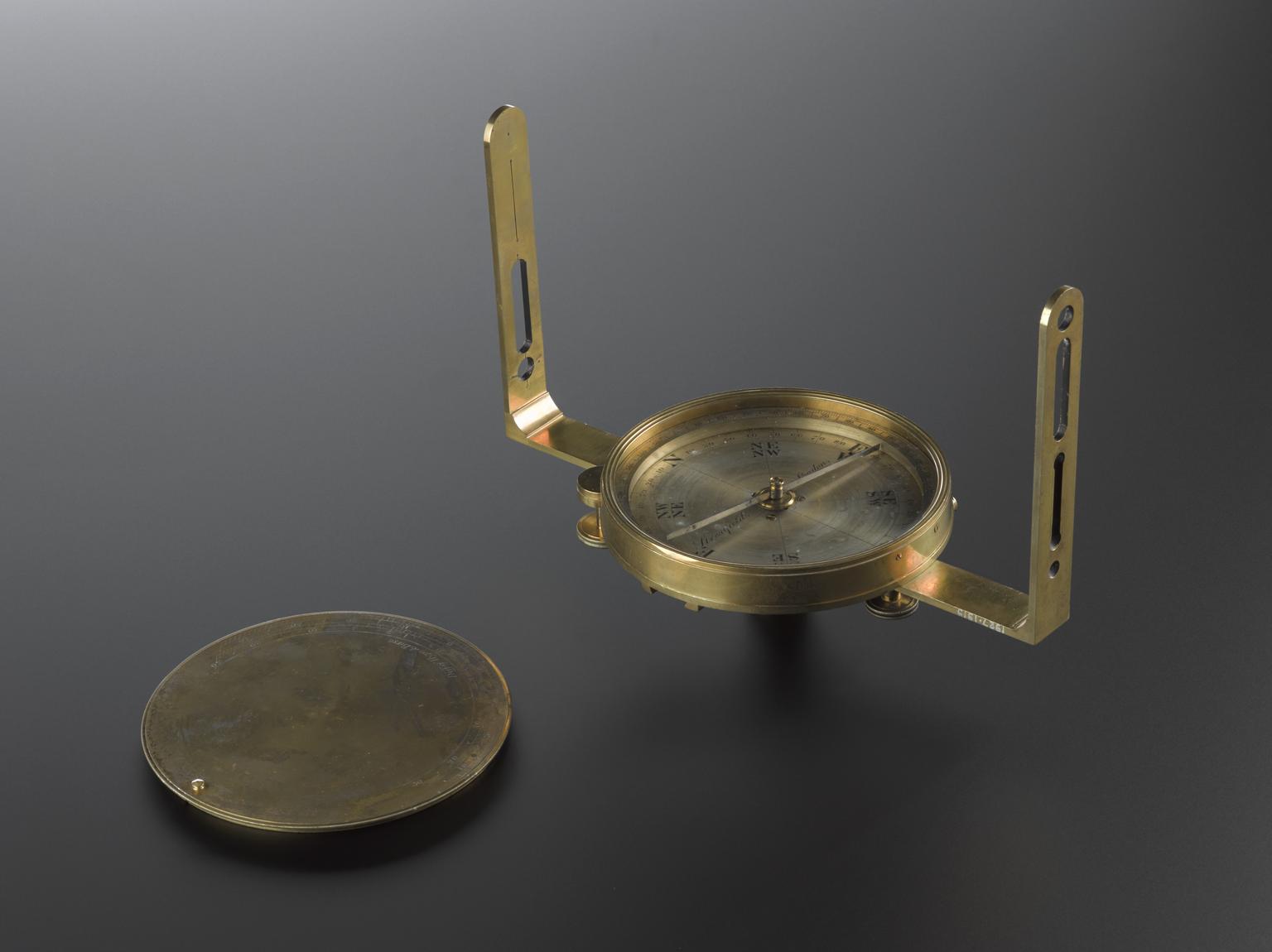
The vernier scale allowed the surveyor to make more precise angular measurements, while the spirit level helped ensure that the instrument was level when in use. The two scales on the lid were used to correct measurements taken on sloping ground: they showed how many links should be subtracted from a 100-link chain measurement to calculate the true horizontal distance. The reference to links reflects the instrument's intended use alongside a surveyor's chain.

Instruments like this were a common tool for eighteenth-century land surveying, before more precise and increasingly affordable theodolites became widespread. Circumferentors were particularly popular in North America, where land was cheaper, so precision mattered less, and trees often blocked the sightlines a theodolite needed.

This circumferentor is part of King George III's collection of scientific instruments.

Details

Category:
King George III
Object Number:
1927-1919
Materials:
brass, silver, glass, steel and mahogany
Measurements:
box: length 195 mm
box: width 190 mm
box: height 87 mm
length 305 mm
height 215 mm
dial: diameter 165 mm
type:
circumferentor
credit:
King’s College London

Parts

Circumferentor

Circumferentor with lid.

More

This circumferentor was used to measure horizontal angles and bearings between points on the ground. The surveyor sighted along the two arms toward a landmark and read its bearing from the compass dial. A series of these bearings, combined with distances measured by chain, allowed a surveyor to plot the shape of a piece of land.

The vernier scale allowed the surveyor to make more precise angular measurements, while the spirit level helped ensure that the instrument was level when in use. The two scales on the lid were used to correct measurements taken on sloping ground: they showed how many links should be subtracted from a 100-link chain measurement to calculate the true horizontal distance. The reference to links reflects the instrument's intended use alongside a surveyor's chain.

Instruments like this were a common tool for eighteenth-century land surveying, before more precise and increasingly affordable theodolites became widespread. Circumferentors were particularly popular in North America, where land was cheaper, so precision mattered less, and trees often blocked the sightlines a theodolite needed.

This circumferentor is part of King George III's collection of scientific instruments.

Measurements:
overall circumferentor (1 of 2): 210 mm x 306 mm x 160 mm, 2.68 kg
overall lid (2 of 2): 5 mm 165 mm,
Materials:
brass (copper, zinc alloy) , silver (alloy) , glass and steel (metal)
Object Number:
1927-1919 Pt1
type:
circumferentor
Image ©
The Board of Trustees of the Science Museum
Circumferentor

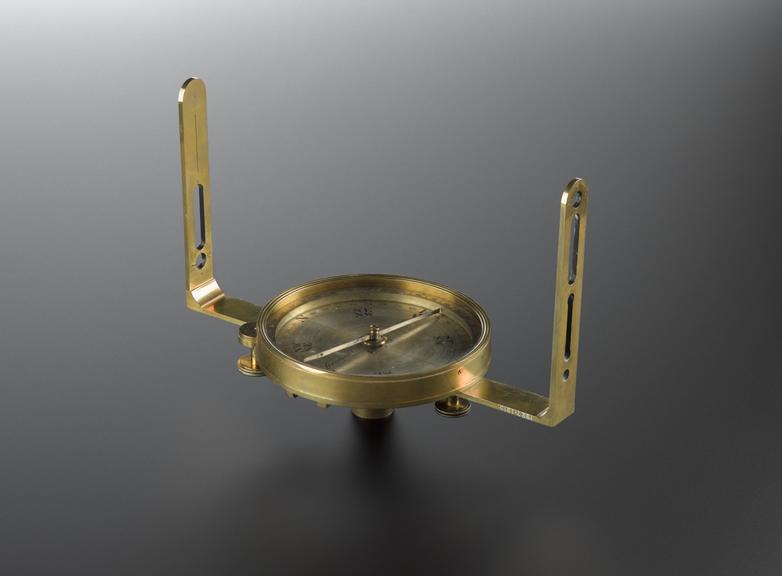
Brass Circumferentor made by Streatfield, London. C.1750

More

This circumferentor was used to measure horizontal angles and bearings between points on the ground. The surveyor sighted along the two arms toward a landmark and read its bearing from the compass dial. A series of these bearings, combined with distances measured by chain, allowed a surveyor to plot the shape of a piece of land.

The vernier scale allowed the surveyor to make more precise angular measurements, while the spirit level helped ensure that the instrument was level when in use. The two scales on the lid were used to correct measurements taken on sloping ground: they showed how many links should be subtracted from a 100-link chain measurement to calculate the true horizontal distance. The reference to links reflects the instrument's intended use alongside a surveyor's chain.

Instruments like this were a common tool for eighteenth-century land surveying, before more precise and increasingly affordable theodolites became widespread. Circumferentors were particularly popular in North America, where land was cheaper, so precision mattered less, and trees often blocked the sightlines a theodolite needed.

This circumferentor is part of King George III's collection of scientific instruments.

Measurements:
overall circumferentor: 210 mm x 306 mm x 160 mm, 2.68 kg
Materials:
brass (copper, zinc alloy) , silver (alloy) , glass and steel (metal)
Object Number:
1927-1919 Pt1/1
type:
circumferentor
Image ©
The Board of Trustees of the Science Museum
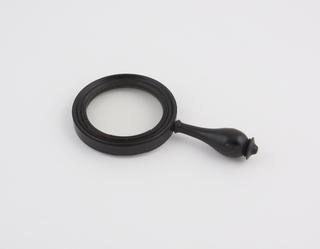
Part of:
1927-1919 Pt1
Lid for circumferentor

Lid for circumferentor

Lid for circumferentor

More

The circumferentor's brass cover plate for the dial is marked with two scales. One is degrees 45-0-45 and the other 30-0-30 engraved 'Diff of Hypo and Base'. This refers to the numbers of links of chain needed to be subtracted from a 100-link measurement on an incline to find the distance travelled horizontally.

Measurements:
overall lid: 5 mm 165 mm,
Materials:
brass (copper, zinc alloy)
Object Number:
1927-1919 Pt1/2
type:
lids
Image ©
The Board of Trustees of the Science Museum
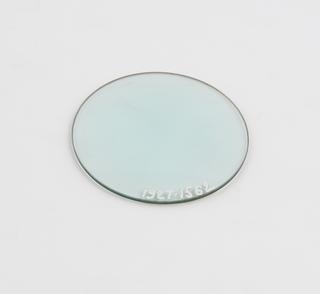
Part of:
1927-1919 Pt1
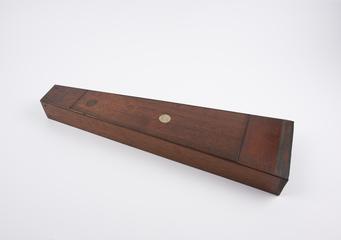
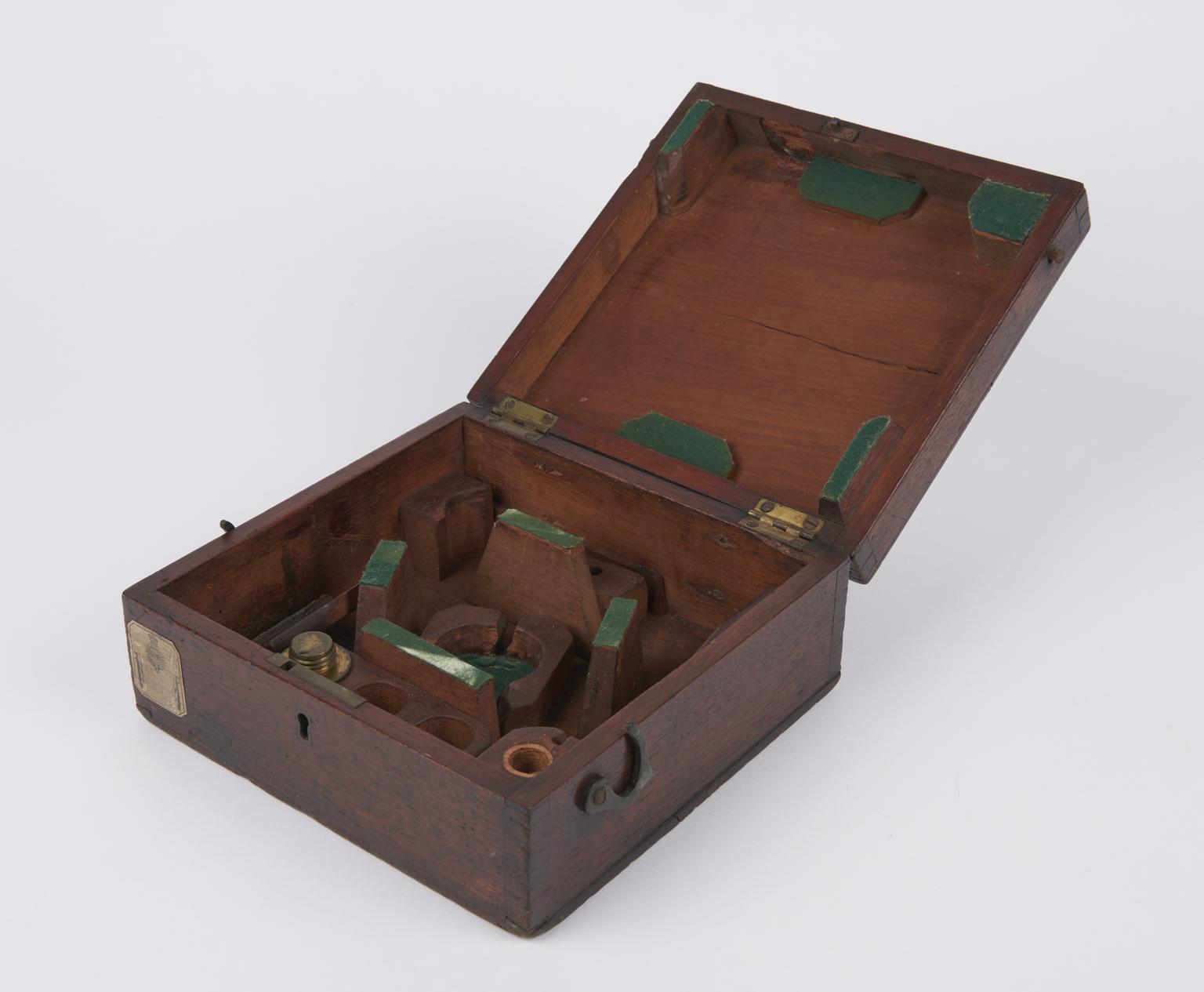
Mahogany case for circumferentor

Mahogany case for circumferentor

Mahogany case for circumferentor

Measurements:
box: length 195 mm
box: width 190 mm
box: height 87 mm
length 305 mm
height 215 mm
dial: diameter 165 mm
Materials:
brass (copper, zinc alloy) and mahogany (wood)
Object Number:
1927-1919 Pt2
type:
instrument case
Image ©
The Board of Trustees of the Science Museum