Set of Beams and Beam Studs from the Quadrangle Storehouse at Sheerness Dockyard

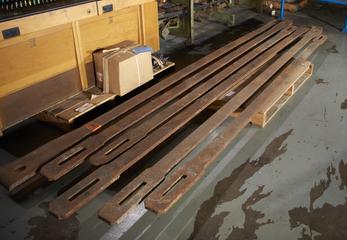
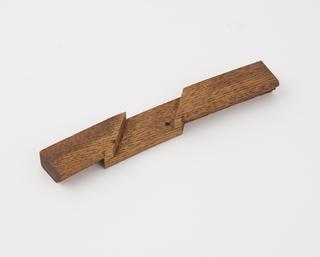
Set of beams, consisting of four main beams, twelve secondary beams and two main beam stubs from a wall bay and an internal bay of the fourth-floor level of the Quadrangle Storehouse at Sheerness Dockyard.

These parts are from the quadrangle storehouse once at the Sheerness dockyard, which was originally built between 1824 and 1829. The storehouse is architecturally significant as an early example of a structure which used a system of secondary iron beams to span between main grids, a crucial step in the development of modern buildings.

To accomodate the rapidily expanding naval forces and maritime trade of the still growing British Empire, the old 17th century Sheerness Dockyard was closed in 1815 to begin what is now called 'the Great Rebuilding', with John Rennie the Elder successfully proposing a radical and entirely new metal framework dockyard more than double the size of the original. Mostly complete by 1832, the dockyard was a marvel of the early Victorian period, with a singular design and aethetic vision shared by John Rennie and Edward Holl, and was at the time one of the most expensive engineering and architectural projects of the century. A proof of concept for many new construction methods, building materials and engineering practices, the Sheerness Dockyard paved the way for even grander constructions both in the UK and beyond.
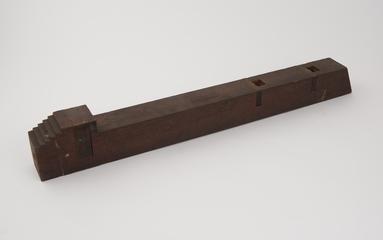
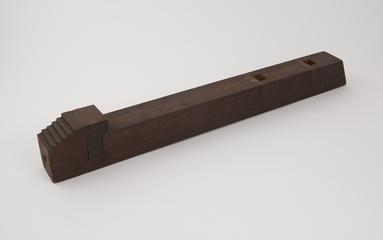
Details

Category:
Building Construction
Object Number:
1979-246/1
Measurements:
overall: 450 mm x 9450 mm x 290 mm,
type:
beams

Parts

Cross Beam from the Quadrangle Storehouse at Sheerness Dockyard

Cross Beam from the Quadrangle Storehouse at Sheerness Dockyard

Cross beam from a wall bay and an internal bay of the fourth-floor level of the Quadrangle Storehouse at Sheerness Dockyard.

More

These parts are from the quadrangle storehouse once at the Sheerness dockyard, which was originally built between 1824 and 1829. The storehouse is architecturally significant as an early example of a structure which used a system of secondary iron beams to span between main grids, a crucial step in the development of modern buildings.

To accomodate the rapidily expanding naval forces and maritime trade of the still growing British Empire, the old 17th century Sheerness Dockyard was closed in 1815 to begin what is now called 'the Great Rebuilding', with John Rennie the Elder successfully proposing a radical and entirely new metal framework dockyard more than double the size of the original. Mostly complete by 1832, the dockyard was a marvel of the early Victorian period, with a singular design and aethetic vision shared by John Rennie and Edward Holl, and was at the time one of the most expensive engineering and architectural projects of the century. A proof of concept for many new construction methods, building materials and engineering practices, the Sheerness Dockyard paved the way for even grander constructions both in the UK and beyond.
Measurements:
overall:
Object Number:
1979-246/1/1
type:
beams
Cross Beam from the Quadrangle Storehouse at Sheerness Dockyard

Cross Beam from the Quadrangle Storehouse at Sheerness Dockyard

Cross beam from a wall bay and an internal bay of the fourth-floor level of the Quadrangle Storehouse at Sheerness Dockyard.

More

These parts are from the quadrangle storehouse once at the Sheerness dockyard, which was originally built between 1824 and 1829. The storehouse is architecturally significant as an early example of a structure which used a system of secondary iron beams to span between main grids, a crucial step in the development of modern buildings.

To accomodate the rapidily expanding naval forces and maritime trade of the still growing British Empire, the old 17th century Sheerness Dockyard was closed in 1815 to begin what is now called 'the Great Rebuilding', with John Rennie the Elder successfully proposing a radical and entirely new metal framework dockyard more than double the size of the original. Mostly complete by 1832, the dockyard was a marvel of the early Victorian period, with a singular design and aethetic vision shared by John Rennie and Edward Holl, and was at the time one of the most expensive engineering and architectural projects of the century. A proof of concept for many new construction methods, building materials and engineering practices, the Sheerness Dockyard paved the way for even grander constructions both in the UK and beyond.

Measurements:
overall:
Object Number:
1979-246/1/2
type:
beams
Cross Beam from the Quadrangle Storehouse at Sheerness Dockyard

Cross Beam from the Quadrangle Storehouse at Sheerness Dockyard

Cross beam from a wall bay and an internal bay of the fourth-floor level of the Quadrangle Storehouse at Sheerness Dockyard.

More

These parts are from the quadrangle storehouse once at the Sheerness dockyard, which was originally built between 1824 and 1829. The storehouse is architecturally significant as an early example of a structure which used a system of secondary iron beams to span between main grids, a crucial step in the development of modern buildings.

To accomodate the rapidily expanding naval forces and maritime trade of the still growing British Empire, the old 17th century Sheerness Dockyard was closed in 1815 to begin what is now called 'the Great Rebuilding', with John Rennie the Elder successfully proposing a radical and entirely new metal framework dockyard more than double the size of the original. Mostly complete by 1832, the dockyard was a marvel of the early Victorian period, with a singular design and aethetic vision shared by John Rennie and Edward Holl, and was at the time one of the most expensive engineering and architectural projects of the century. A proof of concept for many new construction methods, building materials and engineering practices, the Sheerness Dockyard paved the way for even grander constructions both in the UK and beyond.
Measurements:
overall: 450 mm x 9450 mm x 290 mm,
Object Number:
1979-246/1/3
type:
beams
Cross Beam from the Quadrangle Storehouse at Sheerness Dockyard

Cross Beam from the Quadrangle Storehouse at Sheerness Dockyard

Cross beam from a wall bay and an internal bay of the fourth-floor level of the Quadrangle Storehouse at Sheerness Dockyard.

More

These parts are from the quadrangle storehouse once at the Sheerness dockyard, which was originally built between 1824 and 1829. The storehouse is architecturally significant as an early example of a structure which used a system of secondary iron beams to span between main grids, a crucial step in the development of modern buildings.

To accomodate the rapidily expanding naval forces and maritime trade of the still growing British Empire, the old 17th century Sheerness Dockyard was closed in 1815 to begin what is now called 'the Great Rebuilding', with John Rennie the Elder successfully proposing a radical and entirely new metal framework dockyard more than double the size of the original. Mostly complete by 1832, the dockyard was a marvel of the early Victorian period, with a singular design and aethetic vision shared by John Rennie and Edward Holl, and was at the time one of the most expensive engineering and architectural projects of the century. A proof of concept for many new construction methods, building materials and engineering practices, the Sheerness Dockyard paved the way for even grander constructions both in the UK and beyond.

Measurements:
overall: 450 mm x 9450 mm x 290 mm,
Object Number:
1979-246/1/4
type:
beams
Cross Beam from the Quadrangle Storehouse at Sheerness Dockyard

Cross Beam from the Quadrangle Storehouse at Sheerness Dockyard

Cross beam from a wall bay and an internal bay of the fourth-floor level of the Quadrangle Storehouse at Sheerness Dockyard.

More

These parts are from the quadrangle storehouse once at the Sheerness dockyard, which was originally built between 1824 and 1829. The storehouse is architecturally significant as an early example of a structure which used a system of secondary iron beams to span between main grids, a crucial step in the development of modern buildings.

To accomodate the rapidily expanding naval forces and maritime trade of the still growing British Empire, the old 17th century Sheerness Dockyard was closed in 1815 to begin what is now called 'the Great Rebuilding', with John Rennie the Elder successfully proposing a radical and entirely new metal framework dockyard more than double the size of the original. Mostly complete by 1832, the dockyard was a marvel of the early Victorian period, with a singular design and aethetic vision shared by John Rennie and Edward Holl, and was at the time one of the most expensive engineering and architectural projects of the century. A proof of concept for many new construction methods, building materials and engineering practices, the Sheerness Dockyard paved the way for even grander constructions both in the UK and beyond.

Measurements:
overall: 450 mm x 9450 mm x 290 mm,
Object Number:
1979-246/1/5
type:
beams
Cross Beam from the Quadrangle Storehouse at Sheerness Dockyard

Cross Beam from the Quadrangle Storehouse at Sheerness Dockyard

Cross beam from a wall bay and an internal bay of the fourth-floor level of the Quadrangle Storehouse at Sheerness Dockyard.

More

These parts are from the quadrangle storehouse once at the Sheerness dockyard, which was originally built between 1824 and 1829. The storehouse is architecturally significant as an early example of a structure which used a system of secondary iron beams to span between main grids, a crucial step in the development of modern buildings.

To accomodate the rapidily expanding naval forces and maritime trade of the still growing British Empire, the old 17th century Sheerness Dockyard was closed in 1815 to begin what is now called 'the Great Rebuilding', with John Rennie the Elder successfully proposing a radical and entirely new metal framework dockyard more than double the size of the original. Mostly complete by 1832, the dockyard was a marvel of the early Victorian period, with a singular design and aethetic vision shared by John Rennie and Edward Holl, and was at the time one of the most expensive engineering and architectural projects of the century. A proof of concept for many new construction methods, building materials and engineering practices, the Sheerness Dockyard paved the way for even grander constructions both in the UK and beyond.

Measurements:
overall: 450 mm x 9450 mm x 290 mm,
Object Number:
1979-246/1/6
type:
beams
Cross Beam from the Quadrangle Storehouse at Sheerness Dockyard

Cross Beam from the Quadrangle Storehouse at Sheerness Dockyard

Cross beam from a wall bay and an internal bay of the fourth-floor level of the Quadrangle Storehouse at Sheerness Dockyard.

More

These parts are from the quadrangle storehouse once at the Sheerness dockyard, which was originally built between 1824 and 1829. The storehouse is architecturally significant as an early example of a structure which used a system of secondary iron beams to span between main grids, a crucial step in the development of modern buildings.

To accomodate the rapidily expanding naval forces and maritime trade of the still growing British Empire, the old 17th century Sheerness Dockyard was closed in 1815 to begin what is now called 'the Great Rebuilding', with John Rennie the Elder successfully proposing a radical and entirely new metal framework dockyard more than double the size of the original. Mostly complete by 1832, the dockyard was a marvel of the early Victorian period, with a singular design and aethetic vision shared by John Rennie and Edward Holl, and was at the time one of the most expensive engineering and architectural projects of the century. A proof of concept for many new construction methods, building materials and engineering practices, the Sheerness Dockyard paved the way for even grander constructions both in the UK and beyond.

Measurements:
overall: 450 mm x 9450 mm x 290 mm,
Object Number:
1979-246/1/7
type:
beams
Cross Beam from the Quadrangle Storehouse at Sheerness Dockyard

Cross Beam from the Quadrangle Storehouse at Sheerness Dockyard

Cross beam from a wall bay and an internal bay of the fourth-floor level of the Quadrangle Storehouse at Sheerness Dockyard.

More

These parts are from the quadrangle storehouse once at the Sheerness dockyard, which was originally built between 1824 and 1829. The storehouse is architecturally significant as an early example of a structure which used a system of secondary iron beams to span between main grids, a crucial step in the development of modern buildings.

To accomodate the rapidily expanding naval forces and maritime trade of the still growing British Empire, the old 17th century Sheerness Dockyard was closed in 1815 to begin what is now called 'the Great Rebuilding', with John Rennie the Elder successfully proposing a radical and entirely new metal framework dockyard more than double the size of the original. Mostly complete by 1832, the dockyard was a marvel of the early Victorian period, with a singular design and aethetic vision shared by John Rennie and Edward Holl, and was at the time one of the most expensive engineering and architectural projects of the century. A proof of concept for many new construction methods, building materials and engineering practices, the Sheerness Dockyard paved the way for even grander constructions both in the UK and beyond.

Measurements:
overall: 450 mm x 9450 mm x 290 mm,
Object Number:
1979-246/1/8
type:
beams
Cross Beam from the Quadrangle Storehouse at Sheerness Dockyard

Cross Beam from the Quadrangle Storehouse at Sheerness Dockyard

Cross beam from a wall bay and an internal bay of the fourth-floor level of the Quadrangle Storehouse at Sheerness Dockyard.

More

These parts are from the quadrangle storehouse once at the Sheerness dockyard, which was originally built between 1824 and 1829. The storehouse is architecturally significant as an early example of a structure which used a system of secondary iron beams to span between main grids, a crucial step in the development of modern buildings.

To accomodate the rapidily expanding naval forces and maritime trade of the still growing British Empire, the old 17th century Sheerness Dockyard was closed in 1815 to begin what is now called 'the Great Rebuilding', with John Rennie the Elder successfully proposing a radical and entirely new metal framework dockyard more than double the size of the original. Mostly complete by 1832, the dockyard was a marvel of the early Victorian period, with a singular design and aethetic vision shared by John Rennie and Edward Holl, and was at the time one of the most expensive engineering and architectural projects of the century. A proof of concept for many new construction methods, building materials and engineering practices, the Sheerness Dockyard paved the way for even grander constructions both in the UK and beyond.

Measurements:
overall: 450 mm x 9450 mm x 290 mm,
Object Number:
1979-246/1/9
type:
beams
Cross Beam from the Quadrangle Storehouse at Sheerness Dockyard

Cross Beam from the Quadrangle Storehouse at Sheerness Dockyard

Cross beam from a wall bay and an internal bay of the fourth-floor level of the Quadrangle Storehouse at Sheerness Dockyard.

More

These parts are from the quadrangle storehouse once at the Sheerness dockyard, which was originally built between 1824 and 1829. The storehouse is architecturally significant as an early example of a structure which used a system of secondary iron beams to span between main grids, a crucial step in the development of modern buildings.

To accomodate the rapidily expanding naval forces and maritime trade of the still growing British Empire, the old 17th century Sheerness Dockyard was closed in 1815 to begin what is now called 'the Great Rebuilding', with John Rennie the Elder successfully proposing a radical and entirely new metal framework dockyard more than double the size of the original. Mostly complete by 1832, the dockyard was a marvel of the early Victorian period, with a singular design and aethetic vision shared by John Rennie and Edward Holl, and was at the time one of the most expensive engineering and architectural projects of the century. A proof of concept for many new construction methods, building materials and engineering practices, the Sheerness Dockyard paved the way for even grander constructions both in the UK and beyond.

Measurements:
overall: 450 mm x 9450 mm x 290 mm,
Object Number:
1979-246/1/10
type:
beams
Cross Beam from the Quadrangle Storehouse at Sheerness Dockyard

Cross Beam from the Quadrangle Storehouse at Sheerness Dockyard

Cross beam from a wall bay and an internal bay of the fourth-floor level of the Quadrangle Storehouse at Sheerness Dockyard.

More

These parts are from the quadrangle storehouse once at the Sheerness dockyard, which was originally built between 1824 and 1829. The storehouse is architecturally significant as an early example of a structure which used a system of secondary iron beams to span between main grids, a crucial step in the development of modern buildings.

To accomodate the rapidily expanding naval forces and maritime trade of the still growing British Empire, the old 17th century Sheerness Dockyard was closed in 1815 to begin what is now called 'the Great Rebuilding', with John Rennie the Elder successfully proposing a radical and entirely new metal framework dockyard more than double the size of the original. Mostly complete by 1832, the dockyard was a marvel of the early Victorian period, with a singular design and aethetic vision shared by John Rennie and Edward Holl, and was at the time one of the most expensive engineering and architectural projects of the century. A proof of concept for many new construction methods, building materials and engineering practices, the Sheerness Dockyard paved the way for even grander constructions both in the UK and beyond.

Measurements:
overall: 450 mm x 9450 mm x 290 mm,
Object Number:
1979-246/1/11
type:
beams
Cross Beam from the Quadrangle Storehouse at Sheerness Dockyard

Cross Beam from the Quadrangle Storehouse at Sheerness Dockyard

Cross beam from a wall bay and an internal bay of the fourth-floor level of the Quadrangle Storehouse at Sheerness Dockyard.

More

These parts are from the quadrangle storehouse once at the Sheerness dockyard, which was originally built between 1824 and 1829. The storehouse is architecturally significant as an early example of a structure which used a system of secondary iron beams to span between main grids, a crucial step in the development of modern buildings.

To accomodate the rapidily expanding naval forces and maritime trade of the still growing British Empire, the old 17th century Sheerness Dockyard was closed in 1815 to begin what is now called 'the Great Rebuilding', with John Rennie the Elder successfully proposing a radical and entirely new metal framework dockyard more than double the size of the original. Mostly complete by 1832, the dockyard was a marvel of the early Victorian period, with a singular design and aethetic vision shared by John Rennie and Edward Holl, and was at the time one of the most expensive engineering and architectural projects of the century. A proof of concept for many new construction methods, building materials and engineering practices, the Sheerness Dockyard paved the way for even grander constructions both in the UK and beyond.

Measurements:
overall: 450 mm x 9450 mm x 290 mm,
Object Number:
1979-246/1/12
type:
beams
Main Beam from the Quadrangle Storehouse at Sheerness Dockyard

Main Beam from the Quadrangle Storehouse at Sheerness Dockyard

Main beam from a wall bay and an internal bay of the fourth-floor level of the Quadrangle Storehouse at Sheerness Dockyard.

More

These parts are from the quadrangle storehouse once at the Sheerness dockyard, which was originally built between 1824 and 1829. The storehouse is architecturally significant as an early example of a structure which used a system of secondary iron beams to span between main grids, a crucial step in the development of modern buildings.

To accomodate the rapidily expanding naval forces and maritime trade of the still growing British Empire, the old 17th century Sheerness Dockyard was closed in 1815 to begin what is now called 'the Great Rebuilding', with John Rennie the Elder successfully proposing a radical and entirely new metal framework dockyard more than double the size of the original. Mostly complete by 1832, the dockyard was a marvel of the early Victorian period, with a singular design and aethetic vision shared by John Rennie and Edward Holl, and was at the time one of the most expensive engineering and architectural projects of the century. A proof of concept for many new construction methods, building materials and engineering practices, the Sheerness Dockyard paved the way for even grander constructions both in the UK and beyond.

Object Number:
1979-246/1/13
type:
beams
Main Beam from the Quadrangle Storehouse at Sheerness Dockyard

Main Beam from the Quadrangle Storehouse at Sheerness Dockyard

Main beam from a wall bay and an internal bay of the fourth-floor level of the Quadrangle Storehouse at Sheerness Dockyard.

More

These parts are from the quadrangle storehouse once at the Sheerness dockyard, which was originally built between 1824 and 1829. The storehouse is architecturally significant as an early example of a structure which used a system of secondary iron beams to span between main grids, a crucial step in the development of modern buildings.

To accomodate the rapidily expanding naval forces and maritime trade of the still growing British Empire, the old 17th century Sheerness Dockyard was closed in 1815 to begin what is now called 'the Great Rebuilding', with John Rennie the Elder successfully proposing a radical and entirely new metal framework dockyard more than double the size of the original. Mostly complete by 1832, the dockyard was a marvel of the early Victorian period, with a singular design and aethetic vision shared by John Rennie and Edward Holl, and was at the time one of the most expensive engineering and architectural projects of the century. A proof of concept for many new construction methods, building materials and engineering practices, the Sheerness Dockyard paved the way for even grander constructions both in the UK and beyond.

Measurements:
overall (as stored): 450 mm x 1500 mm x 290 mm,
Object Number:
1979-246/1/14
type:
beams
Main Beam from the Quadrangle Storehouse at Sheerness Dockyard

Main Beam from the Quadrangle Storehouse at Sheerness Dockyard

Main beam from a wall bay and an internal bay of the fourth-floor level of the Quadrangle Storehouse at Sheerness Dockyard.

More

These parts are from the quadrangle storehouse once at the Sheerness dockyard, which was originally built between 1824 and 1829. The storehouse is architecturally significant as an early example of a structure which used a system of secondary iron beams to span between main grids, a crucial step in the development of modern buildings.

To accomodate the rapidily expanding naval forces and maritime trade of the still growing British Empire, the old 17th century Sheerness Dockyard was closed in 1815 to begin what is now called 'the Great Rebuilding', with John Rennie the Elder successfully proposing a radical and entirely new metal framework dockyard more than double the size of the original. Mostly complete by 1832, the dockyard was a marvel of the early Victorian period, with a singular design and aethetic vision shared by John Rennie and Edward Holl, and was at the time one of the most expensive engineering and architectural projects of the century. A proof of concept for many new construction methods, building materials and engineering practices, the Sheerness Dockyard paved the way for even grander constructions both in the UK and beyond.

Measurements:
overall (as stored): 450 mm x 1500 mm x 290 mm,
Object Number:
1979-246/1/15
type:
beams
Main Beam from the Quadrangle Storehouse at Sheerness Dockyard

Main Beam from the Quadrangle Storehouse at Sheerness Dockyard

Main beam from a wall bay and an internal bay of the fourth-floor level of the Quadrangle Storehouse at Sheerness Dockyard.

More

These parts are from the quadrangle storehouse once at the Sheerness dockyard, which was originally built between 1824 and 1829. The storehouse is architecturally significant as an early example of a structure which used a system of secondary iron beams to span between main grids, a crucial step in the development of modern buildings.

To accomodate the rapidily expanding naval forces and maritime trade of the still growing British Empire, the old 17th century Sheerness Dockyard was closed in 1815 to begin what is now called 'the Great Rebuilding', with John Rennie the Elder successfully proposing a radical and entirely new metal framework dockyard more than double the size of the original. Mostly complete by 1832, the dockyard was a marvel of the early Victorian period, with a singular design and aethetic vision shared by John Rennie and Edward Holl, and was at the time one of the most expensive engineering and architectural projects of the century. A proof of concept for many new construction methods, building materials and engineering practices, the Sheerness Dockyard paved the way for even grander constructions both in the UK and beyond.

Measurements:
overall (as stored): 450 mm x 1500 mm x 290 mm,
Object Number:
1979-246/1/16
type:
beams
Stub Column from the Quadrangle Storehouse at Sheerness Dockyard

Stub Column from the Quadrangle Storehouse at Sheerness Dockyard

Stub column from a wall bay and an internal bay of the fourth-floor level of the Quadrangle Storehouse at Sheerness Dockyard.

More

These parts are from the quadrangle storehouse once at the Sheerness dockyard, which was originally built between 1824 and 1829. The storehouse is architecturally significant as an early example of a structure which used a system of secondary iron beams to span between main grids, a crucial step in the development of modern buildings.

To accomodate the rapidily expanding naval forces and maritime trade of the still growing British Empire, the old 17th century Sheerness Dockyard was closed in 1815 to begin what is now called 'the Great Rebuilding', with John Rennie the Elder successfully proposing a radical and entirely new metal framework dockyard more than double the size of the original. Mostly complete by 1832, the dockyard was a marvel of the early Victorian period, with a singular design and aethetic vision shared by John Rennie and Edward Holl, and was at the time one of the most expensive engineering and architectural projects of the century. A proof of concept for many new construction methods, building materials and engineering practices, the Sheerness Dockyard paved the way for even grander constructions both in the UK and beyond.

Object Number:
1979-246/1/17
type:
beams
Stub Column from the Quadrangle Storehouse at Sheerness Dockyard

Stub Column from the Quadrangle Storehouse at Sheerness Dockyard

Stub column from a wall bay and an internal bay of the fourth-floor level of the Quadrangle Storehouse at Sheerness Dockyard.

More

These parts are from the quadrangle storehouse once at the Sheerness dockyard, which was originally built between 1824 and 1829. The storehouse is architecturally significant as an early example of a structure which used a system of secondary iron beams to span between main grids, a crucial step in the development of modern buildings.

To accomodate the rapidily expanding naval forces and maritime trade of the still growing British Empire, the old 17th century Sheerness Dockyard was closed in 1815 to begin what is now called 'the Great Rebuilding', with John Rennie the Elder successfully proposing a radical and entirely new metal framework dockyard more than double the size of the original. Mostly complete by 1832, the dockyard was a marvel of the early Victorian period, with a singular design and aethetic vision shared by John Rennie and Edward Holl, and was at the time one of the most expensive engineering and architectural projects of the century. A proof of concept for many new construction methods, building materials and engineering practices, the Sheerness Dockyard paved the way for even grander constructions both in the UK and beyond.

Object Number:
1979-246/1/18
type:
beams