Part section of 1832 Dye House ironwork from Strutt complex at Milford

Made:
1832 in Belper
maker:
William Strutt

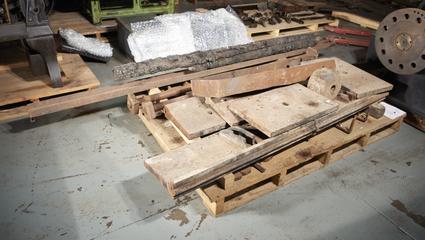
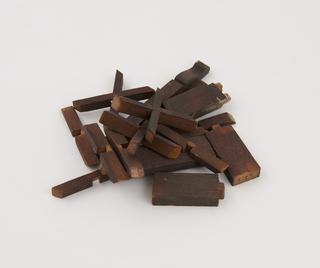
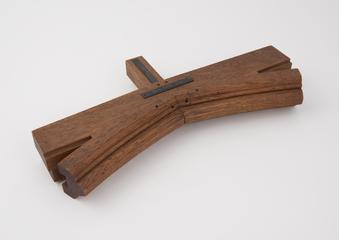
Part section of 1832 Dye House ironwork from Strutt complex at Milford, with earliest bolted column/beam building connections found (1977) - 5 beams, 7 columns, 3 column ties, 1 roof tie, one main rafter (timber), section of purlin wallplate dovetail box, bolts and wedges, samples of jack arch springing special bricks and floor tiles.

William Strutt, a civil engineer, architect and entrepreneur in cotton, is well known for being an early pioneer and promoter of fire-resistant building design. William Strutt was inspired to improve the safety of buildings after seeing his father's old mill burn down. He applied these ideas to his own buildings. This material are examples of how he redesigned cotton mills, avoiding the use of timber and other flammable materials. Instead using cast ironwork, bricks, and ceramics.

This material comes from one of William Strutt's later constructions, the Dye house, which was constructed in the early 1830s and was considered a more sophistcated improvement over his earlier fire-proof buildings, the cruciform mill from the 1790s, and his rebuilt South Mill in the 1810s. Most notably, this building is considered to be one of the earliest examples of the practice of using bolting columns to beam connections, and of the use of double flanged beams. This design allowed for taller walls, and a more raised curved roof, features which would later be used at on a greater scale in the landmark construction of the Sheerness Dockyard storehouses in 1858.

Of Strutt's original mill sites, only the North Mill in Belper remains, and is now a World Heritage Site.
Details

Category:
Building Construction
Object Number:
1977-752
type:
ironwork
credit:
English Sewing Ltd.

Parts

Columns, Ties, Beams, Rafter and Roof Tie

Columns, Ties, Beams, Rafter and Roof Tie

Pallet of components from 1832 Dye House ironwork from Strutt complex at Milford. Includes wooden and metal pieces.

More

William Strutt, a civil engineer, architect and entrepreneur in cotton, is well known for being an early pioneer and promoter of fire-resistant building design. William Strutt was inspired to improve the safety of buildings after seeing his father's old mill burn down. He applied these ideas to his own buildings. This material are examples of how he redesigned cotton mills, avoiding the use of timber and other flammable materials. Instead using cast ironwork, bricks, and ceramics.

This material comes from one of William Strutt's later constructions, the Dye house, which was constructed in the early 1830s and was considered a more sophistcated improvement over his earlier fire-proof buildings, the cruciform mill from the 1790s, and his rebuilt South Mill in the 1810s. Most notably, this building is considered to be one of the earliest examples of the practice of using bolting columns to beam connections, and of the use of double flanged beams. This design allowed for taller walls, and a more raised curved roof, features which would later be used at on a greater scale in the landmark construction of the Sheerness Dockyard storehouses in 1858.

Of Strutt's original mill sites, only the North Mill in Belper remains, and is now a World Heritage Site.
Measurements:
overall: 400 mm x 4880 mm x 1480 mm,
Object Number:
1977-752/1
type:
ironwork
Column

Column

Column from 1832 Dye House ironwork, from Strutt's complex at Milford.

More

William Strutt, a civil engineer, architect and entrepreneur in cotton, is well known for being an early pioneer and promoter of fire-resistant building design. William Strutt was inspired to improve the safety of buildings after seeing his father's old mill burn down. He applied these ideas to his own buildings. This material are examples of how he redesigned cotton mills, avoiding the use of timber and other flammable materials. Instead using cast ironwork, bricks, and ceramics.

This material comes from one of William Strutt's later constructions, the Dye house, which was constructed in the early 1830s and was considered a more sophistcated improvement over his earlier fire-proof buildings, the cruciform mill from the 1790s, and his rebuilt South Mill in the 1810s. Most notably, this building is considered to be one of the earliest examples of the practice of using bolting columns to beam connections, and of the use of double flanged beams. This design allowed for taller walls, and a more raised curved roof, features which would later be used at on a greater scale in the landmark construction of the Sheerness Dockyard storehouses in 1858.

Of Strutt's original mill sites, only the North Mill in Belper remains, and is now a World Heritage Site.
Measurements:
overall: 200 mm x 2500 mm x 200 mm,
Object Number:
1977-752/1/1
type:
ironwork
Part of:
1977-752/1
Column

Column

Column from 1832 Dye House ironwork, from Strutt's complex at Milford.

More

William Strutt, a civil engineer, architect and entrepreneur in cotton, is well known for being an early pioneer and promoter of fire-resistant building design. William Strutt was inspired to improve the safety of buildings after seeing his father's old mill burn down. He applied these ideas to his own buildings. This material are examples of how he redesigned cotton mills, avoiding the use of timber and other flammable materials. Instead using cast ironwork, bricks, and ceramics.

This material comes from one of William Strutt's later constructions, the Dye house, which was constructed in the early 1830s and was considered a more sophistcated improvement over his earlier fire-proof buildings, the cruciform mill from the 1790s, and his rebuilt South Mill in the 1810s. Most notably, this building is considered to be one of the earliest examples of the practice of using bolting columns to beam connections, and of the use of double flanged beams. This design allowed for taller walls, and a more raised curved roof, features which would later be used at on a greater scale in the landmark construction of the Sheerness Dockyard storehouses in 1858.

Of Strutt's original mill sites, only the North Mill in Belper remains, and is now a World Heritage Site.
Measurements:
overall: 200 mm x 2500 mm x 200 mm,
Object Number:
1977-752/1/2
type:
ironwork
Part of:
1977-752/1
Column

Column

Column from 1832 Dye House ironwork, from Strutt's complex at Milford.

More

William Strutt, a civil engineer, architect and entrepreneur in cotton, is well known for being an early pioneer and promoter of fire-resistant building design. William Strutt was inspired to improve the safety of buildings after seeing his father's old mill burn down. He applied these ideas to his own buildings. This material are examples of how he redesigned cotton mills, avoiding the use of timber and other flammable materials. Instead using cast ironwork, bricks, and ceramics.

This material comes from one of William Strutt's later constructions, the Dye house, which was constructed in the early 1830s and was considered a more sophistcated improvement over his earlier fire-proof buildings, the cruciform mill from the 1790s, and his rebuilt South Mill in the 1810s. Most notably, this building is considered to be one of the earliest examples of the practice of using bolting columns to beam connections, and of the use of double flanged beams. This design allowed for taller walls, and a more raised curved roof, features which would later be used at on a greater scale in the landmark construction of the Sheerness Dockyard storehouses in 1858.

Of Strutt's original mill sites, only the North Mill in Belper remains, and is now a World Heritage Site.
Measurements:
overall: 200 mm x 2500 mm x 200 mm,
Object Number:
1977-752/1/3
type:
ironwork
Part of:
1977-752/1
Column

Column

Column from 1832 Dye House ironwork, from Strutt's complex at Milford.

More

William Strutt, a civil engineer, architect and entrepreneur in cotton, is well known for being an early pioneer and promoter of fire-resistant building design. William Strutt was inspired to improve the safety of buildings after seeing his father's old mill burn down. He applied these ideas to his own buildings. This material are examples of how he redesigned cotton mills, avoiding the use of timber and other flammable materials. Instead using cast ironwork, bricks, and ceramics.

This material comes from one of William Strutt's later constructions, the Dye house, which was constructed in the early 1830s and was considered a more sophistcated improvement over his earlier fire-proof buildings, the cruciform mill from the 1790s, and his rebuilt South Mill in the 1810s. Most notably, this building is considered to be one of the earliest examples of the practice of using bolting columns to beam connections, and of the use of double flanged beams. This design allowed for taller walls, and a more raised curved roof, features which would later be used at on a greater scale in the landmark construction of the Sheerness Dockyard storehouses in 1858.

Of Strutt's original mill sites, only the North Mill in Belper remains, and is now a World Heritage Site.

Measurements:
overall (as stored): 200 mm x 2500 mm x 200 mm,
Object Number:
1977-752/1/4
type:
ironwork
Part of:
1977-752/1
Column

Column

Column from 1832 Dye House ironwork, from Strutt's complex at Milford.

More

William Strutt, a civil engineer, architect and entrepreneur in cotton, is well known for being an early pioneer and promoter of fire-resistant building design. William Strutt was inspired to improve the safety of buildings after seeing his father's old mill burn down. He applied these ideas to his own buildings. This material are examples of how he redesigned cotton mills, avoiding the use of timber and other flammable materials. Instead using cast ironwork, bricks, and ceramics.

This material comes from one of William Strutt's later constructions, the Dye house, which was constructed in the early 1830s and was considered a more sophistcated improvement over his earlier fire-proof buildings, the cruciform mill from the 1790s, and his rebuilt South Mill in the 1810s. Most notably, this building is considered to be one of the earliest examples of the practice of using bolting columns to beam connections, and of the use of double flanged beams. This design allowed for taller walls, and a more raised curved roof, features which would later be used at on a greater scale in the landmark construction of the Sheerness Dockyard storehouses in 1858.

Of Strutt's original mill sites, only the North Mill in Belper remains, and is now a World Heritage Site.

Measurements:
overall (as stored): 200 mm x 2500 mm x 200 mm,
Object Number:
1977-752/1/5
type:
ironwork
Part of:
1977-752/1
Column

Column

Column from 1832 Dye House ironwork, from Strutt's complex at Milford.

More

William Strutt, a civil engineer, architect and entrepreneur in cotton, is well known for being an early pioneer and promoter of fire-resistant building design. William Strutt was inspired to improve the safety of buildings after seeing his father's old mill burn down. He applied these ideas to his own buildings. This material are examples of how he redesigned cotton mills, avoiding the use of timber and other flammable materials. Instead using cast ironwork, bricks, and ceramics.

This material comes from one of William Strutt's later constructions, the Dye house, which was constructed in the early 1830s and was considered a more sophistcated improvement over his earlier fire-proof buildings, the cruciform mill from the 1790s, and his rebuilt South Mill in the 1810s. Most notably, this building is considered to be one of the earliest examples of the practice of using bolting columns to beam connections, and of the use of double flanged beams. This design allowed for taller walls, and a more raised curved roof, features which would later be used at on a greater scale in the landmark construction of the Sheerness Dockyard storehouses in 1858.

Of Strutt's original mill sites, only the North Mill in Belper remains, and is now a World Heritage Site.

Measurements:
overall (as stored): 200 mm x 2500 mm x 200 mm,
Object Number:
1977-752/1/6
type:
ironwork
Part of:
1977-752/1
Column

Column

Column from 1832 Dye House ironwork, from Strutt's complex at Milford.

More

William Strutt, a civil engineer, architect and entrepreneur in cotton, is well known for being an early pioneer and promoter of fire-resistant building design. William Strutt was inspired to improve the safety of buildings after seeing his father's old mill burn down. He applied these ideas to his own buildings. This material are examples of how he redesigned cotton mills, avoiding the use of timber and other flammable materials. Instead using cast ironwork, bricks, and ceramics.

This material comes from one of William Strutt's later constructions, the Dye house, which was constructed in the early 1830s and was considered a more sophistcated improvement over his earlier fire-proof buildings, the cruciform mill from the 1790s, and his rebuilt South Mill in the 1810s. Most notably, this building is considered to be one of the earliest examples of the practice of using bolting columns to beam connections, and of the use of double flanged beams. This design allowed for taller walls, and a more raised curved roof, features which would later be used at on a greater scale in the landmark construction of the Sheerness Dockyard storehouses in 1858.

Of Strutt's original mill sites, only the North Mill in Belper remains, and is now a World Heritage Site.

Measurements:
overall (as stored): 200 mm x 2500 mm x 200 mm,
Object Number:
1977-752/1/7
type:
ironwork
Part of:
1977-752/1
Tie

Tie

Tie from 1832 Dye House ironwork, from Strutt's complex at Milford.

More

William Strutt, a civil engineer, architect and entrepreneur in cotton, is well known for being an early pioneer and promoter of fire-resistant building design. William Strutt was inspired to improve the safety of buildings after seeing his father's old mill burn down. He applied these ideas to his own buildings. This material are examples of how he redesigned cotton mills, avoiding the use of timber and other flammable materials. Instead using cast ironwork, bricks, and ceramics.

This material comes from one of William Strutt's later constructions, the Dye house, which was constructed in the early 1830s and was considered a more sophistcated improvement over his earlier fire-proof buildings, the cruciform mill from the 1790s, and his rebuilt South Mill in the 1810s. Most notably, this building is considered to be one of the earliest examples of the practice of using bolting columns to beam connections, and of the use of double flanged beams. This design allowed for taller walls, and a more raised curved roof, features which would later be used at on a greater scale in the landmark construction of the Sheerness Dockyard storehouses in 1858.

Of Strutt's original mill sites, only the North Mill in Belper remains, and is now a World Heritage Site.

Object Number:
1977-752/1/8
type:
ironwork
Part of:
1977-752/1
Tie

Tie

Tie from 1832 Dye House ironwork, from Strutt's complex at Milford.

More

William Strutt, a civil engineer, architect and entrepreneur in cotton, is well known for being an early pioneer and promoter of fire-resistant building design. William Strutt was inspired to improve the safety of buildings after seeing his father's old mill burn down. He applied these ideas to his own buildings. This material are examples of how he redesigned cotton mills, avoiding the use of timber and other flammable materials. Instead using cast ironwork, bricks, and ceramics.

This material comes from one of William Strutt's later constructions, the Dye house, which was constructed in the early 1830s and was considered a more sophistcated improvement over his earlier fire-proof buildings, the cruciform mill from the 1790s, and his rebuilt South Mill in the 1810s. Most notably, this building is considered to be one of the earliest examples of the practice of using bolting columns to beam connections, and of the use of double flanged beams. This design allowed for taller walls, and a more raised curved roof, features which would later be used at on a greater scale in the landmark construction of the Sheerness Dockyard storehouses in 1858.

Of Strutt's original mill sites, only the North Mill in Belper remains, and is now a World Heritage Site.

Measurements:
overall (as stored): 200 mm x 1000 mm x 200 mm,
Object Number:
1977-752/1/9
type:
ironwork
Part of:
1977-752/1
Tie

Tie

Tie from 1832 Dye House ironwork, from Strutt's complex at Milford.

More

William Strutt, a civil engineer, architect and entrepreneur in cotton, is well known for being an early pioneer and promoter of fire-resistant building design. William Strutt was inspired to improve the safety of buildings after seeing his father's old mill burn down. He applied these ideas to his own buildings. This material are examples of how he redesigned cotton mills, avoiding the use of timber and other flammable materials. Instead using cast ironwork, bricks, and ceramics.

This material comes from one of William Strutt's later constructions, the Dye house, which was constructed in the early 1830s and was considered a more sophistcated improvement over his earlier fire-proof buildings, the cruciform mill from the 1790s, and his rebuilt South Mill in the 1810s. Most notably, this building is considered to be one of the earliest examples of the practice of using bolting columns to beam connections, and of the use of double flanged beams. This design allowed for taller walls, and a more raised curved roof, features which would later be used at on a greater scale in the landmark construction of the Sheerness Dockyard storehouses in 1858.

Of Strutt's original mill sites, only the North Mill in Belper remains, and is now a World Heritage Site.

Measurements:
overall (as stored): 200 mm x 1000 mm x 200 mm,
Object Number:
1977-752/1/10
type:
ironwork
Part of:
1977-752/1
Beam

Beam

Beam from 1832 Dye House ironwork, from Strutt's complex at Milford.

More

William Strutt, a civil engineer, architect and entrepreneur in cotton, is well known for being an early pioneer and promoter of fire-resistant building design. William Strutt was inspired to improve the safety of buildings after seeing his father's old mill burn down. He applied these ideas to his own buildings. This material are examples of how he redesigned cotton mills, avoiding the use of timber and other flammable materials. Instead using cast ironwork, bricks, and ceramics.

This material comes from one of William Strutt's later constructions, the Dye house, which was constructed in the early 1830s and was considered a more sophistcated improvement over his earlier fire-proof buildings, the cruciform mill from the 1790s, and his rebuilt South Mill in the 1810s. Most notably, this building is considered to be one of the earliest examples of the practice of using bolting columns to beam connections, and of the use of double flanged beams. This design allowed for taller walls, and a more raised curved roof, features which would later be used at on a greater scale in the landmark construction of the Sheerness Dockyard storehouses in 1858.

Of Strutt's original mill sites, only the North Mill in Belper remains, and is now a World Heritage Site.

Object Number:
1977-752/1/11
type:
ironwork
Part of:
1977-752/1
Beam

Beam

Beam from 1832 Dye House ironwork, from Strutt's complex at Milford.

More

William Strutt, a civil engineer, architect and entrepreneur in cotton, is well known for being an early pioneer and promoter of fire-resistant building design. William Strutt was inspired to improve the safety of buildings after seeing his father's old mill burn down. He applied these ideas to his own buildings. This material are examples of how he redesigned cotton mills, avoiding the use of timber and other flammable materials. Instead using cast ironwork, bricks, and ceramics.

This material comes from one of William Strutt's later constructions, the Dye house, which was constructed in the early 1830s and was considered a more sophistcated improvement over his earlier fire-proof buildings, the cruciform mill from the 1790s, and his rebuilt South Mill in the 1810s. Most notably, this building is considered to be one of the earliest examples of the practice of using bolting columns to beam connections, and of the use of double flanged beams. This design allowed for taller walls, and a more raised curved roof, features which would later be used at on a greater scale in the landmark construction of the Sheerness Dockyard storehouses in 1858.

Of Strutt's original mill sites, only the North Mill in Belper remains, and is now a World Heritage Site.

Measurements:
overall (as stored): 100 mm x 1800 mm x 100 mm,
Object Number:
1977-752/1/12
type:
ironwork
Part of:
1977-752/1
Beam

Beam

Beam from 1832 Dye House ironwork, from Strutt's complex at Milford.

More

William Strutt, a civil engineer, architect and entrepreneur in cotton, is well known for being an early pioneer and promoter of fire-resistant building design. William Strutt was inspired to improve the safety of buildings after seeing his father's old mill burn down. He applied these ideas to his own buildings. This material are examples of how he redesigned cotton mills, avoiding the use of timber and other flammable materials. Instead using cast ironwork, bricks, and ceramics.

This material comes from one of William Strutt's later constructions, the Dye house, which was constructed in the early 1830s and was considered a more sophistcated improvement over his earlier fire-proof buildings, the cruciform mill from the 1790s, and his rebuilt South Mill in the 1810s. Most notably, this building is considered to be one of the earliest examples of the practice of using bolting columns to beam connections, and of the use of double flanged beams. This design allowed for taller walls, and a more raised curved roof, features which would later be used at on a greater scale in the landmark construction of the Sheerness Dockyard storehouses in 1858.

Of Strutt's original mill sites, only the North Mill in Belper remains, and is now a World Heritage Site.

Measurements:
overall (as stored): 100 mm x 1800 mm x 100 mm,
Object Number:
1977-752/1/13
type:
ironwork
Part of:
1977-752/1
Beam

Beam

Beam from 1832 Dye House ironwork, from Strutt's complex at Milford.

More

William Strutt, a civil engineer, architect and entrepreneur in cotton, is well known for being an early pioneer and promoter of fire-resistant building design. William Strutt was inspired to improve the safety of buildings after seeing his father's old mill burn down. He applied these ideas to his own buildings. This material are examples of how he redesigned cotton mills, avoiding the use of timber and other flammable materials. Instead using cast ironwork, bricks, and ceramics.

This material comes from one of William Strutt's later constructions, the Dye house, which was constructed in the early 1830s and was considered a more sophistcated improvement over his earlier fire-proof buildings, the cruciform mill from the 1790s, and his rebuilt South Mill in the 1810s. Most notably, this building is considered to be one of the earliest examples of the practice of using bolting columns to beam connections, and of the use of double flanged beams. This design allowed for taller walls, and a more raised curved roof, features which would later be used at on a greater scale in the landmark construction of the Sheerness Dockyard storehouses in 1858.

Of Strutt's original mill sites, only the North Mill in Belper remains, and is now a World Heritage Site.

Measurements:
overall (as stored): 100 mm x 1800 mm x 100 mm,
Object Number:
1977-752/1/14
type:
ironwork
Part of:
1977-752/1
Beam

Beam

Beam from 1832 Dye House ironwork, from Strutt's complex at Milford.

More

William Strutt, a civil engineer, architect and entrepreneur in cotton, is well known for being an early pioneer and promoter of fire-resistant building design. William Strutt was inspired to improve the safety of buildings after seeing his father's old mill burn down. He applied these ideas to his own buildings. This material are examples of how he redesigned cotton mills, avoiding the use of timber and other flammable materials. Instead using cast ironwork, bricks, and ceramics.

This material comes from one of William Strutt's later constructions, the Dye house, which was constructed in the early 1830s and was considered a more sophistcated improvement over his earlier fire-proof buildings, the cruciform mill from the 1790s, and his rebuilt South Mill in the 1810s. Most notably, this building is considered to be one of the earliest examples of the practice of using bolting columns to beam connections, and of the use of double flanged beams. This design allowed for taller walls, and a more raised curved roof, features which would later be used at on a greater scale in the landmark construction of the Sheerness Dockyard storehouses in 1858.

Of Strutt's original mill sites, only the North Mill in Belper remains, and is now a World Heritage Site.

Measurements:
overall (as stored): 100 mm x 1800 mm x 100 mm,
Object Number:
1977-752/1/15
type:
ironwork
Part of:
1977-752/1
Rafter

Rafter

Rafter from 1832 Dye House ironwork, from Strutt's complex at Milford.

More

William Strutt, a civil engineer, architect and entrepreneur in cotton, is well known for being an early pioneer and promoter of fire-resistant building design. William Strutt was inspired to improve the safety of buildings after seeing his father's old mill burn down. He applied these ideas to his own buildings. This material are examples of how he redesigned cotton mills, avoiding the use of timber and other flammable materials. Instead using cast ironwork, bricks, and ceramics.

This material comes from one of William Strutt's later constructions, the Dye house, which was constructed in the early 1830s and was considered a more sophistcated improvement over his earlier fire-proof buildings, the cruciform mill from the 1790s, and his rebuilt South Mill in the 1810s. Most notably, this building is considered to be one of the earliest examples of the practice of using bolting columns to beam connections, and of the use of double flanged beams. This design allowed for taller walls, and a more raised curved roof, features which would later be used at on a greater scale in the landmark construction of the Sheerness Dockyard storehouses in 1858.

Of Strutt's original mill sites, only the North Mill in Belper remains, and is now a World Heritage Site.

Object Number:
1977-752/1/16
type:
ironwork
Part of:
1977-752/1
Roof Tie

Roof Tie

Roof Tie from 1832 Dye House ironwork, from Strutt's complex at Milford.

More

William Strutt, a civil engineer, architect and entrepreneur in cotton, is well known for being an early pioneer and promoter of fire-resistant building design. William Strutt was inspired to improve the safety of buildings after seeing his father's old mill burn down. He applied these ideas to his own buildings. This material are examples of how he redesigned cotton mills, avoiding the use of timber and other flammable materials. Instead using cast ironwork, bricks, and ceramics.

This material comes from one of William Strutt's later constructions, the Dye house, which was constructed in the early 1830s and was considered a more sophistcated improvement over his earlier fire-proof buildings, the cruciform mill from the 1790s, and his rebuilt South Mill in the 1810s. Most notably, this building is considered to be one of the earliest examples of the practice of using bolting columns to beam connections, and of the use of double flanged beams. This design allowed for taller walls, and a more raised curved roof, features which would later be used at on a greater scale in the landmark construction of the Sheerness Dockyard storehouses in 1858.

Of Strutt's original mill sites, only the North Mill in Belper remains, and is now a World Heritage Site.

Object Number:
1977-752/1/17
type:
ironwork
Part of:
1977-752/1
Purlin Wall Plates, Metal Rod, Box of Components

Purlin Wall Plates, Metal Rod, Box of Components

Pallet of components from 1832 Dye House ironwork from Strutt complex at Milford. Includes two metal beams. Pallet also contains box of stone bricks and tiles and metal components.

More

William Strutt, a civil engineer, architect and entrepreneur in cotton, is well known for being an early pioneer and promoter of fire-resistant building design. William Strutt was inspired to improve the safety of buildings after seeing his father's old mill burn down. He applied these ideas to his own buildings. This material are examples of how he redesigned cotton mills, avoiding the use of timber and other flammable materials. Instead using cast ironwork, bricks, and ceramics.

This material comes from one of William Strutt's later constructions, the Dye house, which was constructed in the early 1830s and was considered a more sophistcated improvement over his earlier fire-proof buildings, the cruciform mill from the 1790s, and his rebuilt South Mill in the 1810s. Most notably, this building is considered to be one of the earliest examples of the practice of using bolting columns to beam connections, and of the use of double flanged beams. This design allowed for taller walls, and a more raised curved roof, features which would later be used at on a greater scale in the landmark construction of the Sheerness Dockyard storehouses in 1858.

Of Strutt's original mill sites, only the North Mill in Belper remains, and is now a World Heritage Site.

Measurements:
overall: 615 mm x 3470 mm x 470 mm,
Object Number:
1977-752/2
type:
ironwork
Purlin Wall Plate

Purlin Wall Plate

Purlin Wall Plate from 1832 Dye House ironwork, from Strutt's complex at Milford.

More

William Strutt, a civil engineer, architect and entrepreneur in cotton, is well known for being an early pioneer and promoter of fire-resistant building design. William Strutt was inspired to improve the safety of buildings after seeing his father's old mill burn down. He applied these ideas to his own buildings. This material are examples of how he redesigned cotton mills, avoiding the use of timber and other flammable materials. Instead using cast ironwork, bricks, and ceramics.

This material comes from one of William Strutt's later constructions, the Dye house, which was constructed in the early 1830s and was considered a more sophistcated improvement over his earlier fire-proof buildings, the cruciform mill from the 1790s, and his rebuilt South Mill in the 1810s. Most notably, this building is considered to be one of the earliest examples of the practice of using bolting columns to beam connections, and of the use of double flanged beams. This design allowed for taller walls, and a more raised curved roof, features which would later be used at on a greater scale in the landmark construction of the Sheerness Dockyard storehouses in 1858.

Of Strutt's original mill sites, only the North Mill in Belper remains, and is now a World Heritage Site.

Object Number:
1977-752/2/1
type:
ironwork
Part of:
1977-752/2
Purlin Wall Plate

Purlin Wall Plate

Purlin Wall Plate from 1832 Dye House ironwork, from Strutt's complex at Milford.

More

William Strutt, a civil engineer, architect and entrepreneur in cotton, is well known for being an early pioneer and promoter of fire-resistant building design. William Strutt was inspired to improve the safety of buildings after seeing his father's old mill burn down. He applied these ideas to his own buildings. This material are examples of how he redesigned cotton mills, avoiding the use of timber and other flammable materials. Instead using cast ironwork, bricks, and ceramics.

This material comes from one of William Strutt's later constructions, the Dye house, which was constructed in the early 1830s and was considered a more sophistcated improvement over his earlier fire-proof buildings, the cruciform mill from the 1790s, and his rebuilt South Mill in the 1810s. Most notably, this building is considered to be one of the earliest examples of the practice of using bolting columns to beam connections, and of the use of double flanged beams. This design allowed for taller walls, and a more raised curved roof, features which would later be used at on a greater scale in the landmark construction of the Sheerness Dockyard storehouses in 1858.

Of Strutt's original mill sites, only the North Mill in Belper remains, and is now a World Heritage Site.

Measurements:
overall (as stored): 500 mm x 1000 mm x 250 mm,
Object Number:
1977-752/2/2
type:
ironwork
Part of:
1977-752/2
Long Metal Rod

Long Metal Rod

Long Metal Rod from 1832 Dye House ironwork, from Strutt's complex at Milford.

More

William Strutt, a civil engineer, architect and entrepreneur in cotton, is well known for being an early pioneer and promoter of fire-resistant building design. William Strutt was inspired to improve the safety of buildings after seeing his father's old mill burn down. He applied these ideas to his own buildings. This material are examples of how he redesigned cotton mills, avoiding the use of timber and other flammable materials. Instead using cast ironwork, bricks, and ceramics.

This material comes from one of William Strutt's later constructions, the Dye house, which was constructed in the early 1830s and was considered a more sophistcated improvement over his earlier fire-proof buildings, the cruciform mill from the 1790s, and his rebuilt South Mill in the 1810s. Most notably, this building is considered to be one of the earliest examples of the practice of using bolting columns to beam connections, and of the use of double flanged beams. This design allowed for taller walls, and a more raised curved roof, features which would later be used at on a greater scale in the landmark construction of the Sheerness Dockyard storehouses in 1858.

Of Strutt's original mill sites, only the North Mill in Belper remains, and is now a World Heritage Site.

Object Number:
1977-752/2/3
type:
ironwork
Part of:
1977-752/2
Box of bolts, wedges and jack arch springing special bricks and floor tiles

Box of bolts, wedges and jack arch springing special bricks and floor tiles

Box of bolts, wedges and jack arch springing special bricks and floor tiles. From 1832 Dye House ironwork, from Strutt's complex at Milford.

More

William Strutt, a civil engineer, architect and entrepreneur in cotton, is well known for being an early pioneer and promoter of fire-resistant building design. William Strutt was inspired to improve the safety of buildings after seeing his father's old mill burn down. He applied these ideas to his own buildings. This material are examples of how he redesigned cotton mills, avoiding the use of timber and other flammable materials. Instead using cast ironwork, bricks, and ceramics.

This material comes from one of William Strutt's later constructions, the Dye house, which was constructed in the early 1830s and was considered a more sophistcated improvement over his earlier fire-proof buildings, the cruciform mill from the 1790s, and his rebuilt South Mill in the 1810s. Most notably, this building is considered to be one of the earliest examples of the practice of using bolting columns to beam connections, and of the use of double flanged beams. This design allowed for taller walls, and a more raised curved roof, features which would later be used at on a greater scale in the landmark construction of the Sheerness Dockyard storehouses in 1858.

Of Strutt's original mill sites, only the North Mill in Belper remains, and is now a World Heritage Site.

Measurements:
overall (as stored): 500 mm x 500 mm x 250 mm,
Object Number:
1977-752/2/4
type:
ironwork
Part of:
1977-752/2
Purlin Wall Plates, Long and Short Metal Rods

Purlin Wall Plates, Long and Short Metal Rods

Purlin Wall Plates, Long and Short Metal Rods, from 1832 Dye House ironwork, from Strutt's complex at Milford.

More

William Strutt, a civil engineer, architect and entrepreneur in cotton, is well known for being an early pioneer and promoter of fire-resistant building design. William Strutt was inspired to improve the safety of buildings after seeing his father's old mill burn down. He applied these ideas to his own buildings. This material are examples of how he redesigned cotton mills, avoiding the use of timber and other flammable materials. Instead using cast ironwork, bricks, and ceramics.

This material comes from one of William Strutt's later constructions, the Dye house, which was constructed in the early 1830s and was considered a more sophistcated improvement over his earlier fire-proof buildings, the cruciform mill from the 1790s, and his rebuilt South Mill in the 1810s. Most notably, this building is considered to be one of the earliest examples of the practice of using bolting columns to beam connections, and of the use of double flanged beams. This design allowed for taller walls, and a more raised curved roof, features which would later be used at on a greater scale in the landmark construction of the Sheerness Dockyard storehouses in 1858.

Of Strutt's original mill sites, only the North Mill in Belper remains, and is now a World Heritage Site.

Measurements:
overall: 345 mm x 4170 mm x 1210 mm,
Object Number:
1977-752/3
type:
ironwork
Long Metal Rod

Long Metal Rod

Long Metal Rod from 1832 Dye House ironwork, from Strutt's complex at Milford.

More

William Strutt, a civil engineer, architect and entrepreneur in cotton, is well known for being an early pioneer and promoter of fire-resistant building design. William Strutt was inspired to improve the safety of buildings after seeing his father's old mill burn down. He applied these ideas to his own buildings. This material are examples of how he redesigned cotton mills, avoiding the use of timber and other flammable materials. Instead using cast ironwork, bricks, and ceramics.

This material comes from one of William Strutt's later constructions, the Dye house, which was constructed in the early 1830s and was considered a more sophistcated improvement over his earlier fire-proof buildings, the cruciform mill from the 1790s, and his rebuilt South Mill in the 1810s. Most notably, this building is considered to be one of the earliest examples of the practice of using bolting columns to beam connections, and of the use of double flanged beams. This design allowed for taller walls, and a more raised curved roof, features which would later be used at on a greater scale in the landmark construction of the Sheerness Dockyard storehouses in 1858.

Of Strutt's original mill sites, only the North Mill in Belper remains, and is now a World Heritage Site.

Object Number:
1977-752/3/1
type:
ironwork
Part of:
1977-752/3
Long Metal Rod

Long Metal Rod

Long Metal Rod from 1832 Dye House ironwork, from Strutt's complex at Milford.

More

William Strutt, a civil engineer, architect and entrepreneur in cotton, is well known for being an early pioneer and promoter of fire-resistant building design. William Strutt was inspired to improve the safety of buildings after seeing his father's old mill burn down. He applied these ideas to his own buildings. This material are examples of how he redesigned cotton mills, avoiding the use of timber and other flammable materials. Instead using cast ironwork, bricks, and ceramics.

This material comes from one of William Strutt's later constructions, the Dye house, which was constructed in the early 1830s and was considered a more sophistcated improvement over his earlier fire-proof buildings, the cruciform mill from the 1790s, and his rebuilt South Mill in the 1810s. Most notably, this building is considered to be one of the earliest examples of the practice of using bolting columns to beam connections, and of the use of double flanged beams. This design allowed for taller walls, and a more raised curved roof, features which would later be used at on a greater scale in the landmark construction of the Sheerness Dockyard storehouses in 1858.

Of Strutt's original mill sites, only the North Mill in Belper remains, and is now a World Heritage Site.

Measurements:
overall (as stored): 1200 mm 25 mm,
Object Number:
1977-752/3/2
type:
ironwork
Part of:
1977-752/3
Long Metal Rod

Long Metal Rod

Long Metal Rod from 1832 Dye House ironwork, from Strutt's complex at Milford.

More

William Strutt, a civil engineer, architect and entrepreneur in cotton, is well known for being an early pioneer and promoter of fire-resistant building design. William Strutt was inspired to improve the safety of buildings after seeing his father's old mill burn down. He applied these ideas to his own buildings. This material are examples of how he redesigned cotton mills, avoiding the use of timber and other flammable materials. Instead using cast ironwork, bricks, and ceramics.

This material comes from one of William Strutt's later constructions, the Dye house, which was constructed in the early 1830s and was considered a more sophistcated improvement over his earlier fire-proof buildings, the cruciform mill from the 1790s, and his rebuilt South Mill in the 1810s. Most notably, this building is considered to be one of the earliest examples of the practice of using bolting columns to beam connections, and of the use of double flanged beams. This design allowed for taller walls, and a more raised curved roof, features which would later be used at on a greater scale in the landmark construction of the Sheerness Dockyard storehouses in 1858.

Of Strutt's original mill sites, only the North Mill in Belper remains, and is now a World Heritage Site.

Measurements:
overall (as stored): 1200 mm 25 mm,
Object Number:
1977-752/3/3
type:
ironwork
Part of:
1977-752/3
Long Metal Rod

Long Metal Rod

Long Metal Rod from 1832 Dye House ironwork, from Strutt's complex at Milford.

More

William Strutt, a civil engineer, architect and entrepreneur in cotton, is well known for being an early pioneer and promoter of fire-resistant building design. William Strutt was inspired to improve the safety of buildings after seeing his father's old mill burn down. He applied these ideas to his own buildings. This material are examples of how he redesigned cotton mills, avoiding the use of timber and other flammable materials. Instead using cast ironwork, bricks, and ceramics.

This material comes from one of William Strutt's later constructions, the Dye house, which was constructed in the early 1830s and was considered a more sophistcated improvement over his earlier fire-proof buildings, the cruciform mill from the 1790s, and his rebuilt South Mill in the 1810s. Most notably, this building is considered to be one of the earliest examples of the practice of using bolting columns to beam connections, and of the use of double flanged beams. This design allowed for taller walls, and a more raised curved roof, features which would later be used at on a greater scale in the landmark construction of the Sheerness Dockyard storehouses in 1858.

Of Strutt's original mill sites, only the North Mill in Belper remains, and is now a World Heritage Site.

Measurements:
overall (as stored): 1200 mm 25 mm,
Object Number:
1977-752/3/4
type:
ironwork
Part of:
1977-752/3
Short Metal Rod

Short Metal Rod

Short Metal Rod from 1832 Dye House ironwork, from Strutt's complex at Milford.

More

William Strutt, a civil engineer, architect and entrepreneur in cotton, is well known for being an early pioneer and promoter of fire-resistant building design. William Strutt was inspired to improve the safety of buildings after seeing his father's old mill burn down. He applied these ideas to his own buildings. This material are examples of how he redesigned cotton mills, avoiding the use of timber and other flammable materials. Instead using cast ironwork, bricks, and ceramics.

This material comes from one of William Strutt's later constructions, the Dye house, which was constructed in the early 1830s and was considered a more sophistcated improvement over his earlier fire-proof buildings, the cruciform mill from the 1790s, and his rebuilt South Mill in the 1810s. Most notably, this building is considered to be one of the earliest examples of the practice of using bolting columns to beam connections, and of the use of double flanged beams. This design allowed for taller walls, and a more raised curved roof, features which would later be used at on a greater scale in the landmark construction of the Sheerness Dockyard storehouses in 1858.

Of Strutt's original mill sites, only the North Mill in Belper remains, and is now a World Heritage Site.

Object Number:
1977-752/3/5
type:
ironwork
Part of:
1977-752/3
Short Metal Rod

Short Metal Rod

Short Metal Rod from 1832 Dye House ironwork, from Strutt's complex at Milford.

More

William Strutt, a civil engineer, architect and entrepreneur in cotton, is well known for being an early pioneer and promoter of fire-resistant building design. William Strutt was inspired to improve the safety of buildings after seeing his father's old mill burn down. He applied these ideas to his own buildings. This material are examples of how he redesigned cotton mills, avoiding the use of timber and other flammable materials. Instead using cast ironwork, bricks, and ceramics.

This material comes from one of William Strutt's later constructions, the Dye house, which was constructed in the early 1830s and was considered a more sophistcated improvement over his earlier fire-proof buildings, the cruciform mill from the 1790s, and his rebuilt South Mill in the 1810s. Most notably, this building is considered to be one of the earliest examples of the practice of using bolting columns to beam connections, and of the use of double flanged beams. This design allowed for taller walls, and a more raised curved roof, features which would later be used at on a greater scale in the landmark construction of the Sheerness Dockyard storehouses in 1858.

Of Strutt's original mill sites, only the North Mill in Belper remains, and is now a World Heritage Site.

Object Number:
1977-752/3/6
type:
ironwork
Part of:
1977-752/3
Purlin Wall Plate

Purlin Wall Plate

Purlin Wall Plate from 1832 Dye House ironwork, from Strutt's complex at Milford.

More

William Strutt, a civil engineer, architect and entrepreneur in cotton, is well known for being an early pioneer and promoter of fire-resistant building design. William Strutt was inspired to improve the safety of buildings after seeing his father's old mill burn down. He applied these ideas to his own buildings. This material are examples of how he redesigned cotton mills, avoiding the use of timber and other flammable materials. Instead using cast ironwork, bricks, and ceramics.

This material comes from one of William Strutt's later constructions, the Dye house, which was constructed in the early 1830s and was considered a more sophistcated improvement over his earlier fire-proof buildings, the cruciform mill from the 1790s, and his rebuilt South Mill in the 1810s. Most notably, this building is considered to be one of the earliest examples of the practice of using bolting columns to beam connections, and of the use of double flanged beams. This design allowed for taller walls, and a more raised curved roof, features which would later be used at on a greater scale in the landmark construction of the Sheerness Dockyard storehouses in 1858.

Of Strutt's original mill sites, only the North Mill in Belper remains, and is now a World Heritage Site.

Object Number:
1977-752/3/7
type:
ironwork
Part of:
1977-752/3
Purlin Wall Plate

Purlin Wall Plate

Purlin Wall Plate from 1832 Dye House ironwork, from Strutt's complex at Milford.

More

William Strutt, a civil engineer, architect and entrepreneur in cotton, is well known for being an early pioneer and promoter of fire-resistant building design. William Strutt was inspired to improve the safety of buildings after seeing his father's old mill burn down. He applied these ideas to his own buildings. This material are examples of how he redesigned cotton mills, avoiding the use of timber and other flammable materials. Instead using cast ironwork, bricks, and ceramics.

This material comes from one of William Strutt's later constructions, the Dye house, which was constructed in the early 1830s and was considered a more sophistcated improvement over his earlier fire-proof buildings, the cruciform mill from the 1790s, and his rebuilt South Mill in the 1810s. Most notably, this building is considered to be one of the earliest examples of the practice of using bolting columns to beam connections, and of the use of double flanged beams. This design allowed for taller walls, and a more raised curved roof, features which would later be used at on a greater scale in the landmark construction of the Sheerness Dockyard storehouses in 1858.

Of Strutt's original mill sites, only the North Mill in Belper remains, and is now a World Heritage Site.

Measurements:
overall (as stored): 500 mm x 1000 mm x 250 mm,
Object Number:
1977-752/3/8
type:
ironwork
Part of:
1977-752/3
Purlin Wall Plate

Purlin Wall Plate

Purlin Wall Plate from 1832 Dye House ironwork, from Strutt's complex at Milford.

More

William Strutt, a civil engineer, architect and entrepreneur in cotton, is well known for being an early pioneer and promoter of fire-resistant building design. William Strutt was inspired to improve the safety of buildings after seeing his father's old mill burn down. He applied these ideas to his own buildings. This material are examples of how he redesigned cotton mills, avoiding the use of timber and other flammable materials. Instead using cast ironwork, bricks, and ceramics.

This material comes from one of William Strutt's later constructions, the Dye house, which was constructed in the early 1830s and was considered a more sophistcated improvement over his earlier fire-proof buildings, the cruciform mill from the 1790s, and his rebuilt South Mill in the 1810s. Most notably, this building is considered to be one of the earliest examples of the practice of using bolting columns to beam connections, and of the use of double flanged beams. This design allowed for taller walls, and a more raised curved roof, features which would later be used at on a greater scale in the landmark construction of the Sheerness Dockyard storehouses in 1858.

Of Strutt's original mill sites, only the North Mill in Belper remains, and is now a World Heritage Site.

Measurements:
overall (as stored): 500 mm x 1000 mm x 250 mm,
Object Number:
1977-752/3/9
type:
ironwork
Part of:
1977-752/3
Dove Tail Box

Dove Tail Box

Dove Tail Box

More

William Strutt, a civil engineer, architect and entrepreneur in cotton, is well known for being an early pioneer and promoter of fire-resistant building design. William Strutt was inspired to improve the safety of buildings after seeing his father's old mill burn down. He applied these ideas to his own buildings. This material are examples of how he redesigned cotton mills, avoiding the use of timber and other flammable materials. Instead using cast ironwork, bricks, and ceramics.

This material comes from one of William Strutt's later constructions, the Dye house, which was constructed in the early 1830s and was considered a more sophistcated improvement over his earlier fire-proof buildings, the cruciform mill from the 1790s, and his rebuilt South Mill in the 1810s. Most notably, this building is considered to be one of the earliest examples of the practice of using bolting columns to beam connections, and of the use of double flanged beams. This design allowed for taller walls, and a more raised curved roof, features which would later be used at on a greater scale in the landmark construction of the Sheerness Dockyard storehouses in 1858.

Of Strutt's original mill sites, only the North Mill in Belper remains, and is now a World Heritage Site.

Object Number:
1977-752/4
type:
ironwork