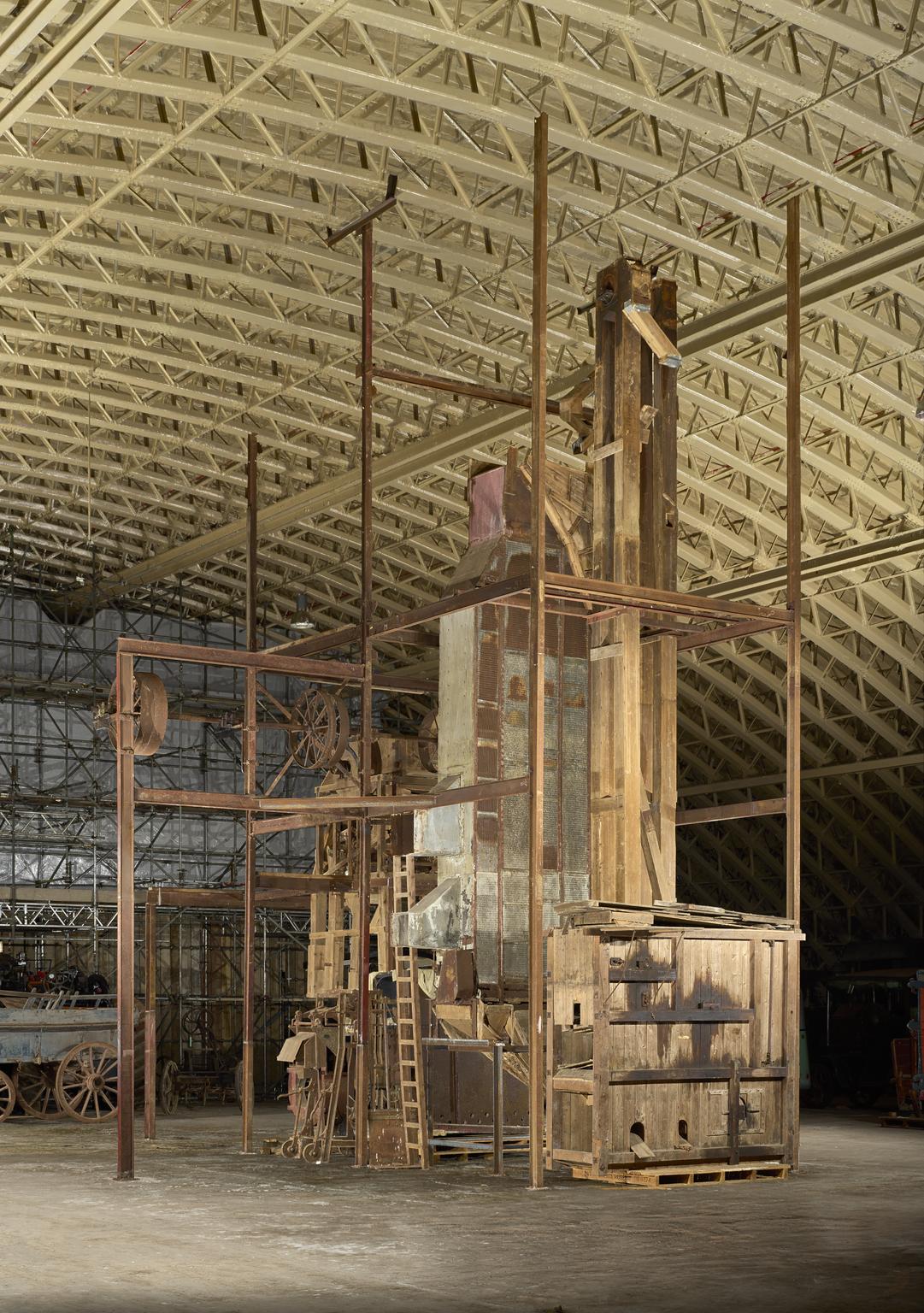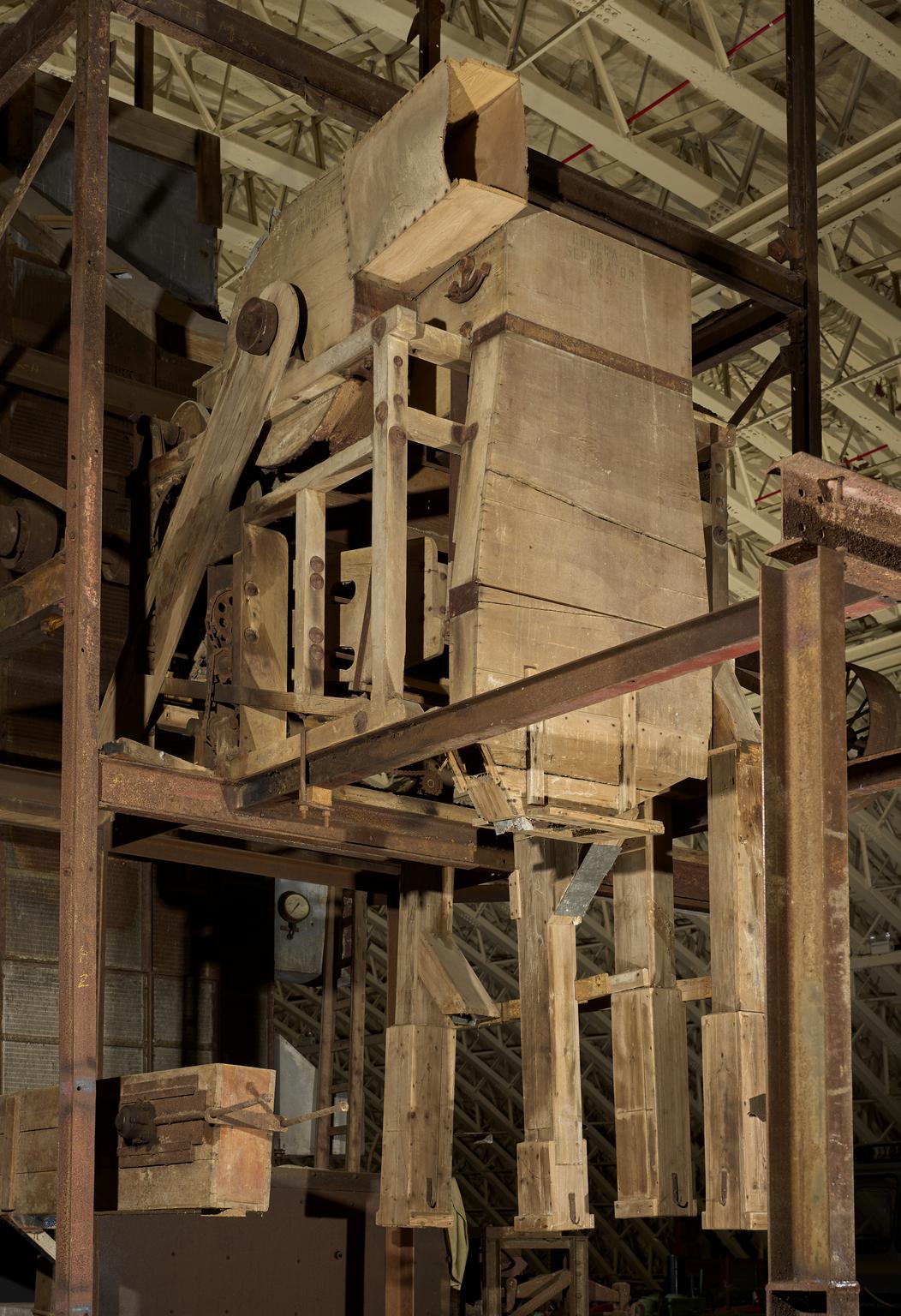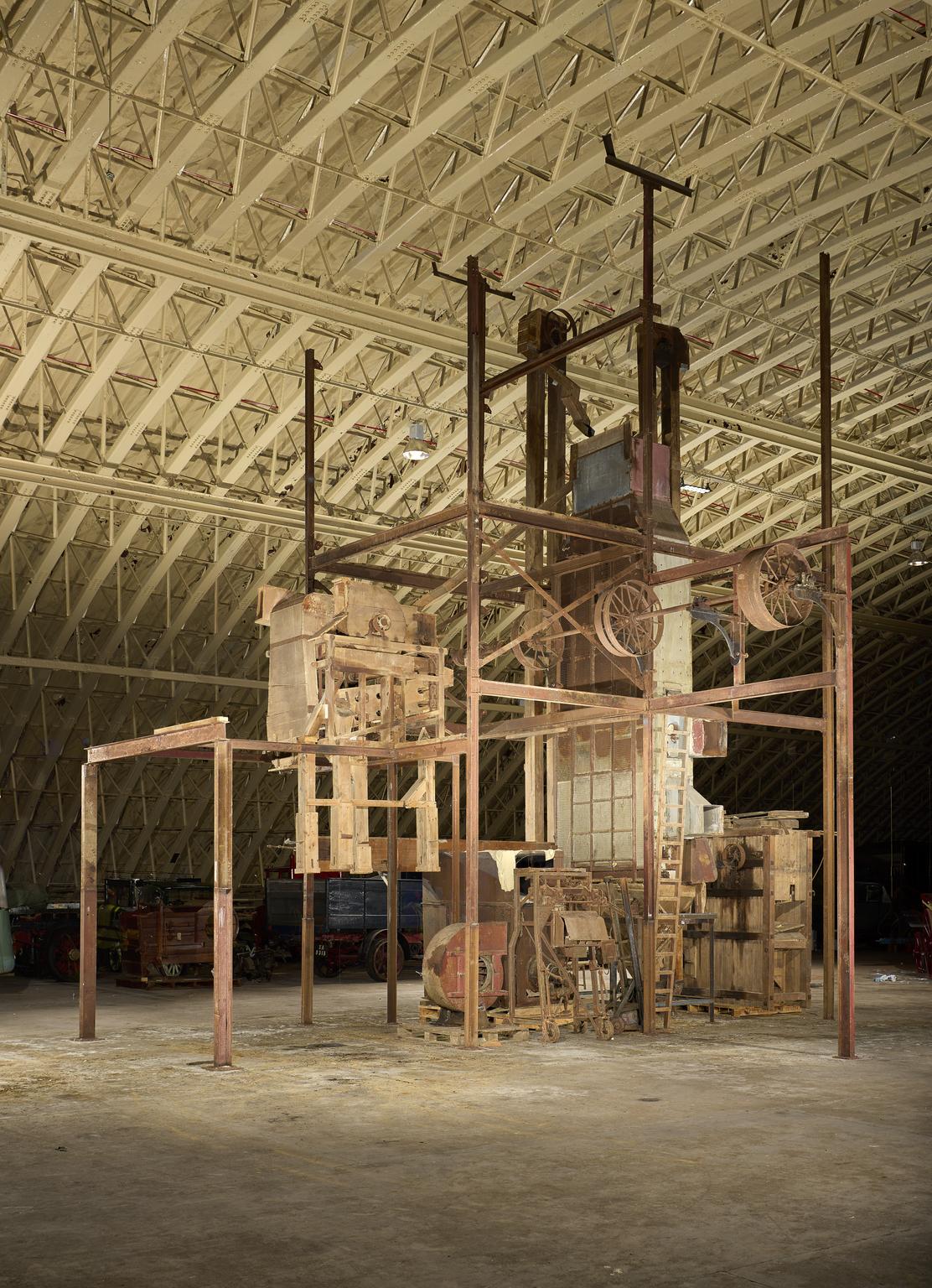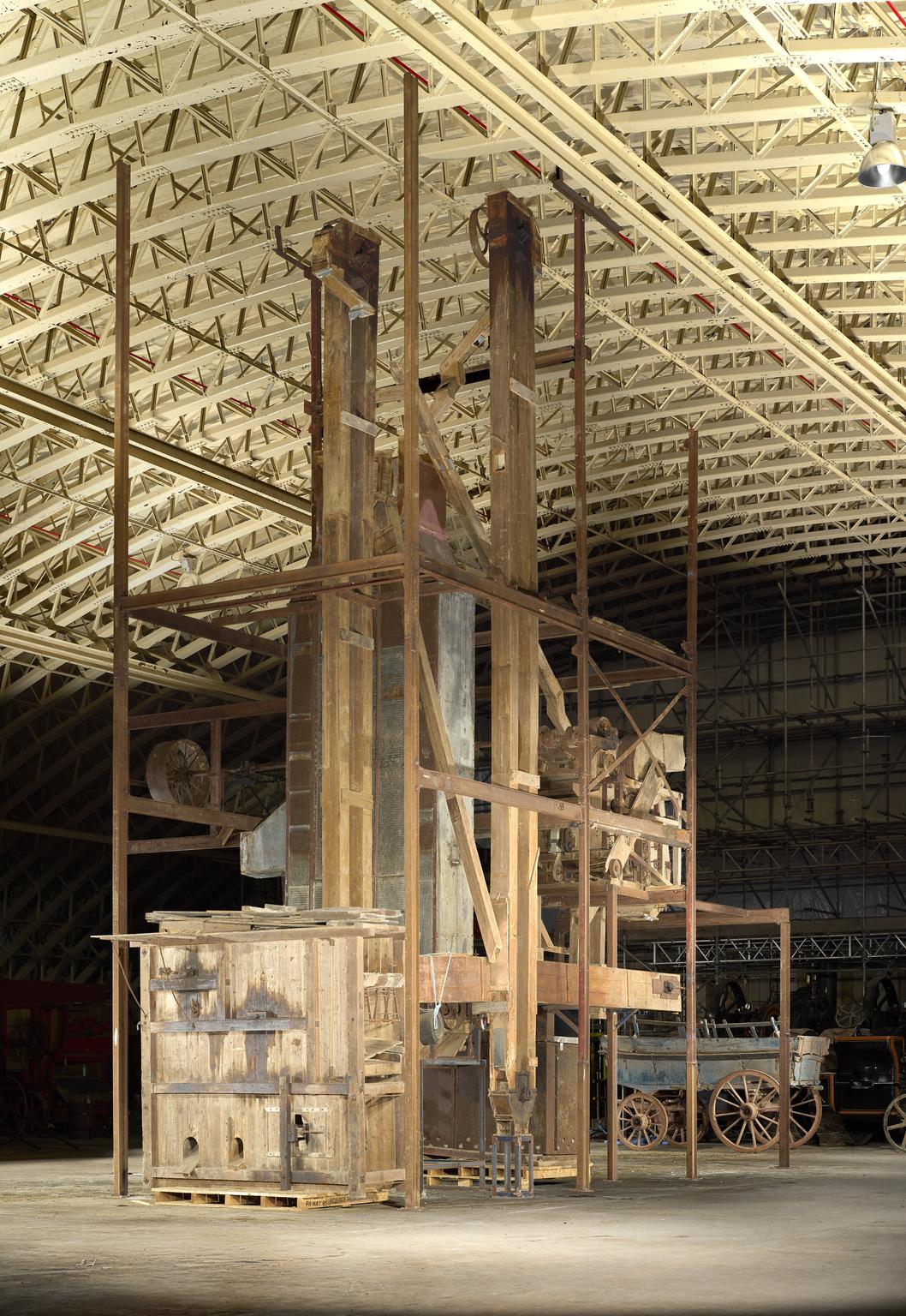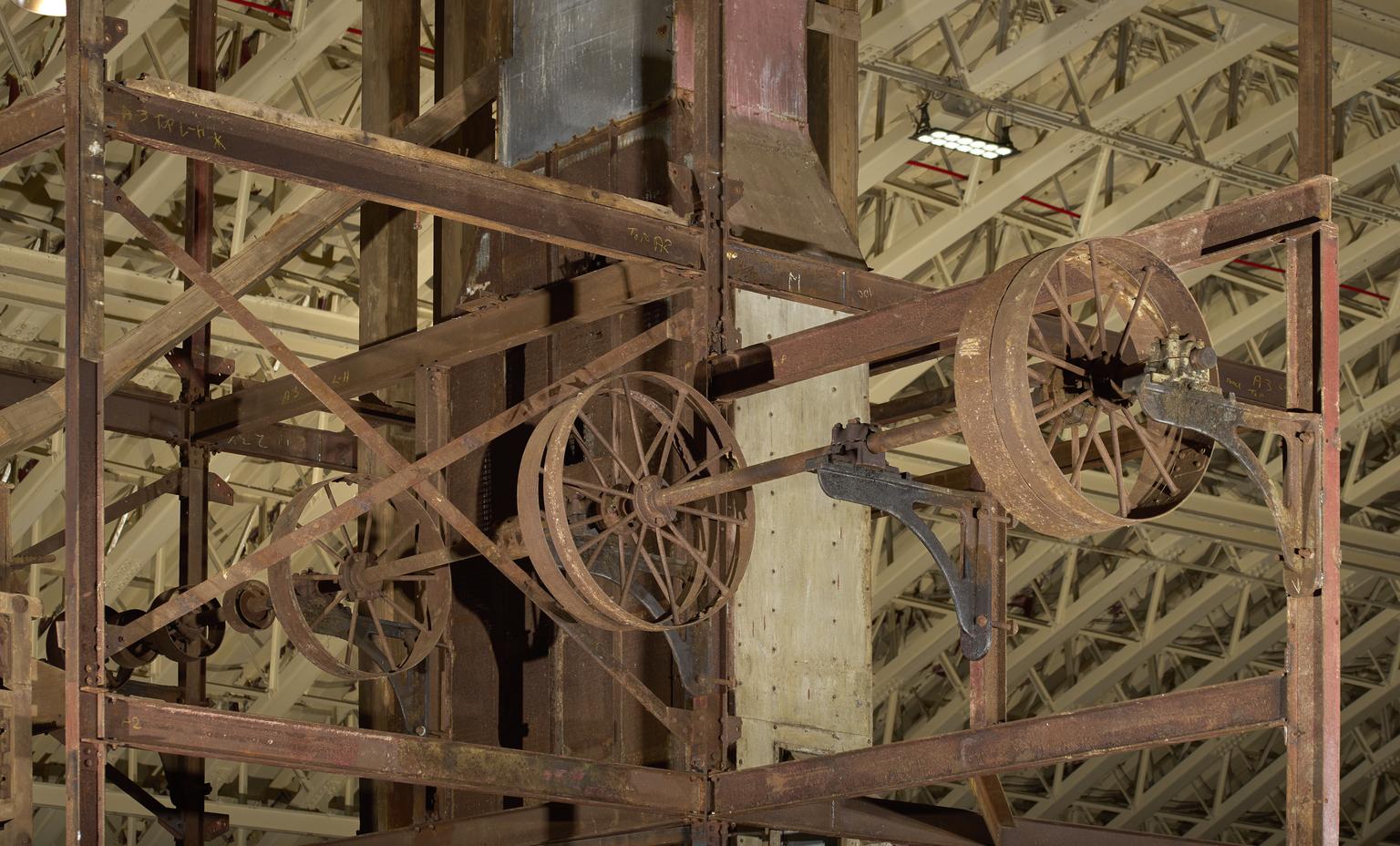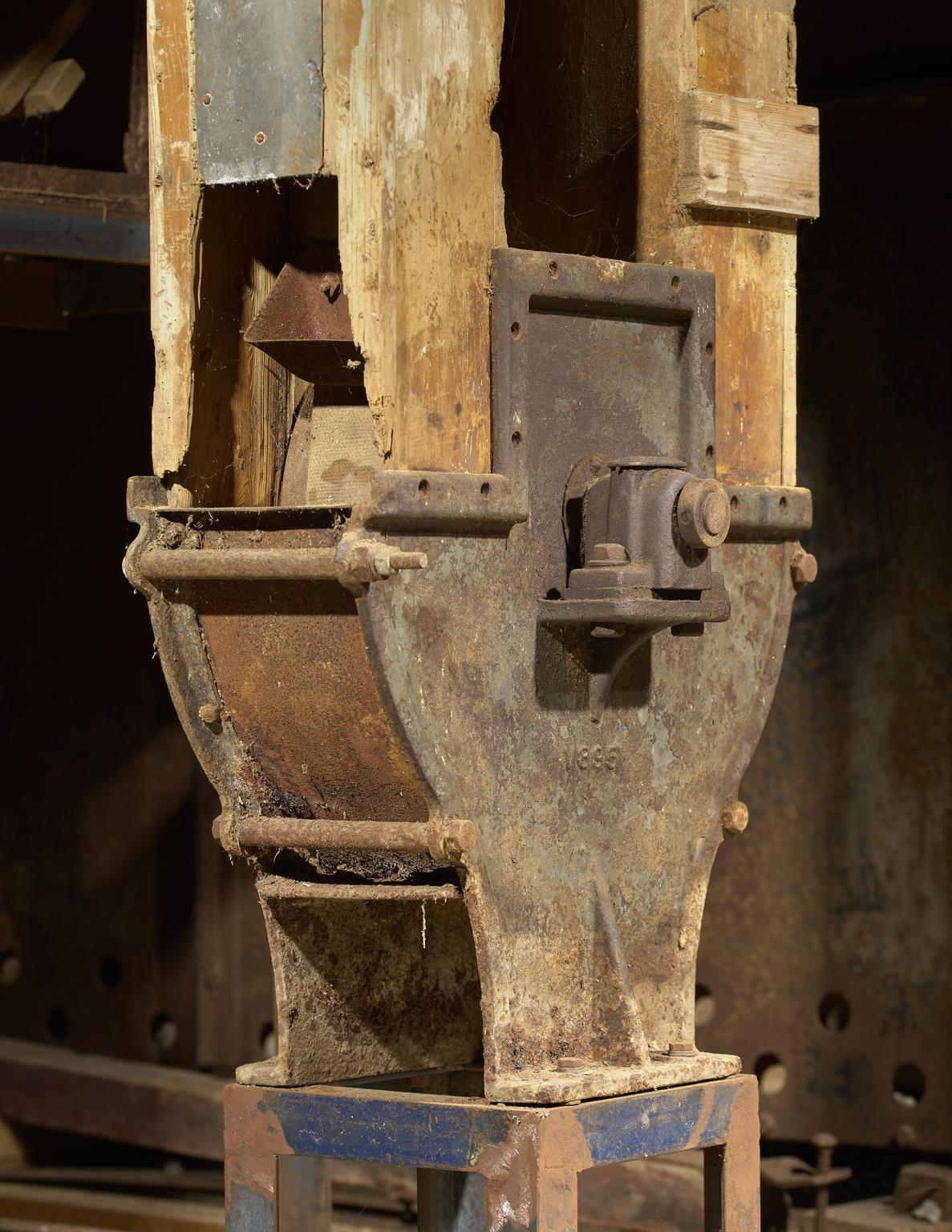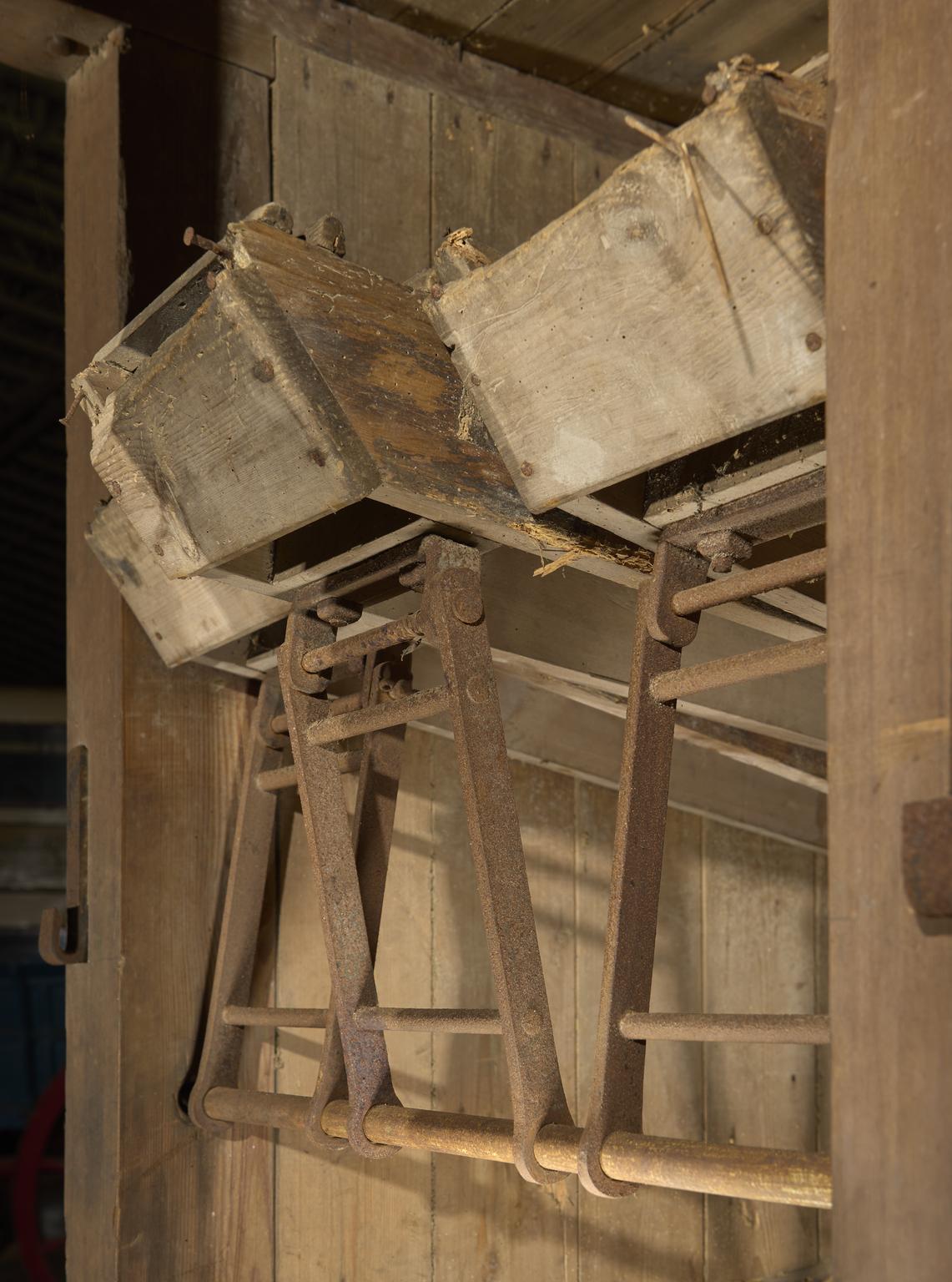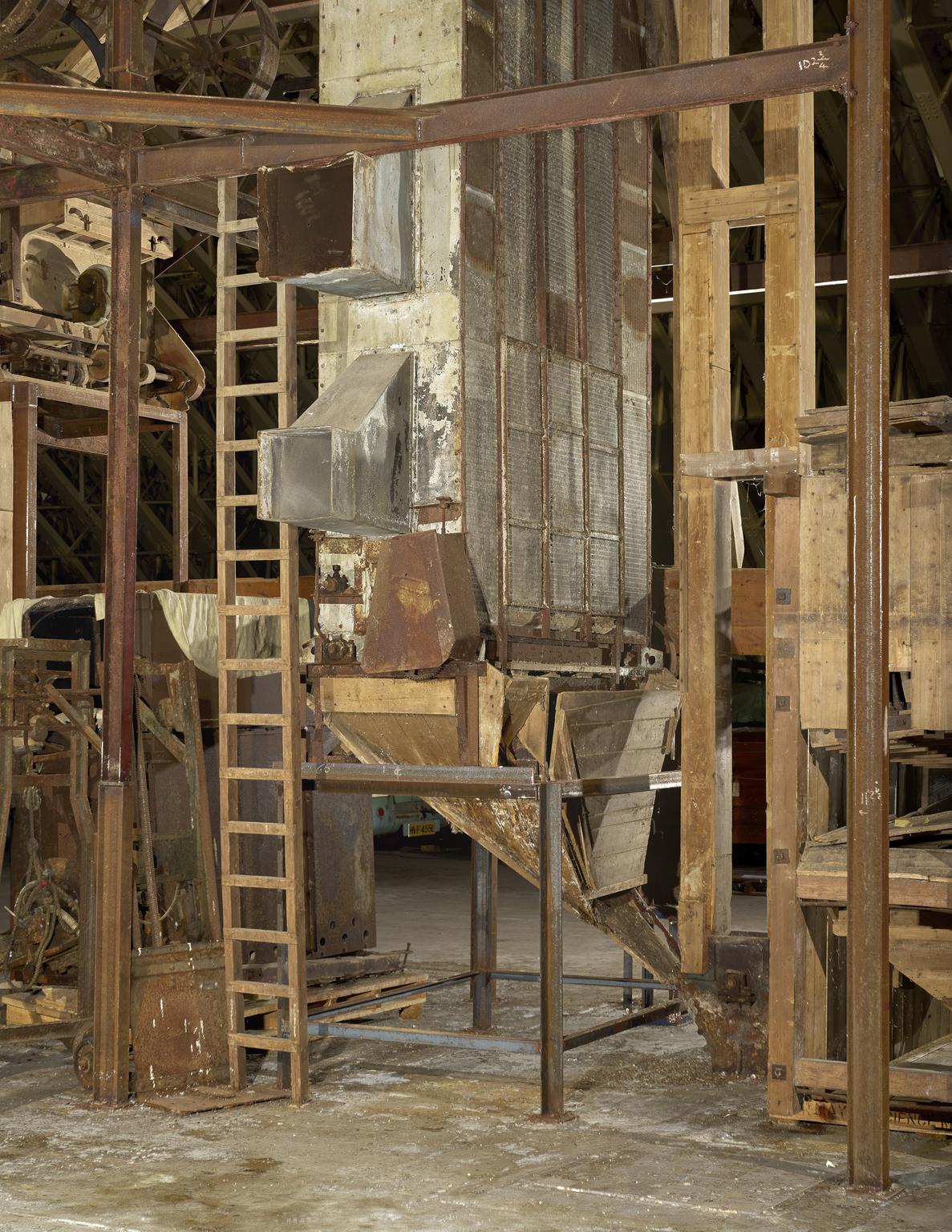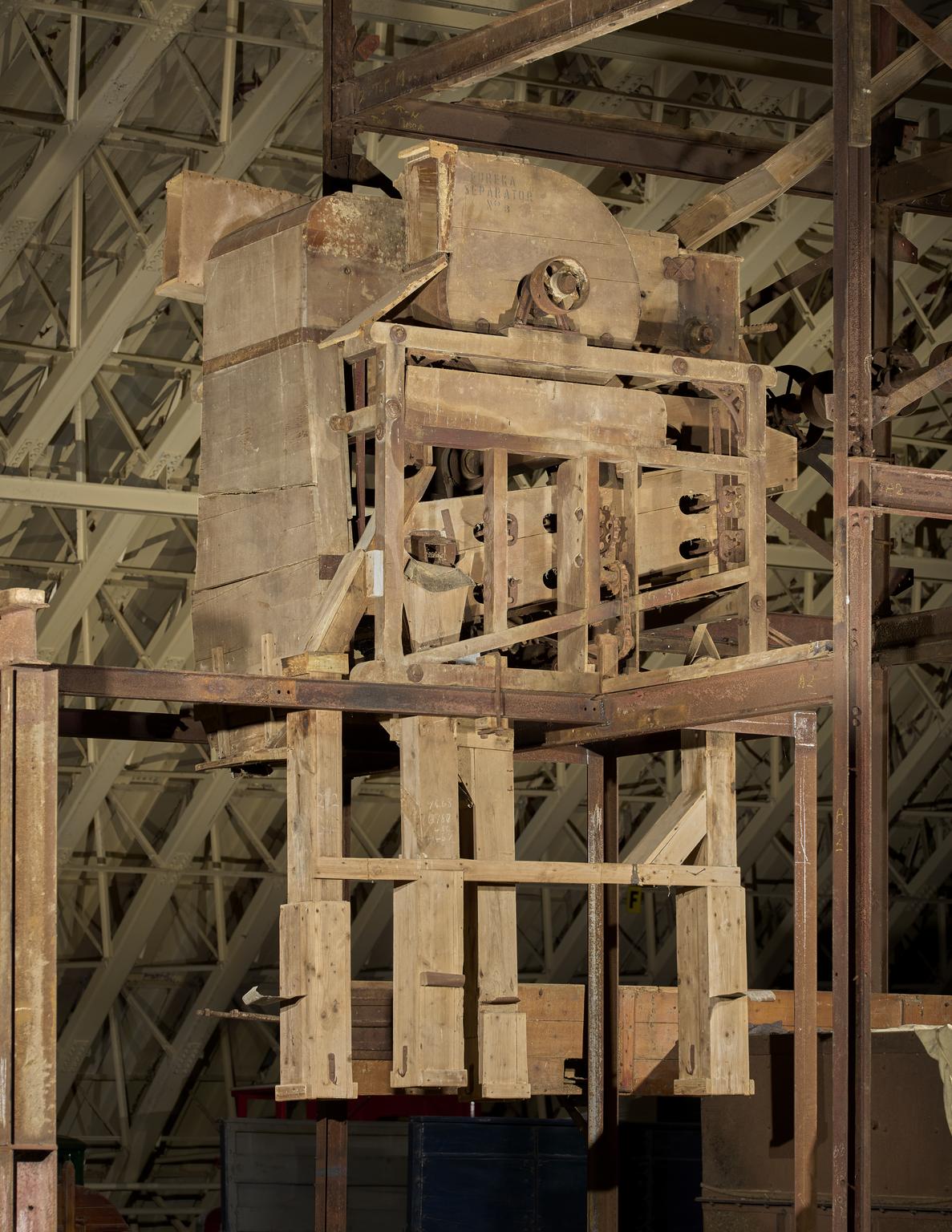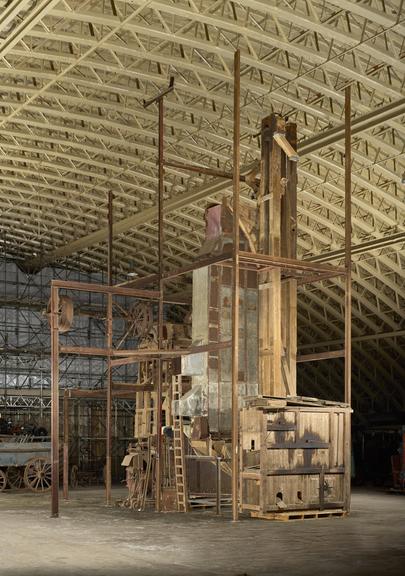
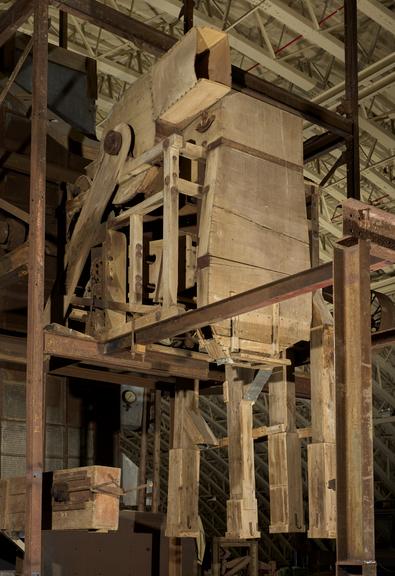
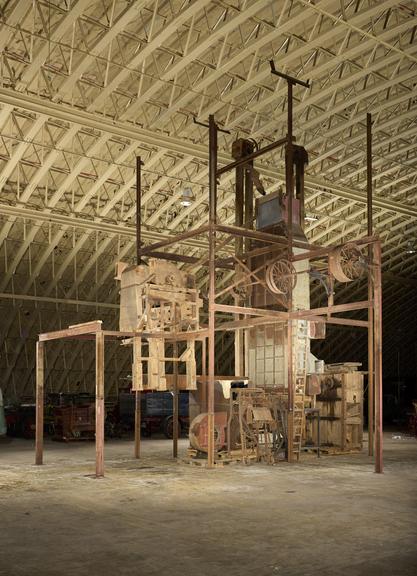
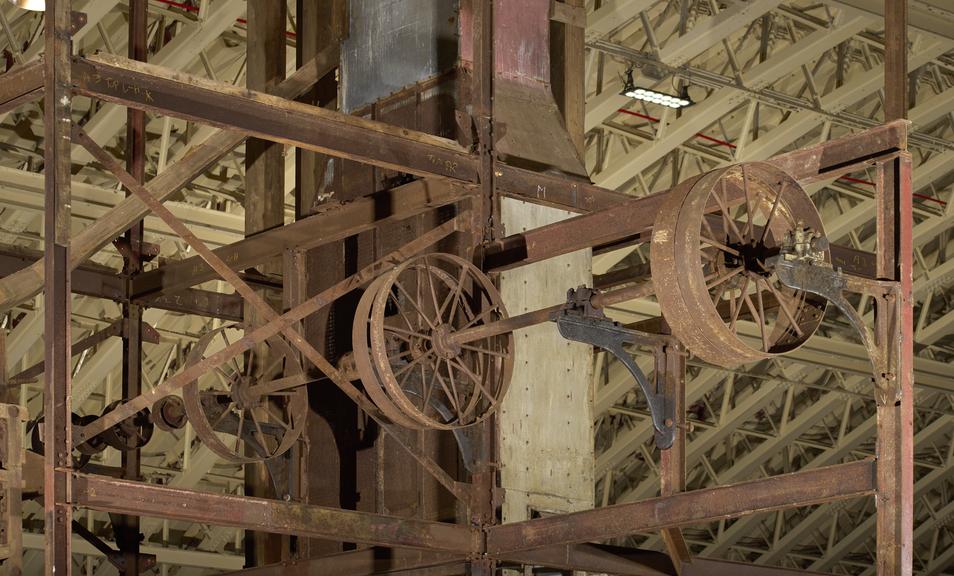
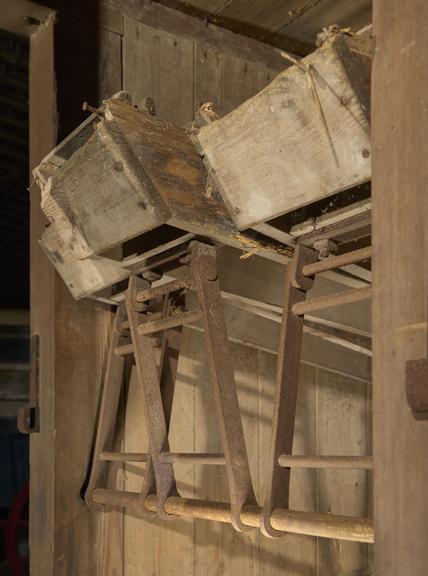
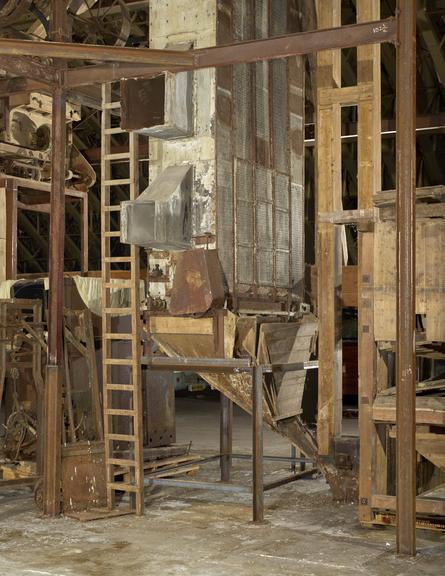
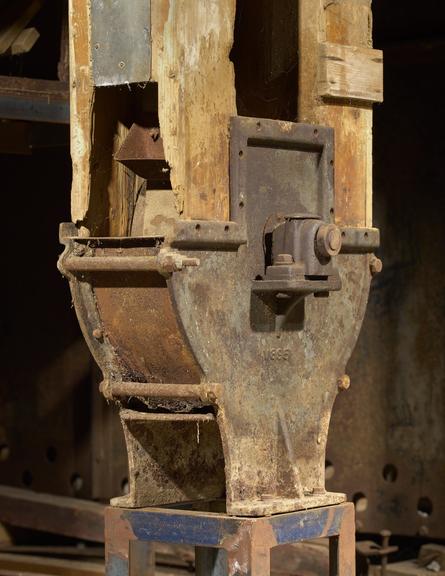
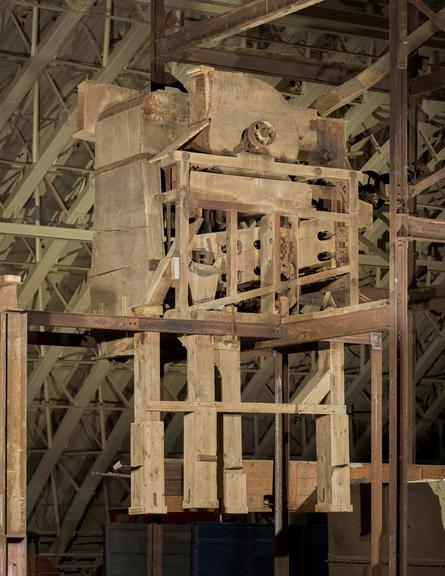
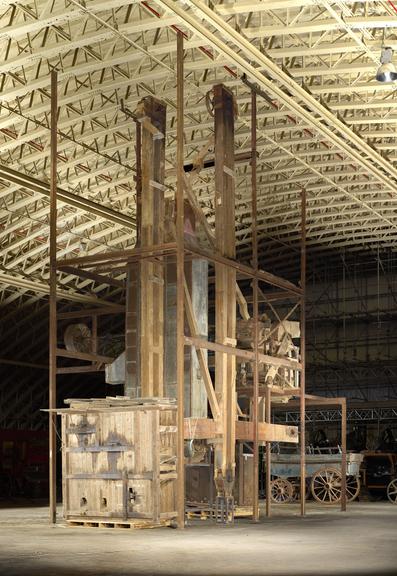

Grain dryer designed by Roland Dudley and built by E. R. & F. Turner of Ipswich in 1929

Made:
1929 in Ipswich
Grain dryer designed by Roland Dudley and built by E. R. & F. Turner of Ipswich in 1929 Grain dryer designed by Roland Dudley and built by E. R. & F. Turner of Ipswich in 1929 Grain dryer designed by Roland Dudley and built by E. R. & F. Turner of Ipswich in 1929 Grain dryer designed by Roland Dudley and built by E. R. & F. Turner of Ipswich in 1929 Grain dryer designed by Roland Dudley and built by E. R. & F. Turner of Ipswich in 1929 Grain dryer designed by Roland Dudley and built by E. R. & F. Turner of Ipswich in 1929 Grain dryer designed by Roland Dudley and built by E. R. & F. Turner of Ipswich in 1929 Grain dryer designed by Roland Dudley and built by E. R. & F. Turner of Ipswich in 1929 Grain dryer designed by Roland Dudley and built by E. R. & F. Turner of Ipswich in 1929

Creative Commons LicenseThis image is released under a CC BY-NC-SA 4.0 Licence

License this image for commercial use at Science and Society Picture Library

License

Creative Commons LicenseThis image is released under a CC BY-NC-SA 4.0 Licence

License this image for commercial use at Science and Society Picture Library

License

Creative Commons LicenseThis image is released under a CC BY-NC-SA 4.0 Licence

License this image for commercial use at Science and Society Picture Library

License

Creative Commons LicenseThis image is released under a CC BY-NC-SA 4.0 Licence

License this image for commercial use at Science and Society Picture Library

License

Creative Commons LicenseThis image is released under a CC BY-NC-SA 4.0 Licence

License this image for commercial use at Science and Society Picture Library

License

Creative Commons LicenseThis image is released under a CC BY-NC-SA 4.0 Licence

License this image for commercial use at Science and Society Picture Library

License

Creative Commons LicenseThis image is released under a CC BY-NC-SA 4.0 Licence

License this image for commercial use at Science and Society Picture Library

License

Creative Commons LicenseThis image is released under a CC BY-NC-SA 4.0 Licence

License this image for commercial use at Science and Society Picture Library

License

Creative Commons LicenseThis image is released under a CC BY-NC-SA 4.0 Licence

License this image for commercial use at Science and Society Picture Library

License

Science Museum Group
© The Board of Trustees of the Science Museum
Science Museum Group
© The Board of Trustees of the Science Museum
Science Museum Group
© The Board of Trustees of the Science Museum
Science Museum Group
© The Board of Trustees of the Science Museum

Science Museum Group
© The Board of Trustees of the Science Museum
Science Museum Group
© The Board of Trustees of the Science Museum
Science Museum Group
© The Board of Trustees of the Science Museum
Science Museum Group
© The Board of Trustees of the Science Museum
Science Museum Group
© The Board of Trustees of the Science Museum
Grain dryer designed by Roland Dudley and built by E. R. & F. Turner of Ipswich in 1929, for use at Linkenholt Manor in Hampshire in conjunction with a Holt combine-harvester. With associated spare parts

This grain dryer is one of first mechanised grain drying machines in the UK and possibly in Europe, and was designed by pioneering agricultural engineer Roland Dudley in 1930, as part of his quest to fully mechanise British farming practices.

In the 1920s Roland Dudley, a successful civil and army engineer, purchased the 1500-acre Linkenholt Manor estate in Hampshire for his family. In the late 1920s, one of his tenant farmers died in a farming accident, which inspired Roland Dudley to think about how he could reduce the labour intensity and lengthy work of traditional British farming. Borrowing from his experience as an engineer, Dudley realised the potential for mechanising farming practices using cutting edge machinery. In 1928 he purchased one of the first combine harvesters in the UK (shipped from the US) and was the first to put it to commercial use in for-profit farming.

The speed and efficiency of the combine harvester meant Dudley needed to find a way to dry the harvested grain at an equal speed to prevent bottlenecking his operation. He drew up his own designs for this 20-foot-high coke-furnace heated grain dryer which could be operated entirely by a single man, and had the machine built in 1930 by the Ipswich-based milling engineering company Turner Ltd.

The combine harvester matched with the Turner dryer was so successful that it reduced a season’s worth of work on the Linkenholt estate, into a process that only took a few days. In an anecdotal story, Roland Dudley supposedly demonstrated the impact of his innovations by harvesting, drying, milling, baking and eating a loaf of bread all within 24 hours. Dudley’s mechanisation strategy allowed him to endure during the 1930s recession, whilst estates around him struggled and shut down.

Whilst he was generally critiqued by his farming neighbours at the time, within a generation Roland Dudley’s pioneering farming practices were widely adopted across the country. Mechanisation of Britain’s agriculture was especially driven by the onset of WW2, during which Roland Dudley continued to champion his ideas as Vice-Chairman of Hampshire’s War Agricultural Executive Committee. Roland Dudley was awarded the OBE in 1958 for his working championing modern British farming practices.

Details

Category:
Agricultural Engineering
Object Number:
1997-1055
Materials:
wood (unidentified) and metal (unknown)
Measurements:
complete: 3400 x 9000 mm
type:
grain dryer
credit:
Linkenholt Manor Estate

Parts

Grain dryer designed by Roland Dudley and built by E. R. & F. Turner of Ipswich in 1929

Grain dryer designed by Roland Dudley and built by E. R. & F. Turner of Ipswich in 1929, for use at Linkenholt Manor in Hampshire in conjunction with a Holt combine-harvester.

More

This grain dryer is one of first mechanised grain drying machines in the UK and possibly in Europe, and was designed by pioneering agricultural engineer Roland Dudley in 1930, as part of his quest to fully mechanise British farming practices.

In the 1920s Roland Dudley, a successful civil and army engineer, purchased the 1500-acre Linkenholt Manor estate in Hampshire for his family. In the late 1920s, one of his tenant farmers died in a farming accident, which inspired Roland Dudley to think about how he could reduce the labour intensity and lengthy work of traditional British farming. Borrowing from his experience as an engineer, Dudley realised the potential for mechanising farming practices using cutting edge machinery. In 1928 he purchased one of the first combine harvesters in the UK (shipped from the US) and was the first to put it to commercial use in for-profit farming.

The speed and efficiency of the combine harvester meant Dudley needed to find a way to dry the harvested grain at an equal speed to prevent bottlenecking his operation. He drew up his own designs for this 20-foot-high coke-furnace heated grain dryer which could be operated entirely by a single man, and had the machine built in 1930 by the Ipswich-based milling engineering company Turner Ltd.

The combine harvester matched with the Turner dryer was so successful that it reduced a season’s worth of work on the Linkenholt estate, into a process that only took a few days. In an anecdotal story, Roland Dudley supposedly demonstrated the impact of his innovations by harvesting, drying, milling, baking and eating a loaf of bread all within 24 hours. Dudley’s mechanisation strategy allowed him to endure during the 1930s recession, whilst estates around him struggled and shut down.

Whilst he was generally critiqued by his farming neighbours at the time, within a generation Roland Dudley’s pioneering farming practices were widely adopted across the country. Mechanisation of Britain’s agriculture was especially driven by the onset of WW2, during which Roland Dudley continued to champion his ideas as Vice-Chairman of Hampshire’s War Agricultural Executive Committee. Roland Dudley was awarded the OBE in 1958 for his working championing modern British farming practices.

Measurements:
overall (including frame): 7840 mm x 2895 mm x 1500 mm,
Materials:
wood (unidentified) and metal (unknown)
Object Number:
1997-1055/1
type:
grain dryer
Image ©
The Board of Trustees of the Science Museum
Spare components associated with Grain dryer designed by Roland Dudley

Spare components associated with Grain dryer designed by Roland Dudley

Spare components associated with Grain dryer designed by Roland Dudley and built by E. R. & F. Turner of Ipswich in 1929, for use at Linkenholt Manor in Hampshire in conjunction with a Holt combine-harvester.

More

This grain dryer is one of first mechanised grain drying machines in the UK and possibly in Europe, and was designed by pioneering agricultural engineer Roland Dudley in 1930, as part of his quest to fully mechanise British farming practices.

In the 1920s Roland Dudley, a successful civil and army engineer, purchased the 1500-acre Linkenholt Manor estate in Hampshire for his family. In the late 1920s, one of his tenant farmers died in a farming accident, which inspired Roland Dudley to think about how he could reduce the labour intensity and lengthy work of traditional British farming. Borrowing from his experience as an engineer, Dudley realised the potential for mechanising farming practices using cutting edge machinery. In 1928 he purchased one of the first combine harvesters in the UK (shipped from the US) and was the first to put it to commercial use in for-profit farming.

The speed and efficiency of the combine harvester meant Dudley needed to find a way to dry the harvested grain at an equal speed to prevent bottlenecking his operation. He drew up his own designs for this 20-foot-high coke-furnace heated grain dryer which could be operated entirely by a single man, and had the machine built in 1930 by the Ipswich-based milling engineering company Turner Ltd.

The combine harvester matched with the Turner dryer was so successful that it reduced a season’s worth of work on the Linkenholt estate, into a process that only took a few days. In an anecdotal story, Roland Dudley supposedly demonstrated the impact of his innovations by harvesting, drying, milling, baking and eating a loaf of bread all within 24 hours. Dudley’s mechanisation strategy allowed him to endure during the 1930s recession, whilst estates around him struggled and shut down.

Whilst he was generally critiqued by his farming neighbours at the time, within a generation Roland Dudley’s pioneering farming practices were widely adopted across the country. Mechanisation of Britain’s agriculture was especially driven by the onset of WW2, during which Roland Dudley continued to champion his ideas as Vice-Chairman of Hampshire’s War Agricultural Executive Committee. Roland Dudley was awarded the OBE in 1958 for his working championing modern British farming practices.

Object Number:
1997-1055/2
type:
components
Fan and Pipe for Grain dryer

Fan and Pipe for Grain dryer

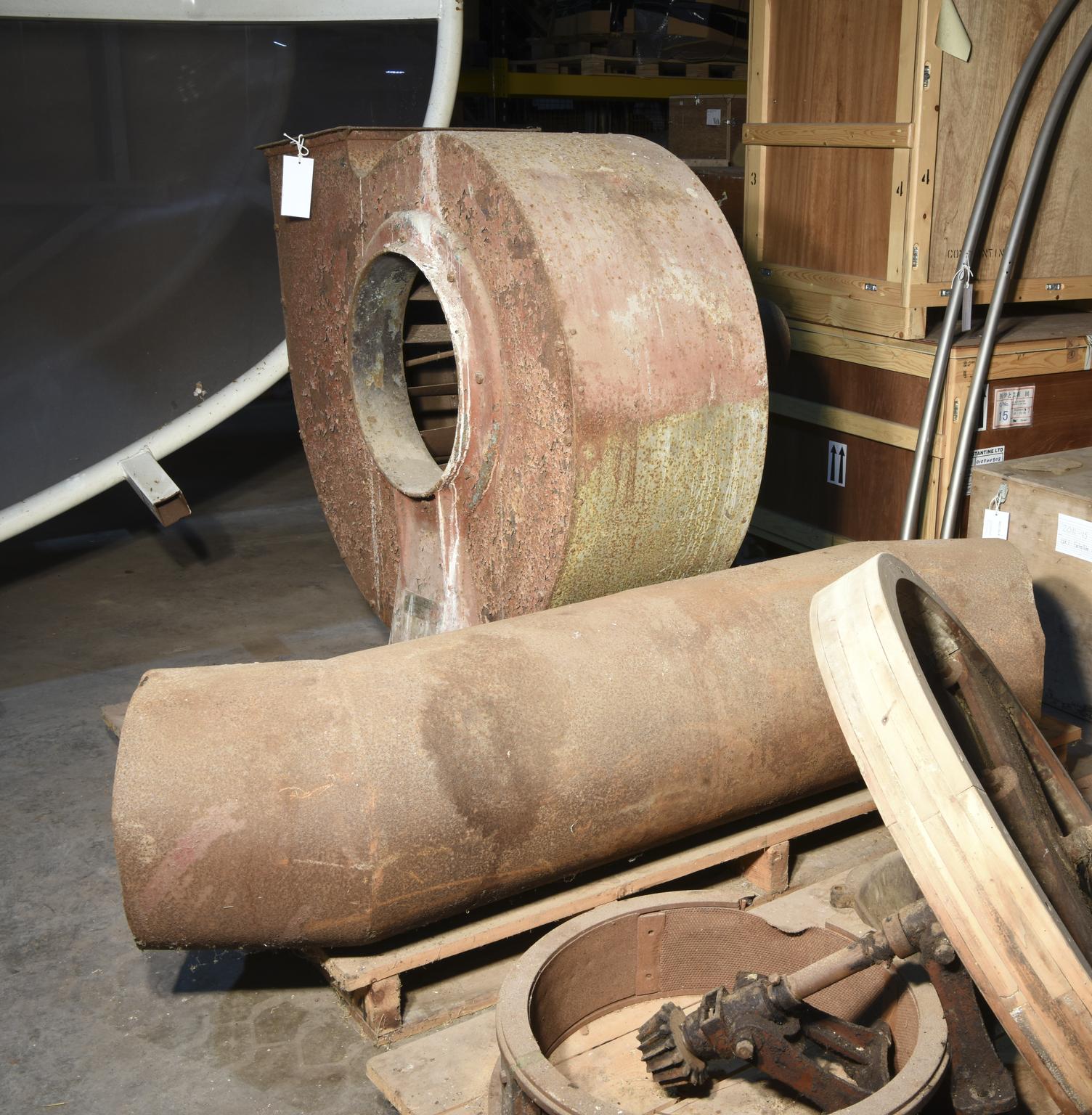
Fan in metal casing and a metal pipe for grain dryer designed by Roland Dudley.

More

This grain dryer is one of first mechanised grain drying machines in the UK and possibly in Europe, and was designed by pioneering agricultural engineer Roland Dudley in 1930, as part of his quest to fully mechanise British farming practices.

In the 1920s Roland Dudley, a successful civil and army engineer, purchased the 1500-acre Linkenholt Manor estate in Hampshire for his family. In the late 1920s, one of his tenant farmers died in a farming accident, which inspired Roland Dudley to think about how he could reduce the labour intensity and lengthy work of traditional British farming. Borrowing from his experience as an engineer, Dudley realised the potential for mechanising farming practices using cutting edge machinery. In 1928 he purchased one of the first combine harvesters in the UK (shipped from the US) and was the first to put it to commercial use in for-profit farming.

The speed and efficiency of the combine harvester meant Dudley needed to find a way to dry the harvested grain at an equal speed to prevent bottlenecking his operation. He drew up his own designs for this 20-foot-high coke-furnace heated grain dryer which could be operated entirely by a single man, and had the machine built in 1930 by the Ipswich-based milling engineering company Turner Ltd.

The combine harvester matched with the Turner dryer was so successful that it reduced a season’s worth of work on the Linkenholt estate, into a process that only took a few days. In an anecdotal story, Roland Dudley supposedly demonstrated the impact of his innovations by harvesting, drying, milling, baking and eating a loaf of bread all within 24 hours. Dudley’s mechanisation strategy allowed him to endure during the 1930s recession, whilst estates around him struggled and shut down.

Whilst he was generally critiqued by his farming neighbours at the time, within a generation Roland Dudley’s pioneering farming practices were widely adopted across the country. Mechanisation of Britain’s agriculture was especially driven by the onset of WW2, during which Roland Dudley continued to champion his ideas as Vice-Chairman of Hampshire’s War Agricultural Executive Committee. Roland Dudley was awarded the OBE in 1958 for his working championing modern British farming practices.

Measurements:
overall: 1320 mm x 1600 mm x 1930 mm, 478 kg
Materials:
metal (unknown)
Object Number:
1997-1055/2/1
type:
components
Image ©
The Board of Trustees of the Science Museum
Part of:
1997-1055/2
Fan for Grain dryer

Fan for Grain dryer

Fan in metal casing for grain dryer designed by Roland Dudley.

More

This grain dryer is one of first mechanised grain drying machines in the UK and possibly in Europe, and was designed by pioneering agricultural engineer Roland Dudley in 1930, as part of his quest to fully mechanise British farming practices.

In the 1920s Roland Dudley, a successful civil and army engineer, purchased the 1500-acre Linkenholt Manor estate in Hampshire for his family. In the late 1920s, one of his tenant farmers died in a farming accident, which inspired Roland Dudley to think about how he could reduce the labour intensity and lengthy work of traditional British farming. Borrowing from his experience as an engineer, Dudley realised the potential for mechanising farming practices using cutting edge machinery. In 1928 he purchased one of the first combine harvesters in the UK (shipped from the US) and was the first to put it to commercial use in for-profit farming.

The speed and efficiency of the combine harvester meant Dudley needed to find a way to dry the harvested grain at an equal speed to prevent bottlenecking his operation. He drew up his own designs for this 20-foot-high coke-furnace heated grain dryer which could be operated entirely by a single man, and had the machine built in 1930 by the Ipswich-based milling engineering company Turner Ltd.

The combine harvester matched with the Turner dryer was so successful that it reduced a season’s worth of work on the Linkenholt estate, into a process that only took a few days. In an anecdotal story, Roland Dudley supposedly demonstrated the impact of his innovations by harvesting, drying, milling, baking and eating a loaf of bread all within 24 hours. Dudley’s mechanisation strategy allowed him to endure during the 1930s recession, whilst estates around him struggled and shut down.

Whilst he was generally critiqued by his farming neighbours at the time, within a generation Roland Dudley’s pioneering farming practices were widely adopted across the country. Mechanisation of Britain’s agriculture was especially driven by the onset of WW2, during which Roland Dudley continued to champion his ideas as Vice-Chairman of Hampshire’s War Agricultural Executive Committee. Roland Dudley was awarded the OBE in 1958 for his working championing modern British farming practices.

Measurements:
overall: 1330 mm x 1270 mm x 1150 mm,
Materials:
metal (unknown)
Object Number:
1997-1055/2/1/1
type:
components
Part of:
1997-1055/2/1
Pipe for Grain dryer

Pipe for Grain dryer

Metal pipe for grain dryer designed by Roland Dudley.

More

This grain dryer is one of first mechanised grain drying machines in the UK and possibly in Europe, and was designed by pioneering agricultural engineer Roland Dudley in 1930, as part of his quest to fully mechanise British farming practices.

In the 1920s Roland Dudley, a successful civil and army engineer, purchased the 1500-acre Linkenholt Manor estate in Hampshire for his family. In the late 1920s, one of his tenant farmers died in a farming accident, which inspired Roland Dudley to think about how he could reduce the labour intensity and lengthy work of traditional British farming. Borrowing from his experience as an engineer, Dudley realised the potential for mechanising farming practices using cutting edge machinery. In 1928 he purchased one of the first combine harvesters in the UK (shipped from the US) and was the first to put it to commercial use in for-profit farming.

The speed and efficiency of the combine harvester meant Dudley needed to find a way to dry the harvested grain at an equal speed to prevent bottlenecking his operation. He drew up his own designs for this 20-foot-high coke-furnace heated grain dryer which could be operated entirely by a single man, and had the machine built in 1930 by the Ipswich-based milling engineering company Turner Ltd.

The combine harvester matched with the Turner dryer was so successful that it reduced a season’s worth of work on the Linkenholt estate, into a process that only took a few days. In an anecdotal story, Roland Dudley supposedly demonstrated the impact of his innovations by harvesting, drying, milling, baking and eating a loaf of bread all within 24 hours. Dudley’s mechanisation strategy allowed him to endure during the 1930s recession, whilst estates around him struggled and shut down.

Whilst he was generally critiqued by his farming neighbours at the time, within a generation Roland Dudley’s pioneering farming practices were widely adopted across the country. Mechanisation of Britain’s agriculture was especially driven by the onset of WW2, during which Roland Dudley continued to champion his ideas as Vice-Chairman of Hampshire’s War Agricultural Executive Committee. Roland Dudley was awarded the OBE in 1958 for his working championing modern British farming practices.

Measurements:
overall: 460 mm x 1790 mm x 530 mm,
Materials:
metal (unknown)
Object Number:
1997-1055/2/1/2
type:
components
Part of:
1997-1055/2/1
Components for Grain dryer

Components for Grain dryer

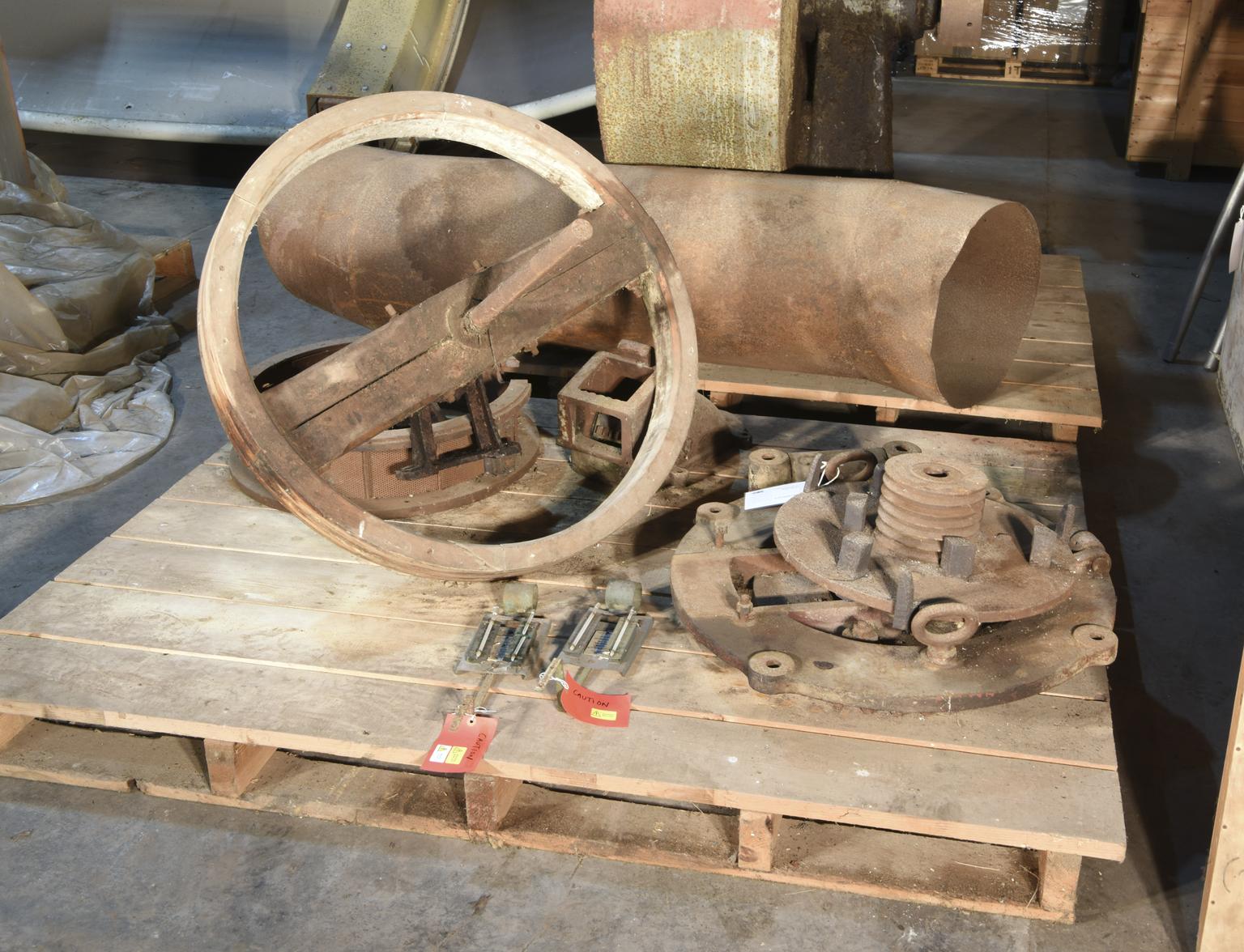
Two metal brackets each with two thermometers, wooden wheel with metal axle fitting, metal ring with mesh lining, hinged cast iron disc, cast iron disc mounted with ribbed cylinder, metal casing with toothed wooden block inside; for grain dryer designed by Roland Dudley.

More

This grain dryer is one of first mechanised grain drying machines in the UK and possibly in Europe, and was designed by pioneering agricultural engineer Roland Dudley in 1930, as part of his quest to fully mechanise British farming practices.

In the 1920s Roland Dudley, a successful civil and army engineer, purchased the 1500-acre Linkenholt Manor estate in Hampshire for his family. In the late 1920s, one of his tenant farmers died in a farming accident, which inspired Roland Dudley to think about how he could reduce the labour intensity and lengthy work of traditional British farming. Borrowing from his experience as an engineer, Dudley realised the potential for mechanising farming practices using cutting edge machinery. In 1928 he purchased one of the first combine harvesters in the UK (shipped from the US) and was the first to put it to commercial use in for-profit farming.

The speed and efficiency of the combine harvester meant Dudley needed to find a way to dry the harvested grain at an equal speed to prevent bottlenecking his operation. He drew up his own designs for this 20-foot-high coke-furnace heated grain dryer which could be operated entirely by a single man, and had the machine built in 1930 by the Ipswich-based milling engineering company Turner Ltd.

The combine harvester matched with the Turner dryer was so successful that it reduced a season’s worth of work on the Linkenholt estate, into a process that only took a few days. In an anecdotal story, Roland Dudley supposedly demonstrated the impact of his innovations by harvesting, drying, milling, baking and eating a loaf of bread all within 24 hours. Dudley’s mechanisation strategy allowed him to endure during the 1930s recession, whilst estates around him struggled and shut down.

Whilst he was generally critiqued by his farming neighbours at the time, within a generation Roland Dudley’s pioneering farming practices were widely adopted across the country. Mechanisation of Britain’s agriculture was especially driven by the onset of WW2, during which Roland Dudley continued to champion his ideas as Vice-Chairman of Hampshire’s War Agricultural Executive Committee. Roland Dudley was awarded the OBE in 1958 for his working championing modern British farming practices.

Measurements:
overall: 810 mm x 1770 mm x 1220 mm, 297 kg
Materials:
metal (unknown) , wood (unidentified) and cast iron
Object Number:
1997-1055/2/2
type:
components
Image ©
The Board of Trustees of the Science Museum
Part of:
1997-1055/2
Thermometer Components for Grain Dryer

Thermometer Components for Grain Dryer

Two metal brackets each with two thermometers for grain dryer designed by Roland Dudley.

More

This grain dryer is one of first mechanised grain drying machines in the UK and possibly in Europe, and was designed by pioneering agricultural engineer Roland Dudley in 1930, as part of his quest to fully mechanise British farming practices.

In the 1920s Roland Dudley, a successful civil and army engineer, purchased the 1500-acre Linkenholt Manor estate in Hampshire for his family. In the late 1920s, one of his tenant farmers died in a farming accident, which inspired Roland Dudley to think about how he could reduce the labour intensity and lengthy work of traditional British farming. Borrowing from his experience as an engineer, Dudley realised the potential for mechanising farming practices using cutting edge machinery. In 1928 he purchased one of the first combine harvesters in the UK (shipped from the US) and was the first to put it to commercial use in for-profit farming.

The speed and efficiency of the combine harvester meant Dudley needed to find a way to dry the harvested grain at an equal speed to prevent bottlenecking his operation. He drew up his own designs for this 20-foot-high coke-furnace heated grain dryer which could be operated entirely by a single man, and had the machine built in 1930 by the Ipswich-based milling engineering company Turner Ltd.

The combine harvester matched with the Turner dryer was so successful that it reduced a season’s worth of work on the Linkenholt estate, into a process that only took a few days. In an anecdotal story, Roland Dudley supposedly demonstrated the impact of his innovations by harvesting, drying, milling, baking and eating a loaf of bread all within 24 hours. Dudley’s mechanisation strategy allowed him to endure during the 1930s recession, whilst estates around him struggled and shut down.

Whilst he was generally critiqued by his farming neighbours at the time, within a generation Roland Dudley’s pioneering farming practices were widely adopted across the country. Mechanisation of Britain’s agriculture was especially driven by the onset of WW2, during which Roland Dudley continued to champion his ideas as Vice-Chairman of Hampshire’s War Agricultural Executive Committee. Roland Dudley was awarded the OBE in 1958 for his working championing modern British farming practices.

Object Number:
1997-1055/2/2/1
type:
thermometer
Part of:
1997-1055/2/2
Components for Grain dryer

Components for Grain dryer

Wooden wheel with metal axle fitting, metal ring with mesh lining, hinged cast iron disc, cast iron disc mounted with ribbed cylinder, metal casing with toothed wooden block inside; for grain dryer designed by Roland Dudley.

More

This grain dryer is one of first mechanised grain drying machines in the UK and possibly in Europe, and was designed by pioneering agricultural engineer Roland Dudley in 1930, as part of his quest to fully mechanise British farming practices.

In the 1920s Roland Dudley, a successful civil and army engineer, purchased the 1500-acre Linkenholt Manor estate in Hampshire for his family. In the late 1920s, one of his tenant farmers died in a farming accident, which inspired Roland Dudley to think about how he could reduce the labour intensity and lengthy work of traditional British farming. Borrowing from his experience as an engineer, Dudley realised the potential for mechanising farming practices using cutting edge machinery. In 1928 he purchased one of the first combine harvesters in the UK (shipped from the US) and was the first to put it to commercial use in for-profit farming.

The speed and efficiency of the combine harvester meant Dudley needed to find a way to dry the harvested grain at an equal speed to prevent bottlenecking his operation. He drew up his own designs for this 20-foot-high coke-furnace heated grain dryer which could be operated entirely by a single man, and had the machine built in 1930 by the Ipswich-based milling engineering company Turner Ltd.

The combine harvester matched with the Turner dryer was so successful that it reduced a season’s worth of work on the Linkenholt estate, into a process that only took a few days. In an anecdotal story, Roland Dudley supposedly demonstrated the impact of his innovations by harvesting, drying, milling, baking and eating a loaf of bread all within 24 hours. Dudley’s mechanisation strategy allowed him to endure during the 1930s recession, whilst estates around him struggled and shut down.

Whilst he was generally critiqued by his farming neighbours at the time, within a generation Roland Dudley’s pioneering farming practices were widely adopted across the country. Mechanisation of Britain’s agriculture was especially driven by the onset of WW2, during which Roland Dudley continued to champion his ideas as Vice-Chairman of Hampshire’s War Agricultural Executive Committee. Roland Dudley was awarded the OBE in 1958 for his working championing modern British farming practices.

Measurements:
overall: 810 mm x 1770 mm x 1220 mm, 297 kg
Object Number:
1997-1055/2/2/2
type:
components
Image ©
The Board of Trustees of the Science Museum
Part of:
1997-1055/2/2
Furnace for grain dryer designed by Roland Dudley and built by E. R. & F. Turner of Ipswich in 1929

Furnace for grain dryer designed by Roland Dudley and built by E. R. & F. Turner of Ipswich in 1929

Furnace for grain dryer designed by Roland Dudley and built by E. R. & F. Turner of Ipswich in 1929, for use at Linkenholt Manor in Hampshire in conjunction with a Holt combine-harvester. With associated spare parts

More

This grain dryer is one of first mechanised grain drying machines in the UK and possibly in Europe, and was designed by pioneering agricultural engineer Roland Dudley in 1930, as part of his quest to fully mechanise British farming practices.

In the 1920s Roland Dudley, a successful civil and army engineer, purchased the 1500-acre Linkenholt Manor estate in Hampshire for his family. In the late 1920s, one of his tenant farmers died in a farming accident, which inspired Roland Dudley to think about how he could reduce the labour intensity and lengthy work of traditional British farming. Borrowing from his experience as an engineer, Dudley realised the potential for mechanising farming practices using cutting edge machinery. In 1928 he purchased one of the first combine harvesters in the UK (shipped from the US) and was the first to put it to commercial use in for-profit farming.

The speed and efficiency of the combine harvester meant Dudley needed to find a way to dry the harvested grain at an equal speed to prevent bottlenecking his operation. He drew up his own designs for this 20-foot-high coke-furnace heated grain dryer which could be operated entirely by a single man, and had the machine built in 1930 by the Ipswich-based milling engineering company Turner Ltd.

The combine harvester matched with the Turner dryer was so successful that it reduced a season’s worth of work on the Linkenholt estate, into a process that only took a few days. In an anecdotal story, Roland Dudley supposedly demonstrated the impact of his innovations by harvesting, drying, milling, baking and eating a loaf of bread all within 24 hours. Dudley’s mechanisation strategy allowed him to endure during the 1930s recession, whilst estates around him struggled and shut down.

Whilst he was generally critiqued by his farming neighbours at the time, within a generation Roland Dudley’s pioneering farming practices were widely adopted across the country. Mechanisation of Britain’s agriculture was especially driven by the onset of WW2, during which Roland Dudley continued to champion his ideas as Vice-Chairman of Hampshire’s War Agricultural Executive Committee. Roland Dudley was awarded the OBE in 1958 for his working championing modern British farming practices.

Measurements:
complete: 3400 x 9000 mm
overall (on pallet): 2220 mm x 1480 mm x 2520 mm,
Object Number:
1997-1055/4
type:
grain dryer
No.3 fan (cold air) for grain dryer designed by Roland Dudley and built by E. R. & F

No.3 fan (cold air) for grain dryer designed by Roland Dudley and built by E. R. & F

No.3 fan (cold air) for grain dryer designed by Roland Dudley and built by E. R. & F. Turner of Ipswich in 1929, for use at Linkenholt Manor in Hampshire in conjunction with a Holt combine-harvester. With associated spare parts

More

This grain dryer is one of first mechanised grain drying machines in the UK and possibly in Europe, and was designed by pioneering agricultural engineer Roland Dudley in 1930, as part of his quest to fully mechanise British farming practices.

In the 1920s Roland Dudley, a successful civil and army engineer, purchased the 1500-acre Linkenholt Manor estate in Hampshire for his family. In the late 1920s, one of his tenant farmers died in a farming accident, which inspired Roland Dudley to think about how he could reduce the labour intensity and lengthy work of traditional British farming. Borrowing from his experience as an engineer, Dudley realised the potential for mechanising farming practices using cutting edge machinery. In 1928 he purchased one of the first combine harvesters in the UK (shipped from the US) and was the first to put it to commercial use in for-profit farming.

The speed and efficiency of the combine harvester meant Dudley needed to find a way to dry the harvested grain at an equal speed to prevent bottlenecking his operation. He drew up his own designs for this 20-foot-high coke-furnace heated grain dryer which could be operated entirely by a single man, and had the machine built in 1930 by the Ipswich-based milling engineering company Turner Ltd.

The combine harvester matched with the Turner dryer was so successful that it reduced a season’s worth of work on the Linkenholt estate, into a process that only took a few days. In an anecdotal story, Roland Dudley supposedly demonstrated the impact of his innovations by harvesting, drying, milling, baking and eating a loaf of bread all within 24 hours. Dudley’s mechanisation strategy allowed him to endure during the 1930s recession, whilst estates around him struggled and shut down.

Whilst he was generally critiqued by his farming neighbours at the time, within a generation Roland Dudley’s pioneering farming practices were widely adopted across the country. Mechanisation of Britain’s agriculture was especially driven by the onset of WW2, during which Roland Dudley continued to champion his ideas as Vice-Chairman of Hampshire’s War Agricultural Executive Committee. Roland Dudley was awarded the OBE in 1958 for his working championing modern British farming practices.

Measurements:
overall: 1200 mm x 830 mm x 1000 mm,
complete: 3400 x 9000 mm
Object Number:
1997-1055/5
type:
fan
‘Eureka’ grain cleaner and shutes for grain dryer designed by Roland Dudley

‘Eureka’ grain cleaner and shutes for grain dryer designed by Roland Dudley

‘Eureka’ grain cleaner and shutes for grain dryer designed by Roland Dudley and built by E. R. & F. Turner of Ipswich in 1929, for use at Linkenholt Manor in Hampshire in conjunction with a Holt combine-harvester. With associated spare parts

More

This grain dryer is one of first mechanised grain drying machines in the UK and possibly in Europe, and was designed by pioneering agricultural engineer Roland Dudley in 1930, as part of his quest to fully mechanise British farming practices.

In the 1920s Roland Dudley, a successful civil and army engineer, purchased the 1500-acre Linkenholt Manor estate in Hampshire for his family. In the late 1920s, one of his tenant farmers died in a farming accident, which inspired Roland Dudley to think about how he could reduce the labour intensity and lengthy work of traditional British farming. Borrowing from his experience as an engineer, Dudley realised the potential for mechanising farming practices using cutting edge machinery. In 1928 he purchased one of the first combine harvesters in the UK (shipped from the US) and was the first to put it to commercial use in for-profit farming.

The speed and efficiency of the combine harvester meant Dudley needed to find a way to dry the harvested grain at an equal speed to prevent bottlenecking his operation. He drew up his own designs for this 20-foot-high coke-furnace heated grain dryer which could be operated entirely by a single man, and had the machine built in 1930 by the Ipswich-based milling engineering company Turner Ltd.

The combine harvester matched with the Turner dryer was so successful that it reduced a season’s worth of work on the Linkenholt estate, into a process that only took a few days. In an anecdotal story, Roland Dudley supposedly demonstrated the impact of his innovations by harvesting, drying, milling, baking and eating a loaf of bread all within 24 hours. Dudley’s mechanisation strategy allowed him to endure during the 1930s recession, whilst estates around him struggled and shut down.

Whilst he was generally critiqued by his farming neighbours at the time, within a generation Roland Dudley’s pioneering farming practices were widely adopted across the country. Mechanisation of Britain’s agriculture was especially driven by the onset of WW2, during which Roland Dudley continued to champion his ideas as Vice-Chairman of Hampshire’s War Agricultural Executive Committee. Roland Dudley was awarded the OBE in 1958 for his working championing modern British farming practices.

Measurements:
complete: 3400 x 9000 mm
Object Number:
1997-1055/6
type:
grain cleaner
‘Eureka’ grain cleaner for grain dryer designed by Roland Dudley

‘Eureka’ grain cleaner for grain dryer designed by Roland Dudley

‘Eureka’ grain cleaner for grain dryer designed by Roland Dudley and built by E. R. & F. Turner of Ipswich in 1929, for use at Linkenholt Manor in Hampshire in conjunction with a Holt combine-harvester.

More

This grain dryer is one of first mechanised grain drying machines in the UK and possibly in Europe, and was designed by pioneering agricultural engineer Roland Dudley in 1930, as part of his quest to fully mechanise British farming practices.

In the 1920s Roland Dudley, a successful civil and army engineer, purchased the 1500-acre Linkenholt Manor estate in Hampshire for his family. In the late 1920s, one of his tenant farmers died in a farming accident, which inspired Roland Dudley to think about how he could reduce the labour intensity and lengthy work of traditional British farming. Borrowing from his experience as an engineer, Dudley realised the potential for mechanising farming practices using cutting edge machinery. In 1928 he purchased one of the first combine harvesters in the UK (shipped from the US) and was the first to put it to commercial use in for-profit farming.

The speed and efficiency of the combine harvester meant Dudley needed to find a way to dry the harvested grain at an equal speed to prevent bottlenecking his operation. He drew up his own designs for this 20-foot-high coke-furnace heated grain dryer which could be operated entirely by a single man, and had the machine built in 1930 by the Ipswich-based milling engineering company Turner Ltd.

The combine harvester matched with the Turner dryer was so successful that it reduced a season’s worth of work on the Linkenholt estate, into a process that only took a few days. In an anecdotal story, Roland Dudley supposedly demonstrated the impact of his innovations by harvesting, drying, milling, baking and eating a loaf of bread all within 24 hours. Dudley’s mechanisation strategy allowed him to endure during the 1930s recession, whilst estates around him struggled and shut down.

Whilst he was generally critiqued by his farming neighbours at the time, within a generation Roland Dudley’s pioneering farming practices were widely adopted across the country. Mechanisation of Britain’s agriculture was especially driven by the onset of WW2, during which Roland Dudley continued to champion his ideas as Vice-Chairman of Hampshire’s War Agricultural Executive Committee. Roland Dudley was awarded the OBE in 1958 for his working championing modern British farming practices.

Measurements:
complete: 3400 x 9000 mm
overall (on pallet): 2110 mm x 1560 mm x 2240 mm,
Object Number:
1997-1055/6/1
type:
grain cleaner
Part of:
1997-1055/6
Shutes from ‘Eureka’ grain cleaner for grain dryer designed by Roland Dudley

Shutes from ‘Eureka’ grain cleaner for grain dryer designed by Roland Dudley

Shutes for ‘Eureka’ grain cleaner for grain dryer designed by Roland Dudley and built by E. R. & F. Turner of Ipswich in 1929, for use at Linkenholt Manor in Hampshire in conjunction with a Holt combine-harvester. With associated spare parts

More

This grain dryer is one of first mechanised grain drying machines in the UK and possibly in Europe, and was designed by pioneering agricultural engineer Roland Dudley in 1930, as part of his quest to fully mechanise British farming practices.

In the 1920s Roland Dudley, a successful civil and army engineer, purchased the 1500-acre Linkenholt Manor estate in Hampshire for his family. In the late 1920s, one of his tenant farmers died in a farming accident, which inspired Roland Dudley to think about how he could reduce the labour intensity and lengthy work of traditional British farming. Borrowing from his experience as an engineer, Dudley realised the potential for mechanising farming practices using cutting edge machinery. In 1928 he purchased one of the first combine harvesters in the UK (shipped from the US) and was the first to put it to commercial use in for-profit farming.

The speed and efficiency of the combine harvester meant Dudley needed to find a way to dry the harvested grain at an equal speed to prevent bottlenecking his operation. He drew up his own designs for this 20-foot-high coke-furnace heated grain dryer which could be operated entirely by a single man, and had the machine built in 1930 by the Ipswich-based milling engineering company Turner Ltd.

The combine harvester matched with the Turner dryer was so successful that it reduced a season’s worth of work on the Linkenholt estate, into a process that only took a few days. In an anecdotal story, Roland Dudley supposedly demonstrated the impact of his innovations by harvesting, drying, milling, baking and eating a loaf of bread all within 24 hours. Dudley’s mechanisation strategy allowed him to endure during the 1930s recession, whilst estates around him struggled and shut down.

Whilst he was generally critiqued by his farming neighbours at the time, within a generation Roland Dudley’s pioneering farming practices were widely adopted across the country. Mechanisation of Britain’s agriculture was especially driven by the onset of WW2, during which Roland Dudley continued to champion his ideas as Vice-Chairman of Hampshire’s War Agricultural Executive Committee. Roland Dudley was awarded the OBE in 1958 for his working championing modern British farming practices.

Measurements:
overall: 820 mm x 2230 mm x 1220 mm,
complete:
Object Number:
1997-1055/6/2
type:
shutes
Part of:
1997-1055/6
Elevator for Grain dryer designed by Roland Dudley

Elevator for Grain dryer designed by Roland Dudley

Elevator and associated pulley for grain dryer designed by Roland Dudley and built by E. R. & F. Turner of Ipswich in 1929, for use at Linkenholt Manor in Hampshire in conjunction with a Holt combine-harvester. With associated spare parts

More

This grain dryer is one of first mechanised grain drying machines in the UK and possibly in Europe, and was designed by pioneering agricultural engineer Roland Dudley in 1930, as part of his quest to fully mechanise British farming practices.

In the 1920s Roland Dudley, a successful civil and army engineer, purchased the 1500-acre Linkenholt Manor estate in Hampshire for his family. In the late 1920s, one of his tenant farmers died in a farming accident, which inspired Roland Dudley to think about how he could reduce the labour intensity and lengthy work of traditional British farming. Borrowing from his experience as an engineer, Dudley realised the potential for mechanising farming practices using cutting edge machinery. In 1928 he purchased one of the first combine harvesters in the UK (shipped from the US) and was the first to put it to commercial use in for-profit farming.

The speed and efficiency of the combine harvester meant Dudley needed to find a way to dry the harvested grain at an equal speed to prevent bottlenecking his operation. He drew up his own designs for this 20-foot-high coke-furnace heated grain dryer which could be operated entirely by a single man, and had the machine built in 1930 by the Ipswich-based milling engineering company Turner Ltd.

The combine harvester matched with the Turner dryer was so successful that it reduced a season’s worth of work on the Linkenholt estate, into a process that only took a few days. In an anecdotal story, Roland Dudley supposedly demonstrated the impact of his innovations by harvesting, drying, milling, baking and eating a loaf of bread all within 24 hours. Dudley’s mechanisation strategy allowed him to endure during the 1930s recession, whilst estates around him struggled and shut down.

Whilst he was generally critiqued by his farming neighbours at the time, within a generation Roland Dudley’s pioneering farming practices were widely adopted across the country. Mechanisation of Britain’s agriculture was especially driven by the onset of WW2, during which Roland Dudley continued to champion his ideas as Vice-Chairman of Hampshire’s War Agricultural Executive Committee. Roland Dudley was awarded the OBE in 1958 for his working championing modern British farming practices.

Measurements:
complete: 3400 x 9000 mm
Object Number:
1997-1055/7
type:
elevator
Elevator for Grain dryer designed by Roland Dudley

Elevator for Grain dryer designed by Roland Dudley

Elevator for grain dryer designed by Roland Dudley and built by E. R. & F. Turner of Ipswich in 1929, for use at Linkenholt Manor in Hampshire in conjunction with a Holt combine-harvester.

More

This grain dryer is one of first mechanised grain drying machines in the UK and possibly in Europe, and was designed by pioneering agricultural engineer Roland Dudley in 1930, as part of his quest to fully mechanise British farming practices.

In the 1920s Roland Dudley, a successful civil and army engineer, purchased the 1500-acre Linkenholt Manor estate in Hampshire for his family. In the late 1920s, one of his tenant farmers died in a farming accident, which inspired Roland Dudley to think about how he could reduce the labour intensity and lengthy work of traditional British farming. Borrowing from his experience as an engineer, Dudley realised the potential for mechanising farming practices using cutting edge machinery. In 1928 he purchased one of the first combine harvesters in the UK (shipped from the US) and was the first to put it to commercial use in for-profit farming.

The speed and efficiency of the combine harvester meant Dudley needed to find a way to dry the harvested grain at an equal speed to prevent bottlenecking his operation. He drew up his own designs for this 20-foot-high coke-furnace heated grain dryer which could be operated entirely by a single man, and had the machine built in 1930 by the Ipswich-based milling engineering company Turner Ltd.

The combine harvester matched with the Turner dryer was so successful that it reduced a season’s worth of work on the Linkenholt estate, into a process that only took a few days. In an anecdotal story, Roland Dudley supposedly demonstrated the impact of his innovations by harvesting, drying, milling, baking and eating a loaf of bread all within 24 hours. Dudley’s mechanisation strategy allowed him to endure during the 1930s recession, whilst estates around him struggled and shut down.

Whilst he was generally critiqued by his farming neighbours at the time, within a generation Roland Dudley’s pioneering farming practices were widely adopted across the country. Mechanisation of Britain’s agriculture was especially driven by the onset of WW2, during which Roland Dudley continued to champion his ideas as Vice-Chairman of Hampshire’s War Agricultural Executive Committee. Roland Dudley was awarded the OBE in 1958 for his working championing modern British farming practices.

Measurements:
overall: 9120 mm x 800 mm x 1200 mm,
complete: 3400 x 9000 mm
Object Number:
1997-1055/7/1
type:
elevator
Part of:
1997-1055/7
Pulley from Elevator for Grain dryer designed by Roland Dudley

Pulley from Elevator for Grain dryer designed by Roland Dudley

Pulley from Elevator for grain dryer designed by Roland Dudley and built by E. R. & F. Turner of Ipswich in 1929, for use at Linkenholt Manor in Hampshire in conjunction with a Holt combine-harvester.

More

This grain dryer is one of first mechanised grain drying machines in the UK and possibly in Europe, and was designed by pioneering agricultural engineer Roland Dudley in 1930, as part of his quest to fully mechanise British farming practices.

In the 1920s Roland Dudley, a successful civil and army engineer, purchased the 1500-acre Linkenholt Manor estate in Hampshire for his family. In the late 1920s, one of his tenant farmers died in a farming accident, which inspired Roland Dudley to think about how he could reduce the labour intensity and lengthy work of traditional British farming. Borrowing from his experience as an engineer, Dudley realised the potential for mechanising farming practices using cutting edge machinery. In 1928 he purchased one of the first combine harvesters in the UK (shipped from the US) and was the first to put it to commercial use in for-profit farming.

The speed and efficiency of the combine harvester meant Dudley needed to find a way to dry the harvested grain at an equal speed to prevent bottlenecking his operation. He drew up his own designs for this 20-foot-high coke-furnace heated grain dryer which could be operated entirely by a single man, and had the machine built in 1930 by the Ipswich-based milling engineering company Turner Ltd.

The combine harvester matched with the Turner dryer was so successful that it reduced a season’s worth of work on the Linkenholt estate, into a process that only took a few days. In an anecdotal story, Roland Dudley supposedly demonstrated the impact of his innovations by harvesting, drying, milling, baking and eating a loaf of bread all within 24 hours. Dudley’s mechanisation strategy allowed him to endure during the 1930s recession, whilst estates around him struggled and shut down.

Whilst he was generally critiqued by his farming neighbours at the time, within a generation Roland Dudley’s pioneering farming practices were widely adopted across the country. Mechanisation of Britain’s agriculture was especially driven by the onset of WW2, during which Roland Dudley continued to champion his ideas as Vice-Chairman of Hampshire’s War Agricultural Executive Committee. Roland Dudley was awarded the OBE in 1958 for his working championing modern British farming practices.

Measurements:
overall: 630 mm x 650 mm x 440 mm,
complete: 3400 x 9000 mm
Object Number:
1997-1055/7/2
type:
pulleys
Part of:
1997-1055/7
Cooling elevator grain dryer designed by Roland Dudley

Cooling elevator grain dryer designed by Roland Dudley

Cooling elevator and pulley for grain dryer designed by Roland Dudley and built by E. R. & F. Turner of Ipswich in 1929, for use at Linkenholt Manor in Hampshire in conjunction with a Holt combine-harvester. With associated spare parts

More

This grain dryer is one of first mechanised grain drying machines in the UK and possibly in Europe, and was designed by pioneering agricultural engineer Roland Dudley in 1930, as part of his quest to fully mechanise British farming practices.

In the 1920s Roland Dudley, a successful civil and army engineer, purchased the 1500-acre Linkenholt Manor estate in Hampshire for his family. In the late 1920s, one of his tenant farmers died in a farming accident, which inspired Roland Dudley to think about how he could reduce the labour intensity and lengthy work of traditional British farming. Borrowing from his experience as an engineer, Dudley realised the potential for mechanising farming practices using cutting edge machinery. In 1928 he purchased one of the first combine harvesters in the UK (shipped from the US) and was the first to put it to commercial use in for-profit farming.

The speed and efficiency of the combine harvester meant Dudley needed to find a way to dry the harvested grain at an equal speed to prevent bottlenecking his operation. He drew up his own designs for this 20-foot-high coke-furnace heated grain dryer which could be operated entirely by a single man, and had the machine built in 1930 by the Ipswich-based milling engineering company Turner Ltd.

The combine harvester matched with the Turner dryer was so successful that it reduced a season’s worth of work on the Linkenholt estate, into a process that only took a few days. In an anecdotal story, Roland Dudley supposedly demonstrated the impact of his innovations by harvesting, drying, milling, baking and eating a loaf of bread all within 24 hours. Dudley’s mechanisation strategy allowed him to endure during the 1930s recession, whilst estates around him struggled and shut down.

Whilst he was generally critiqued by his farming neighbours at the time, within a generation Roland Dudley’s pioneering farming practices were widely adopted across the country. Mechanisation of Britain’s agriculture was especially driven by the onset of WW2, during which Roland Dudley continued to champion his ideas as Vice-Chairman of Hampshire’s War Agricultural Executive Committee. Roland Dudley was awarded the OBE in 1958 for his working championing modern British farming practices.

Measurements:
complete: 3400 x 9000 mm
Object Number:
1997-1055/8
type:
elevator
Cooling elevator grain dryer designed by Roland Dudley

Cooling elevator grain dryer designed by Roland Dudley

Cooling elevator for grain dryer designed by Roland Dudley and built by E. R. & F. Turner of Ipswich in 1929, for use at Linkenholt Manor in Hampshire in conjunction with a Holt combine-harvester.

More

This grain dryer is one of first mechanised grain drying machines in the UK and possibly in Europe, and was designed by pioneering agricultural engineer Roland Dudley in 1930, as part of his quest to fully mechanise British farming practices.

In the 1920s Roland Dudley, a successful civil and army engineer, purchased the 1500-acre Linkenholt Manor estate in Hampshire for his family. In the late 1920s, one of his tenant farmers died in a farming accident, which inspired Roland Dudley to think about how he could reduce the labour intensity and lengthy work of traditional British farming. Borrowing from his experience as an engineer, Dudley realised the potential for mechanising farming practices using cutting edge machinery. In 1928 he purchased one of the first combine harvesters in the UK (shipped from the US) and was the first to put it to commercial use in for-profit farming.

The speed and efficiency of the combine harvester meant Dudley needed to find a way to dry the harvested grain at an equal speed to prevent bottlenecking his operation. He drew up his own designs for this 20-foot-high coke-furnace heated grain dryer which could be operated entirely by a single man, and had the machine built in 1930 by the Ipswich-based milling engineering company Turner Ltd.

The combine harvester matched with the Turner dryer was so successful that it reduced a season’s worth of work on the Linkenholt estate, into a process that only took a few days. In an anecdotal story, Roland Dudley supposedly demonstrated the impact of his innovations by harvesting, drying, milling, baking and eating a loaf of bread all within 24 hours. Dudley’s mechanisation strategy allowed him to endure during the 1930s recession, whilst estates around him struggled and shut down.

Whilst he was generally critiqued by his farming neighbours at the time, within a generation Roland Dudley’s pioneering farming practices were widely adopted across the country. Mechanisation of Britain’s agriculture was especially driven by the onset of WW2, during which Roland Dudley continued to champion his ideas as Vice-Chairman of Hampshire’s War Agricultural Executive Committee. Roland Dudley was awarded the OBE in 1958 for his working championing modern British farming practices.

Measurements:
overall: 9300 mm x 7805 mm x 690 mm,
complete: 3400 x 9000 mm
Object Number:
1997-1055/8/1
type:
elevator
Part of:
1997-1055/8
Pulley from Cooling elevator grain dryer designed by Roland Dudley

Pulley from Cooling elevator grain dryer designed by Roland Dudley

Pulley from Cooling elevator for grain dryer designed by Roland Dudley and built by E. R. & F. Turner of Ipswich in 1929, for use at Linkenholt Manor in Hampshire in conjunction with a Holt combine-harvester.

More

This grain dryer is one of first mechanised grain drying machines in the UK and possibly in Europe, and was designed by pioneering agricultural engineer Roland Dudley in 1930, as part of his quest to fully mechanise British farming practices.

In the 1920s Roland Dudley, a successful civil and army engineer, purchased the 1500-acre Linkenholt Manor estate in Hampshire for his family. In the late 1920s, one of his tenant farmers died in a farming accident, which inspired Roland Dudley to think about how he could reduce the labour intensity and lengthy work of traditional British farming. Borrowing from his experience as an engineer, Dudley realised the potential for mechanising farming practices using cutting edge machinery. In 1928 he purchased one of the first combine harvesters in the UK (shipped from the US) and was the first to put it to commercial use in for-profit farming.

The speed and efficiency of the combine harvester meant Dudley needed to find a way to dry the harvested grain at an equal speed to prevent bottlenecking his operation. He drew up his own designs for this 20-foot-high coke-furnace heated grain dryer which could be operated entirely by a single man, and had the machine built in 1930 by the Ipswich-based milling engineering company Turner Ltd.

The combine harvester matched with the Turner dryer was so successful that it reduced a season’s worth of work on the Linkenholt estate, into a process that only took a few days. In an anecdotal story, Roland Dudley supposedly demonstrated the impact of his innovations by harvesting, drying, milling, baking and eating a loaf of bread all within 24 hours. Dudley’s mechanisation strategy allowed him to endure during the 1930s recession, whilst estates around him struggled and shut down.

Whilst he was generally critiqued by his farming neighbours at the time, within a generation Roland Dudley’s pioneering farming practices were widely adopted across the country. Mechanisation of Britain’s agriculture was especially driven by the onset of WW2, during which Roland Dudley continued to champion his ideas as Vice-Chairman of Hampshire’s War Agricultural Executive Committee. Roland Dudley was awarded the OBE in 1958 for his working championing modern British farming practices.

Measurements:
overall: 630 mm x 650 mm x 430 mm,
complete: 3400 x 9000 mm
Object Number:
1997-1055/8/2
type:
elevator
Part of:
1997-1055/8
Lineshafting from grain dryer designed by Roland Dudley

Lineshafting from grain dryer designed by Roland Dudley

Lineshafting,consisting of two lenghts, one with 4 pulley and the other with 6 pulleys to drive grain dryer and ancillaries, for grain dryer designed by Roland Dudley and built by E. R. & F. Turner of Ipswich in 1929, for use at Linkenholt Manor in Hampshire in conjunction with a Holt combine-harvester. With associated spare parts

More

This grain dryer is one of first mechanised grain drying machines in the UK and possibly in Europe, and was designed by pioneering agricultural engineer Roland Dudley in 1930, as part of his quest to fully mechanise British farming practices.

In the 1920s Roland Dudley, a successful civil and army engineer, purchased the 1500-acre Linkenholt Manor estate in Hampshire for his family. In the late 1920s, one of his tenant farmers died in a farming accident, which inspired Roland Dudley to think about how he could reduce the labour intensity and lengthy work of traditional British farming. Borrowing from his experience as an engineer, Dudley realised the potential for mechanising farming practices using cutting edge machinery. In 1928 he purchased one of the first combine harvesters in the UK (shipped from the US) and was the first to put it to commercial use in for-profit farming.

The speed and efficiency of the combine harvester meant Dudley needed to find a way to dry the harvested grain at an equal speed to prevent bottlenecking his operation. He drew up his own designs for this 20-foot-high coke-furnace heated grain dryer which could be operated entirely by a single man, and had the machine built in 1930 by the Ipswich-based milling engineering company Turner Ltd.

The combine harvester matched with the Turner dryer was so successful that it reduced a season’s worth of work on the Linkenholt estate, into a process that only took a few days. In an anecdotal story, Roland Dudley supposedly demonstrated the impact of his innovations by harvesting, drying, milling, baking and eating a loaf of bread all within 24 hours. Dudley’s mechanisation strategy allowed him to endure during the 1930s recession, whilst estates around him struggled and shut down.

Whilst he was generally critiqued by his farming neighbours at the time, within a generation Roland Dudley’s pioneering farming practices were widely adopted across the country. Mechanisation of Britain’s agriculture was especially driven by the onset of WW2, during which Roland Dudley continued to champion his ideas as Vice-Chairman of Hampshire’s War Agricultural Executive Committee. Roland Dudley was awarded the OBE in 1958 for his working championing modern British farming practices.

Measurements:
complete: 3400 x 9000 mm
Object Number:
1997-1055/9
type:
lineshaft
Length of lineshafting from grain dryer designed by Roland Dudleyx

Length of lineshafting from grain dryer designed by Roland Dudleyx

One length of lineshafting with 4 pulleys to drive grain dryer and ancillaries, for grain dryer designed by Roland Dudley and built by E. R. & F. Turner of Ipswich in 1929, for use at Linkenholt Manor in Hampshire in conjunction with a Holt combine-harvester. With associated spare parts

More

This grain dryer is one of first mechanised grain drying machines in the UK and possibly in Europe, and was designed by pioneering agricultural engineer Roland Dudley in 1930, as part of his quest to fully mechanise British farming practices.

In the 1920s Roland Dudley, a successful civil and army engineer, purchased the 1500-acre Linkenholt Manor estate in Hampshire for his family. In the late 1920s, one of his tenant farmers died in a farming accident, which inspired Roland Dudley to think about how he could reduce the labour intensity and lengthy work of traditional British farming. Borrowing from his experience as an engineer, Dudley realised the potential for mechanising farming practices using cutting edge machinery. In 1928 he purchased one of the first combine harvesters in the UK (shipped from the US) and was the first to put it to commercial use in for-profit farming.

The speed and efficiency of the combine harvester meant Dudley needed to find a way to dry the harvested grain at an equal speed to prevent bottlenecking his operation. He drew up his own designs for this 20-foot-high coke-furnace heated grain dryer which could be operated entirely by a single man, and had the machine built in 1930 by the Ipswich-based milling engineering company Turner Ltd.

The combine harvester matched with the Turner dryer was so successful that it reduced a season’s worth of work on the Linkenholt estate, into a process that only took a few days. In an anecdotal story, Roland Dudley supposedly demonstrated the impact of his innovations by harvesting, drying, milling, baking and eating a loaf of bread all within 24 hours. Dudley’s mechanisation strategy allowed him to endure during the 1930s recession, whilst estates around him struggled and shut down.

Whilst he was generally critiqued by his farming neighbours at the time, within a generation Roland Dudley’s pioneering farming practices were widely adopted across the country. Mechanisation of Britain’s agriculture was especially driven by the onset of WW2, during which Roland Dudley continued to champion his ideas as Vice-Chairman of Hampshire’s War Agricultural Executive Committee. Roland Dudley was awarded the OBE in 1958 for his working championing modern British farming practices.

Measurements:
overall (pallet): 770 mm x 3160 mm x 1370 mm,
Object Number:
1997-1055/9/1
type:
lineshaft
Part of:
1997-1055/9
Length of lineshafting from grain dryer designed by Roland Dudley

Length of lineshafting from grain dryer designed by Roland Dudley

One length of lineshafting with 6 pulleys to drive grain dryer and ancillaries, brackets, clamp and bolts for grain dryer designed by Roland Dudley and built by E. R. & F. Turner of Ipswich in 1929, for use at Linkenholt Manor in Hampshire in conjunction with a Holt combine-harvester. With associated spare parts

More

This grain dryer is one of first mechanised grain drying machines in the UK and possibly in Europe, and was designed by pioneering agricultural engineer Roland Dudley in 1930, as part of his quest to fully mechanise British farming practices.

In the 1920s Roland Dudley, a successful civil and army engineer, purchased the 1500-acre Linkenholt Manor estate in Hampshire for his family. In the late 1920s, one of his tenant farmers died in a farming accident, which inspired Roland Dudley to think about how he could reduce the labour intensity and lengthy work of traditional British farming. Borrowing from his experience as an engineer, Dudley realised the potential for mechanising farming practices using cutting edge machinery. In 1928 he purchased one of the first combine harvesters in the UK (shipped from the US) and was the first to put it to commercial use in for-profit farming.

The speed and efficiency of the combine harvester meant Dudley needed to find a way to dry the harvested grain at an equal speed to prevent bottlenecking his operation. He drew up his own designs for this 20-foot-high coke-furnace heated grain dryer which could be operated entirely by a single man, and had the machine built in 1930 by the Ipswich-based milling engineering company Turner Ltd.

The combine harvester matched with the Turner dryer was so successful that it reduced a season’s worth of work on the Linkenholt estate, into a process that only took a few days. In an anecdotal story, Roland Dudley supposedly demonstrated the impact of his innovations by harvesting, drying, milling, baking and eating a loaf of bread all within 24 hours. Dudley’s mechanisation strategy allowed him to endure during the 1930s recession, whilst estates around him struggled and shut down.

Whilst he was generally critiqued by his farming neighbours at the time, within a generation Roland Dudley’s pioneering farming practices were widely adopted across the country. Mechanisation of Britain’s agriculture was especially driven by the onset of WW2, during which Roland Dudley continued to champion his ideas as Vice-Chairman of Hampshire’s War Agricultural Executive Committee. Roland Dudley was awarded the OBE in 1958 for his working championing modern British farming practices.

Measurements:
overall (pallet): 890 mm x 3420 mm x 1370 mm,
Object Number:
1997-1055/9/2
type:
lineshaft
Part of:
1997-1055/9
Band conveyor from Grain dryer designed by Roland Dudley

Band conveyor from Grain dryer designed by Roland Dudley

Band conveyor for grain dryer designed by Roland Dudley and built by E. R. & F. Turner of Ipswich in 1929, for use at Linkenholt Manor in Hampshire in conjunction with a Holt combine-harvester. With associated spare parts

More

This grain dryer is one of first mechanised grain drying machines in the UK and possibly in Europe, and was designed by pioneering agricultural engineer Roland Dudley in 1930, as part of his quest to fully mechanise British farming practices.

In the 1920s Roland Dudley, a successful civil and army engineer, purchased the 1500-acre Linkenholt Manor estate in Hampshire for his family. In the late 1920s, one of his tenant farmers died in a farming accident, which inspired Roland Dudley to think about how he could reduce the labour intensity and lengthy work of traditional British farming. Borrowing from his experience as an engineer, Dudley realised the potential for mechanising farming practices using cutting edge machinery. In 1928 he purchased one of the first combine harvesters in the UK (shipped from the US) and was the first to put it to commercial use in for-profit farming.

The speed and efficiency of the combine harvester meant Dudley needed to find a way to dry the harvested grain at an equal speed to prevent bottlenecking his operation. He drew up his own designs for this 20-foot-high coke-furnace heated grain dryer which could be operated entirely by a single man, and had the machine built in 1930 by the Ipswich-based milling engineering company Turner Ltd.

The combine harvester matched with the Turner dryer was so successful that it reduced a season’s worth of work on the Linkenholt estate, into a process that only took a few days. In an anecdotal story, Roland Dudley supposedly demonstrated the impact of his innovations by harvesting, drying, milling, baking and eating a loaf of bread all within 24 hours. Dudley’s mechanisation strategy allowed him to endure during the 1930s recession, whilst estates around him struggled and shut down.

Whilst he was generally critiqued by his farming neighbours at the time, within a generation Roland Dudley’s pioneering farming practices were widely adopted across the country. Mechanisation of Britain’s agriculture was especially driven by the onset of WW2, during which Roland Dudley continued to champion his ideas as Vice-Chairman of Hampshire’s War Agricultural Executive Committee. Roland Dudley was awarded the OBE in 1958 for his working championing modern British farming practices.

Measurements:
complete: 470 mm x 400 mm x 6200 mm,
Object Number:
1997-1055/12
type:
conveyor
Grain overflow shute from Grain dryer designed by Roland Dudley

Grain overflow shute from Grain dryer designed by Roland Dudley

Grain overflow shute which attaches to the top of the grain dryer designed by Roland Dudley and built by E. R. & F. Turner of Ipswich in 1929, for use at Linkenholt Manor in Hampshire in conjunction with a Holt combine-harvester. With associated spare parts

More

This grain dryer is one of first mechanised grain drying machines in the UK and possibly in Europe, and was designed by pioneering agricultural engineer Roland Dudley in 1930, as part of his quest to fully mechanise British farming practices.

In the 1920s Roland Dudley, a successful civil and army engineer, purchased the 1500-acre Linkenholt Manor estate in Hampshire for his family. In the late 1920s, one of his tenant farmers died in a farming accident, which inspired Roland Dudley to think about how he could reduce the labour intensity and lengthy work of traditional British farming. Borrowing from his experience as an engineer, Dudley realised the potential for mechanising farming practices using cutting edge machinery. In 1928 he purchased one of the first combine harvesters in the UK (shipped from the US) and was the first to put it to commercial use in for-profit farming.

The speed and efficiency of the combine harvester meant Dudley needed to find a way to dry the harvested grain at an equal speed to prevent bottlenecking his operation. He drew up his own designs for this 20-foot-high coke-furnace heated grain dryer which could be operated entirely by a single man, and had the machine built in 1930 by the Ipswich-based milling engineering company Turner Ltd.

The combine harvester matched with the Turner dryer was so successful that it reduced a season’s worth of work on the Linkenholt estate, into a process that only took a few days. In an anecdotal story, Roland Dudley supposedly demonstrated the impact of his innovations by harvesting, drying, milling, baking and eating a loaf of bread all within 24 hours. Dudley’s mechanisation strategy allowed him to endure during the 1930s recession, whilst estates around him struggled and shut down.

Whilst he was generally critiqued by his farming neighbours at the time, within a generation Roland Dudley’s pioneering farming practices were widely adopted across the country. Mechanisation of Britain’s agriculture was especially driven by the onset of WW2, during which Roland Dudley continued to champion his ideas as Vice-Chairman of Hampshire’s War Agricultural Executive Committee. Roland Dudley was awarded the OBE in 1958 for his working championing modern British farming practices.

Measurements:
complete: 220 mm x 5750 mm x 910 mm,
Object Number:
1997-1055/13
type:
shute
Wooden ladder from Grain dryer designed by Roland Dudley

Wooden ladder from Grain dryer designed by Roland Dudley

Wooden 17 step ladder from grain dryer designed by Roland Dudley and built by E. R. & F. Turner of Ipswich in 1929, for use at Linkenholt Manor in Hampshire in conjunction with a Holt combine-harvester. With associated spare parts

More

This grain dryer is one of first mechanised grain drying machines in the UK and possibly in Europe, and was designed by pioneering agricultural engineer Roland Dudley in 1930, as part of his quest to fully mechanise British farming practices.

In the 1920s Roland Dudley, a successful civil and army engineer, purchased the 1500-acre Linkenholt Manor estate in Hampshire for his family. In the late 1920s, one of his tenant farmers died in a farming accident, which inspired Roland Dudley to think about how he could reduce the labour intensity and lengthy work of traditional British farming. Borrowing from his experience as an engineer, Dudley realised the potential for mechanising farming practices using cutting edge machinery. In 1928 he purchased one of the first combine harvesters in the UK (shipped from the US) and was the first to put it to commercial use in for-profit farming.

The speed and efficiency of the combine harvester meant Dudley needed to find a way to dry the harvested grain at an equal speed to prevent bottlenecking his operation. He drew up his own designs for this 20-foot-high coke-furnace heated grain dryer which could be operated entirely by a single man, and had the machine built in 1930 by the Ipswich-based milling engineering company Turner Ltd.

The combine harvester matched with the Turner dryer was so successful that it reduced a season’s worth of work on the Linkenholt estate, into a process that only took a few days. In an anecdotal story, Roland Dudley supposedly demonstrated the impact of his innovations by harvesting, drying, milling, baking and eating a loaf of bread all within 24 hours. Dudley’s mechanisation strategy allowed him to endure during the 1930s recession, whilst estates around him struggled and shut down.

Whilst he was generally critiqued by his farming neighbours at the time, within a generation Roland Dudley’s pioneering farming practices were widely adopted across the country. Mechanisation of Britain’s agriculture was especially driven by the onset of WW2, during which Roland Dudley continued to champion his ideas as Vice-Chairman of Hampshire’s War Agricultural Executive Committee. Roland Dudley was awarded the OBE in 1958 for his working championing modern British farming practices.

Measurements:
complete: 4090 mm x 385 mm x 70 mm,
Object Number:
1997-1055/14
type:
ladder
Grain weighing machine from Grain dryer designed by Roland Dudley

Grain weighing machine from Grain dryer designed by Roland Dudley

Free standing grain weighing machine on 4 caster wheels made and patented by W.&T. Avery Ltd, Birmingham. Used in conjunction with the grain dryer designed by Roland Dudley and built by E. R. & F. Turner of Ipswich in 1929, for use at Linkenholt Manor in Hampshire in conjunction with a Holt combine-harvester. With associated spare parts

More

This grain dryer is one of first mechanised grain drying machines in the UK and possibly in Europe, and was designed by pioneering agricultural engineer Roland Dudley in 1930, as part of his quest to fully mechanise British farming practices.

In the 1920s Roland Dudley, a successful civil and army engineer, purchased the 1500-acre Linkenholt Manor estate in Hampshire for his family. In the late 1920s, one of his tenant farmers died in a farming accident, which inspired Roland Dudley to think about how he could reduce the labour intensity and lengthy work of traditional British farming. Borrowing from his experience as an engineer, Dudley realised the potential for mechanising farming practices using cutting edge machinery. In 1928 he purchased one of the first combine harvesters in the UK (shipped from the US) and was the first to put it to commercial use in for-profit farming.

The speed and efficiency of the combine harvester meant Dudley needed to find a way to dry the harvested grain at an equal speed to prevent bottlenecking his operation. He drew up his own designs for this 20-foot-high coke-furnace heated grain dryer which could be operated entirely by a single man, and had the machine built in 1930 by the Ipswich-based milling engineering company Turner Ltd.

The combine harvester matched with the Turner dryer was so successful that it reduced a season’s worth of work on the Linkenholt estate, into a process that only took a few days. In an anecdotal story, Roland Dudley supposedly demonstrated the impact of his innovations by harvesting, drying, milling, baking and eating a loaf of bread all within 24 hours. Dudley’s mechanisation strategy allowed him to endure during the 1930s recession, whilst estates around him struggled and shut down.

Whilst he was generally critiqued by his farming neighbours at the time, within a generation Roland Dudley’s pioneering farming practices were widely adopted across the country. Mechanisation of Britain’s agriculture was especially driven by the onset of WW2, during which Roland Dudley continued to champion his ideas as Vice-Chairman of Hampshire’s War Agricultural Executive Committee. Roland Dudley was awarded the OBE in 1958 for his working championing modern British farming practices.

Measurements:
complete: 2000 mm x 1100 mm x 1100 mm,
Object Number:
1997-1055/15
type:
scales
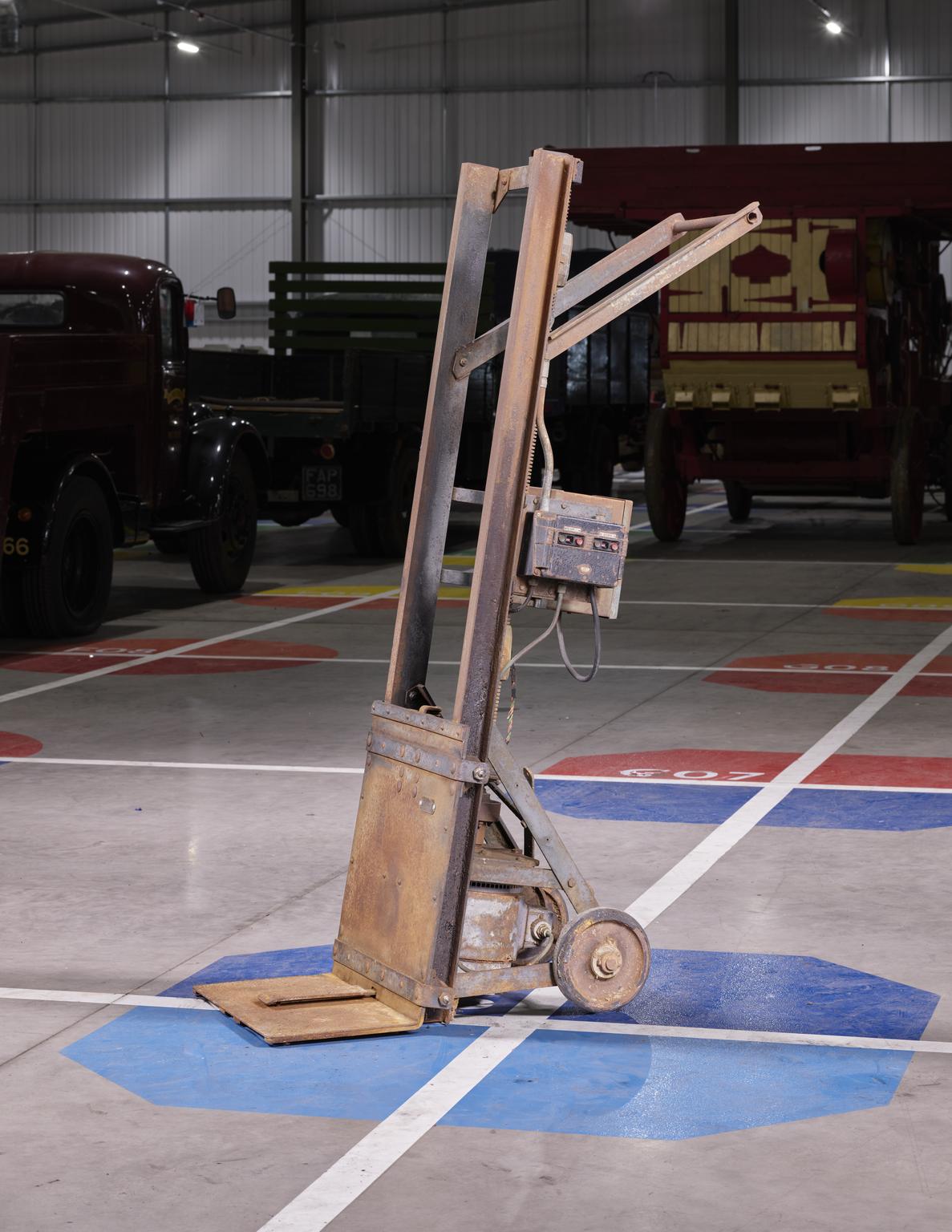
Sack truck from Grain dryer designed by Roland Dudley

Sack truck from Grain dryer designed by Roland Dudley

Sack truck from grain dryer designed by Roland Dudley and built by E. R. & F. Turner of Ipswich in 1929, for use at Linkenholt Manor in Hampshire in conjunction with a Holt combine-harvester. With associated spare parts

More

This grain dryer is one of first mechanised grain drying machines in the UK and possibly in Europe, and was designed by pioneering agricultural engineer Roland Dudley in 1930, as part of his quest to fully mechanise British farming practices.

In the 1920s Roland Dudley, a successful civil and army engineer, purchased the 1500-acre Linkenholt Manor estate in Hampshire for his family. In the late 1920s, one of his tenant farmers died in a farming accident, which inspired Roland Dudley to think about how he could reduce the labour intensity and lengthy work of traditional British farming. Borrowing from his experience as an engineer, Dudley realised the potential for mechanising farming practices using cutting edge machinery. In 1928 he purchased one of the first combine harvesters in the UK (shipped from the US) and was the first to put it to commercial use in for-profit farming.

The speed and efficiency of the combine harvester meant Dudley needed to find a way to dry the harvested grain at an equal speed to prevent bottlenecking his operation. He drew up his own designs for this 20-foot-high coke-furnace heated grain dryer which could be operated entirely by a single man, and had the machine built in 1930 by the Ipswich-based milling engineering company Turner Ltd.

The combine harvester matched with the Turner dryer was so successful that it reduced a season’s worth of work on the Linkenholt estate, into a process that only took a few days. In an anecdotal story, Roland Dudley supposedly demonstrated the impact of his innovations by harvesting, drying, milling, baking and eating a loaf of bread all within 24 hours. Dudley’s mechanisation strategy allowed him to endure during the 1930s recession, whilst estates around him struggled and shut down.

Whilst he was generally critiqued by his farming neighbours at the time, within a generation Roland Dudley’s pioneering farming practices were widely adopted across the country. Mechanisation of Britain’s agriculture was especially driven by the onset of WW2, during which Roland Dudley continued to champion his ideas as Vice-Chairman of Hampshire’s War Agricultural Executive Committee. Roland Dudley was awarded the OBE in 1958 for his working championing modern British farming practices.

Measurements:
complete: 1900 mm x 560 mm x 950 mm,
Object Number:
1997-1055/16
type:
sack truck
Image ©
The Board of Trustees of the Science Museum
Original structural timber from Grain dryer designed by Roland Dudley

Original structural timber from Grain dryer designed by Roland Dudley

Original structural timber from grain dryer designed by Roland Dudley and built by E. R. & F. Turner of Ipswich in 1929, for use at Linkenholt Manor in Hampshire in conjunction with a Holt combine-harvester. With associated spare parts

More

This grain dryer is one of first mechanised grain drying machines in the UK and possibly in Europe, and was designed by pioneering agricultural engineer Roland Dudley in 1930, as part of his quest to fully mechanise British farming practices.

In the 1920s Roland Dudley, a successful civil and army engineer, purchased the 1500-acre Linkenholt Manor estate in Hampshire for his family. In the late 1920s, one of his tenant farmers died in a farming accident, which inspired Roland Dudley to think about how he could reduce the labour intensity and lengthy work of traditional British farming. Borrowing from his experience as an engineer, Dudley realised the potential for mechanising farming practices using cutting edge machinery. In 1928 he purchased one of the first combine harvesters in the UK (shipped from the US) and was the first to put it to commercial use in for-profit farming.

The speed and efficiency of the combine harvester meant Dudley needed to find a way to dry the harvested grain at an equal speed to prevent bottlenecking his operation. He drew up his own designs for this 20-foot-high coke-furnace heated grain dryer which could be operated entirely by a single man, and had the machine built in 1930 by the Ipswich-based milling engineering company Turner Ltd.

The combine harvester matched with the Turner dryer was so successful that it reduced a season’s worth of work on the Linkenholt estate, into a process that only took a few days. In an anecdotal story, Roland Dudley supposedly demonstrated the impact of his innovations by harvesting, drying, milling, baking and eating a loaf of bread all within 24 hours. Dudley’s mechanisation strategy allowed him to endure during the 1930s recession, whilst estates around him struggled and shut down.

Whilst he was generally critiqued by his farming neighbours at the time, within a generation Roland Dudley’s pioneering farming practices were widely adopted across the country. Mechanisation of Britain’s agriculture was especially driven by the onset of WW2, during which Roland Dudley continued to champion his ideas as Vice-Chairman of Hampshire’s War Agricultural Executive Committee. Roland Dudley was awarded the OBE in 1958 for his working championing modern British farming practices.

Measurements:
complete:
Object Number:
1997-1055/17
type:
timber
Bolts from Grain dryer designed by Roland Dudley

Bolts from Grain dryer designed by Roland Dudley

Bolts used in the metal structure which supported the grain dryer designed by Roland Dudley and built by E. R. & F. Turner of Ipswich in 1929, for use at Linkenholt Manor in Hampshire in conjunction with a Holt combine-harvester when errected.

More

This grain dryer is one of first mechanised grain drying machines in the UK and possibly in Europe, and was designed by pioneering agricultural engineer Roland Dudley in 1930, as part of his quest to fully mechanise British farming practices.

In the 1920s Roland Dudley, a successful civil and army engineer, purchased the 1500-acre Linkenholt Manor estate in Hampshire for his family. In the late 1920s, one of his tenant farmers died in a farming accident, which inspired Roland Dudley to think about how he could reduce the labour intensity and lengthy work of traditional British farming. Borrowing from his experience as an engineer, Dudley realised the potential for mechanising farming practices using cutting edge machinery. In 1928 he purchased one of the first combine harvesters in the UK (shipped from the US) and was the first to put it to commercial use in for-profit farming.

The speed and efficiency of the combine harvester meant Dudley needed to find a way to dry the harvested grain at an equal speed to prevent bottlenecking his operation. He drew up his own designs for this 20-foot-high coke-furnace heated grain dryer which could be operated entirely by a single man, and had the machine built in 1930 by the Ipswich-based milling engineering company Turner Ltd.

The combine harvester matched with the Turner dryer was so successful that it reduced a season’s worth of work on the Linkenholt estate, into a process that only took a few days. In an anecdotal story, Roland Dudley supposedly demonstrated the impact of his innovations by harvesting, drying, milling, baking and eating a loaf of bread all within 24 hours. Dudley’s mechanisation strategy allowed him to endure during the 1930s recession, whilst estates around him struggled and shut down.

Whilst he was generally critiqued by his farming neighbours at the time, within a generation Roland Dudley’s pioneering farming practices were widely adopted across the country. Mechanisation of Britain’s agriculture was especially driven by the onset of WW2, during which Roland Dudley continued to champion his ideas as Vice-Chairman of Hampshire’s War Agricultural Executive Committee. Roland Dudley was awarded the OBE in 1958 for his working championing modern British farming practices.

Measurements:
complete: 400 mm x 530 mm x 400 mm,
Object Number:
1997-1055/18
type:
bolts (fasteners)
Floor plan from Grain dryer designed by Roland Dudley

Floor plan from Grain dryer designed by Roland Dudley

Floor plan/ foot print drawn on plastic sheet for grain dryer designed by Roland Dudley and built by E. R. & F. Turner of Ipswich in 1929, for use at Linkenholt Manor in Hampshire in conjunction with a Holt combine-harvester.

More

This grain dryer is one of first mechanised grain drying machines in the UK and possibly in Europe, and was designed by pioneering agricultural engineer Roland Dudley in 1930, as part of his quest to fully mechanise British farming practices.

In the 1920s Roland Dudley, a successful civil and army engineer, purchased the 1500-acre Linkenholt Manor estate in Hampshire for his family. In the late 1920s, one of his tenant farmers died in a farming accident, which inspired Roland Dudley to think about how he could reduce the labour intensity and lengthy work of traditional British farming. Borrowing from his experience as an engineer, Dudley realised the potential for mechanising farming practices using cutting edge machinery. In 1928 he purchased one of the first combine harvesters in the UK (shipped from the US) and was the first to put it to commercial use in for-profit farming.

The speed and efficiency of the combine harvester meant Dudley needed to find a way to dry the harvested grain at an equal speed to prevent bottlenecking his operation. He drew up his own designs for this 20-foot-high coke-furnace heated grain dryer which could be operated entirely by a single man, and had the machine built in 1930 by the Ipswich-based milling engineering company Turner Ltd.

The combine harvester matched with the Turner dryer was so successful that it reduced a season’s worth of work on the Linkenholt estate, into a process that only took a few days. In an anecdotal story, Roland Dudley supposedly demonstrated the impact of his innovations by harvesting, drying, milling, baking and eating a loaf of bread all within 24 hours. Dudley’s mechanisation strategy allowed him to endure during the 1930s recession, whilst estates around him struggled and shut down.

Whilst he was generally critiqued by his farming neighbours at the time, within a generation Roland Dudley’s pioneering farming practices were widely adopted across the country. Mechanisation of Britain’s agriculture was especially driven by the onset of WW2, during which Roland Dudley continued to champion his ideas as Vice-Chairman of Hampshire’s War Agricultural Executive Committee. Roland Dudley was awarded the OBE in 1958 for his working championing modern British farming practices.

Measurements:
overall (folded): 660 mm x 520 mm x 330 mm,
Object Number:
1997-1055/19
type:
floor plan