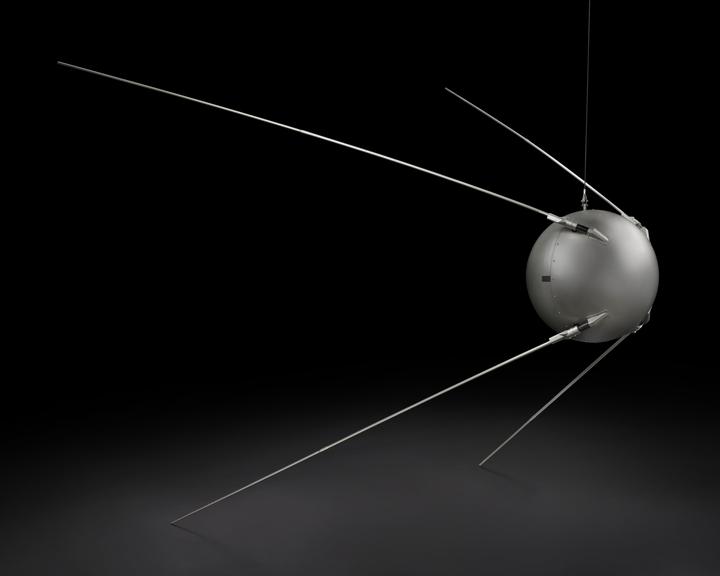

Replica Sputnik I Satellite, 1957.

Replica Sputnik I Satellite, 1957. Replica Sputnik I Satellite, 1957. Replica Sputnik I Satellite, 1957. Replica Sputnik I Satellite, 1957. Replica Sputnik I Satellite, 1957.

Creative Commons LicenseThis image is released under a CC BY-NC-SA 4.0 Licence

License this image for commercial use at Science and Society Picture Library

License

Creative Commons LicenseThis image is released under a CC BY-NC-SA 4.0 Licence

License this image for commercial use at Science and Society Picture Library

License

Creative Commons LicenseThis image is released under a CC BY-NC-SA 4.0 Licence

License this image for commercial use at Science and Society Picture Library

License

Creative Commons LicenseThis image is released under a CC BY-NC-SA 4.0 Licence

License this image for commercial use at Science and Society Picture Library

License

Creative Commons LicenseThis image is released under a CC BY-NC-SA 4.0 Licence

License this image for commercial use at Science and Society Picture Library

License

Science Museum Group
© The Board of Trustees of the Science Museum

Science Museum Group
© The Board of Trustees of the Science Museum

Science Museum Group
© The Board of Trustees of the Science Museum

Science Museum Group
© The Board of Trustees of the Science Museum

Science Museum Group
© The Board of Trustees of the Science Museum

Replica Sputnik I, the world's first artificial satellite, launched in 1957. Design and construction of the original satellite was at the OKB-1 Design Bureau and was overseen by Sergei Pavlovich Korolev.

Sputnik I launched from the Soviet Union on the 4th October 1957. It spent three months orbiting around Earth at 18,000mph (29,000kph). The satellite had a radio transmitter on board which beeped at regular intervals and anyone with a radio could tune into it as it zoomed overhead.

Sputnik I heralded the start of the space race between the USSR and the United States. The launch in particular was impressive. Sputnik I weighed a hefty 184 pounds and was heavier than anything the US was attempting to develop at the time. This meant that the rocket that launched the satellite was incredibly powerful. Americans perceived a growing technological gap between the two countries. The United States poured money into its space programme to try and catch up.

America finally launched its first satellite in January 1958, the Explorer. Despite the tensions of the Cold War, the launch of Sputnik and the space race led to technological developments in space travel that allowed humans to land on the Moon, developed the Space Shuttle programme and put space stations in Earth's orbit.

Details

Category:
Space Technology
Object Number:
1985-1665
Materials:
metal (unknown) and plastic (unidentified)
type:
satellites, artificial satellites and space satellites
credit:
Aeronautical and General Modelmakers

Parts

Main Body of Replica Sputnik I Satellite, 1957.

Main Body of Replica Sputnik I Satellite, 1957.

Main body of Replica Sputnik I, the world's first artificial satellite, launched in 1957. Design and construction of the original satellite was at the OKB-1 Design Bureau and was overseen by Sergei Pavlovich Korolev.

More

Sputnik I launched from the Soviet Union on the 4th October 1957. It spent three months orbiting around Earth at 18,000mph (29,000kph). The satellite had a radio transmitter on board which beeped at regular intervals and anyone with a radio could tune into it as it zoomed overhead.

Sputnik I heralded the start of the space race between the USSR and the United States. The launch in particular was impressive. Sputnik I weighed a hefty 184 pounds and was heavier than anything the US was attempting to develop at the time. This meant that the rocket that launched the satellite was incredibly powerful. Americans perceived a growing technological gap between the two countries. The United States poured money into its space programme to try and catch up.

America finally launched its first satellite in January 1958, the Explorer. Despite the tensions of the Cold War, the launch of Sputnik and the space race led to technological developments in space travel that allowed humans to land on the Moon, developed the Space Shuttle programme and put space stations in Earth's orbit.

Measurements:
overall: 764 mm,
Materials:
metal (unknown) and plastic (unidentified)
Object Number:
1985-1665/1
type:
satellites , artificial satellites and space satellites
Replica Sputnik I Satellite, 1957, Lower Front Attachment Piece

Replica Sputnik I Satellite, 1957, Lower Front Attachment Piece

Lower front attachment piece of Replica Sputnik I, the world's first artificial satellite, launched in 1957. Design and construction of the original satellite was at the OKB-1 Design Bureau and was overseen by Sergei Pavlovich Korolev.

More

Sputnik I launched from the Soviet Union on the 4th October 1957. It spent three months orbiting around Earth at 18,000mph (29,000kph). The satellite had a radio transmitter on board which beeped at regular intervals and anyone with a radio could tune into it as it zoomed overhead.

Sputnik I heralded the start of the space race between the USSR and the United States. The launch in particular was impressive. Sputnik I weighed a hefty 184 pounds and was heavier than anything the US was attempting to develop at the time. This meant that the rocket that launched the satellite was incredibly powerful. Americans perceived a growing technological gap between the two countries. The United States poured money into its space programme to try and catch up.

America finally launched its first satellite in January 1958, the Explorer. Despite the tensions of the Cold War, the launch of Sputnik and the space race led to technological developments in space travel that allowed humans to land on the Moon, developed the Space Shuttle programme and put space stations in Earth's orbit.

Replica Sputnik I Satellite, 1957, Lower Front Attachment Piece, Part 1 (top)

Replica Sputnik I Satellite, 1957, Lower Front Attachment Piece, Part 1 (top)

Lower front attachment piece, part 1 (top) of Replica Sputnik I, the world's first artificial satellite, launched in 1957. Design and construction of the original satellite was at the OKB-1 Design Bureau and was overseen by Sergei Pavlovich Korolev.

More

Sputnik I launched from the Soviet Union on the 4th October 1957. It spent three months orbiting around Earth at 18,000mph (29,000kph). The satellite had a radio transmitter on board which beeped at regular intervals and anyone with a radio could tune into it as it zoomed overhead.

Sputnik I heralded the start of the space race between the USSR and the United States. The launch in particular was impressive. Sputnik I weighed a hefty 184 pounds and was heavier than anything the US was attempting to develop at the time. This meant that the rocket that launched the satellite was incredibly powerful. Americans perceived a growing technological gap between the two countries. The United States poured money into its space programme to try and catch up.

America finally launched its first satellite in January 1958, the Explorer. Despite the tensions of the Cold War, the launch of Sputnik and the space race led to technological developments in space travel that allowed humans to land on the Moon, developed the Space Shuttle programme and put space stations in Earth's orbit.

Measurements:
overall: 1315 mm
Materials:
metal (unknown) and plastic (unidentified)
Object Number:
1985-1665/2/1
type:
satellites , artificial satellites and space satellites
Part of:
1985-1665/2
Replica Sputnik I Satellite, 1957, Lower Front Attachment Piece, Part 2 (bottom)

Replica Sputnik I Satellite, 1957, Lower Front Attachment Piece, Part 2 (bottom)

Lower front attachment piece, part 2 (bottom) of Replica Sputnik I, the world's first artificial satellite, launched in 1957. Design and construction of the original satellite was at the OKB-1 Design Bureau and was overseen by Sergei Pavlovich Korolev.

More

Sputnik I launched from the Soviet Union on the 4th October 1957. It spent three months orbiting around Earth at 18,000mph (29,000kph). The satellite had a radio transmitter on board which beeped at regular intervals and anyone with a radio could tune into it as it zoomed overhead.

Sputnik I heralded the start of the space race between the USSR and the United States. The launch in particular was impressive. Sputnik I weighed a hefty 184 pounds and was heavier than anything the US was attempting to develop at the time. This meant that the rocket that launched the satellite was incredibly powerful. Americans perceived a growing technological gap between the two countries. The United States poured money into its space programme to try and catch up.

America finally launched its first satellite in January 1958, the Explorer. Despite the tensions of the Cold War, the launch of Sputnik and the space race led to technological developments in space travel that allowed humans to land on the Moon, developed the Space Shuttle programme and put space stations in Earth's orbit.

Measurements:
overall: 955 mm
Materials:
metal (unknown) and plastic (unidentified)
Object Number:
1985-1665/2/2
type:
satellites , artificial satellites and space satellites
Part of:
1985-1665/2
Replica Sputnik I Satellite, 1957, Upper Front Attachement Piece

Replica Sputnik I Satellite, 1957, Upper Front Attachement Piece

Upper front attachement piece of Replica Sputnik I, the world's first artificial satellite, launched in 1957. Design and construction of the original satellite was at the OKB-1 Design Bureau and was overseen by Sergei Pavlovich Korolev.

More

Sputnik I launched from the Soviet Union on the 4th October 1957. It spent three months orbiting around Earth at 18,000mph (29,000kph). The satellite had a radio transmitter on board which beeped at regular intervals and anyone with a radio could tune into it as it zoomed overhead.

Sputnik I heralded the start of the space race between the USSR and the United States. The launch in particular was impressive. Sputnik I weighed a hefty 184 pounds and was heavier than anything the US was attempting to develop at the time. This meant that the rocket that launched the satellite was incredibly powerful. Americans perceived a growing technological gap between the two countries. The United States poured money into its space programme to try and catch up.

America finally launched its first satellite in January 1958, the Explorer. Despite the tensions of the Cold War, the launch of Sputnik and the space race led to technological developments in space travel that allowed humans to land on the Moon, developed the Space Shuttle programme and put space stations in Earth's orbit.

Replica Sputnik I Satellite, 1957, Upper Front Attachement Piece, Part 1 (top)

Replica Sputnik I Satellite, 1957, Upper Front Attachement Piece, Part 1 (top)

Upper front attachement piece, part 1 (top) of Replica Sputnik I, the world's first artificial satellite, launched in 1957. Design and construction of the original satellite was at the OKB-1 Design Bureau and was overseen by Sergei Pavlovich Korolev.

More

Sputnik I launched from the Soviet Union on the 4th October 1957. It spent three months orbiting around Earth at 18,000mph (29,000kph). The satellite had a radio transmitter on board which beeped at regular intervals and anyone with a radio could tune into it as it zoomed overhead.

Sputnik I heralded the start of the space race between the USSR and the United States. The launch in particular was impressive. Sputnik I weighed a hefty 184 pounds and was heavier than anything the US was attempting to develop at the time. This meant that the rocket that launched the satellite was incredibly powerful. Americans perceived a growing technological gap between the two countries. The United States poured money into its space programme to try and catch up.

America finally launched its first satellite in January 1958, the Explorer. Despite the tensions of the Cold War, the launch of Sputnik and the space race led to technological developments in space travel that allowed humans to land on the Moon, developed the Space Shuttle programme and put space stations in Earth's orbit.

Measurements:
overall: 1315 mm
Materials:
metal (unknown) and plastic (unidentified)
Object Number:
1985-1665/3/1
type:
satellites , artificial satellites and space satellites
Part of:
1985-1665/3
Replica Sputnik I Satellite, 1957, Upper Front Attachement Piece, Part 2 (bottom)

Replica Sputnik I Satellite, 1957, Upper Front Attachement Piece, Part 2 (bottom)

Upper front attachement piece, part 2 (bottom) of Replica Sputnik I, the world's first artificial satellite, launched in 1957. Design and construction of the original satellite was at the OKB-1 Design Bureau and was overseen by Sergei Pavlovich Korolev.

More

Sputnik I launched from the Soviet Union on the 4th October 1957. It spent three months orbiting around Earth at 18,000mph (29,000kph). The satellite had a radio transmitter on board which beeped at regular intervals and anyone with a radio could tune into it as it zoomed overhead.

Sputnik I heralded the start of the space race between the USSR and the United States. The launch in particular was impressive. Sputnik I weighed a hefty 184 pounds and was heavier than anything the US was attempting to develop at the time. This meant that the rocket that launched the satellite was incredibly powerful. Americans perceived a growing technological gap between the two countries. The United States poured money into its space programme to try and catch up.

America finally launched its first satellite in January 1958, the Explorer. Despite the tensions of the Cold War, the launch of Sputnik and the space race led to technological developments in space travel that allowed humans to land on the Moon, developed the Space Shuttle programme and put space stations in Earth's orbit.

Measurements:
overall: 1455 mm
Materials:
metal (unknown) and plastic (unidentified)
Object Number:
1985-1665/3/2
type:
satellites , artificial satellites and space satellites
Part of:
1985-1665/3
Replica Sputnik I Satellite, 1957, Upper Back Attachment Piece

Replica Sputnik I Satellite, 1957, Upper Back Attachment Piece

Upper back attachment piece of Replica Sputnik I, the world's first artificial satellite, launched in 1957. Design and construction of the original satellite was at the OKB-1 Design Bureau and was overseen by Sergei Pavlovich Korolev.

More

Sputnik I launched from the Soviet Union on the 4th October 1957. It spent three months orbiting around Earth at 18,000mph (29,000kph). The satellite had a radio transmitter on board which beeped at regular intervals and anyone with a radio could tune into it as it zoomed overhead.

Sputnik I heralded the start of the space race between the USSR and the United States. The launch in particular was impressive. Sputnik I weighed a hefty 184 pounds and was heavier than anything the US was attempting to develop at the time. This meant that the rocket that launched the satellite was incredibly powerful. Americans perceived a growing technological gap between the two countries. The United States poured money into its space programme to try and catch up.

America finally launched its first satellite in January 1958, the Explorer. Despite the tensions of the Cold War, the launch of Sputnik and the space race led to technological developments in space travel that allowed humans to land on the Moon, developed the Space Shuttle programme and put space stations in Earth's orbit.

Replica Sputnik I Satellite, 1957, Upper Back Attachment Piece, Part 1 (top)

Replica Sputnik I Satellite, 1957, Upper Back Attachment Piece, Part 1 (top)

Upper back attachment piece, part 1 (top) of Replica Sputnik I, the world's first artificial satellite, launched in 1957. Design and construction of the original satellite was at the OKB-1 Design Bureau and was overseen by Sergei Pavlovich Korolev.

More

Sputnik I launched from the Soviet Union on the 4th October 1957. It spent three months orbiting around Earth at 18,000mph (29,000kph). The satellite had a radio transmitter on board which beeped at regular intervals and anyone with a radio could tune into it as it zoomed overhead.

Sputnik I heralded the start of the space race between the USSR and the United States. The launch in particular was impressive. Sputnik I weighed a hefty 184 pounds and was heavier than anything the US was attempting to develop at the time. This meant that the rocket that launched the satellite was incredibly powerful. Americans perceived a growing technological gap between the two countries. The United States poured money into its space programme to try and catch up.

America finally launched its first satellite in January 1958, the Explorer. Despite the tensions of the Cold War, the launch of Sputnik and the space race led to technological developments in space travel that allowed humans to land on the Moon, developed the Space Shuttle programme and put space stations in Earth's orbit.

Measurements:
overall: 1450 mm
Materials:
metal (unknown) and plastic (unidentified)
Object Number:
1985-1665/4/1
type:
satellites , artificial satellites and space satellites
Part of:
1985-1665/4
Replica Sputnik I Satellite, 1957, Upper Back Attachment Piece, Part 2 (bottom)

Replica Sputnik I Satellite, 1957, Upper Back Attachment Piece, Part 2 (bottom)

Upper back attachment piece, part 2 (bottom) of Replica Sputnik I, the world's first artificial satellite, launched in 1957. Design and construction of the original satellite was at the OKB-1 Design Bureau and was overseen by Sergei Pavlovich Korolev.

More

Sputnik I launched from the Soviet Union on the 4th October 1957. It spent three months orbiting around Earth at 18,000mph (29,000kph). The satellite had a radio transmitter on board which beeped at regular intervals and anyone with a radio could tune into it as it zoomed overhead.

Sputnik I heralded the start of the space race between the USSR and the United States. The launch in particular was impressive. Sputnik I weighed a hefty 184 pounds and was heavier than anything the US was attempting to develop at the time. This meant that the rocket that launched the satellite was incredibly powerful. Americans perceived a growing technological gap between the two countries. The United States poured money into its space programme to try and catch up.

America finally launched its first satellite in January 1958, the Explorer. Despite the tensions of the Cold War, the launch of Sputnik and the space race led to technological developments in space travel that allowed humans to land on the Moon, developed the Space Shuttle programme and put space stations in Earth's orbit.

Measurements:
overall: 955 mm
Materials:
metal (unknown) and plastic (unidentified)
Object Number:
1985-1665/4/2
type:
satellites , artificial satellites and space satellites
Part of:
1985-1665/4
Replica Sputnik I Satellite, 1957, Lower Back Attachment Piece

Replica Sputnik I Satellite, 1957, Lower Back Attachment Piece

Lower back attachment piece of Replica Sputnik I, the world's first artificial satellite, launched in 1957. Design and construction of the original satellite was at the OKB-1 Design Bureau and was overseen by Sergei Pavlovich Korolev.

More

Sputnik I launched from the Soviet Union on the 4th October 1957. It spent three months orbiting around Earth at 18,000mph (29,000kph). The satellite had a radio transmitter on board which beeped at regular intervals and anyone with a radio could tune into it as it zoomed overhead.

Sputnik I heralded the start of the space race between the USSR and the United States. The launch in particular was impressive. Sputnik I weighed a hefty 184 pounds and was heavier than anything the US was attempting to develop at the time. This meant that the rocket that launched the satellite was incredibly powerful. Americans perceived a growing technological gap between the two countries. The United States poured money into its space programme to try and catch up.

America finally launched its first satellite in January 1958, the Explorer. Despite the tensions of the Cold War, the launch of Sputnik and the space race led to technological developments in space travel that allowed humans to land on the Moon, developed the Space Shuttle programme and put space stations in Earth's orbit.

Replica Sputnik I Satellite, 1957, Lower Back Attachment Piece, Part 1 (top)

Replica Sputnik I Satellite, 1957, Lower Back Attachment Piece, Part 1 (top)

Lower back attachment piece, part 1 (top) of Replica Sputnik I, the world's first artificial satellite, launched in 1957. Design and construction of the original satellite was at the OKB-1 Design Bureau and was overseen by Sergei Pavlovich Korolev.

More

Sputnik I launched from the Soviet Union on the 4th October 1957. It spent three months orbiting around Earth at 18,000mph (29,000kph). The satellite had a radio transmitter on board which beeped at regular intervals and anyone with a radio could tune into it as it zoomed overhead.

Sputnik I heralded the start of the space race between the USSR and the United States. The launch in particular was impressive. Sputnik I weighed a hefty 184 pounds and was heavier than anything the US was attempting to develop at the time. This meant that the rocket that launched the satellite was incredibly powerful. Americans perceived a growing technological gap between the two countries. The United States poured money into its space programme to try and catch up.

America finally launched its first satellite in January 1958, the Explorer. Despite the tensions of the Cold War, the launch of Sputnik and the space race led to technological developments in space travel that allowed humans to land on the Moon, developed the Space Shuttle programme and put space stations in Earth's orbit.

Measurements:
overall: 1315 mm
Materials:
metal (unknown) and plastic (unidentified)
Object Number:
1985-1665/5/1
type:
satellites , artificial satellites and space satellites
Part of:
1985-1665/5
Replica Sputnik I Satellite, 1957, Lower Back Attachment Piece, Part 2 (bottom)

Replica Sputnik I Satellite, 1957, Lower Back Attachment Piece, Part 2 (bottom)

Lower back attachment piece, part 2 (bottom) of Replica Sputnik I, the world's first artificial satellite, launched in 1957. Design and construction of the original satellite was at the OKB-1 Design Bureau and was overseen by Sergei Pavlovich Korolev.

More

Sputnik I launched from the Soviet Union on the 4th October 1957. It spent three months orbiting around Earth at 18,000mph (29,000kph). The satellite had a radio transmitter on board which beeped at regular intervals and anyone with a radio could tune into it as it zoomed overhead.

Sputnik I heralded the start of the space race between the USSR and the United States. The launch in particular was impressive. Sputnik I weighed a hefty 184 pounds and was heavier than anything the US was attempting to develop at the time. This meant that the rocket that launched the satellite was incredibly powerful. Americans perceived a growing technological gap between the two countries. The United States poured money into its space programme to try and catch up.

America finally launched its first satellite in January 1958, the Explorer. Despite the tensions of the Cold War, the launch of Sputnik and the space race led to technological developments in space travel that allowed humans to land on the Moon, developed the Space Shuttle programme and put space stations in Earth's orbit.

Measurements:
overall: 1455 mm
Materials:
metal (unknown) and plastic (unidentified)
Object Number:
1985-1665/5/2
type:
satellites , artificial satellites and space satellites
Part of:
1985-1665/5