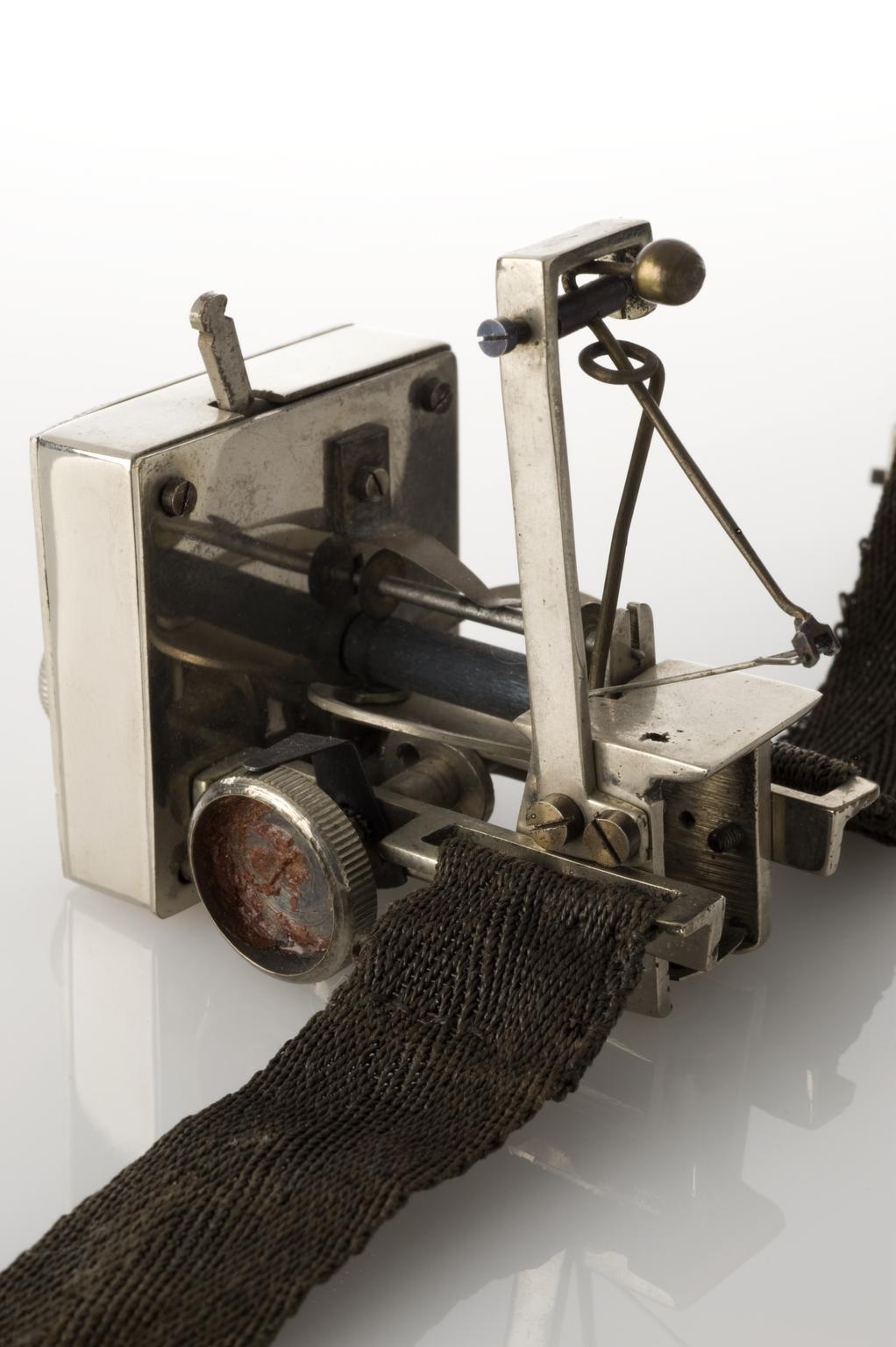
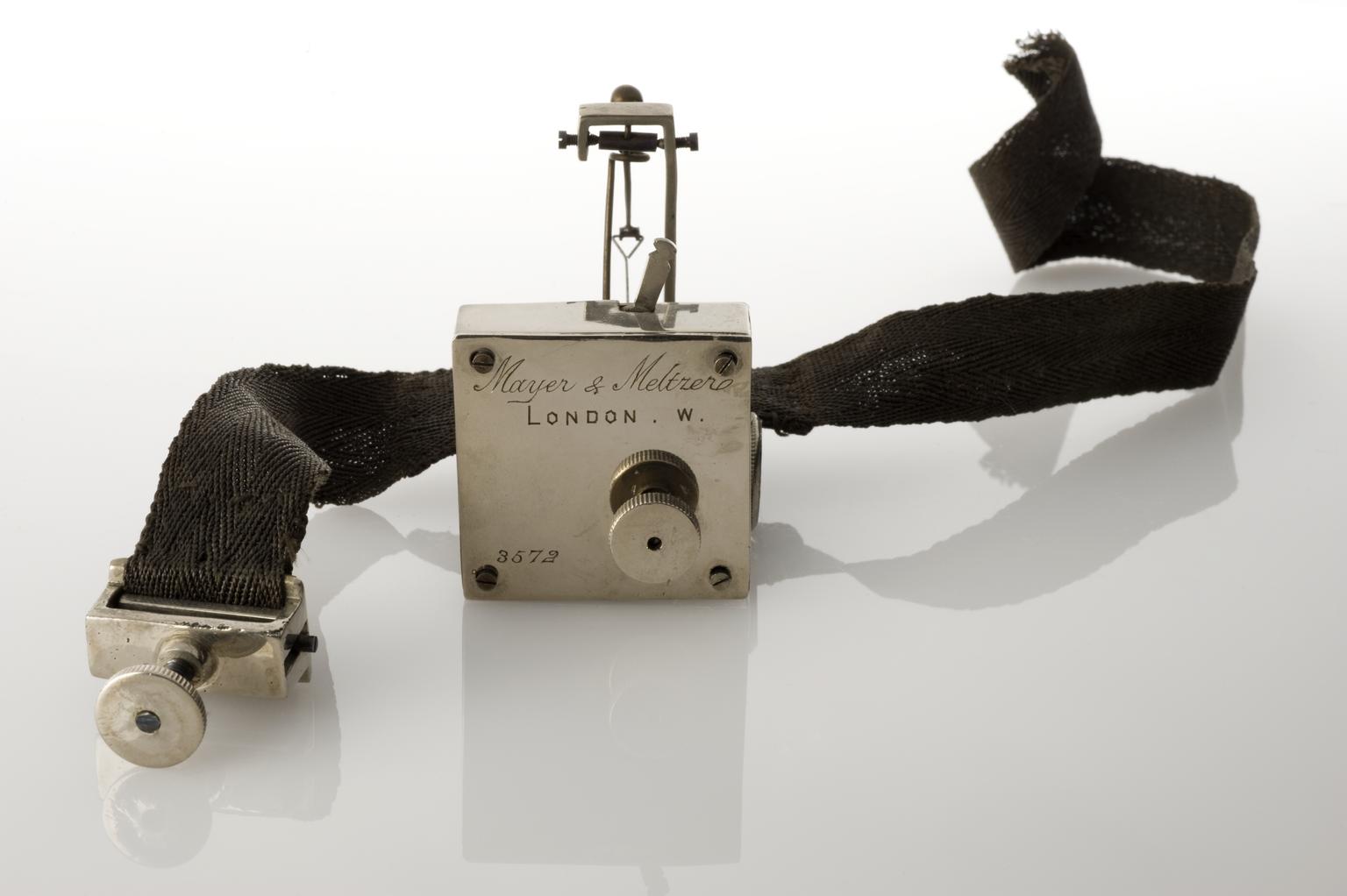
Dudgeon sphygmograph by Mayer and Meltzer

Made:
London
maker:
Mayer and Meltzer

Dudgeon sphygmograph by Mayer and Meltzer, in case, English

Details

Category:
Clinical Diagnosis
Collection:
Sir Henry Wellcome's Museum Collection
Object Number:
A600373
Materials:
case, leather, case, fabric, green, instrument, metal (plated), instrument, ivory, straps, fabric and straps, metal
Measurements:
case: length 72 mm
case: width 66 mm
case: height 59 mm
instrument: length 50 mm
instrument: width 38 mm
instrument: height 54 mm
type:
sphygmographs
credit:
Brown, H.C.

Parts

Dudgeon type sphygmograph

Dudgeon sphygmograph by Mayer and Meltzer, English.

More

A sphygmograph takes the pulse. The device is strapped to the wrist and the metal button placed on the pulse point. The connected needle or pen device moved up and down as the pulse was felt through the button. This created a graphic representation. The sphygmograph was invented in 1860. Robert Ellis Dudgeon (1820-1904) introduced a lightweight version in 1881. It could be carried in the pocket. This example was made by Mayer & Meltzer.

Doctors rarely used the sphygmograph. They preferred using their fingers to take their patients’ pulses. However, the sphygmograph was used in physiological research.

Measurements:
overall: 80 mm x 70 mm x 120 mm, .12kg
Materials:
ivory , leather , metal (unknown) , metal plated (unknown) and textile
Object Number:
A600373 Pt1
type:
sphygmograph
Image ©
The Board of Trustees of the Science Museum
Case for Dudgeon sphygmograph by Mayer and Meltzer

Case for Dudgeon sphygmograph by Mayer and Meltzer

Case for Dudgeon sphygmograph by Mayer and Meltzer, English

Measurements:
case: length 72 mm
case: width 66 mm
case: height 59 mm
instrument: length 50 mm
instrument: width 38 mm
instrument: height 54 mm
Materials:
ivory , leather , metal (unknown) , metal plated (unknown) and textile
Object Number:
A600373 Pt2
type:
instrument cases