Mechanical equivalent of heat apparatus

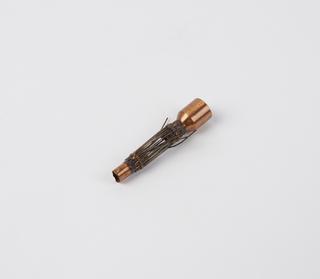
Joule's original calorimeter ('paddle-wheel apparatus') used in determining the mechanical equivalent of heat. Copper mixing vessel with vane and spindle

The British Scientist James Joule used this apparatus in his now classic paddle-wheel experiment. Falling weights turned the paddles to churn water; the churning raised the water's temperature slightly, and Joule found that the temperature rise was in direct proportion to the amount of work done by the falling weights. Joule's 'mechanical equivalent of heat' was crucial in developing the concept of energy.

Details

Category:
Heat
Object Number:
1876-492
Materials:
copper and copper alloy
Measurements:
overall: 700 x 210 mm (approximate)
type:
calorimeter
credit:
Dr. James Prescott Joule.

Parts

Joule's original calorimeter ('paddle-wheel apparatus') used in determining the mechanical equivalent of heat. Copper mixing vessel with vane and spindle

Paddle-wheel Apparatus

Joule's original calorimeter ('paddle-wheel apparatus') used in determining the mechanical equivalent of heat. Copper mixing vessel with vane and spindle

More

The British Scientist James Joule used this apparatus in his now classic paddle-wheel experiment. Falling weights turned the paddles to churn water; the churning raised the water's temperature slightly, and Joule found that the temperature rise was in direct proportion to the amount of work done by the falling weights. Joule's 'mechanical equivalent of heat' was crucial in developing the concept of energy.

Measurements:
overall: 700 x 210 mm (approximate)
Materials:
copper and copper alloy
Object Number:
1876-492/1
type:
calorimeter
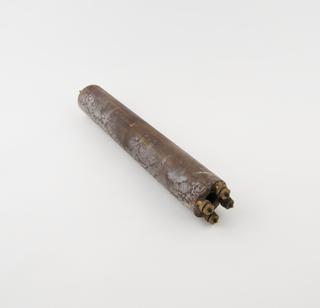
Insulated barrel, part of Joule's original calorimeter ('paddle-wheel apparatus') used in determining the mechanical equivalent of heat. Copper mixing vessel with vane and spindle

Insulated Barrel

Insulated barrel, part of Joule's original calorimeter ('paddle-wheel apparatus') used in determining the mechanical equivalent of heat. Copper mixing vessel with vane and spindle

More

The British Scientist James Joule used this apparatus in his now classic paddle-wheel experiment. Falling weights turned the paddles to churn water; the churning raised the water's temperature slightly, and Joule found that the temperature rise was in direct proportion to the amount of work done by the falling weights. Joule's 'mechanical equivalent of heat' was crucial in developing the concept of energy.

Measurements:
overall: 700 x 210 mm (approximate)
Materials:
copper and copper alloy
Object Number:
1876-492/2
type:
calorimeter
Lid for insulated barrel, part of Joule's original calorimeter ('paddle-wheel apparatus') used in determining the mechanical equivalent of heat. Copper mixing vessel with vane and spindle

Lid for Insulated Barrel

Lid for insulated barrel, part of Joule's original calorimeter ('paddle-wheel apparatus') used in determining the mechanical equivalent of heat. Copper mixing vessel with vane and spindle

More

The British Scientist James Joule used this apparatus in his now classic paddle-wheel experiment. Falling weights turned the paddles to churn water; the churning raised the water's temperature slightly, and Joule found that the temperature rise was in direct proportion to the amount of work done by the falling weights. Joule's 'mechanical equivalent of heat' was crucial in developing the concept of energy.

Measurements:
overall: 700 x 210 mm (approximate)
Materials:
copper and copper alloy
Object Number:
1876-492/3
type:
calorimeter