
Metropolitan Police equipment belt

Metropolitan Police equipment belt Metropolitan Police equipment belt Metropolitan Police equipment belt

Creative Commons LicenseThis image is released under a CC BY-NC-SA 4.0 Licence

License this image for commercial use at Science and Society Picture Library

License

Creative Commons LicenseThis image is released under a CC BY-NC-SA 4.0 Licence

License this image for commercial use at Science and Society Picture Library

License

Creative Commons LicenseThis image is released under a CC BY-NC-SA 4.0 Licence

License this image for commercial use at Science and Society Picture Library

License

Science Museum Group Collection
© The Board of Trustees of the Science Museum

Science Museum Group Collection
© The Board of Trustees of the Science Museum

Science Museum Group Collection
© The Board of Trustees of the Science Museum

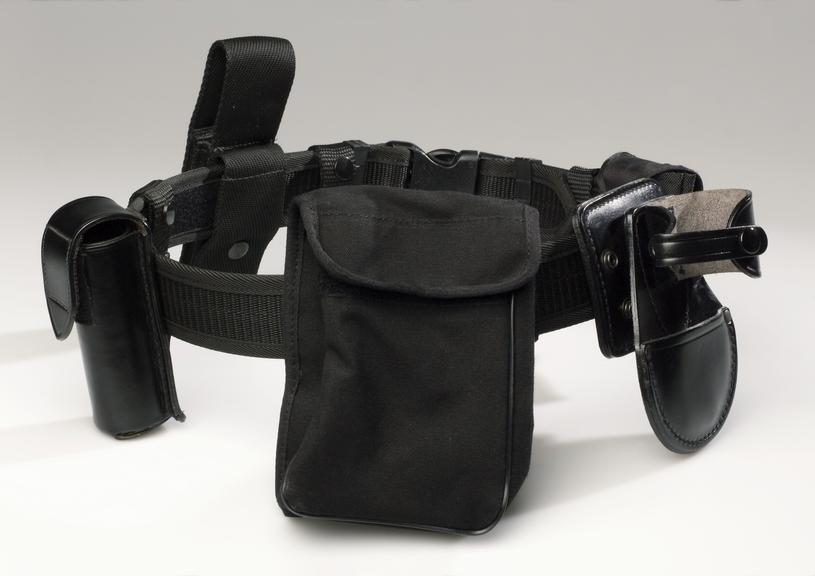
Equipment belt issued to Metropolitan Police officers, UK, in the late 1990s, consisting of a webbing belt, pouches for baton, cs spray canister, handcuffs and documents, one inert cs incapacitant spray canister, one gravity-friction-lock baton, one pair of Hiatt Quickcuffs and key and one personal protection kit containing gloves, decontaminant wipes and disposal bag in pouch.

This is representative of the kit provided to the Metropolitan Police in London, England in the 1990s. Police kit has changed since then, with the most recent addition of the taser introduced to specialist forces in 2003 before being widely rolled out across England & Wales in 2008. The equipment belt may differ across England, with forces catering to their specific needs. Equipment carried by an officer would also vary depending on their mode of transport, with police vehicles able to carry more bulky items such as a first aid kit, breathalyser and traffic cones.

Early police forces were equipped with little more than a rattle – or later a whistle - and a truncheon. The baton remains in the equipment kit to this day, varying in design depending on the force. Whilst some items have maintained their position, modern police kit offers a wide range of equipment in comparison, expanding with technology and contemporary concerns. For example, personal protection kits are now included to address concerns for personal safety and hygiene. Some of the contents are not legal for the public to carry as they are considered weapons, such as the CS spray and batons.

Details

Category:
Public Health & Hygiene
Object Number:
1999-964
Materials:
plastic, metal
Measurements:
overall: 10.6299 x 39.3701 in.; 270 x 1000 mm
type:
police officer equipment belt
credit:
Metropolitan Police Service

Parts

One webbing belt with five pouches from the equipment belt issued to Metropolitan Police officers, UK, in the late 1990s.

Metropolitan Police equipment belt

One webbing belt with five pouches from the equipment belt issued to Metropolitan Police officers, UK, in the late 1990s.

More

This is representative of the kit provided to the Metropolitan Police in London, England in the 1990s. Police kit has changed since then, with the most recent addition of the taser introduced to specialist forces in 2003 before being widely rolled out across England & Wales in 2008. The equipment belt may differ across England, with forces catering to their specific needs. Equipment carried by an officer would also vary depending on their mode of transport, with police vehicles able to carry more bulky items such as a first aid kit, breathalyser and traffic cones.

Early police forces were equipped with little more than a rattle – or later a whistle - and a truncheon. The baton remains in the equipment kit to this day, varying in design depending on the force. Whilst some items have maintained their position, modern police kit offers a wide range of equipment in comparison, expanding with technology and contemporary concerns. For example, personal protection kits are now included to address concerns for personal safety and hygiene. Some of the contents are not legal for the public to carry as they are considered weapons, such as the CS spray and batons.

Measurements:
overall: 190 mm x 395 mm x 430 mm,
Materials:
plastic (unidentified) and leather
Object Number:
1999-964/1
type:
police officer equipment belt
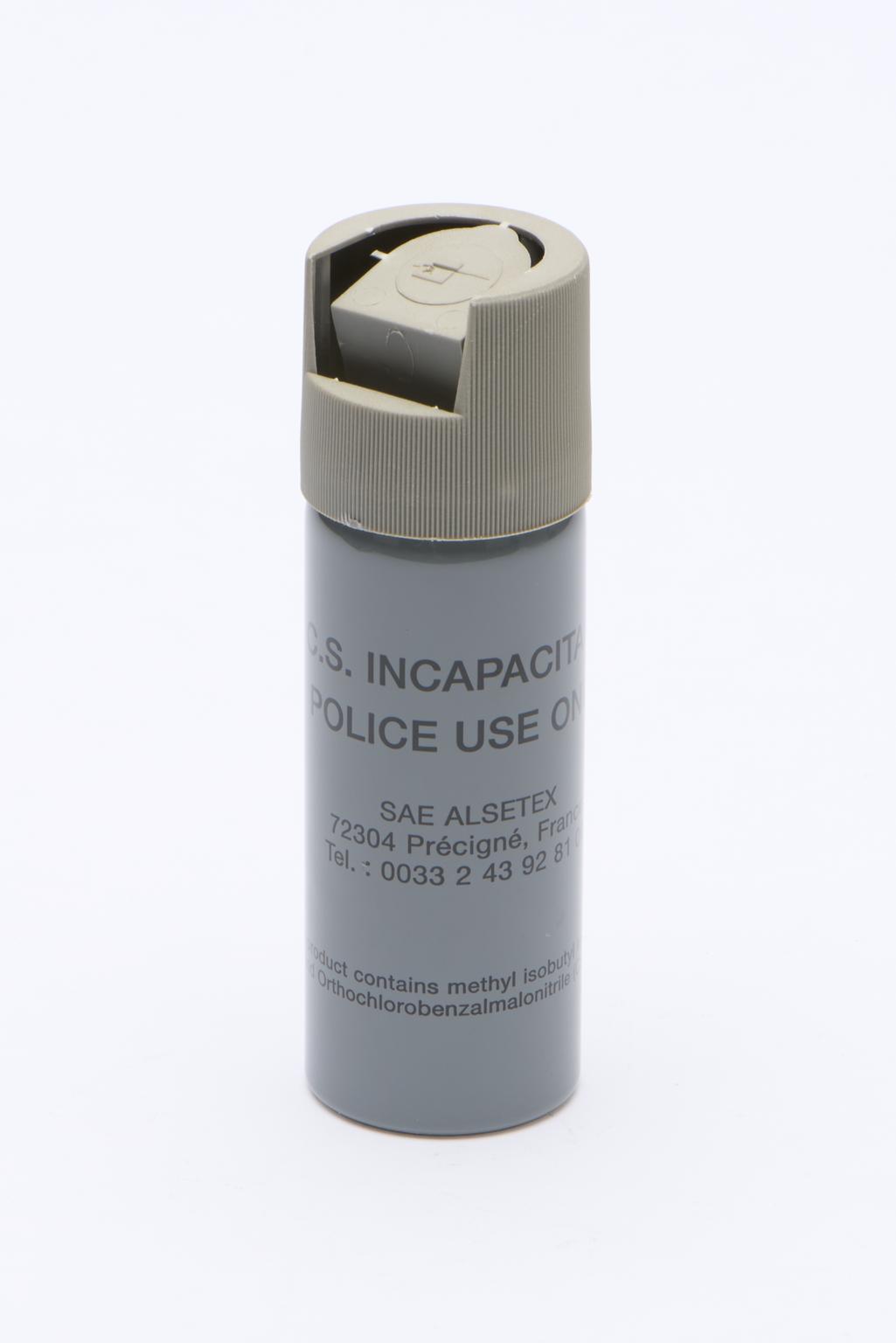
Inert cs incapacitant spray canister

Inert cs incapacitant spray canister

One inert cs incapacitant spray canister from the equipment belt issued to Metropolitan Police officers, UK, in the late 1990s.

More

This is representative of the kit provided to the Metropolitan Police in London, England in the 1990s. Police kit has changed since then, with the most recent addition of the taser introduced to specialist forces in 2003 before being widely rolled out across England & Wales in 2008. The equipment belt may differ across England, with forces catering to their specific needs. Equipment carried by an officer would also vary depending on their mode of transport, with police vehicles able to carry more bulky items such as a first aid kit, breathalyser and traffic cones.

Early police forces were equipped with little more than a rattle – or later a whistle - and a truncheon. The baton remains in the equipment kit to this day, varying in design depending on the force. Whilst some items have maintained their position, modern police kit offers a wide range of equipment in comparison, expanding with technology and contemporary concerns. For example, personal protection kits are now included to address concerns for personal safety and hygiene. Some of the contents are not legal for the public to carry as they are considered weapons, such as the CS spray and batons.

Measurements:
overall: 113 mm 39 mm, .024 kg
Materials:
plastic (unidentified) and steel (metal)
Object Number:
1999-964/2
type:
spray canister
Image ©
The Board of Trustees of the Science Museum
One gravity-friction-lock baton from the equipment belt issued to Metropolitan Police officers, UK, in the late 1990s.

Gravity-friction-lock baton

One gravity-friction-lock baton from the equipment belt issued to Metropolitan Police officers, UK, in the late 1990s.

More

This is representative of the kit provided to the Metropolitan Police in London, England in the 1990s. Police kit has changed since then, with the most recent addition of the taser introduced to specialist forces in 2003 before being widely rolled out across England & Wales in 2008. The equipment belt may differ across England, with forces catering to their specific needs. Equipment carried by an officer would also vary depending on their mode of transport, with police vehicles able to carry more bulky items such as a first aid kit, breathalyser and traffic cones.

Early police forces were equipped with little more than a rattle – or later a whistle - and a truncheon. The baton remains in the equipment kit to this day, varying in design depending on the force. Whilst some items have maintained their position, modern police kit offers a wide range of equipment in comparison, expanding with technology and contemporary concerns. For example, personal protection kits are now included to address concerns for personal safety and hygiene. Some of the contents are not legal for the public to carry as they are considered weapons, such as the CS spray and batons.

Measurements:
overall (lying flat): 25 mm x 520 mm 28 mm, .473 kg
Materials:
metal (unknown)
Object Number:
1999-964/3
type:
baton
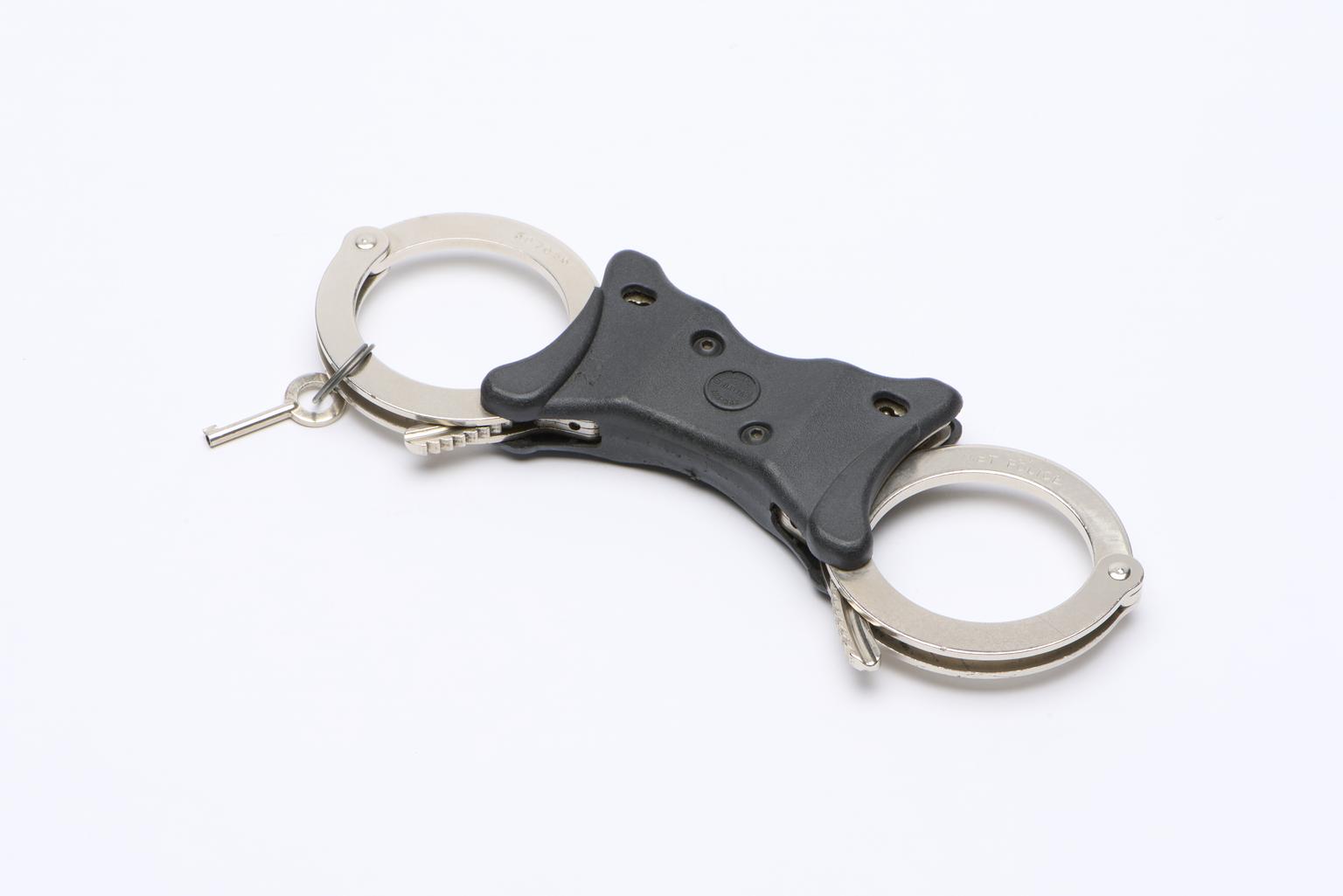
Hiatt Quickcuff handcuffs

Hiatt Quickcuff handcuffs

One pair of Hiatt Quickcuffs or Speedcuffs from the equipment belt issued to Metropolitan Police officers, UK, in the late 1990s.

More

This is representative of the kit provided to the Metropolitan Police in London, England in the 1990s. Police kit has changed since then, with the most recent addition of the taser introduced to specialist forces in 2003 before being widely rolled out across England & Wales in 2008. The equipment belt may differ across England, with forces catering to their specific needs. Equipment carried by an officer would also vary depending on their mode of transport, with police vehicles able to carry more bulky items such as a first aid kit, breathalyser and traffic cones.

Early police forces were equipped with little more than a rattle – or later a whistle - and a truncheon. The baton remains in the equipment kit to this day, varying in design depending on the force. Whilst some items have maintained their position, modern police kit offers a wide range of equipment in comparison, expanding with technology and contemporary concerns. For example, personal protection kits are now included to address concerns for personal safety and hygiene. Some of the contents are not legal for the public to carry as they are considered weapons, such as the CS spray and batons.

Measurements:
overall: 14 mm x 23 mm x 104 mm, .401 kg
Materials:
metal (unknown) and plastic (unidentified)
Object Number:
1999-964/4
type:
handcuffs
Image ©
The Board of Trustees of the Science Museum
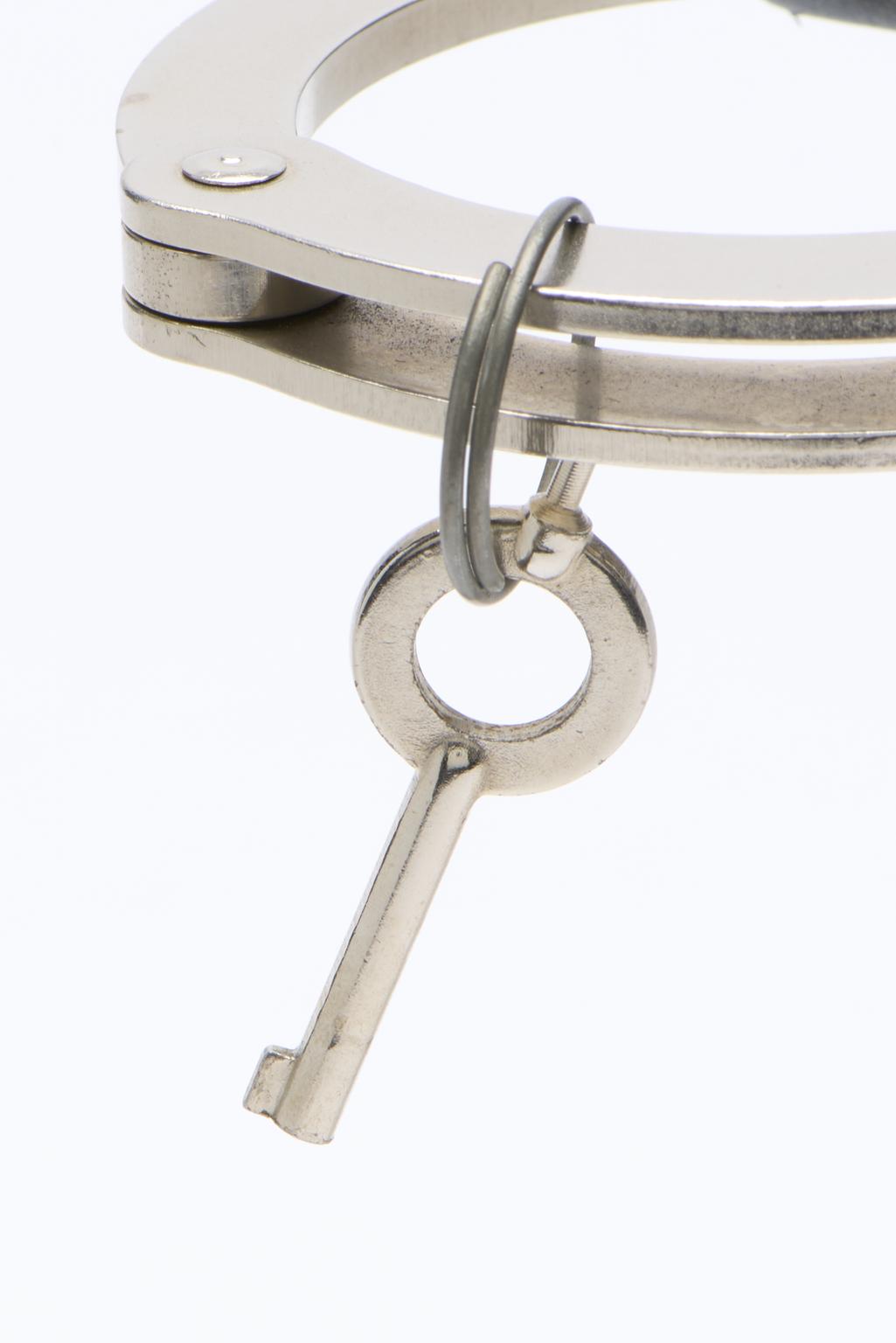
Key for Hiatt Quickcuffs

Key for Hiatt Quickcuffs

Key for Hiatt Quickcuffs or Speedcuffs from equipment belt issued to Metropolitan Police officers, UK, in the late 1990s.

More

This is representative of the kit provided to the Metropolitan Police in London, England in the 1990s. Police kit has changed since then, with the most recent addition of the taser introduced to specialist forces in 2003 before being widely rolled out across England & Wales in 2008. The equipment belt may differ across England, with forces catering to their specific needs. Equipment carried by an officer would also vary depending on their mode of transport, with police vehicles able to carry more bulky items such as a first aid kit, breathalyser and traffic cones.

Early police forces were equipped with little more than a rattle – or later a whistle - and a truncheon. The baton remains in the equipment kit to this day, varying in design depending on the force. Whilst some items have maintained their position, modern police kit offers a wide range of equipment in comparison, expanding with technology and contemporary concerns. For example, personal protection kits are now included to address concerns for personal safety and hygiene. Some of the contents are not legal for the public to carry as they are considered weapons, such as the CS spray and batons.

Measurements:
overall: 2 mm x 45 mm x 16 mm,
Materials:
metal (unknown)
Object Number:
1999-964/5
type:
key
Image ©
The Board of Trustees of the Science Museum
One personal protection kit containing gloves, decontaminant wipes and disposal bag in pouch from equipment belt issued to Metropolitan Police officers, UK, in the late 1990s.

Personal protection kit containing gloves, decontaminant wipes and disposal bag

One personal protection kit containing gloves, decontaminant wipes and disposal bag in pouch from equipment belt issued to Metropolitan Police officers, UK, in the late 1990s.

More

This is representative of the kit provided to the Metropolitan Police in London, England in the 1990s. Police kit has changed since then, with the most recent addition of the taser introduced to specialist forces in 2003 before being widely rolled out across England & Wales in 2008. The equipment belt may differ across England, with forces catering to their specific needs. Equipment carried by an officer would also vary depending on their mode of transport, with police vehicles able to carry more bulky items such as a first aid kit, breathalyser and traffic cones.

Early police forces were equipped with little more than a rattle – or later a whistle - and a truncheon. The baton remains in the equipment kit to this day, varying in design depending on the force. Whilst some items have maintained their position, modern police kit offers a wide range of equipment in comparison, expanding with technology and contemporary concerns. For example, personal protection kits are now included to address concerns for personal safety and hygiene. Some of the contents are not legal for the public to carry as they are considered weapons, such as the CS spray and batons.

Materials:
plastic, metal
Object Number:
1999-964/6
type:
personal protection kit
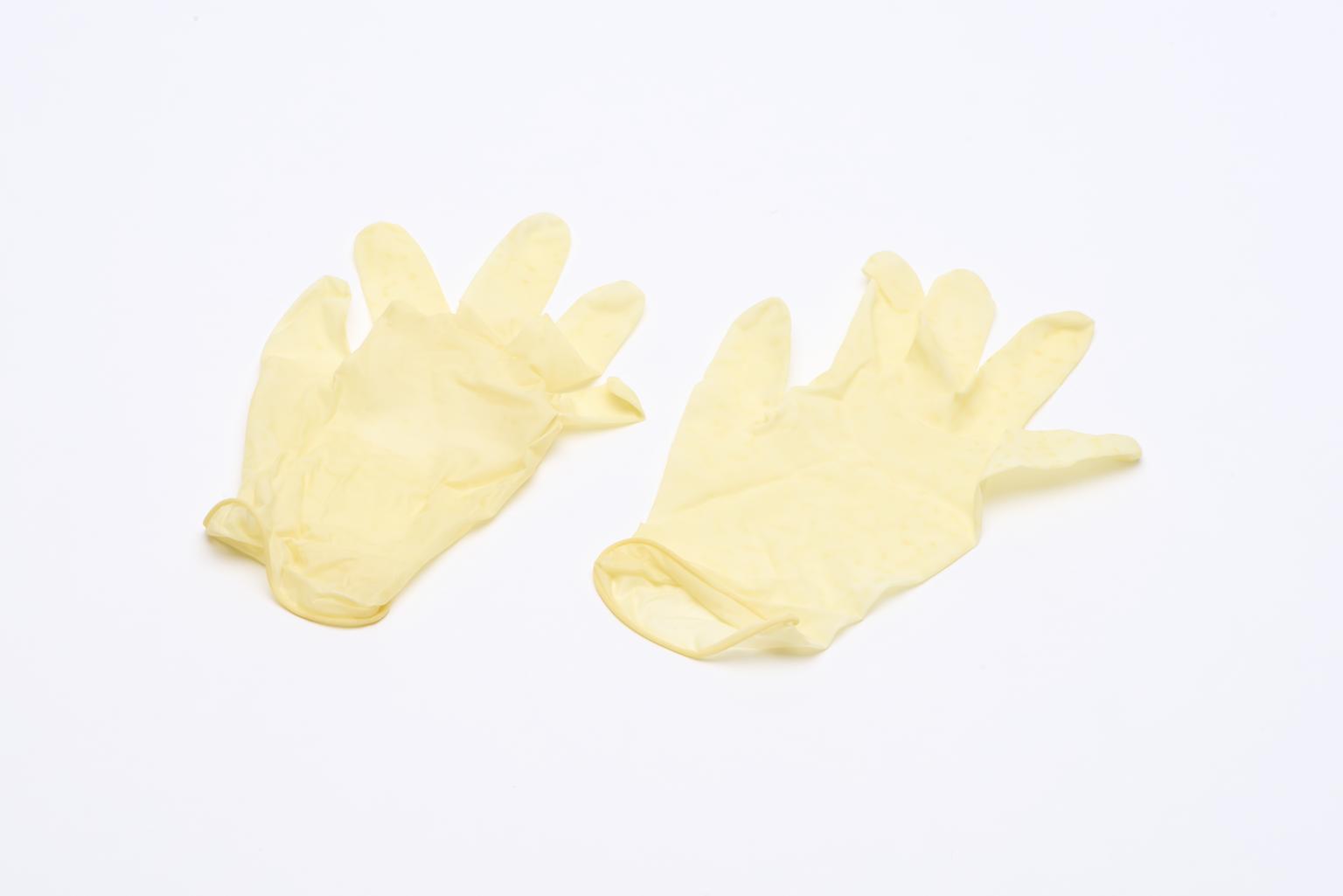
Pair of  gloves from the Personal Protection Kit

Pair of gloves from the Personal Protection Kit

One pair of gloves from the Personal Protection Kit, from the equipment belt issued to Metropolitan Police officers, UK, in the late 1990s.

More

This is representative of the kit provided to the Metropolitan Police in London, England in the 1990s. Police kit has changed since then, with the most recent addition of the taser introduced to specialist forces in 2003 before being widely rolled out across England & Wales in 2008. The equipment belt may differ across England, with forces catering to their specific needs. Equipment carried by an officer would also vary depending on their mode of transport, with police vehicles able to carry more bulky items such as a first aid kit, breathalyser and traffic cones.

Early police forces were equipped with little more than a rattle – or later a whistle - and a truncheon. The baton remains in the equipment kit to this day, varying in design depending on the force. Whilst some items have maintained their position, modern police kit offers a wide range of equipment in comparison, expanding with technology and contemporary concerns. For example, personal protection kits are now included to address concerns for personal safety and hygiene. Some of the contents are not legal for the public to carry as they are considered weapons, such as the CS spray and batons.

Measurements:
overall: 22 mm x 90 mm x 92 mm, .017 kg
Materials:
latex
Object Number:
1999-964/6/1
type:
gloves
Image ©
The Board of Trustees of the Science Museum
Part of:
1999-964/6
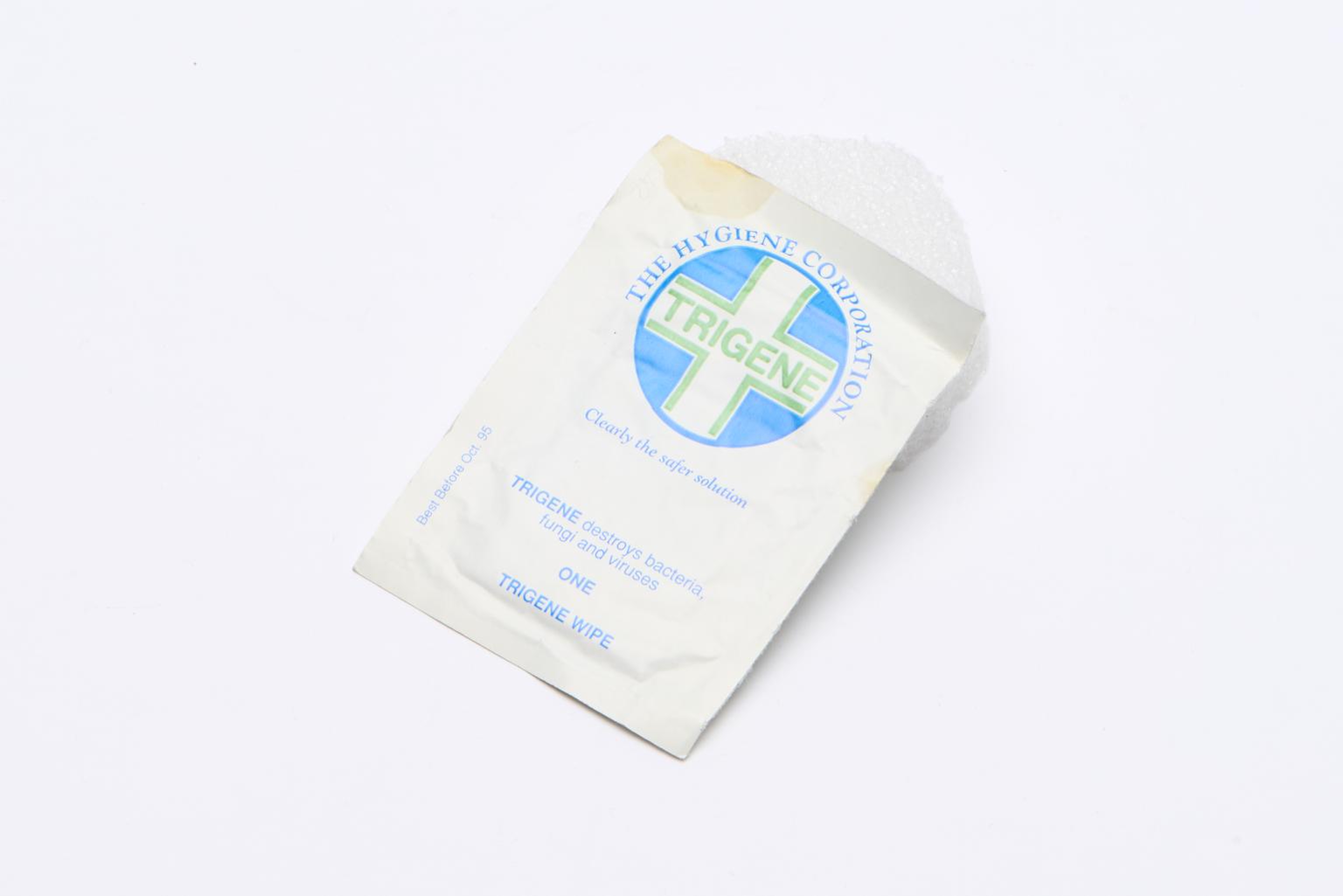
Decontaminant wipes from the Personal Protection Kit

Decontaminant wipes from the Personal Protection Kit

Decontaminant wipes from the Personal Protection Kit, from the equipment belt issued to Metropolitan Police officers, UK, in the late 1990s.

More

This is representative of the kit provided to the Metropolitan Police in London, England in the 1990s. Police kit has changed since then, with the most recent addition of the taser introduced to specialist forces in 2003 before being widely rolled out across England & Wales in 2008. The equipment belt may differ across England, with forces catering to their specific needs. Equipment carried by an officer would also vary depending on their mode of transport, with police vehicles able to carry more bulky items such as a first aid kit, breathalyser and traffic cones.

Early police forces were equipped with little more than a rattle – or later a whistle - and a truncheon. The baton remains in the equipment kit to this day, varying in design depending on the force. Whilst some items have maintained their position, modern police kit offers a wide range of equipment in comparison, expanding with technology and contemporary concerns. For example, personal protection kits are now included to address concerns for personal safety and hygiene. Some of the contents are not legal for the public to carry as they are considered weapons, such as the CS spray and batons.

Measurements:
overall: 3 mm x 63 mm x 82 mm, .003 kg
Materials:
paper (fibre product) and plastic (unidentified)
Object Number:
1999-964/6/2
type:
decontaminant wipes
Image ©
The Board of Trustees of the Science Museum
Part of:
1999-964/6
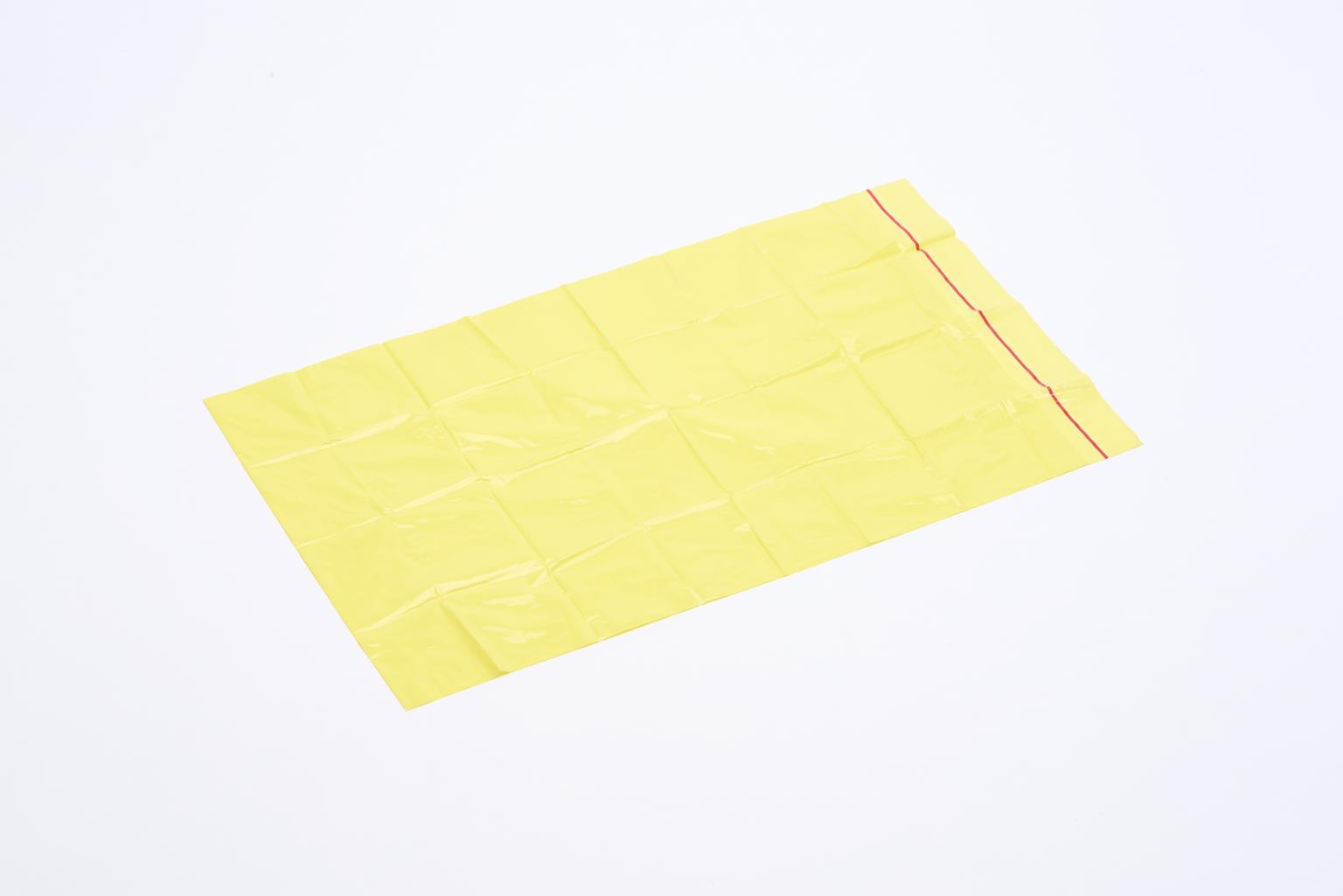
Disposable bag from the Personal Protection Kit

Disposable bag from the Personal Protection Kit

Disposable bag from the Personal Protection Kit, from the equipment belt issued to Metropolitan Police officers, UK, in the late 1990s.

More

This is representative of the kit provided to the Metropolitan Police in London, England in the 1990s. Police kit has changed since then, with the most recent addition of the taser introduced to specialist forces in 2003 before being widely rolled out across England & Wales in 2008. The equipment belt may differ across England, with forces catering to their specific needs. Equipment carried by an officer would also vary depending on their mode of transport, with police vehicles able to carry more bulky items such as a first aid kit, breathalyser and traffic cones.

Early police forces were equipped with little more than a rattle – or later a whistle - and a truncheon. The baton remains in the equipment kit to this day, varying in design depending on the force. Whilst some items have maintained their position, modern police kit offers a wide range of equipment in comparison, expanding with technology and contemporary concerns. For example, personal protection kits are now included to address concerns for personal safety and hygiene. Some of the contents are not legal for the public to carry as they are considered weapons, such as the CS spray and batons.

Measurements:
overall (folded): 10 mm x 74 mm x 75 mm, .005 kg
Materials:
plastic (unidentified)
Object Number:
1999-964/6/3
type:
bag
Image ©
The Board of Trustees of the Science Museum
Part of:
1999-964/6