

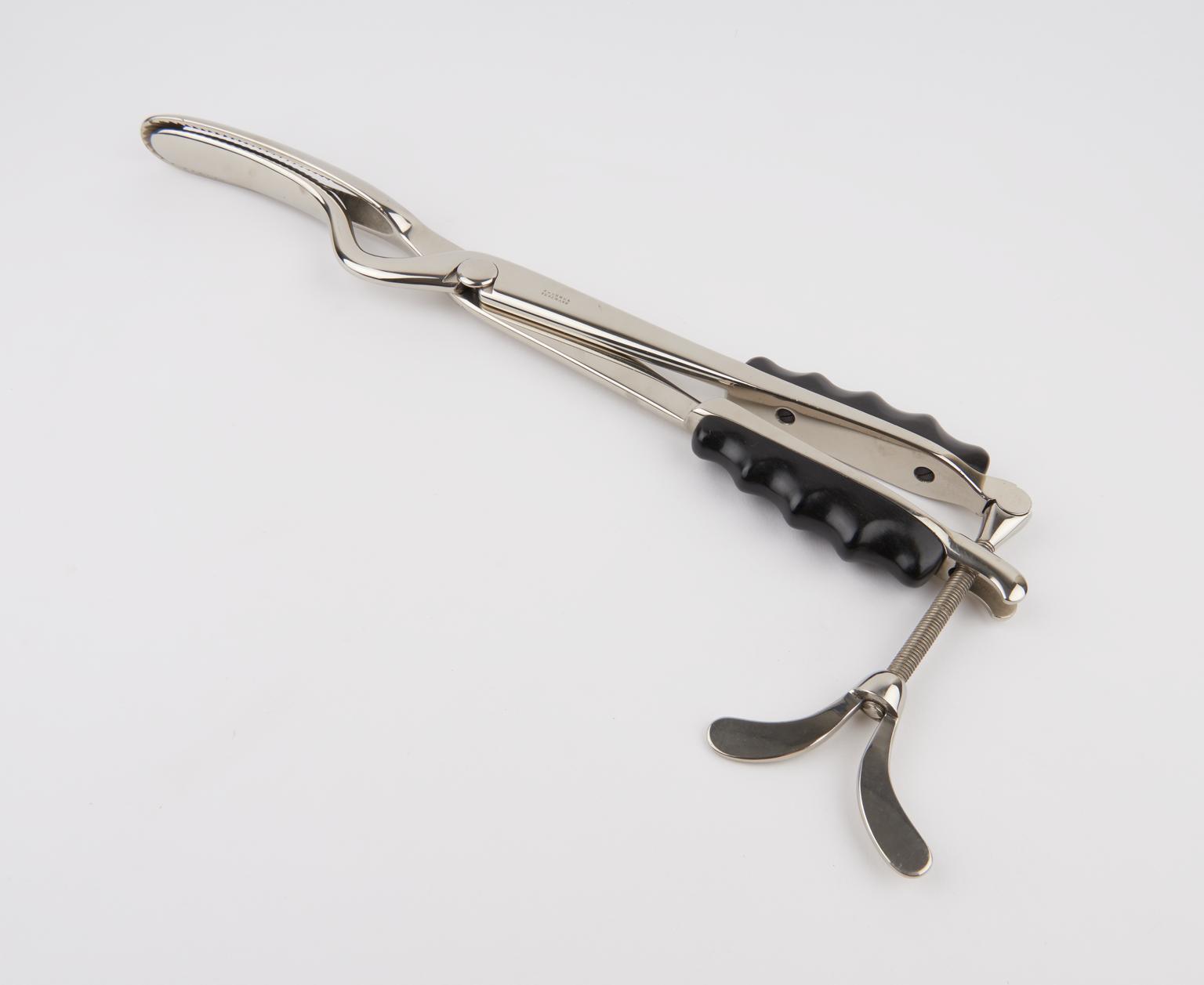
Craniotomy forceps
Craniotomy forceps with wooden handles
- Measurements:
-
length 385 mm
width 115 mm
- Object Number:
- A180574 Pt1
- type:
- craniotomy forceps
- Image ©
- The Board of Trustees of the Science Museum


 This image is released under a CC BY-NC-SA 4.0
Licence
This image is released under a CC BY-NC-SA 4.0
Licence
License this image for commercial use at Science and Society Picture Library
LicenseThis image is released under a CC BY-NC-SA 4.0
Licence
License this image for commercial use at Science and Society Picture Library
License
Science Museum Group
© The Board of Trustees of the Science Museum
Midwifery bag, by Krohne and Sesemann
Science Museum Group Collection
© The Board of Trustees of the Science Museum
Midwifery bag, by Krohne and Sesemann, English probably late 19th century
Instruments and medicines that might be required at the birth of a child are contained in this midwifery bag. The heavy leather box is more like a suitcase than a bag. It opens to reveal forceps held in leather straps in the lid, an instrument tin and four small glass bottles - three of which are marked ‘poison’. The instruments indicate the bag was only called on in dire circumstances, for example if the mother’s life was at risk. Craniotomy forceps are also included. These were heavy, toothed or ridged crushing instruments to break up the skull bones of a foetus. A cephalotribe punctured the infant’s skull.
The set almost certainly belonged to a male obstetric physician. They were originally known as men-midwives. They were not normally present at routine births. However, they would be called to assist if complications arose. The instruments were made by London-based firm Krohne and Sesemann, founded by Prussian immigrants in the 1860s.
Craniotomy forceps with wooden handles
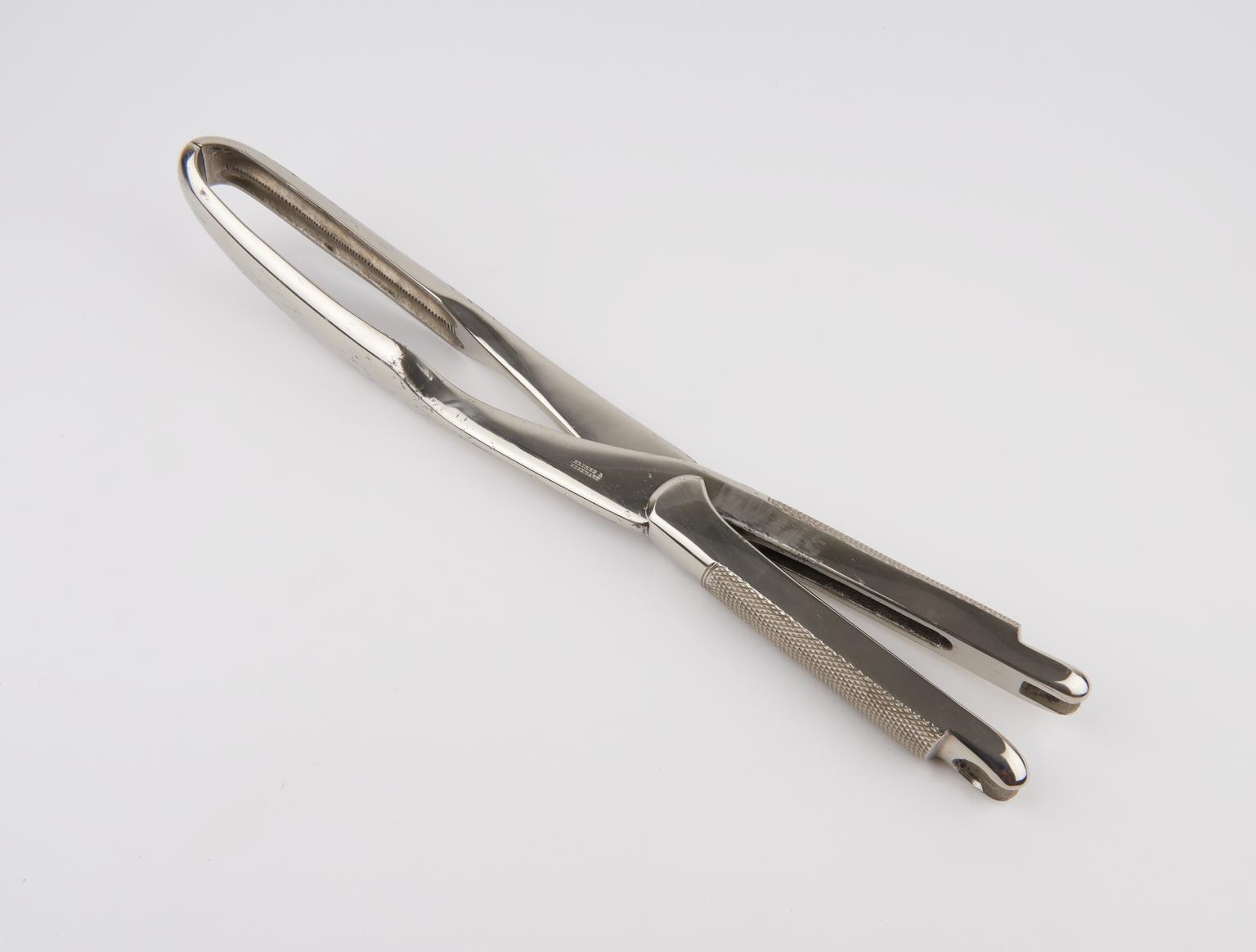
Cephalotribe, possibly Braxton Hicks type
Two bottles in leather covered case
Two bottles in leather covered case