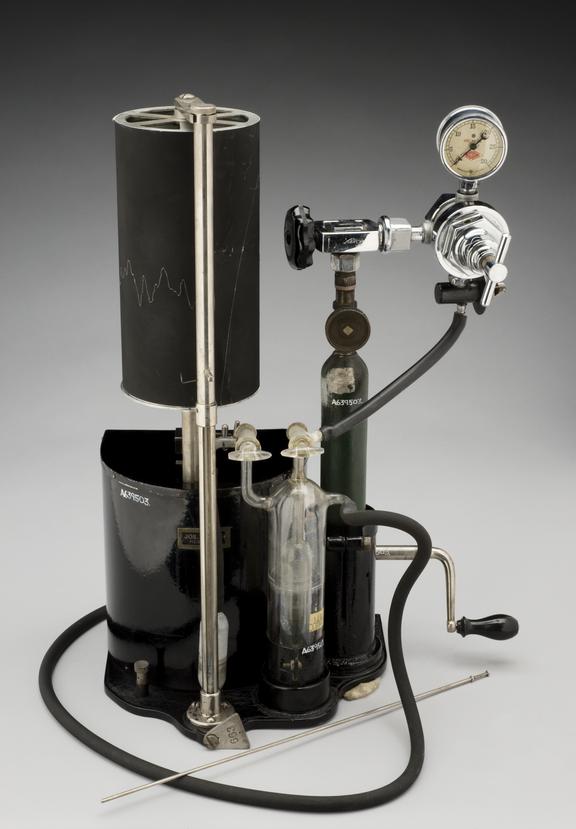
Rubin’s apparatus for uterotubal insufflation, New York, United States, 1928

Made:
1928 in New York
Utero-tubal insufflation apparatus, in case, metal

Creative Commons LicenseThis image is released under a CC BY-NC-SA 4.0 Licence

License this image for commercial use at Science and Society Picture Library

License

Utero-tubal insufflation apparatus, in case, metal
Science Museum Group Collection
© The Board of Trustees of the Science Museum

Utero-tubal insufflation apparatus, in case, metal, with instructions, advertisement and tin for typewriter ribbon, invented by Rubin, made by Becker, from Italian Hospital in London, American make, 1928

Potential blockage in the Fallopian tubes was assessed using this apparatus. It was developed by American gynaecologist Isidor Clinton Rubin (1883-1958). It blows carbon dioxide, via a cannula, into the uterus. The ease with which gas escaped through the Fallopian tubes was reflected by pressure changes on an instrument called a manometer. Blockage of the tubes is often due to previous infection or surgery. It is a common cause of infertility.

Rubin’s test formed a standard part of infertility investigations for many years. It was gradually replaced by an X-ray technique involving radio-opaque ‘dye’ injected into the uterus. The apparatus was made by American maker Joseph Becker and the Ohio Chemical and Manufacturing Company. It was used at the Italian Hospital in London.

Parts

Priced advertisement for utero-tubal insufflation apparatus

Priced advertisement for utero-tubal insufflation apparatus

Priced advertisement for utero-tubal insufflation apparatus, published by Becker, New York City, 1928

Measurements:
height 278 mm
width 216 mm
Materials:
paper
Object Number:
A639503 Pt1
type:
advertisement
Instructions for use of utero-tubal apparatus

Instructions for use of utero-tubal apparatus

Instructions for use of utero-tubal apparatus, printed in USA, 1928

Measurements:
height 280 mm
width 210 mm
Materials:
paper
Object Number:
A639503 Pt2
type:
instructions - document genres
Tin for typewriter ribbon

Tin for typewriter ribbon

Tin for typewriter ribbon, metal, by the Kolok Manufacturing Co. and by George Pulman, 24 Thayer Street, London, England, 1920-1930.

Measurements:
height 23 mm
diameter 64 mm
Materials:
tin
Object Number:
A639503 Pt3
type:
tin - can
Utero-tubal insufflation apparatus

Utero-tubal insufflation apparatus

Utero-tubal insufflation apparatus, without some items (see other parts for rest), made by Becker, from Italian Hospital in London, American make, 1928

Measurements:
case: height 572 mm
case, shut: length 300 mm
case, shut: width 240 mm
case, open: length 620 mm
Materials:
iron , leather , metal (unknown) , steel (metal) and tin (metal)
Object Number:
A639503 Pt4
type:
tubal insufflator
Image ©
The Board of Trustees of the Science Museum
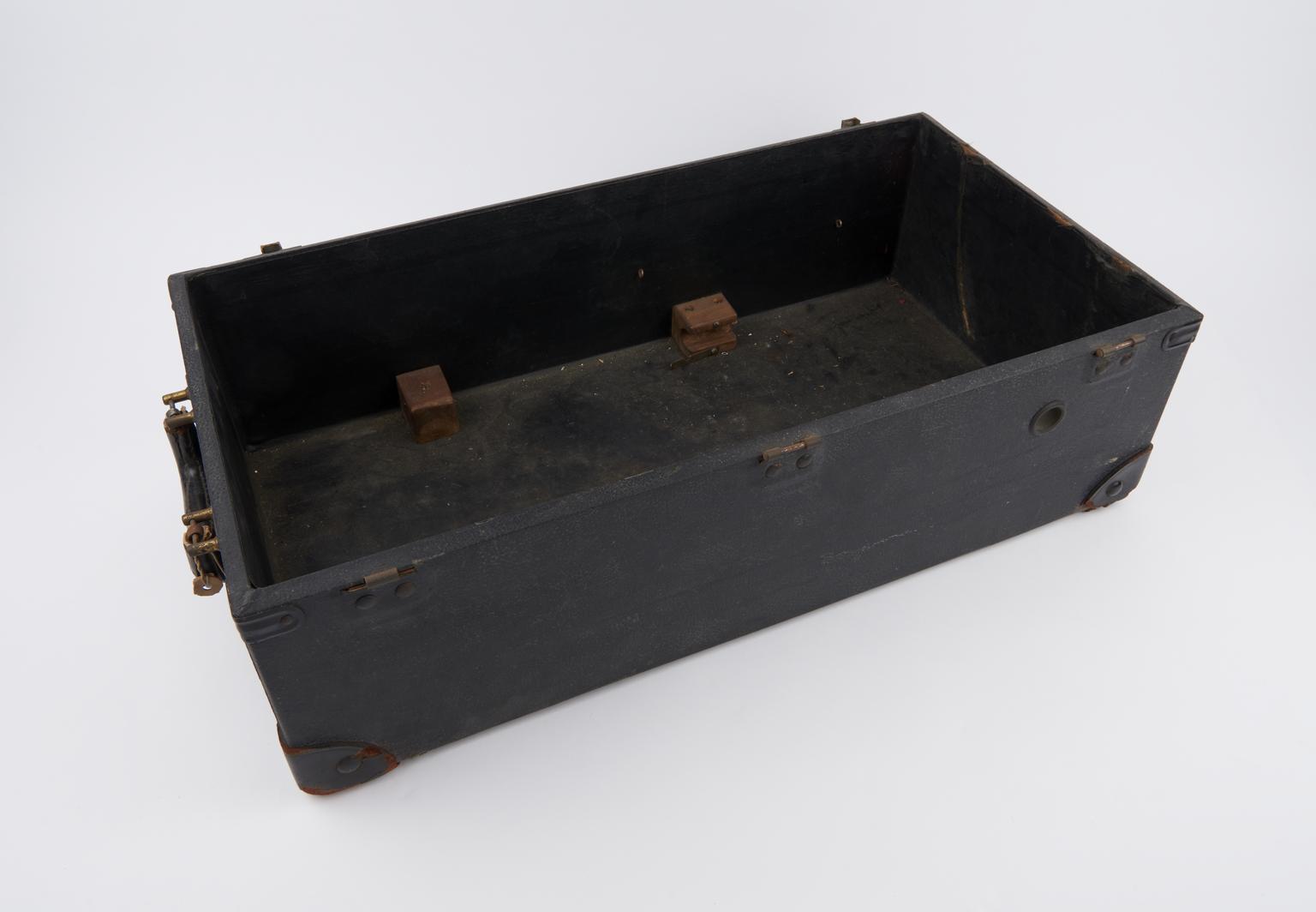
Case for utero-tubal insufflation apparatus

Case for utero-tubal insufflation apparatus

Case for utero-tubal insufflation apparatus, without contents (see other parts for rest), made by Becker, from Italian Hospital in London, American make, 1928

Measurements:
case: height 572 mm
case, shut: length 300 mm
case, shut: width 240 mm
case, open: length 620 mm
Materials:
iron , leather , metal (unknown) , steel (metal) and tin (metal)
Object Number:
A639503 Pt5
type:
case - container
Image ©
The Board of Trustees of the Science Museum
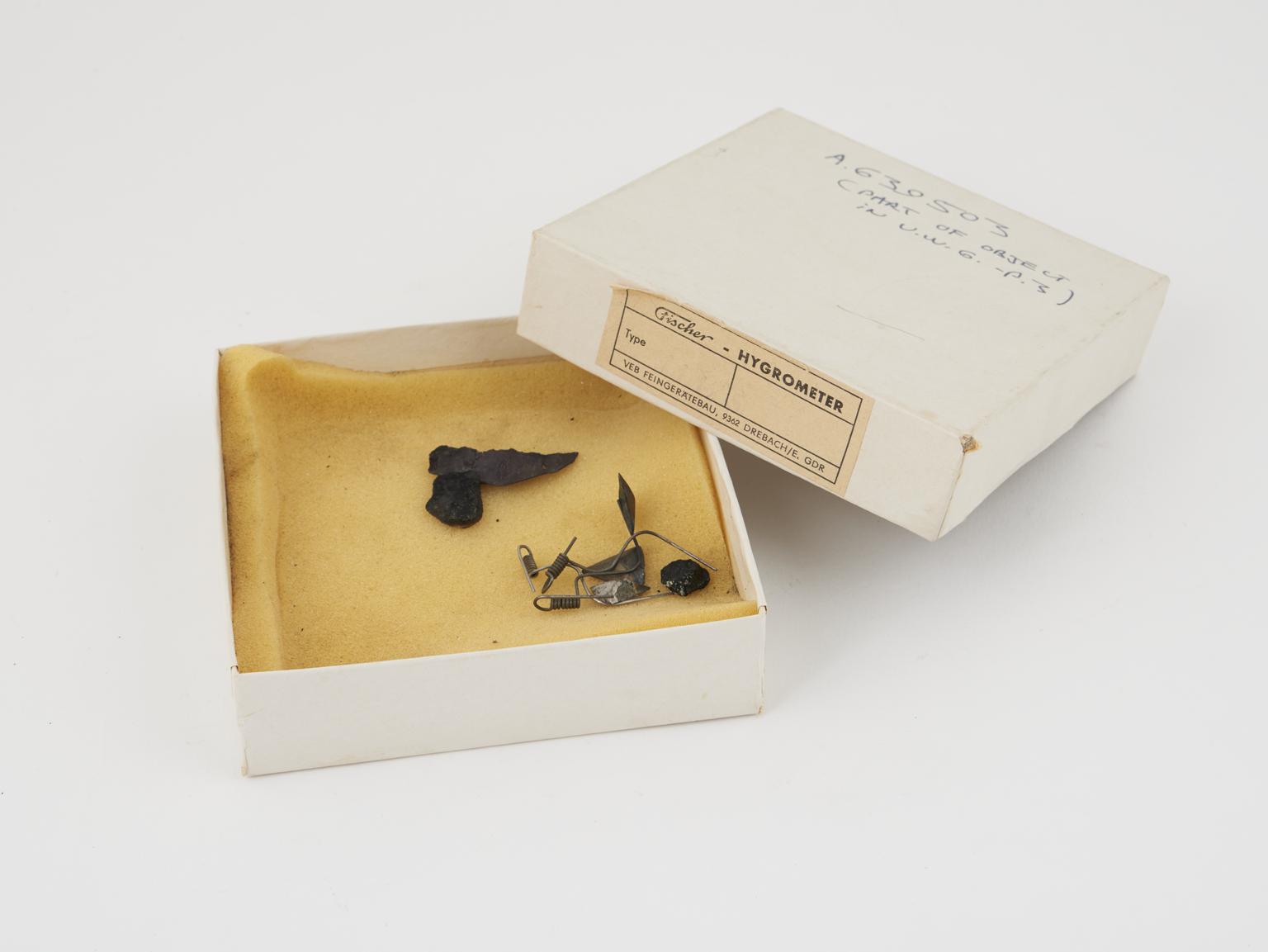
Rubin’s apparatus for uterotubal insufflation, New York, United States, 1928

Rubin’s apparatus for uterotubal insufflation, New York, United States, 1928

Cardboard box containing loose metal parts of utero-tubal insufflation apparatus, invented by Rubin, made by Becker, from Italian Hospital in London, American make, 1928

Measurements:
box: 115 mm x 115 mm x 31 mm,
Materials:
cardboard and metal (unknown)
Object Number:
A639503 Pt6
type:
tubal insufflator parts
Image ©
The Board of Trustees of the Science Museum