Oswald Hope Robertson 1886 - 1966
Oswald Hope Robertson was born in England and his parents emigrated to the United States when he was 18 months old. He studied medicine at Harvard and travelled to France during the First World War to work as a doctor behind the lines of the Western Front.
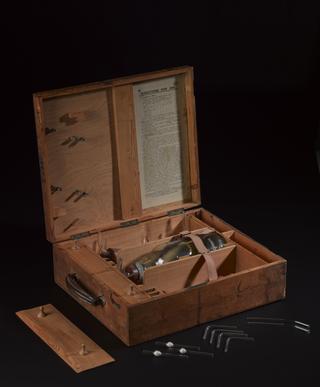
During the conflict, Robertson designed and pioneered portable blood transfusion equipment. His design was effective because the blood was collected in glass containers which held a small amount of sodium citrate, which acted as a preservative by preventing the blood from coagulating. If stored on ice such supplies could be viable for up to 28 days, but even in difficult battlefield conditions they could still be used several hours after being collected. Many previous attempts at blood transfusion involved direct person to person techniques, but Robertson’s design didn’t require the donor to be present. Once collected blood could be taken away and delivered to the patient who needed it.
Blood transfusion began to show its huge potential in the latter stages of the First World War and Robertson was at the forefront of those developments and he continued to innovate in the field. Through his blood preservation techniques he went on to develop some of the very first blood banks. After the war he travelled to China where in 1923 he became a Professor at the Peking Union Medical College in what is now called Beijing. Four year later he returned to the United States where he became head of the Department of Medicine at the University of Chicago, retiring in 1951.