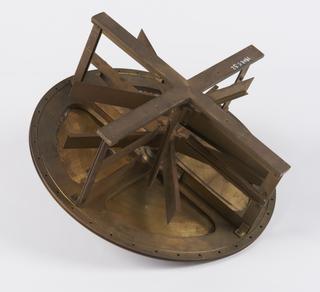
James Prescott Joule 1818 - 1889
- occupation:
- Physicist
- Nationality:
- English, British
- born in:
- Salford, Greater Manchester, England, United Kingdom
Amateur scientist of independent means (ran a brewery) who pioneered our understanding of energy and is celebrated in the name of the S.I. unit for heat. Joule was the son of a Salford brewer. Whilst working with his father, he developed a fascination with the relationship between force, heat and work. Joule was the first person to prove that heat is a form of energy.
How do you get heat out of mechanical work? James Prescott Joule (1818-1889) developed revolutionary ideas on energy and temperature. He established the Mechanical Equivalent of Heat which included a constant describing the conversion of heat into mechanical work. The International unit of energy, the joule, is named in his honour. The Museum's collections include all of Joule's scientific apparatus.
James Joule was born into a wealthy brewing family in Salford, the son of Benjamin and Alice. He was initially educated at home then, at the age of 16, began to study under John Dalton, the eminent Manchester scientist. Joule soon began to conduct electrical and magnetic experiments at a laboratory built in the cellar of his father's home in Pendlebury. He was fascinated by the possibility that electro-magnets might become useful as sources of industrial power. He began to link together electricity, heat and mechanical power by observing the transformations they went through.
In 1840, Joule published a paper in the Proceedings of the Royal Society describing the first of the laws with which he is associated. Now called Joule's Law, it states that heat is produced in an electrical conductor. In the experiments behind this law, he had simply placed coils of different kinds of metal in jars of water and measured the change in temperature. He was elected a member of the Manchester Literary & Philosophical Society in 1842 and held several offices before being elected President in 1860.
In 1843, he read a paper before the British Association at Cork, 'On the Calorific Effects of Magneto-Electricity and on the Mechanical Value of Heat'. This determined the physical constant now known as 'J', or Joule's Equivalent and showed that heat was a form of energy.
Joule's father moved from Pendlebury to Whalley Range and built him a new laboratory. However, James used the cellar of the family brewery to carry out more exact experiments on the value of 'J', as determined by the friction of water, in order to minimise temperature fluctuations. He used minutely accurate thermometers and a travelling microscope to etch the scale of each thermometer precisely. These were made for him by the well-known Manchester scientific instrument maker, J B Dancer.
Related Objects
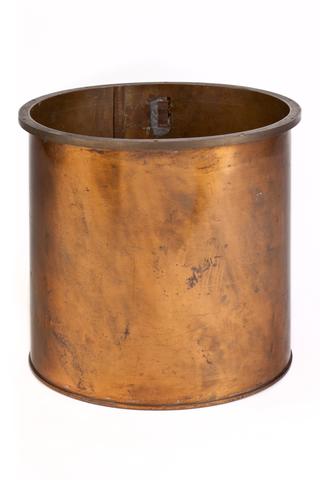
Replica of calorimeter used by James Joule
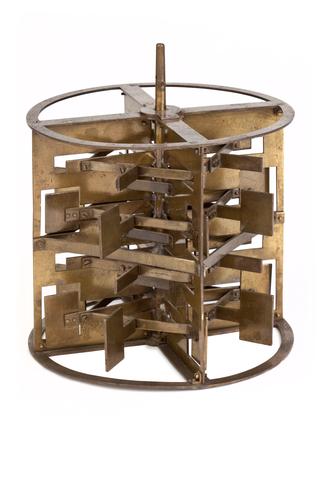
Paddlewheel Replica
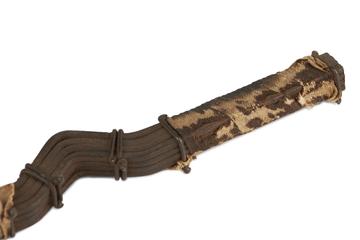
Electromagnet Core made by James Joule

Electric motor used by James Joule

Joule's Cast Iron Friction Apparatus (Calorimeter), 1849
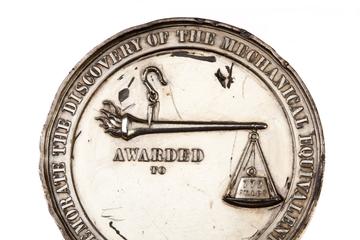
James Joule Commemorative Medal
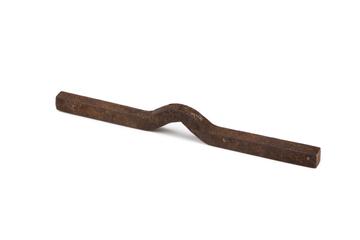
Electromagnet Core
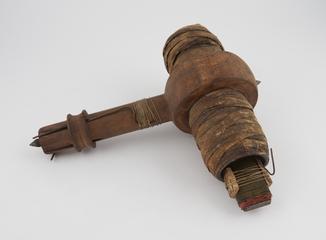
Joule's Electro-Magnet (Calorimeter) Apparatus, 1843
Mechanical equivalent of heat apparatus
