Edwin Lankester 1814 - 1874
- occupation:
- Public health reformer and natural historian
- Nationality:
- British
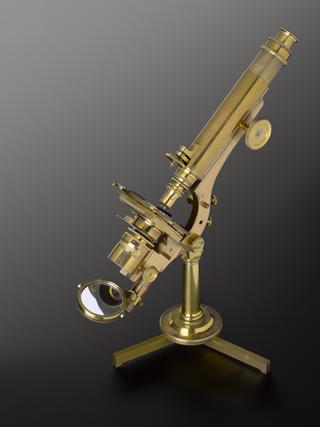
Edwin Lankester was a significant scientist, surgeon and naturalist working in the 19th century. Having used microscopes as early as 1842, he became the president of the (Royal) Microscopical Society of London, as well being first president of the Quekett Microscopical Club. From 1857 he used his extensive experience to produce the best-selling publication ‘Half-hours with the Microscope’ which remained continuously in print until 1918.
He is also a key figure in public health developments of the period – most notably through his role in John Snow’s epidemiological investigations into the 1854 cholera outbreak that centred around the Broad Street water pump in Soho. The Broad Street events loom large in the history of disease both nationally and globally. Lankester’s drive and interventions were crucial to John Snow’s investigations. He was the Chairman of the Cholera Inquiry Committee, which held meetings from late 1854 into the Summer of 1855 and without this Committee Snow would have been limited in his abilities to pursue things further.
In October 1854, very soon after the outbreak was over, Lankester also examined water from the Broad Street pump under the microscope. He noted that of the several wells in the affected district, “only that feeding the Broad St pump had contained organic matter”. Lankester later became one of the very first Medical Officers of Health in Britain. These were individuals whose investigations and expertise was applied to public health regulations and law-making. Lankester’s remit included the area of London most affected by the 1854 outbreak.
Related Objects