This image is released under a
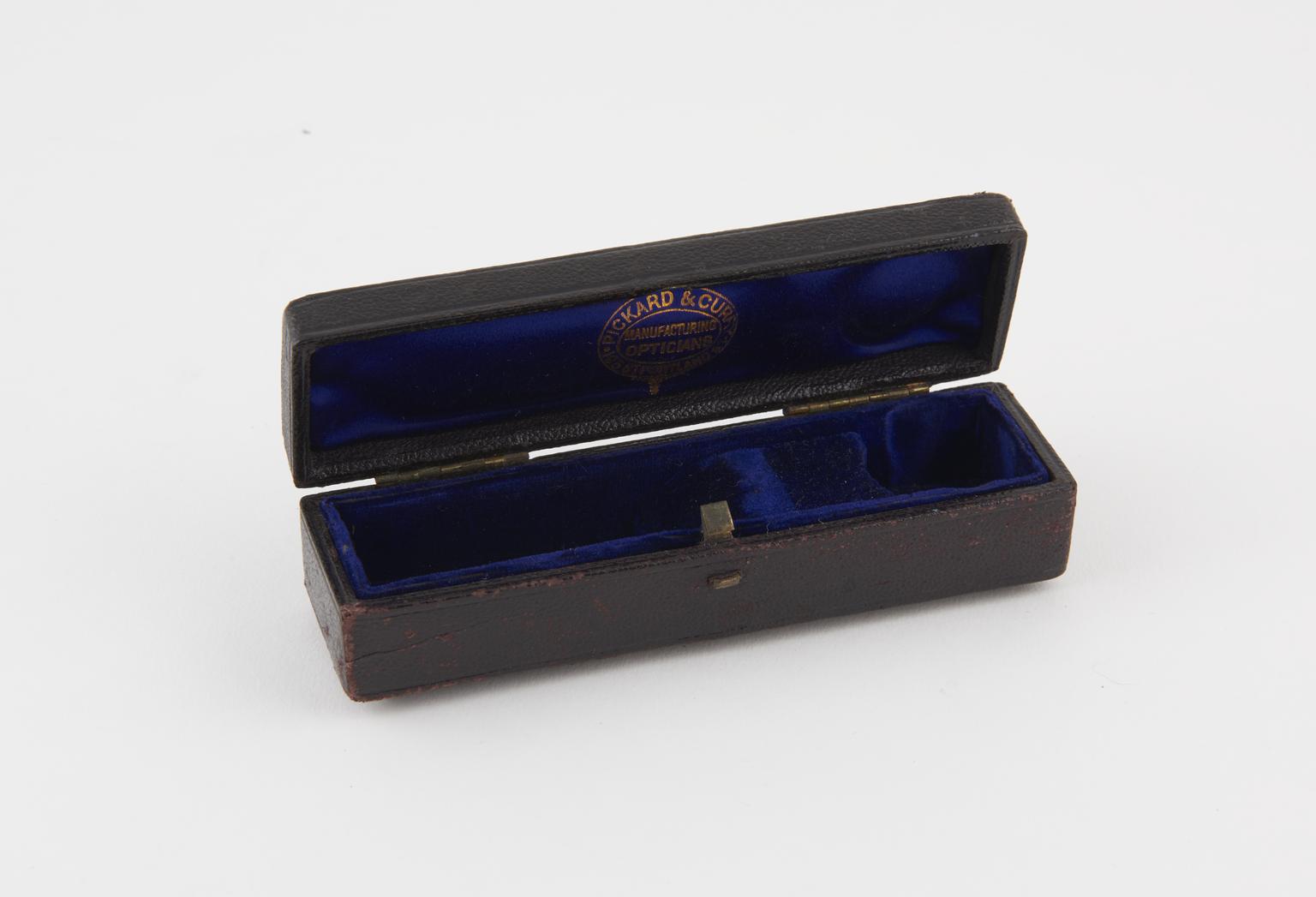
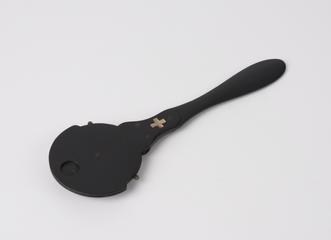
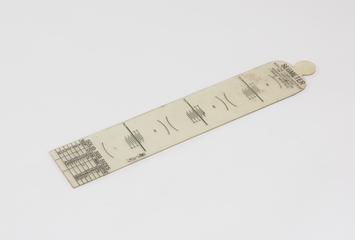
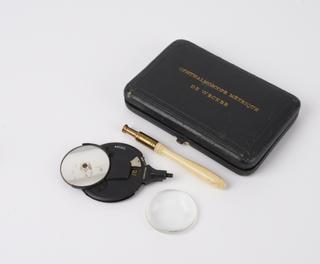
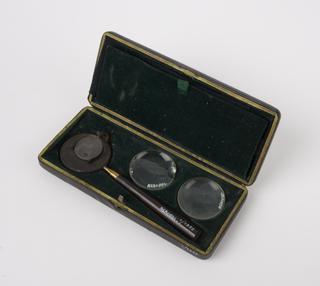
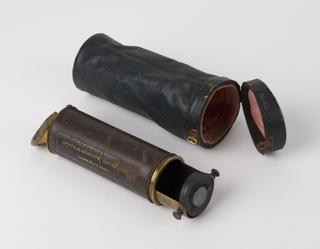
Tonometer, London, England, 1870-1900
Brass tonometer, for measuring ocular pressure in leather covered case, by Pickard and Curry, 195 Great Portland Street, London, England, 1870-1900.
More
Tonometers measure pressure within the eye. This is known as intraocular pressure. Glaucoma is a condition where the optic nerve becomes damaged leading to loss of sight. Glaucoma raises intraocular pressure. Tonometers were refined in the 1880s by German physiologist Adolph Eugene Fick (1829-1901). Cocaine was introduced as a local anaesthetic in 1887. This allowed tonometers to be applied directly to the cornea. This brass tonometer was made by instrument makers Pickard and Curry of London.
- Measurements:
-
overall (main body): 70 mm x 23 mm x 23 mm, .1kg
overall (brass ring): 22 mm 25 mm,
- Materials:
- instrument, brass , instrument, steel , instrument, glass and instrument, ivory
- Object Number:
- A606932/1
- type:
- ophthalmic tonometer
- Image ©
- The Board of Trustees of the Science Museum