Chronophotographe double-use camera

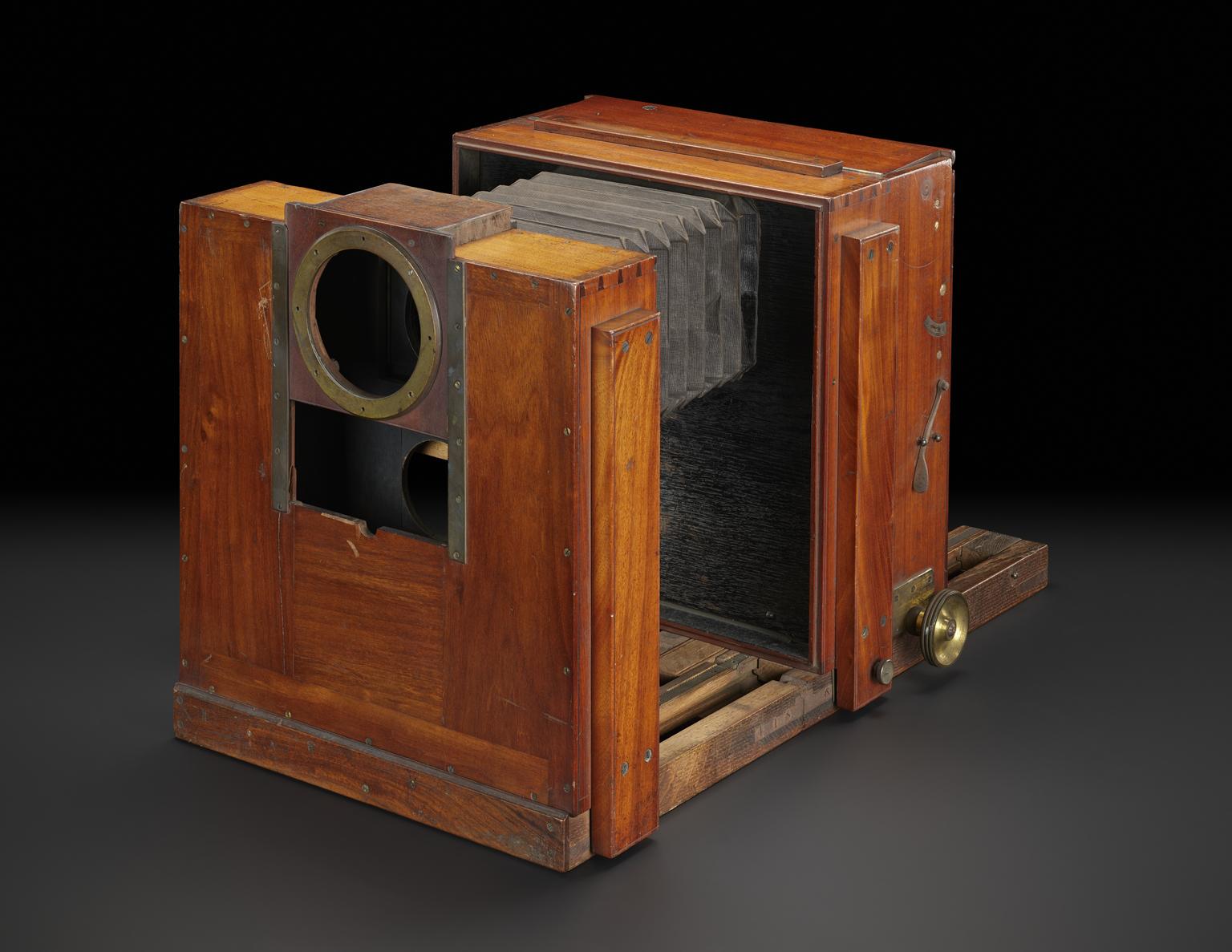
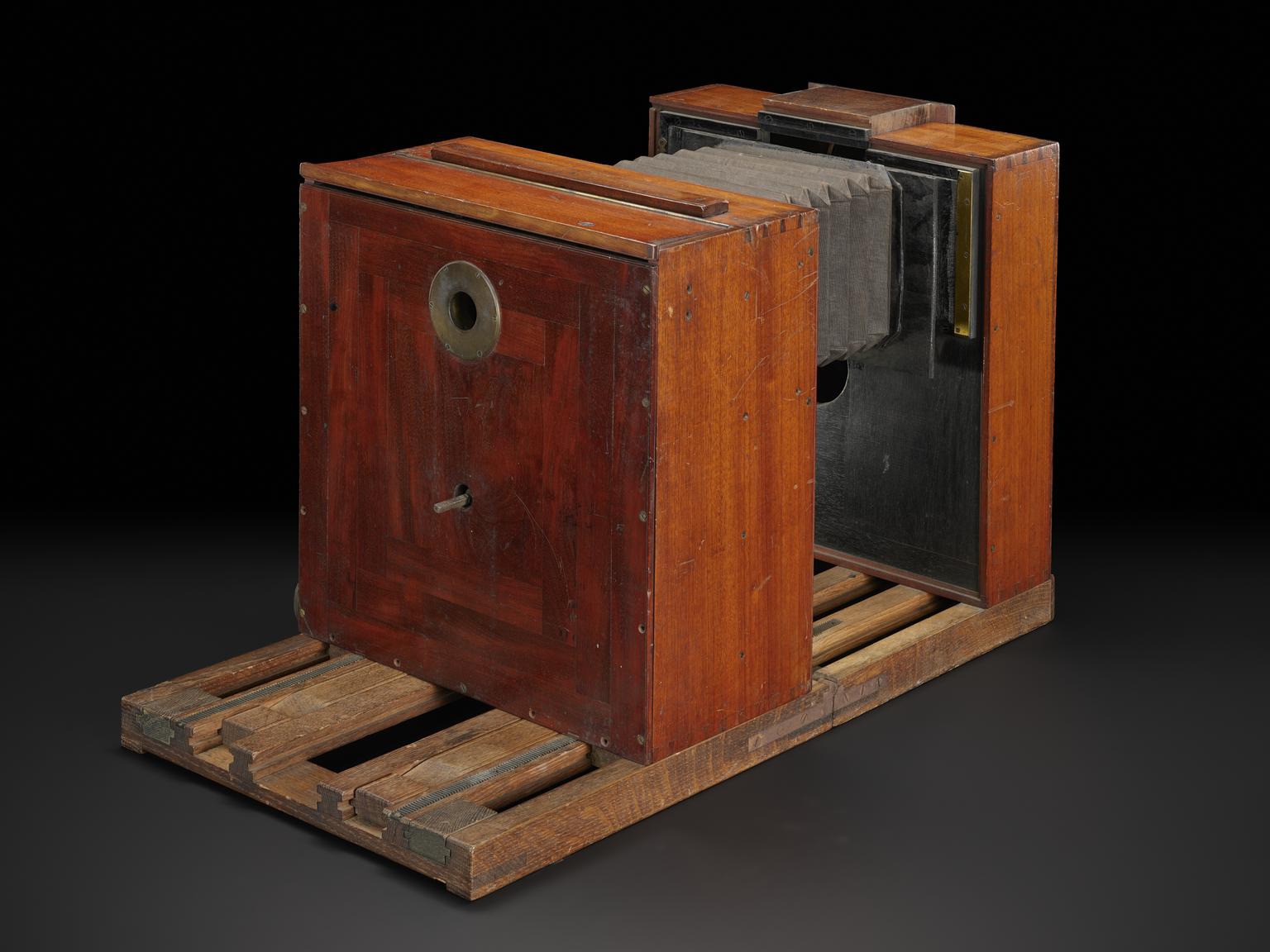
Etienne Jules Marey's Chrono-photographic camera, without lens (B3030), 1890.

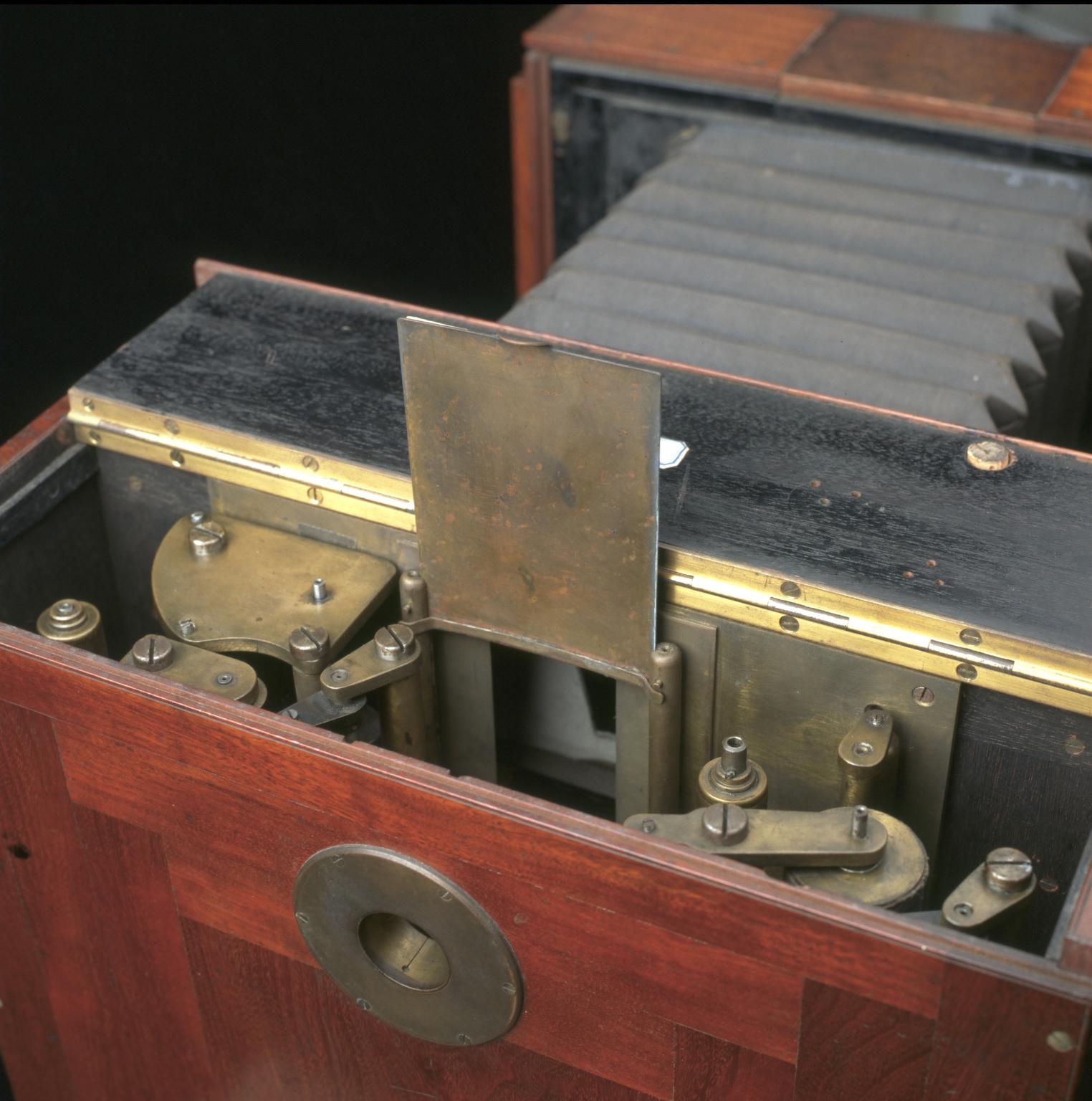
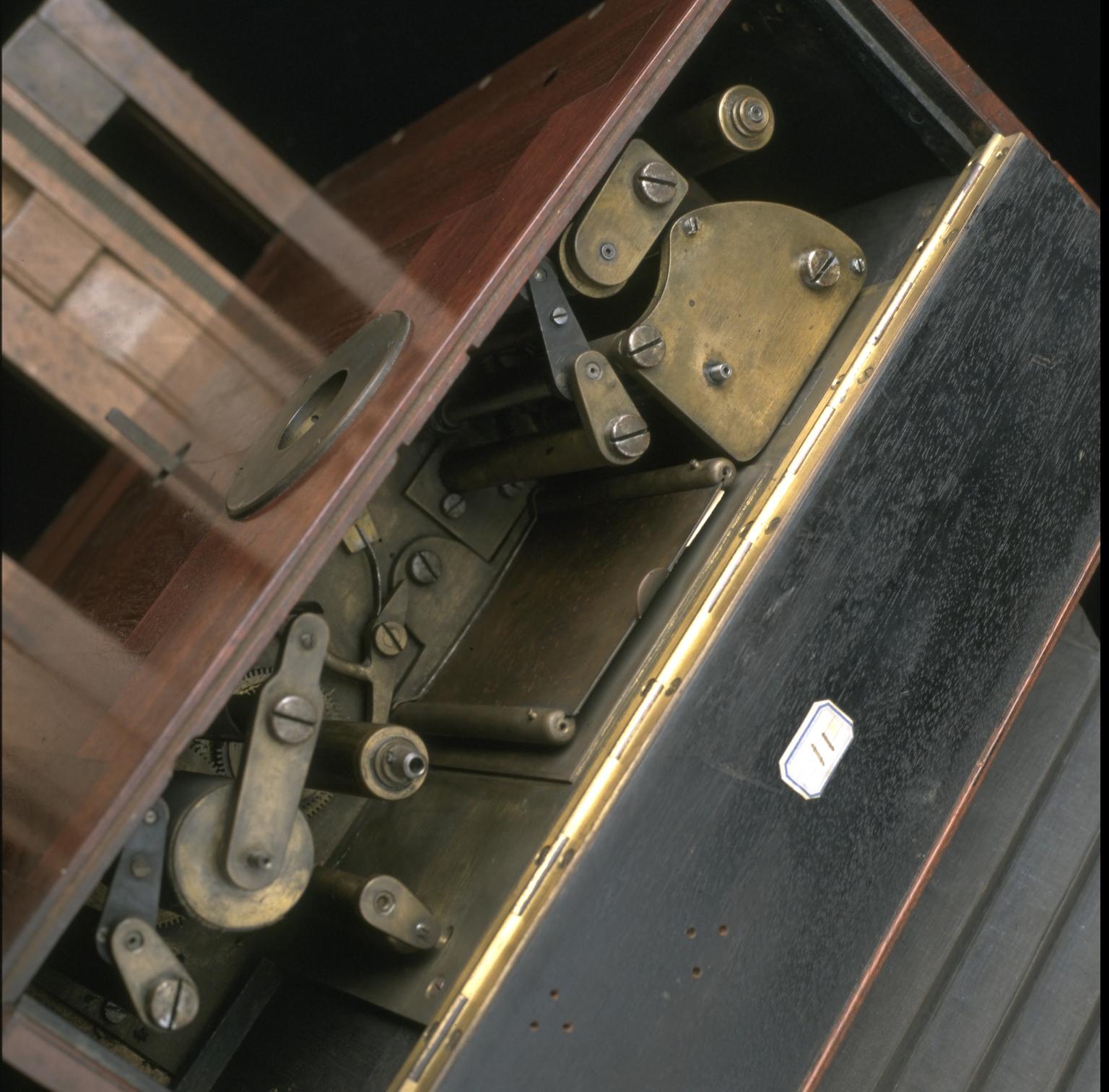
This camera was used to take sequential images on a single, static photographic plate or on strips of celluloid film. The physiologist Etienne-Jules Marey (1830-1904) pioneered the use of photography to record and analyse movement. This camera (which lacks a lens) used celluloid film, introduced by George Eastman in 1889, and was the first to demonstrate the essential characteristics of a cine camera - exposing a series of still images on a ribbon of film, which was moved intermittently between exposures.

Details

Category:
Cinematography
Collection:
Sir Henry Wellcome's Museum Collection
Object Number:
1981-894
Materials:
wood (unidentified), metal (unknown), glass and fabric
Measurements:
overall: 410 mm x 410 mm x 695 mm,
type:
chronophotographe
credit:
Wellcome Trust

Parts

Chronophotographe double-use camera

Etienne Jules Marey's Chrono-photographic camera, without lens (B3030), 1890.

More

This camera was used to take sequential images on a single, static photographic plate or on strips of celluloid film. The physiologist Etienne-Jules Marey (1830-1904) pioneered the use of photography to record and analyse movement. This camera (which lacks a lens) used celluloid film, introduced by George Eastman in 1889, and was the first to demonstrate the essential characteristics of a cine camera - exposing a series of still images on a ribbon of film, which was moved intermittently between exposures.

Measurements:
overall: 410 mm x 410 mm x 695 mm,
Materials:
wood (unidentified) , metal (unknown) , glass and fabric
Object Number:
1981-894/1
type:
chronophotographe
Image ©
The Board of Trustees of the Science Museum
Plate holder for Etienne Jules Marey's Chrono-photographic camera, without lens (B3030), 1890.

Plate holder for chronophotographe double-use camera

Plate holder for Etienne Jules Marey's Chrono-photographic camera, without lens (B3030), 1890.

More

This camera was used to take sequential images on a single, static photographic plate or on strips of celluloid film. The physiologist Etienne-Jules Marey (1830-1904) pioneered the use of photography to record and analyse movement. This camera (which lacks a lens) used celluloid film, introduced by George Eastman in 1889, and was the first to demonstrate the essential characteristics of a cine camera - exposing a series of still images on a ribbon of film, which was moved intermittently between exposures.

Materials:
wood (unidentified)
Object Number:
1981-894/2
type:
plate holder