
Two Spools of Celluloid Made by Louis Le Prince and Case

Two Spools of Celluloid Made by Louis Le Prince and Case

Creative Commons LicenseThis image is released under a CC BY-NC-SA 4.0 Licence

License this image for commercial use at Science and Society Picture Library

License

Science Museum Group Collection
© The Board of Trustees of the Science Museum

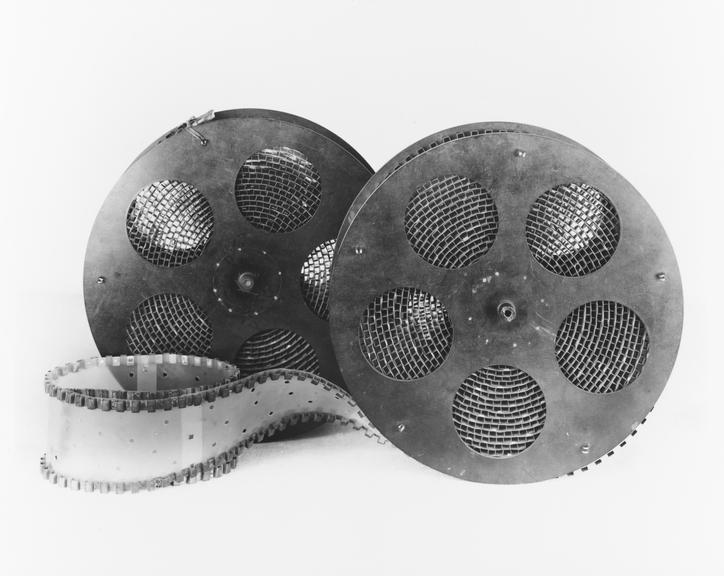
Two spools of celluloid film with silver-notched margins for developing film, made by Louis Le Prince in 1888-1889 and Case.

On 14 October 1888, Louis Aimé Augustin Le Prince stood in the garden of his in-laws home in Leeds and with the bulky wood-and-brass film camera he had built, captured footage of his family. Roundhay Garden scene is the oldest surviving film in existence. On the same day he also shot his son playing an accordion on the steps of the house. Later that month, he filmed traffic moving across Leeds Bridge.

Though he lacked the financial backing and research facilities of Thomas Edison and the Lumière Brothers, the acknowledged pioneers of motion pictures, and did not live to exploit his invention commercially, Louis Le Prince came close to achieving a successful process of cinematography.

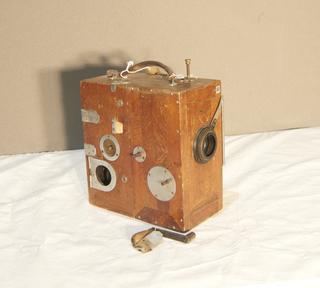
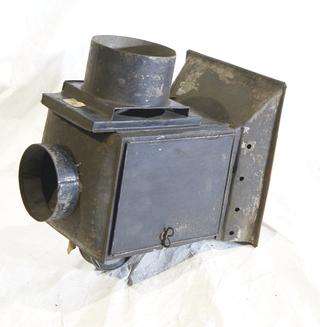
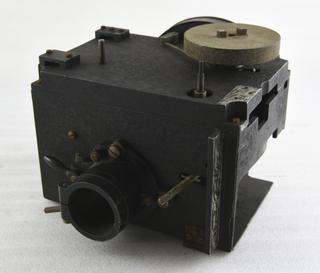
The camera, or 'receiver' as Le Prince called it, was made at his workshop in Leeds in 1888. The camera used 2 3/8-inch-wide un-perforated film which was wound past the lens via a pair of spools. The film was held fast for exposure by a flat, brass plate and the exposure controlled by way of a circular slotted brass shutter.
Details

Category:
Cinematography
Object Number:
1931-5
Materials:
celluloid (cellulose) and metal (unknown)
type:
celluloid
credit:
G M Le Prince

Parts

Two spools of celluloid film with silver-notched margins for developing film, made by Louis Le Prince in 1888-1889.

Two Spools of Celluloid Made by Louis Le Prince

Two spools of celluloid film with silver-notched margins for developing film, made by Louis Le Prince in 1888-1889.

More

On 14 October 1888, Louis Aimé Augustin Le Prince stood in the garden of his in-laws home in Leeds and with the bulky wood-and-brass film camera he had built, captured footage of his family. Roundhay Garden scene is the oldest surviving film in existence. On the same day he also shot his son playing an accordion on the steps of the house. Later that month, he filmed traffic moving across Leeds Bridge.

Though he lacked the financial backing and research facilities of Thomas Edison and the Lumière Brothers, the acknowledged pioneers of motion pictures, and did not live to exploit his invention commercially, Louis Le Prince came close to achieving a successful process of cinematography.

The camera, or 'receiver' as Le Prince called it, was made at his workshop in Leeds in 1888. The camera used 2 3/8-inch-wide un-perforated film which was wound past the lens via a pair of spools. The film was held fast for exposure by a flat, brass plate and the exposure controlled by way of a circular slotted brass shutter.
Materials:
celluloid (cellulose) and metal (unknown)
Object Number:
1931-5/1
type:
celluloid
Case for Two Spools of Celluloid Made by Louis Le Prince

Case for Two Spools of Celluloid Made by Louis Le Prince

Case for two spools of celluloid made by Louis Le Prince

More

On 14 October 1888, Louis Aimé Augustin Le Prince stood in the garden of his in-laws home in Leeds and with the bulky wood-and-brass film camera he had built, captured footage of his family. Roundhay Garden scene is the oldest surviving film in existence. On the same day he also shot his son playing an accordion on the steps of the house. Later that month, he filmed traffic moving across Leeds Bridge.

Though he lacked the financial backing and research facilities of Thomas Edison and the Lumière Brothers, the acknowledged pioneers of motion pictures, and did not live to exploit his invention commercially, Louis Le Prince came close to achieving a successful process of cinematography.

The camera, or 'receiver' as Le Prince called it, was made at his workshop in Leeds in 1888. The camera used 2 3/8-inch-wide un-perforated film which was wound past the lens via a pair of spools. The film was held fast for exposure by a flat, brass plate and the exposure controlled by way of a circular slotted brass shutter.
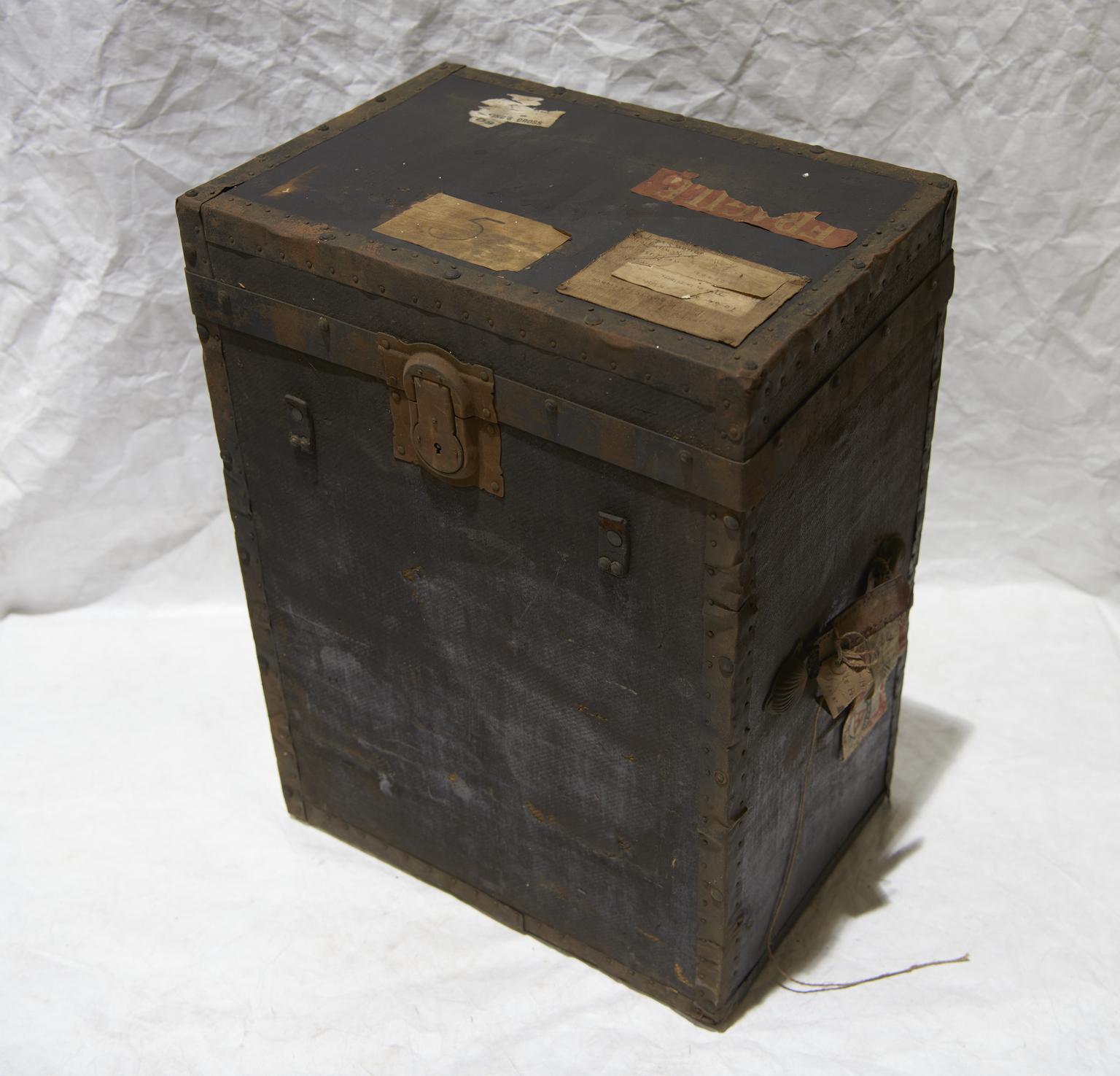
Measurements:
overall: 650 mm x 490 mm x 330 mm,
Materials:
wood (unidentified)
Object Number:
1931-5/2
type:
case
Image ©
The Board of Trustees of the Science Museum