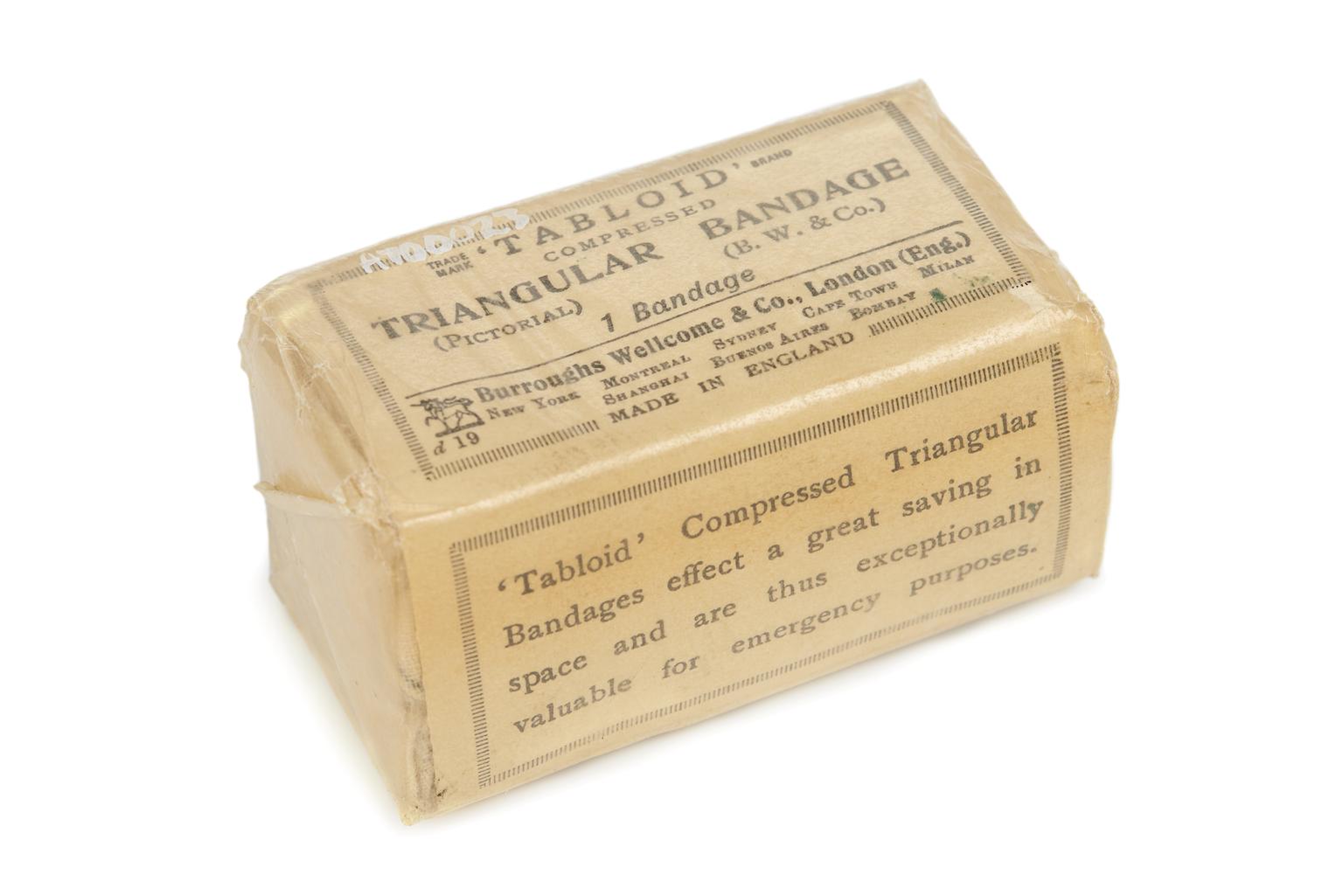
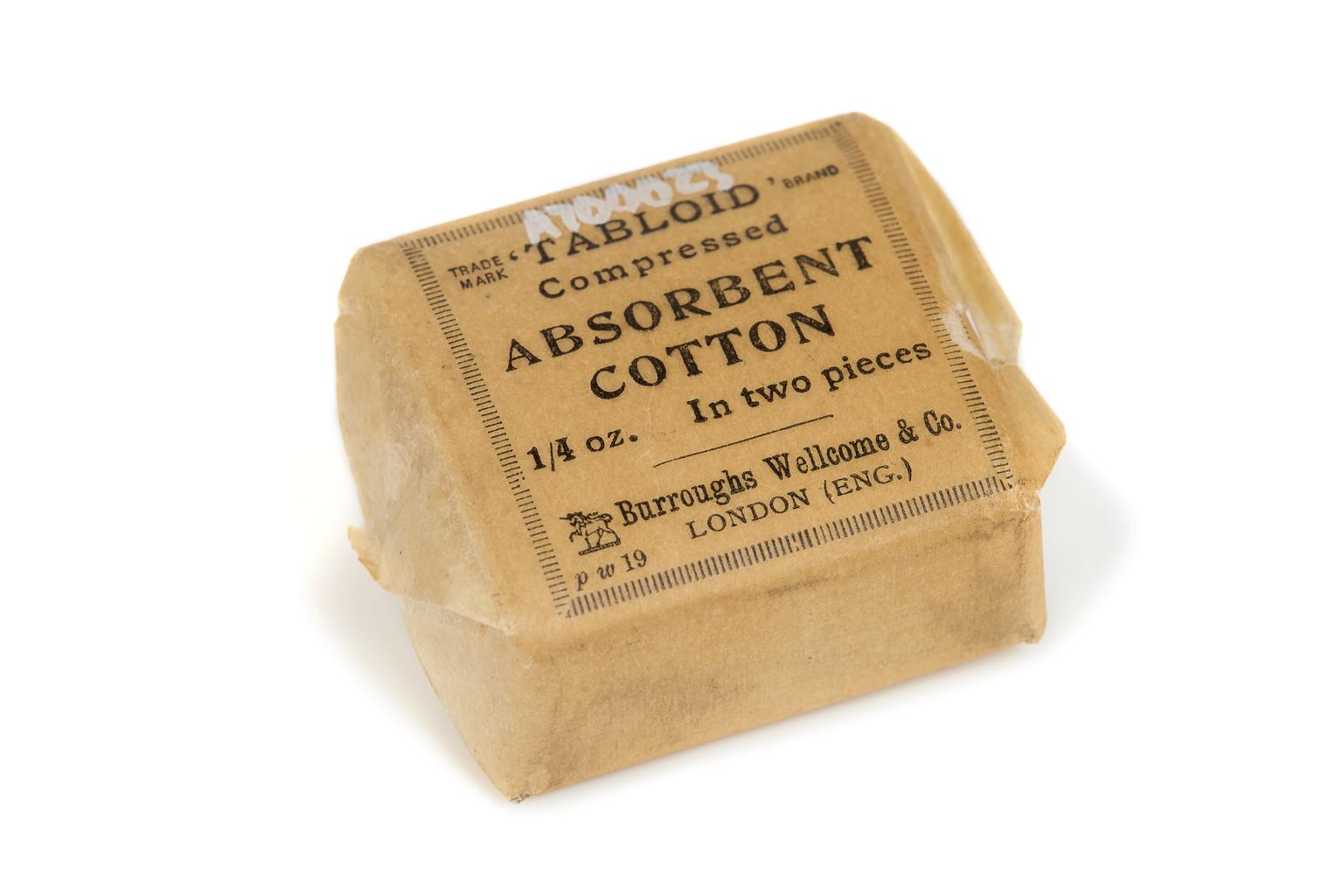
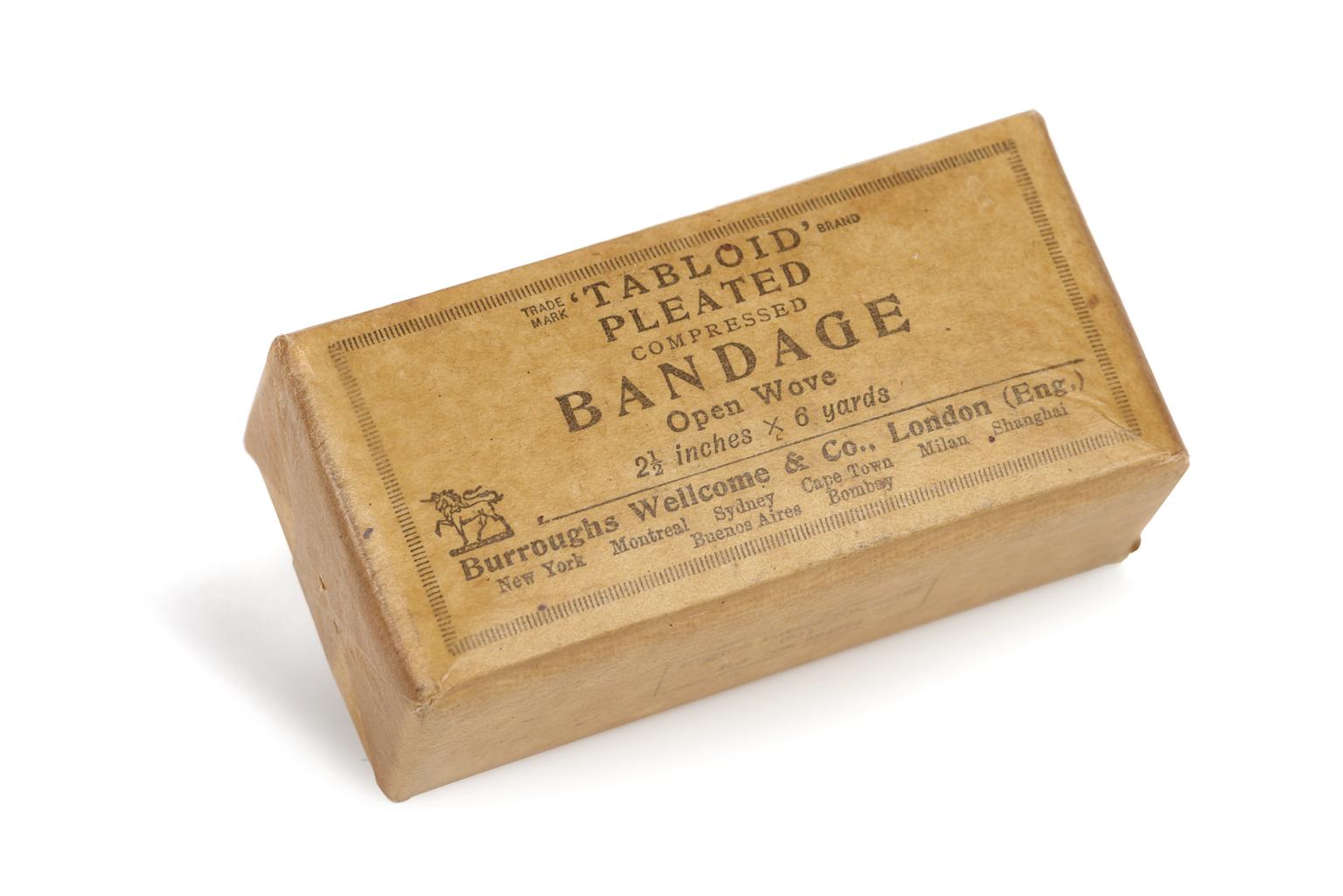
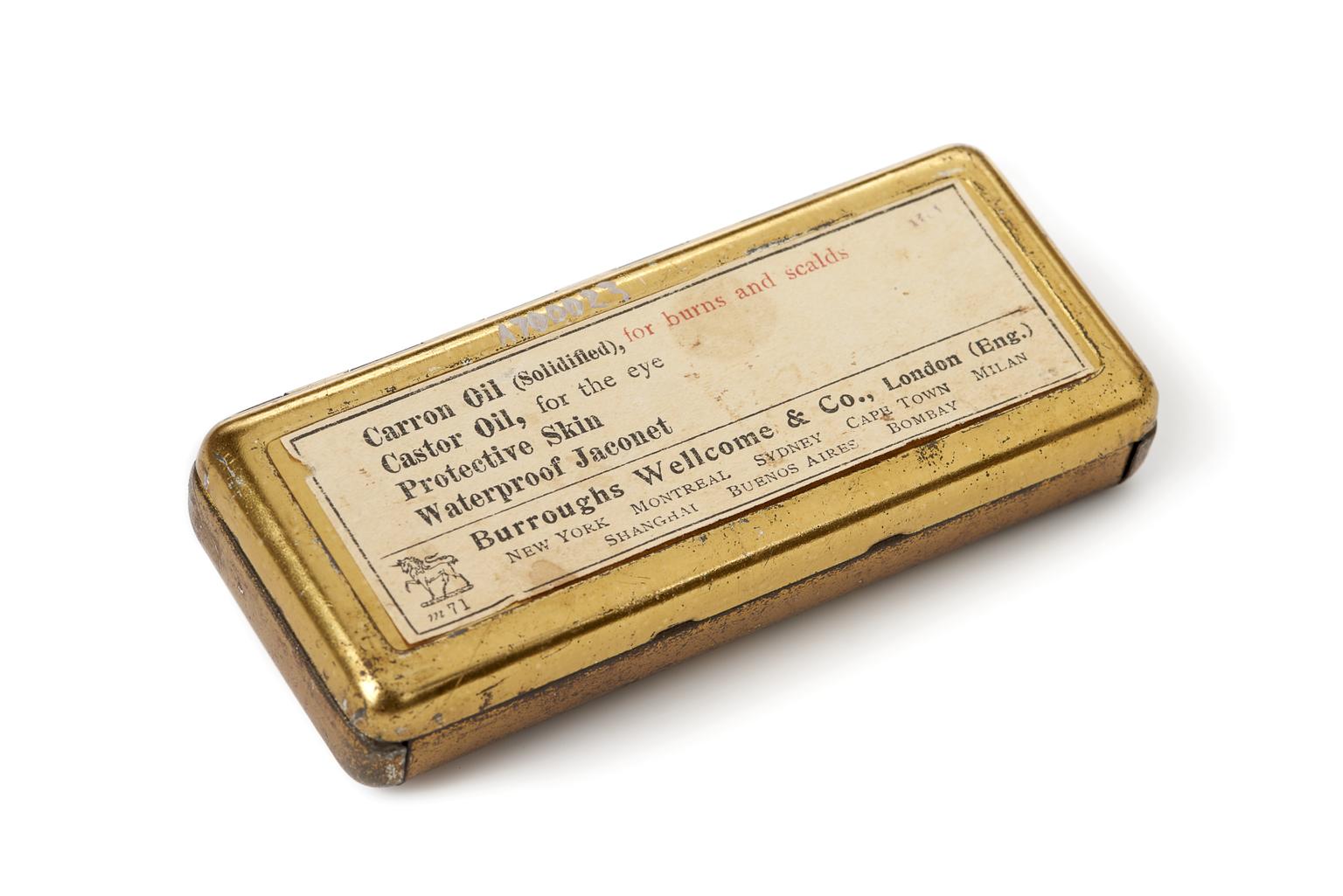
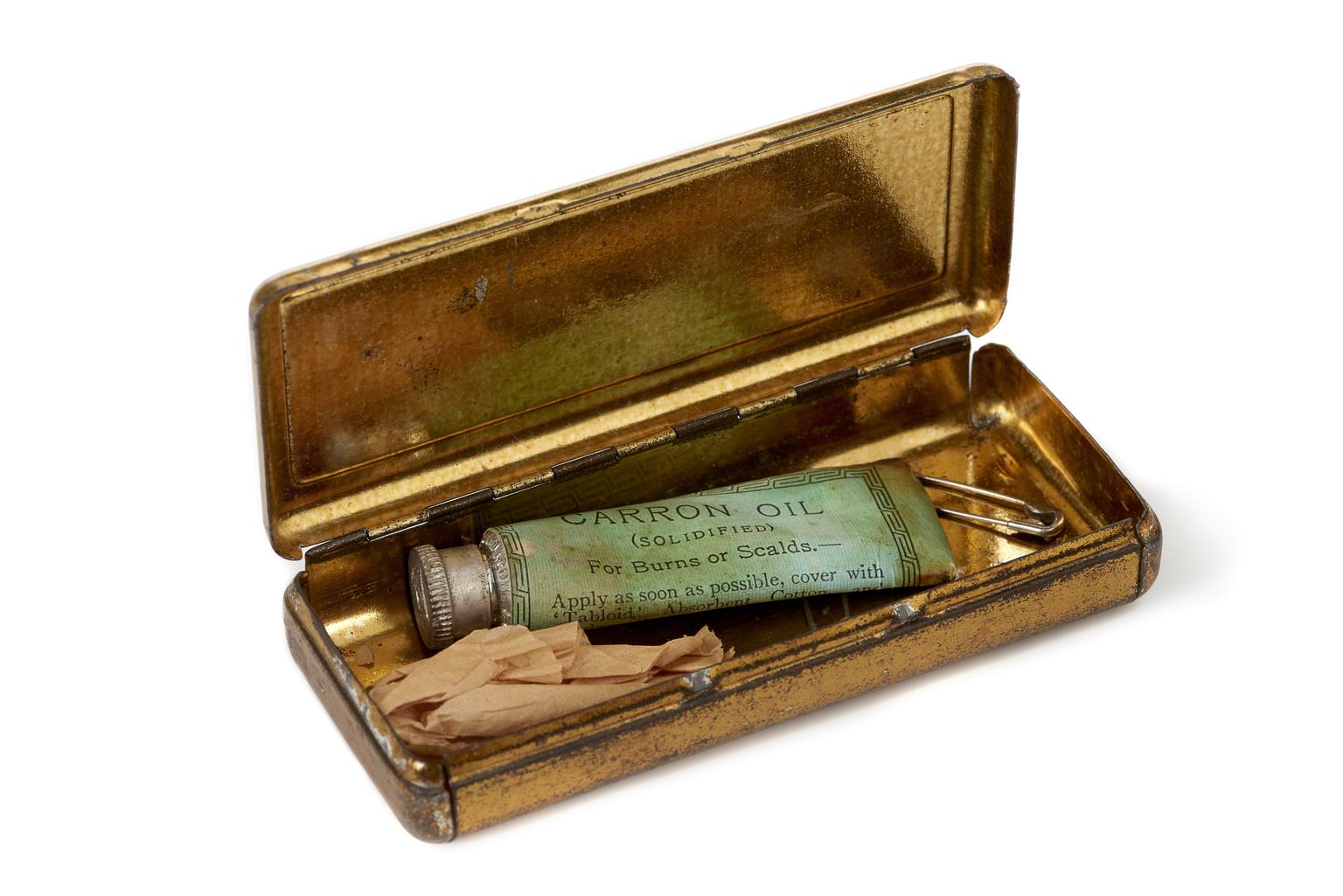
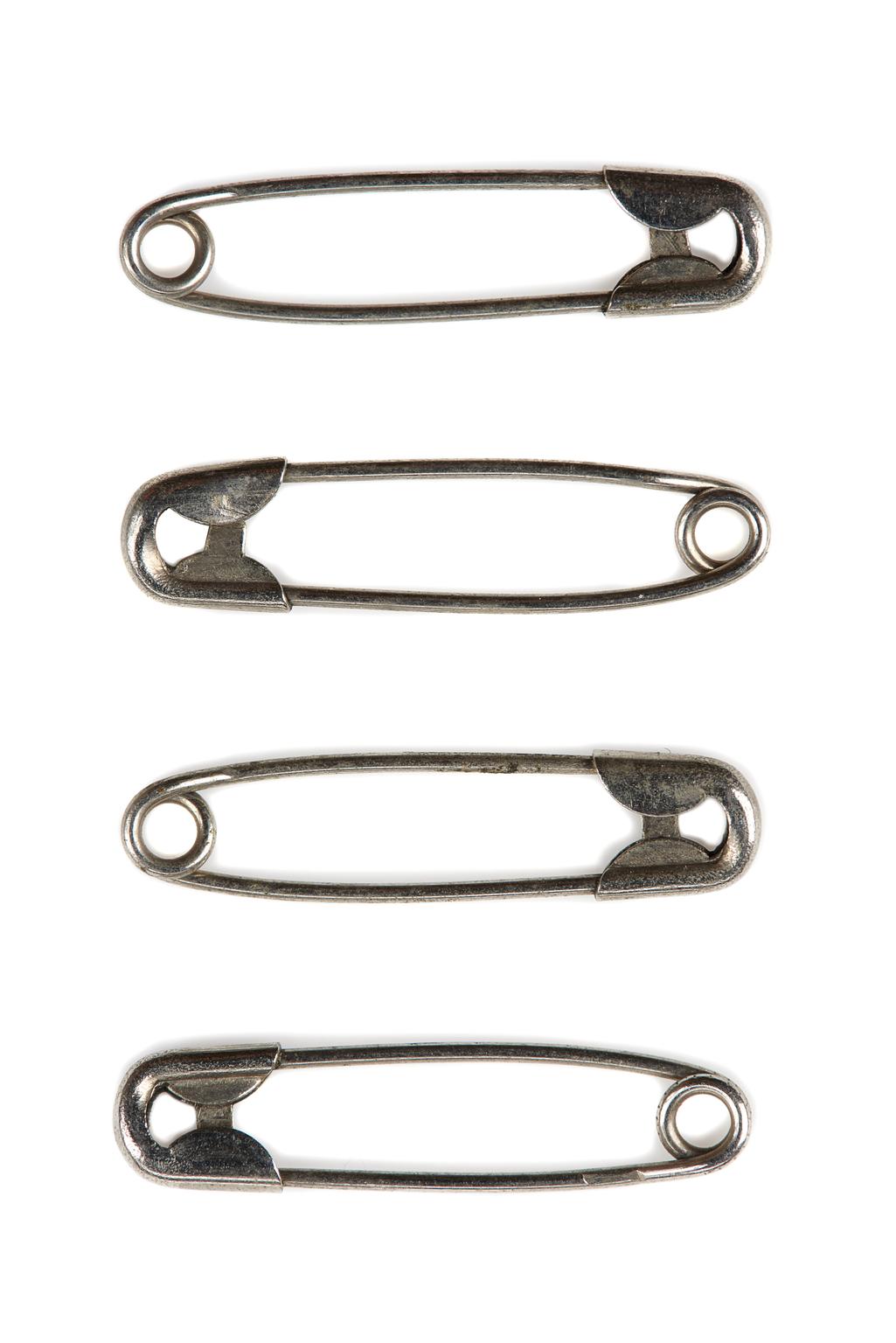
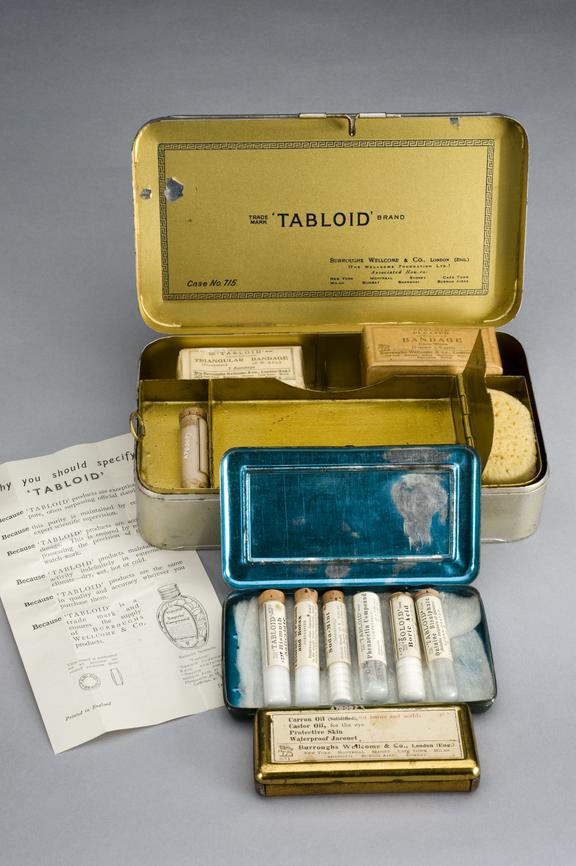
Tabloid first aid kit used by Alcock and Brown, on their first transatlantic non-stop flight, by Burroughs Wellcome and Co., 1919
This first aid kit was used on the first non-stop transatlantic flight on 14-15 June 1919 by Sir Arthur Whitten Brown (1886-1948) and Sir John William Alcock (1892-1919). Alcock and Brown completed the treacherous crossing in 16 hours 27 minutes. The flight was a matter of national prestige. The men shared the £10,000 prize from the Daily Mail, which had been set up to encourage British aviation.
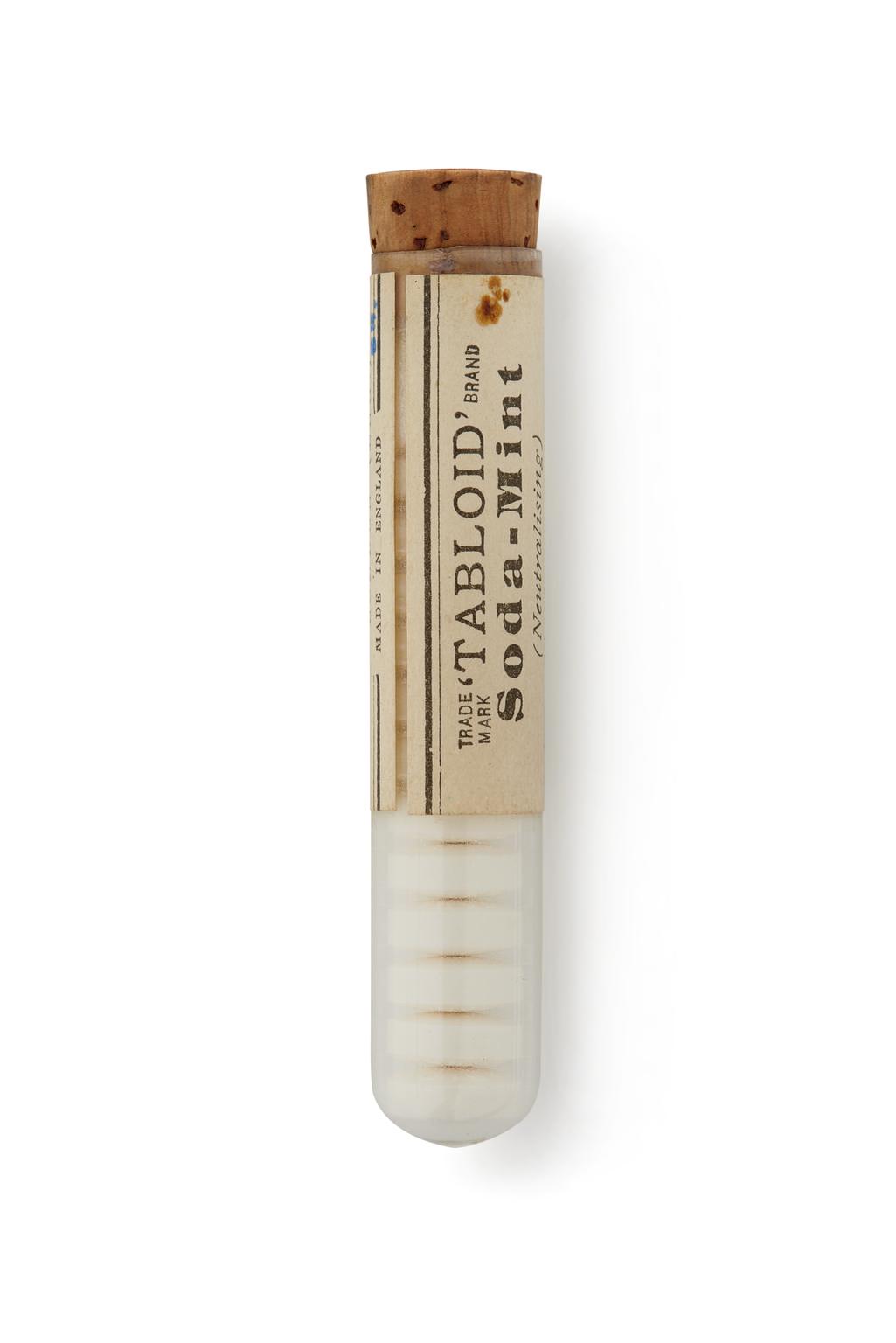
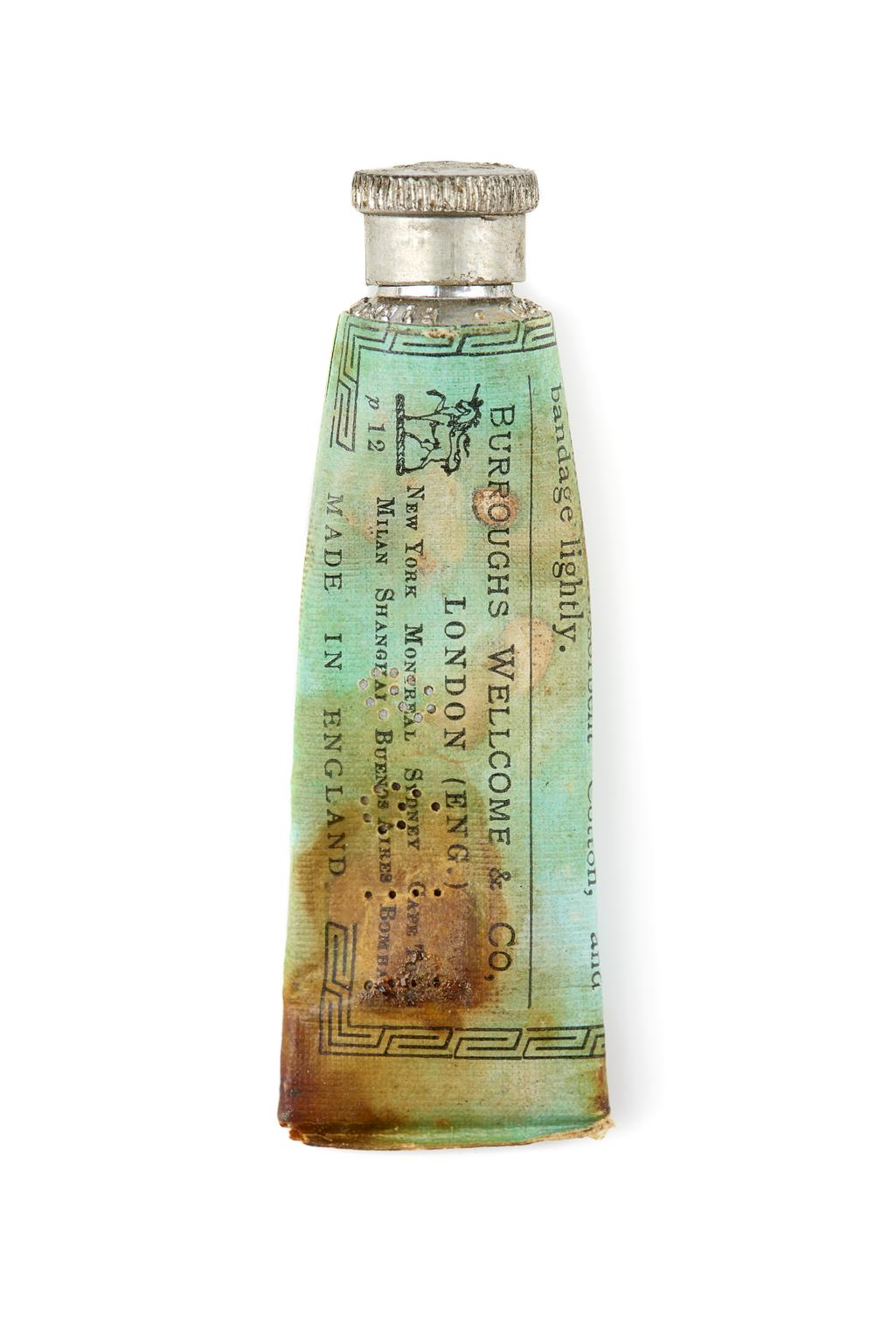
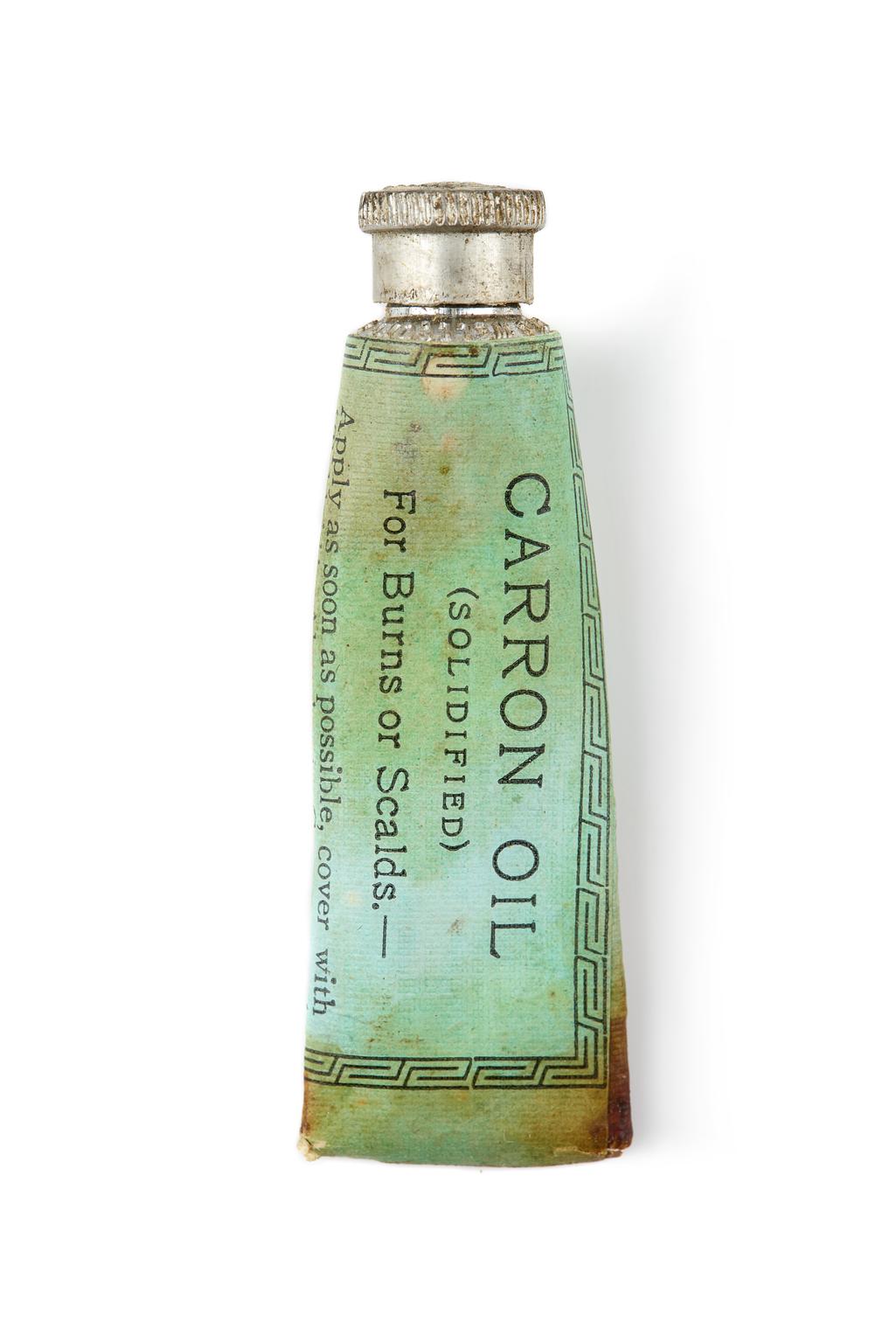
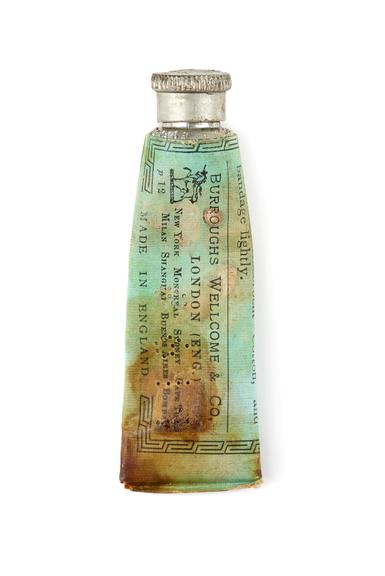
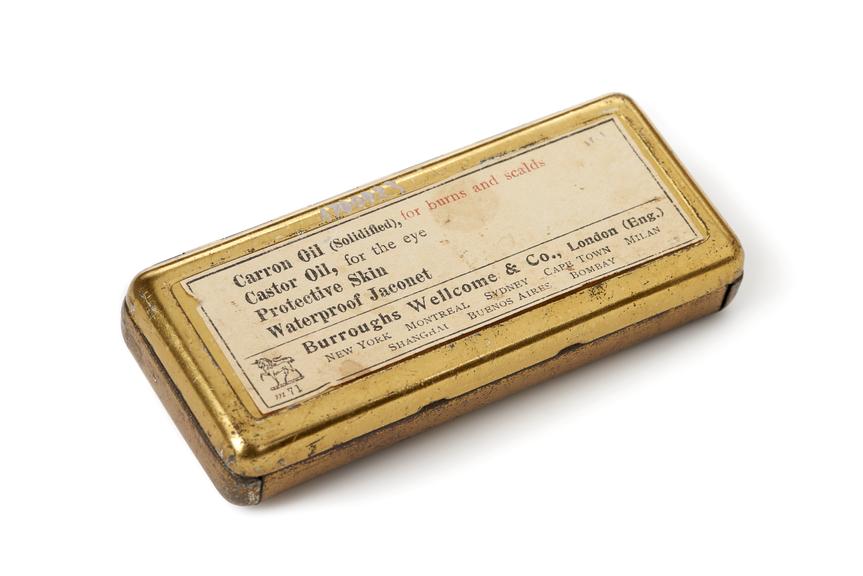
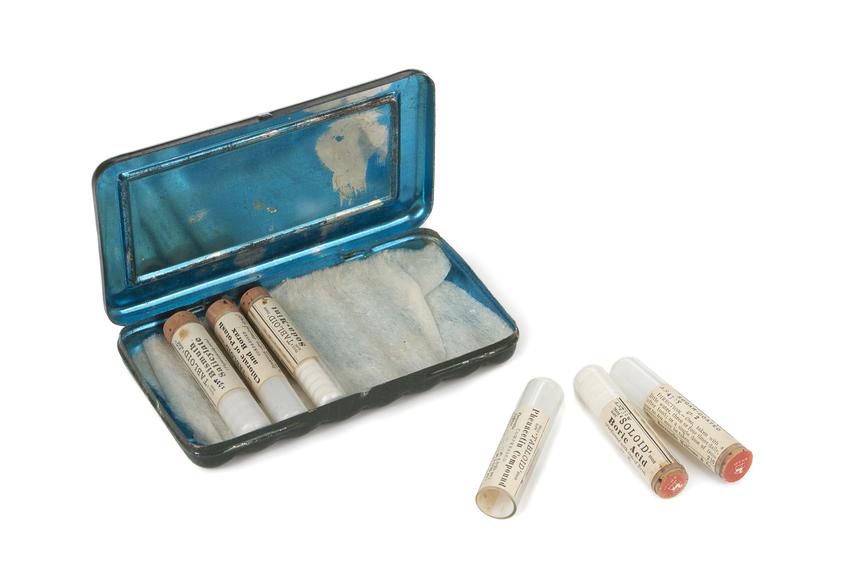
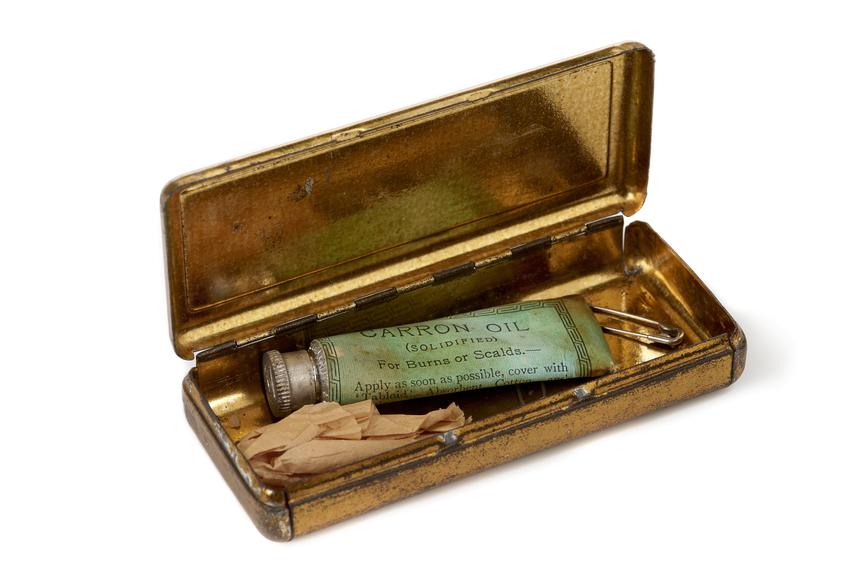
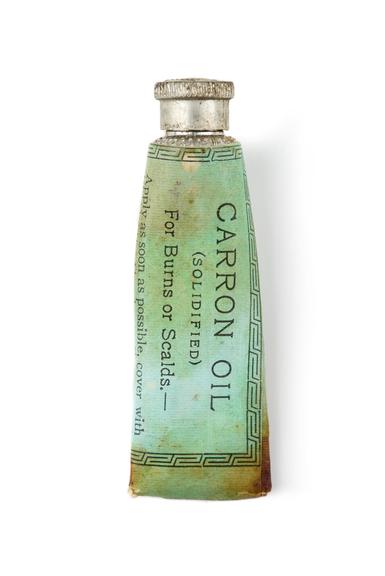
The kit contained bandages, dressings, cotton wool, court plaster, and drugs for pain relief, upset stomachs and nausea, and antiseptics. It also contained carron oil made from linseed oil and lime water for burns and scalds, which were among the most likely injuries on an aircraft full of hot metal; in fact the tube is half empty.
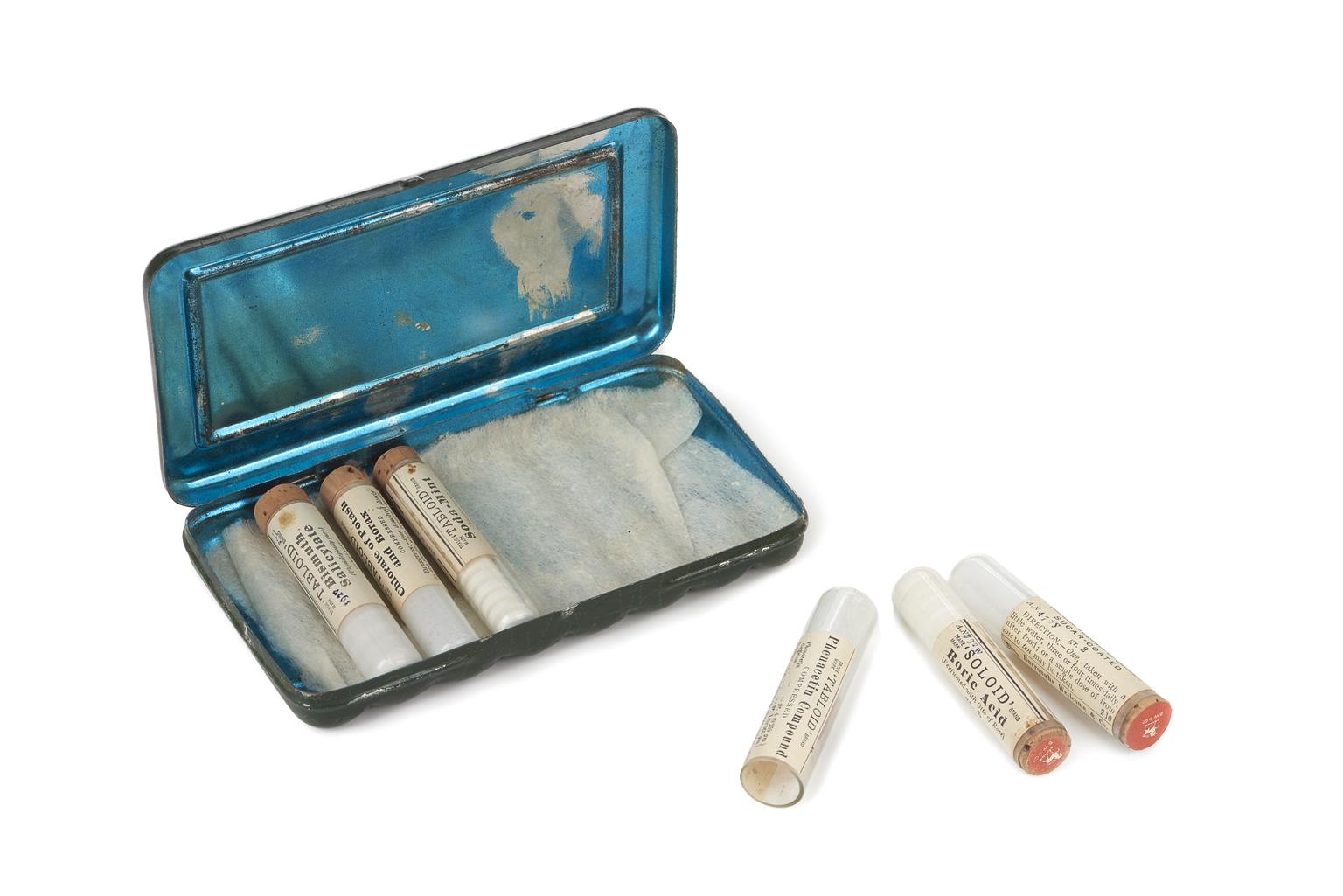
Metal case containing glass tubes from 'Tabloid' first aid kit
Metal case containing six glass tubes (pts 3-8) for tablets, by Burroughs Wellcome and Co. , English
More
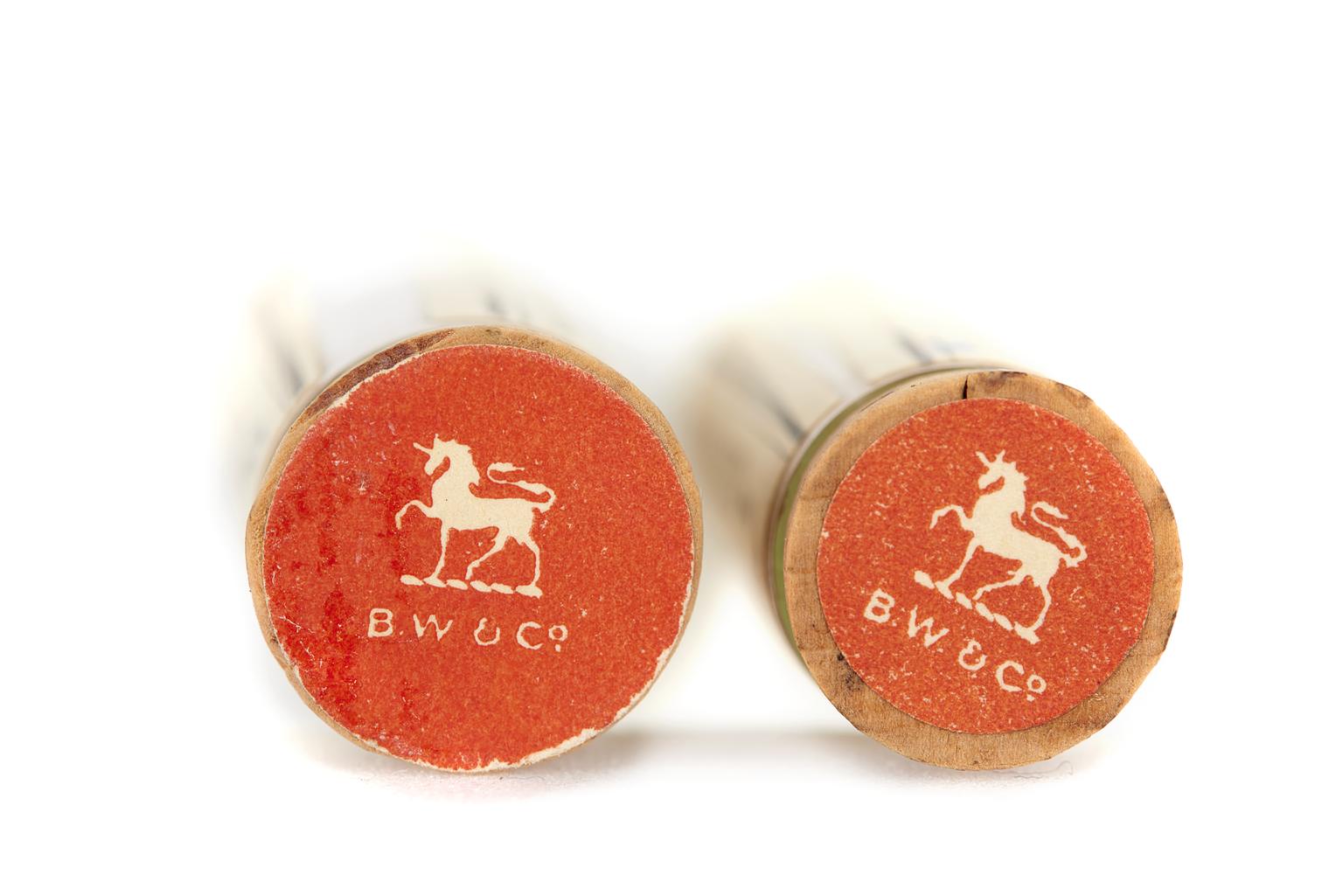
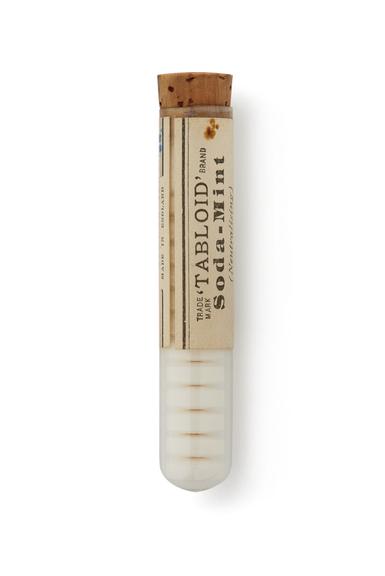
To protect the fragile glass tubes, first aid kits often had additional boxes, labelled with contents. This example has the brand names for Burroughs, Wellcome & Co products 'Tabloid' - their compressed tablets and 'Soloid' - dissolvable tablets used as antiseptics or as astringents – to remove oil or dry up bleeding.
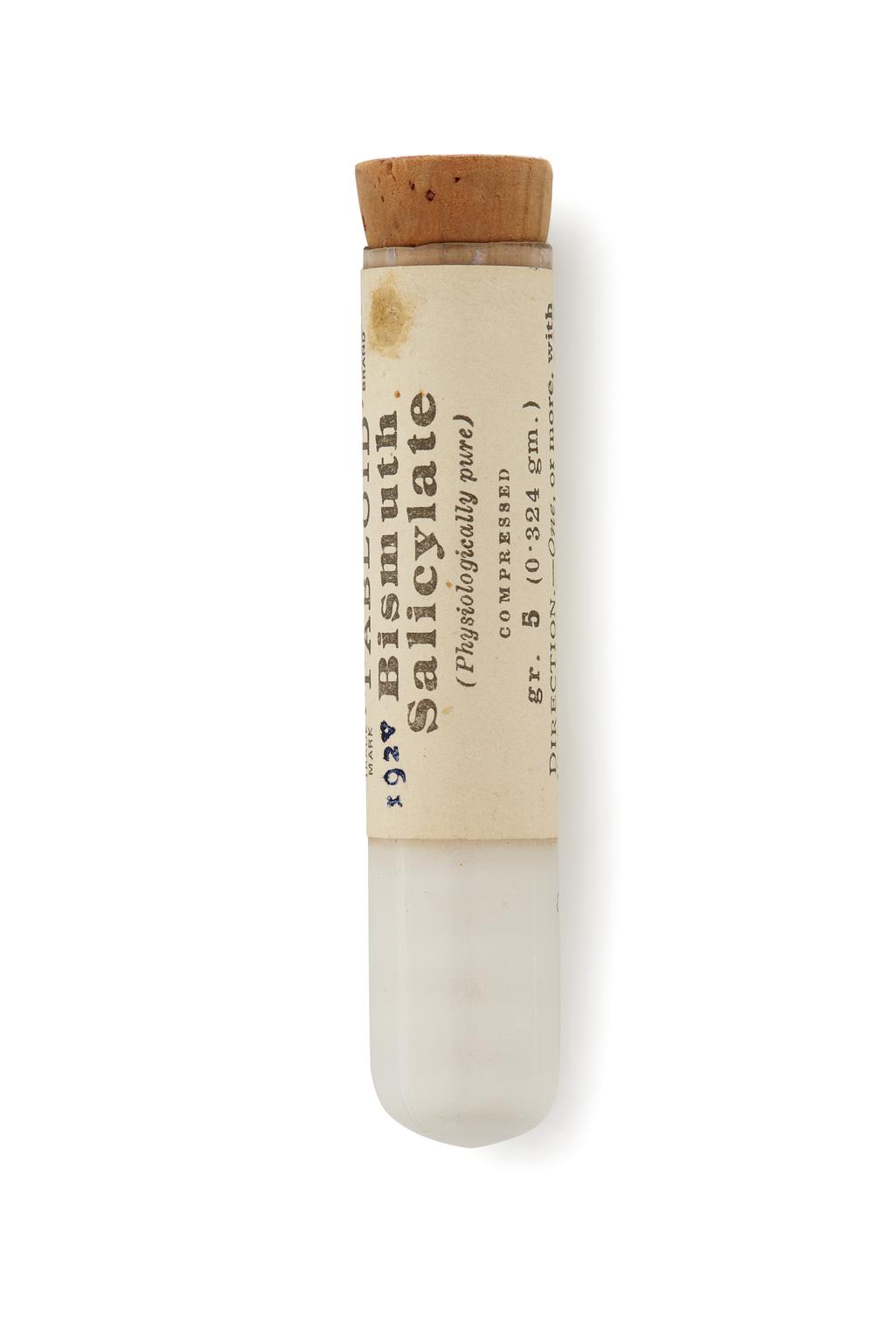
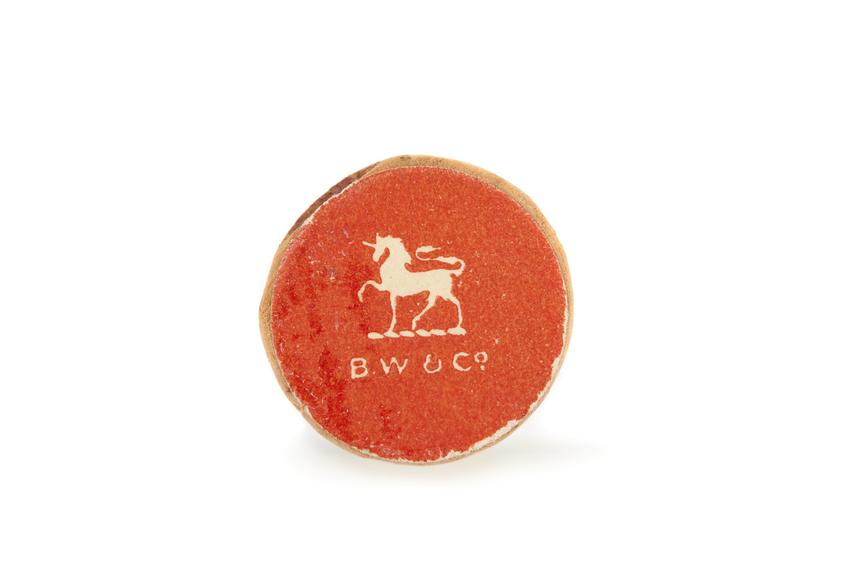
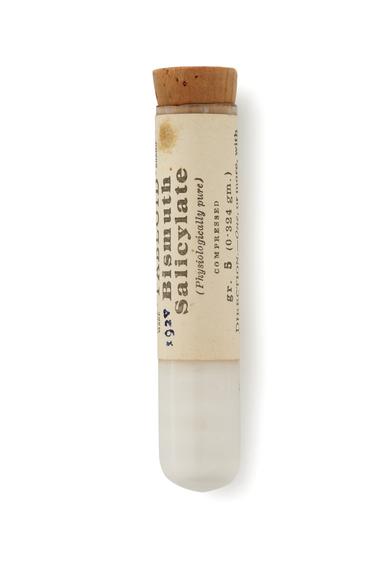
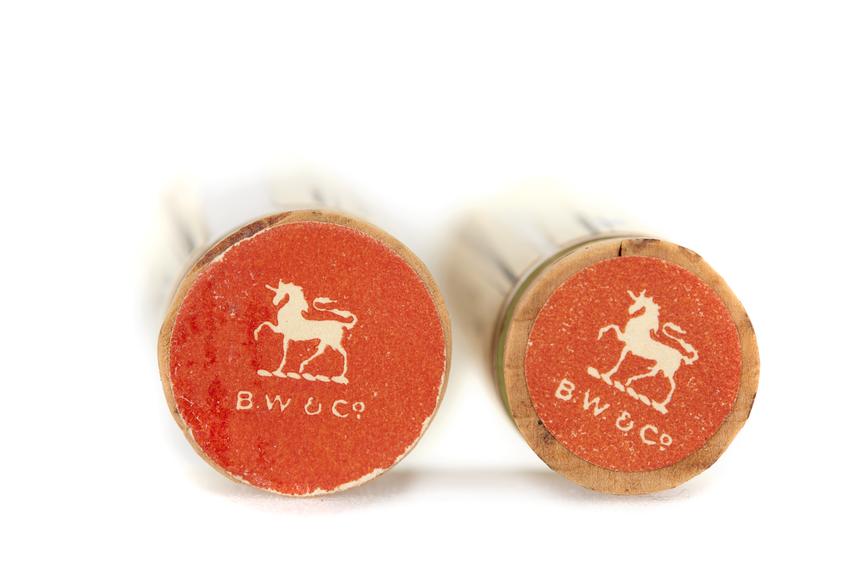
Glass tube of bismuth salicylate tablets with cork bung, by Burroughs Wellcome, English, ( in part 2)
More
According to Wellcome's Medical Diary for 1899, bismuth salicylate was recommended as a treatment for diarrhoea, upset stomachs, and as an intestinal antiseptic.
Empty glass tube for phenacetin compound tablets with cork bung, by Burroughs Wellcome, English, (in part 2)
More
According to the maker's 1920s publication ''Tabloid': A brief medical guide for explorers, missionaries, travellers, colonists, planters and others', phenacetin tablets were used as a treatment for headaches, fevers including those cause by malaria, and nerve pain.
Phenacetin tablets featured in many of the medicine chests developed by Burroughs, Wellcome and Co. First developed in 1887, phenacetin, was withdrawn from UK and US markets in the late 1970s and early 1980s due to kidney damage caused by long-term use.
Empty glass tube of quinine bisulphate tablets with cork bung, by Burroughs Wellcome, English, (in part 2)
More
According to the maker's 1920s publication ''Tabloid': A brief medical guide for explorers, missionaries, travellers, colonists, planters and others', quinine based tablets were used as a preventaive measure against malaria or as a general treatment for fevers. It was also recommended to aid recovery from toothache.
Roll of court plasters from 'Tabloid' first aid kit
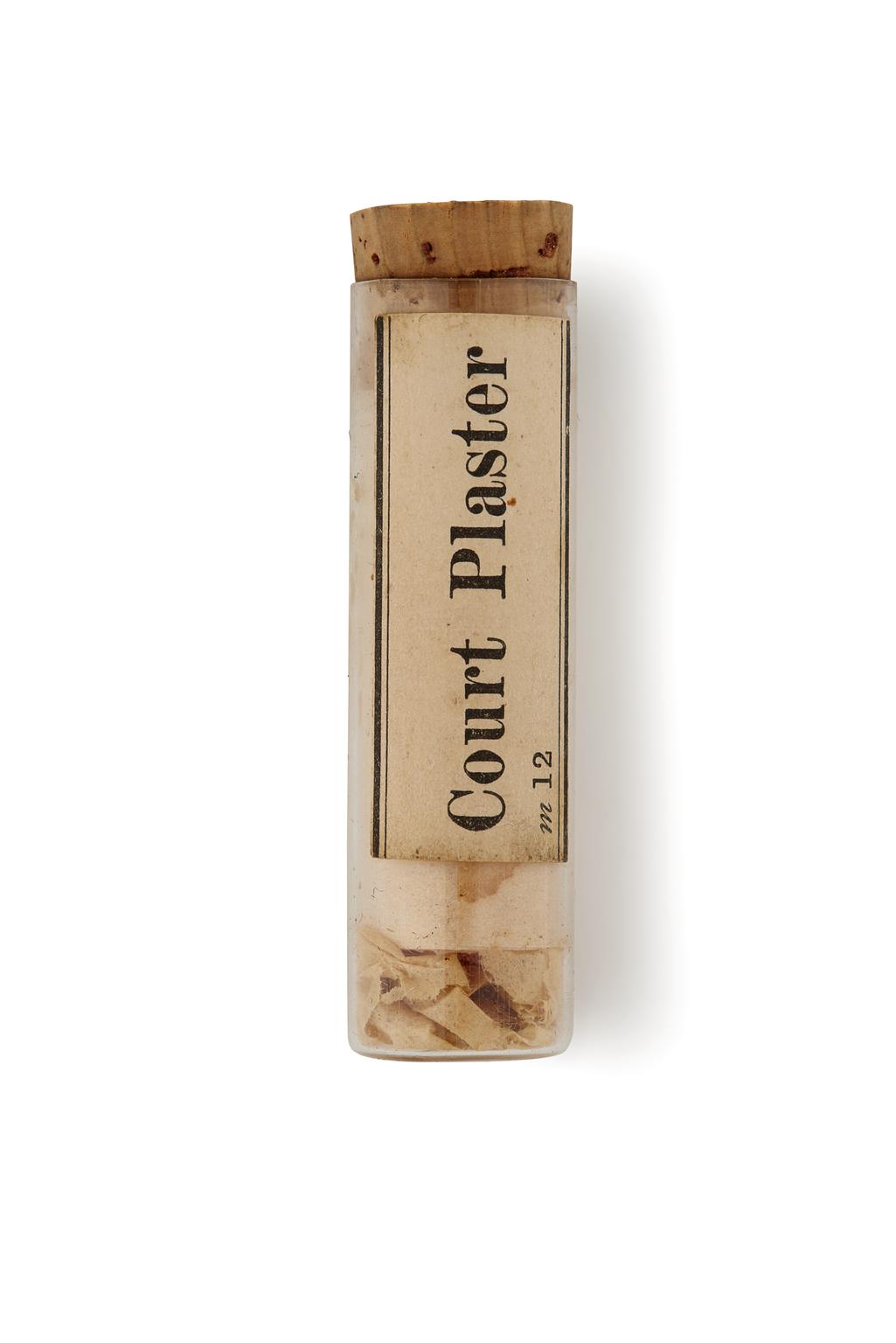
Glass tube containing roll of court plaster, with cork bung
More
A court plaster is an adhesive dressing for wounds made from cotton, isinglass (made from the swimming bladder of fish including sturgeon), and glycerin. The dressing provided moisture, soothing wounds and providing a protective layer to help healing.
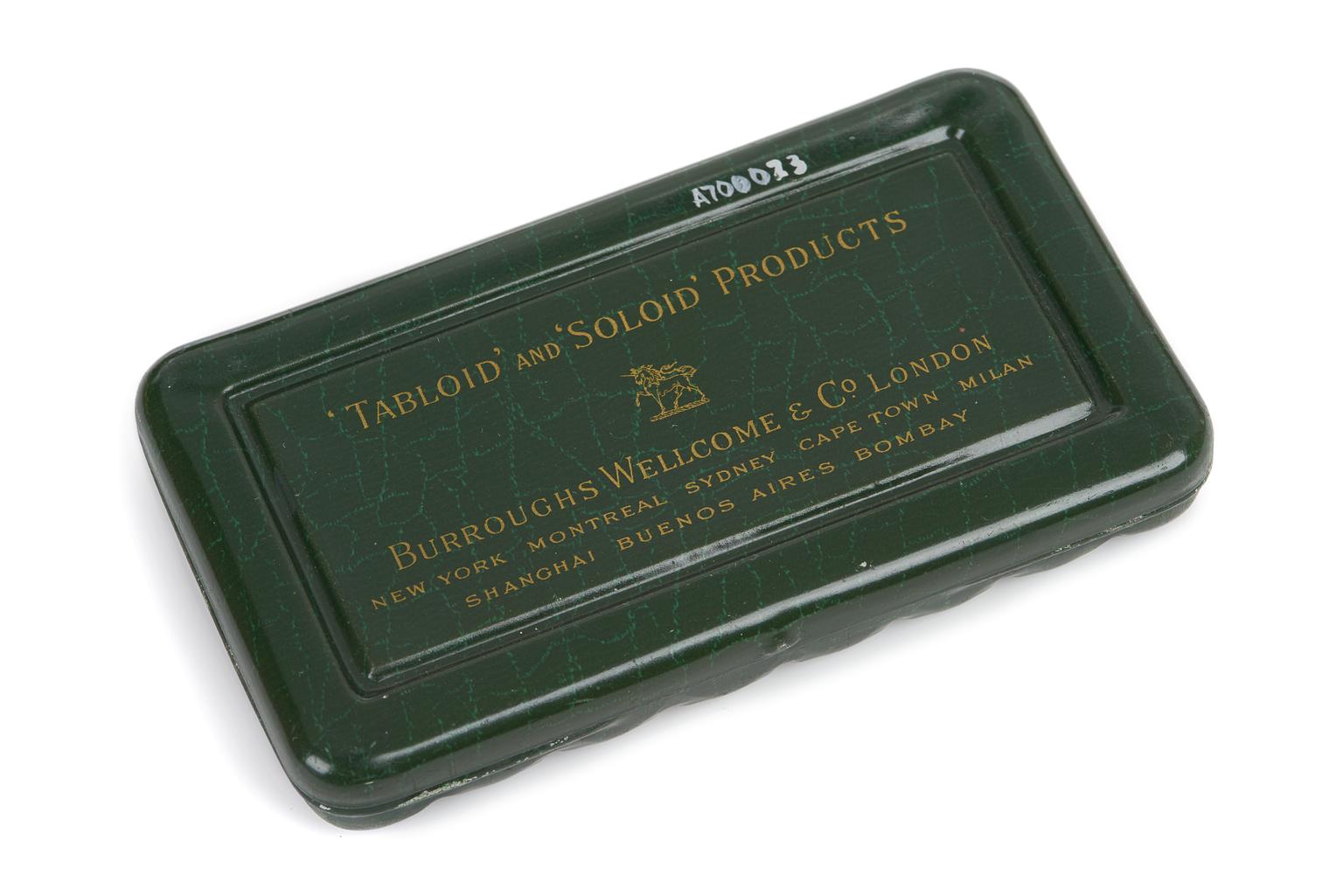
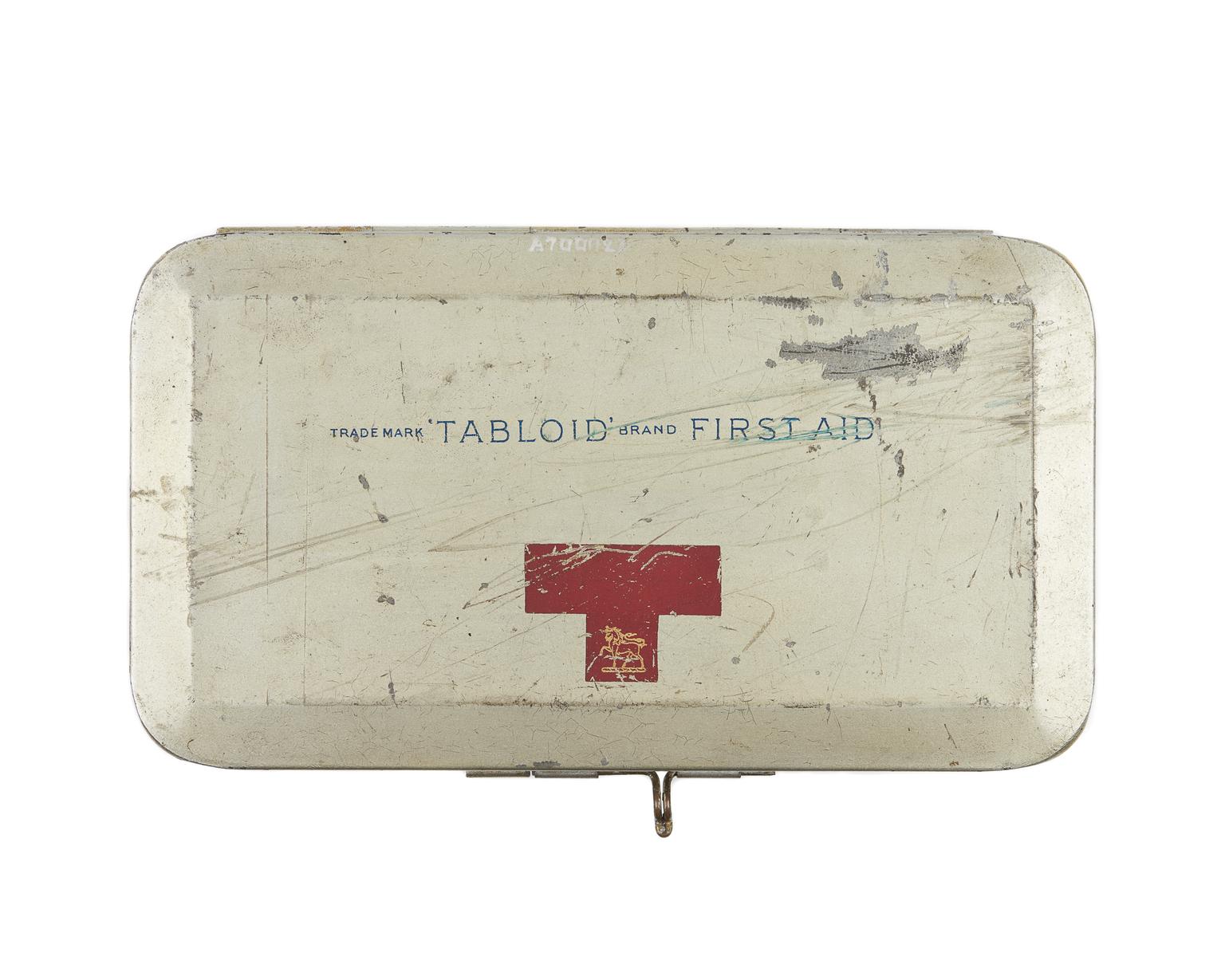
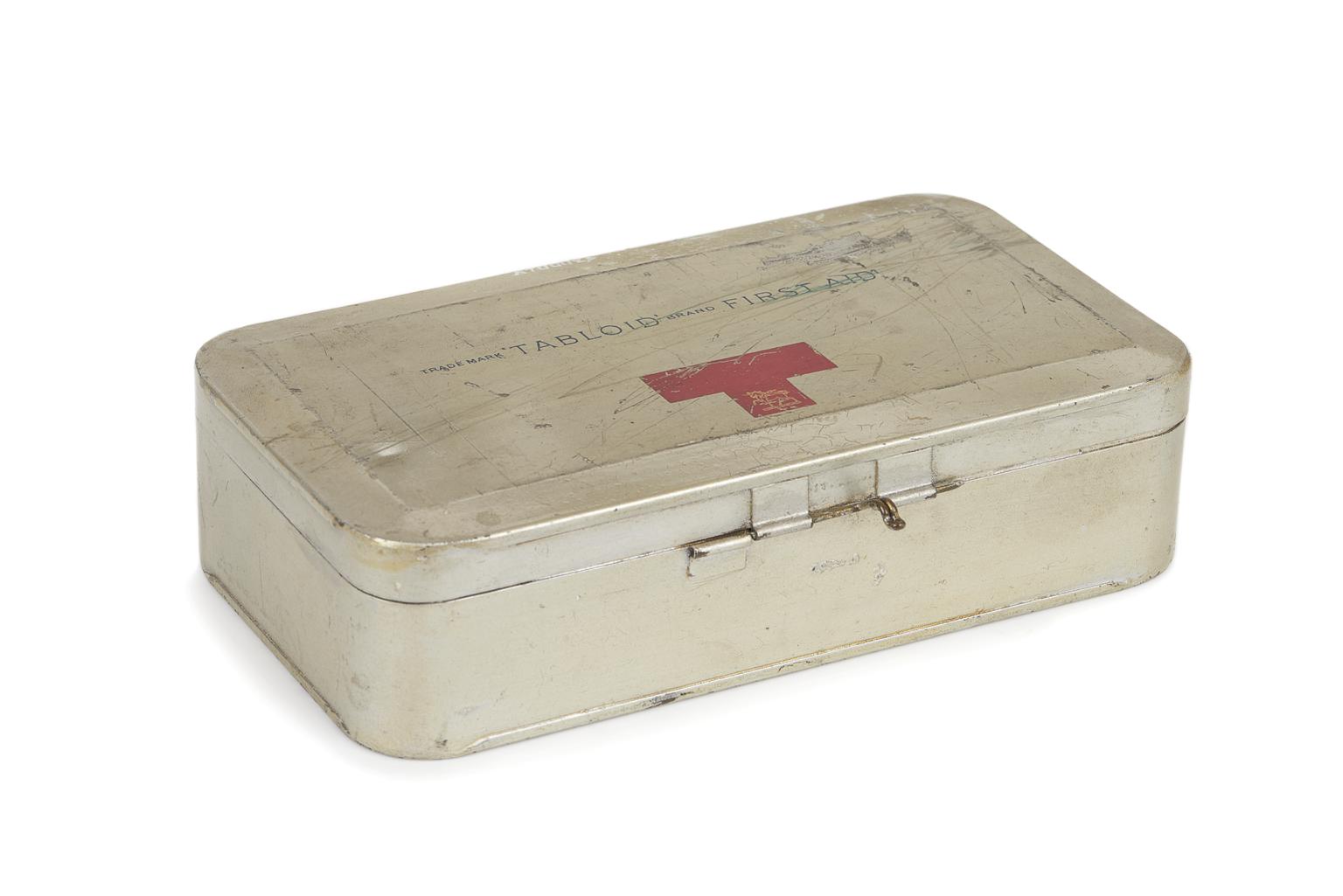
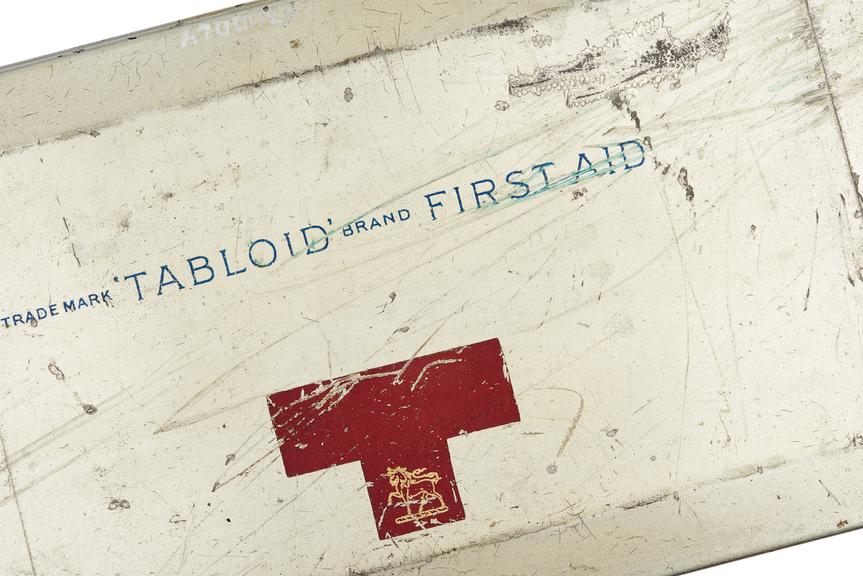
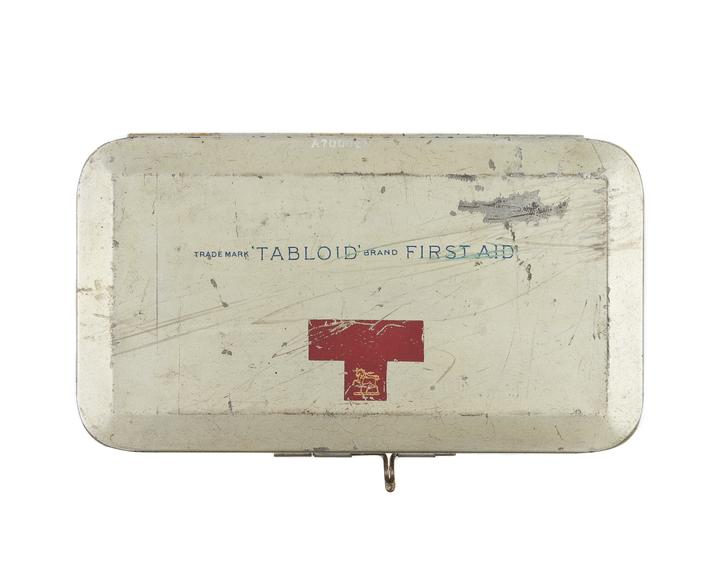
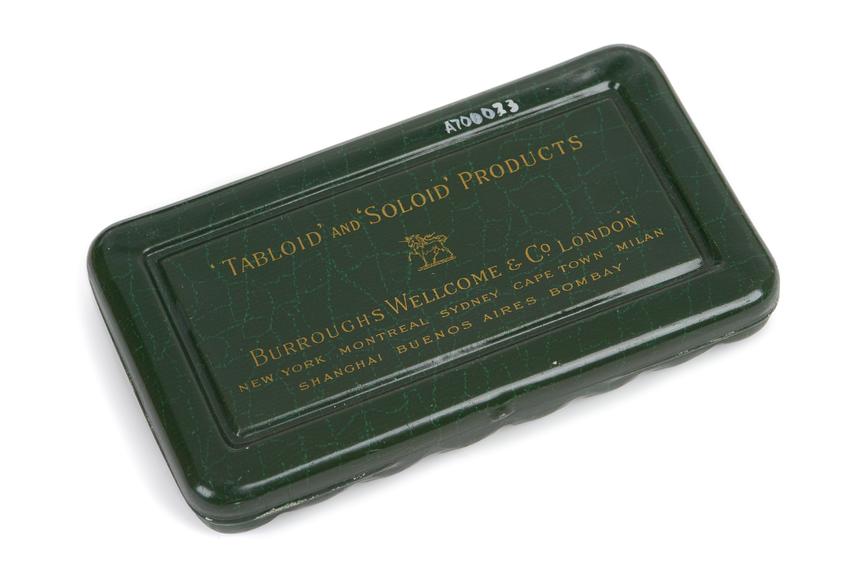
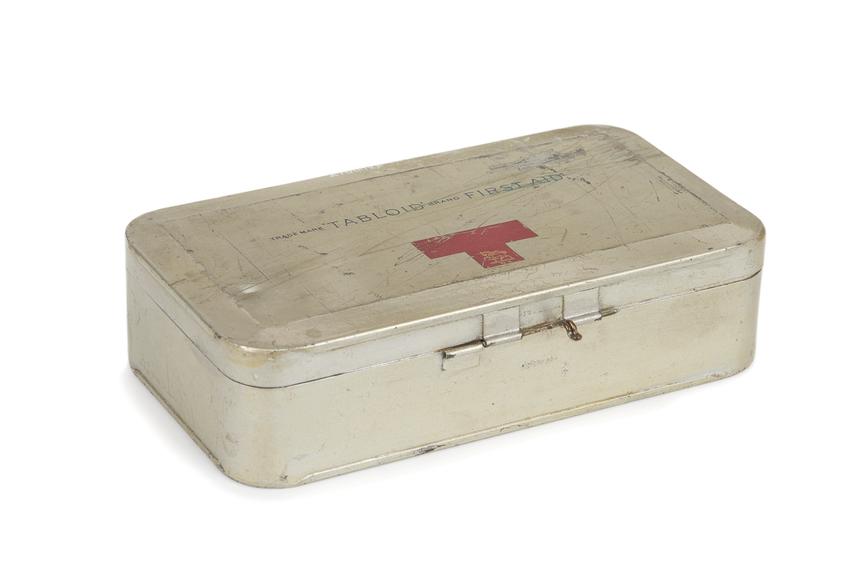
Case for 'Tabloid' first aid kit used by Alcock and Brown
Case for Tabloid first aid kit used by Alcock and Brown, on their first transatlantic non-stop flight, by Burroughs Wellcome and Co., 1919
More
Bearing the brand name 'Tabloid', this was one of many first aid kits produced by Burroughs, Wellcome and Co. The red 'T', echoes the red cross which is an internationally recognised symbol for medical help.
Inside the lid, tje wprds 'Case No.715' are printed. Each type of first kit or medicine chest produced by the makers was identfiable by a number.
If they could afford it, anyone could own the same type of kit as used on the first trans-Atlantic flight. Costing 10 shillings and 6 pence, this was approximately a day's wages for a skilled tradesperson.
Measurements:
overall (closed): 50 mm x 192 mm x 110 mm, 0.69 kg









 This image is released under a