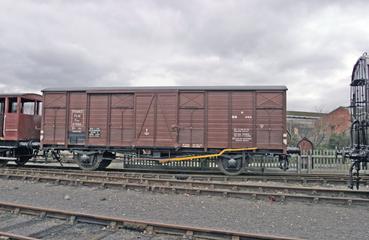
British Railways insulated fish van, 1959
- maker:
- British Railways


 This image is released under a CC BY-NC-SA 4.0
Licence
This image is released under a CC BY-NC-SA 4.0
Licence
License this image for commercial use at Science and Society Picture Library
LicenseThis image is released under a CC BY-NC-SA 4.0
Licence
License this image for commercial use at Science and Society Picture Library
LicenseThis image is released under a CC BY-NC-SA 4.0
Licence
License this image for commercial use at Science and Society Picture Library
License
Science Museum Group Collection
© The Board of Trustees of the Science Museum
Science Museum Group Collection
© The Board of Trustees of the Science Museum
Science Museum Group Collection
© The Board of Trustees of the Science Museum
Fish Van, Insulfish No.B87905, 12T insulated fish van, British Railways, 1959.
Fish was a highly perishable traffic and where the level of traffic at a port merited it, specialist vehicles were provided to ensure the commodity remained in good condition.
The development of efficient insulation and dry ice during the inter-war years allowed fish to be transported over longer distances and remain fresh for longer periods of time. These vehicles were express passenger rated and vacuum braked, which meant that fish vans could be attached to passenger or parcels trains. On BR examples built in the 1950s, the large blue spot denoted that the van was fitted with roller bearing axles, allowing it to travel reliably at high speeds. Large fishing ports could justify entire (‘block’) trains of fish. The operation had ended by 1968.
Details
- Category:
- Locomotives and Rolling Stock
- Object Number:
- 1988-7014
- Materials:
- metal (unknown) and wood (unidentified)
- Measurements:
-
length: 6350 mm,
height: 3912 mm
weight: 12200kg
width: 2388 mm
- type:
- fish van
- credit:
- British Rail, Add. not known
Related Objects
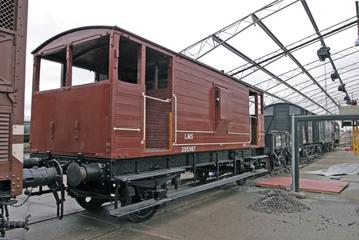
20-ton Goods Brake Van
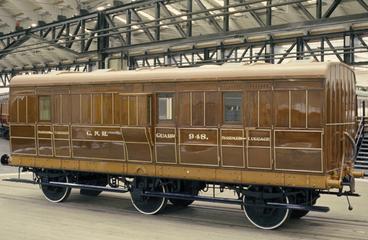
Great Northern Railway brake van
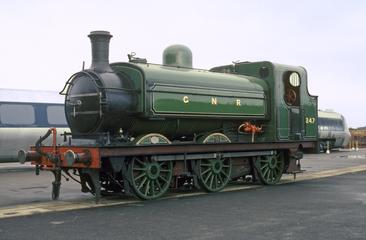
Great Northern Railway 0-6-0ST steam locomotive, No 1247
Chemins de Fer de Paris a Lyon et a la Mediterranee (PLM) train ferry van, 1935