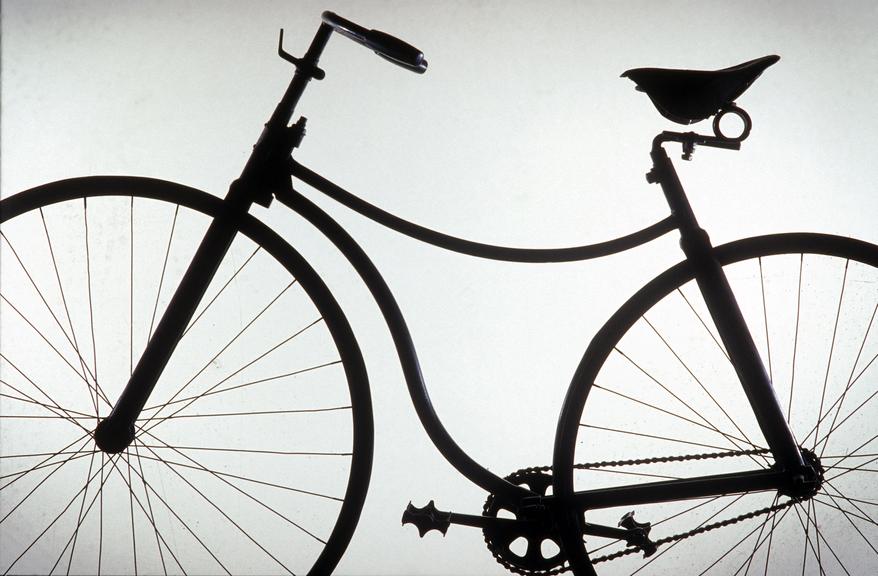
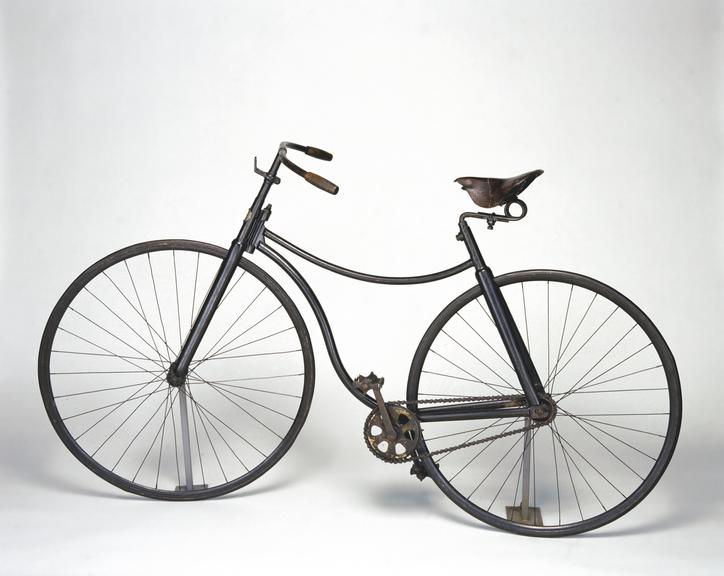
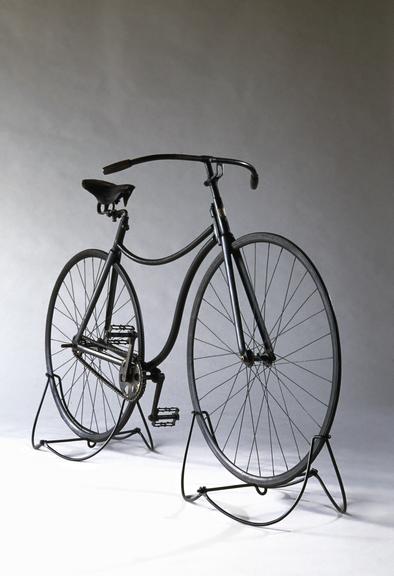
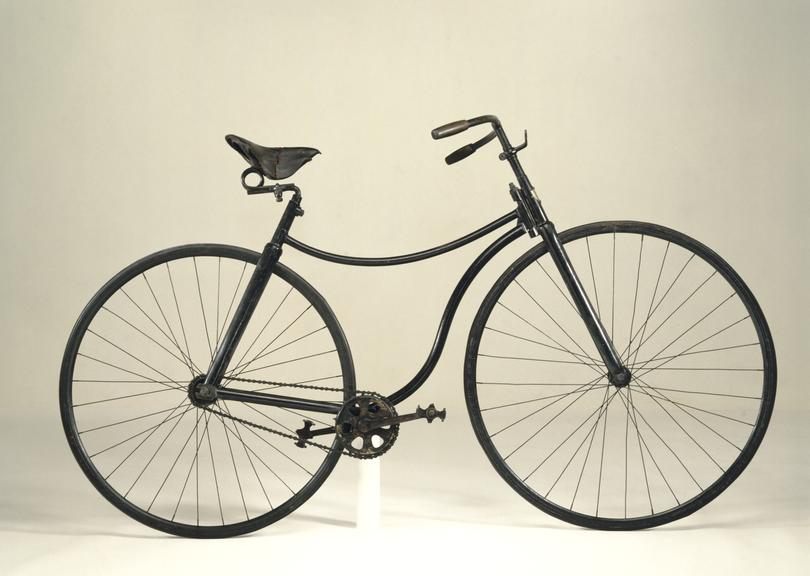
Rover 'Safety' Bicycle, 1885
- maker:
- Rover Company


 This image is released under a CC BY-NC-SA 4.0
Licence
This image is released under a CC BY-NC-SA 4.0
Licence
License this image for commercial use at Science and Society Picture Library
LicenseThis image is released under a CC BY-NC-SA 4.0
Licence
License this image for commercial use at Science and Society Picture Library
LicenseThis image is released under a CC BY-NC-SA 4.0
Licence
License this image for commercial use at Science and Society Picture Library
LicenseThis image is released under a CC BY-NC-SA 4.0
Licence
License this image for commercial use at Science and Society Picture Library
License
Science Museum Group Collection
© The Board of Trustees of the Science Museum
Science Museum Group Collection
© The Board of Trustees of the Science Museum
Science Museum Group Collection
© The Board of Trustees of the Science Museum
Science Museum Group Collection
© The Board of Trustees of the Science Museum
This Rover 'Safety' Bicycle was built in 1885 by Rover Company Limited in Coventry.
The bicycle has a diamond frame design. The sprung saddle (which was re-made by Brooks in 1961) is connected via a column tube to the rear wheel axle. The front wheel is similarly connected to the handlebars by a fixed front fork.
The front fork and rear saddle column are connected via two curved horizontal tubes, with the pedal and gears mounted on the lower tube. The Rover has a rear wheel chain drive. The spoked front and rear wheels both use solid rubber tyres.
In the late 1870s bicycle designers were exploring new designs that would allow the rider to be closer to the ground, and that would therefore be safer. The British inventor John Kemp Starley designed the first successful 'safety' bicycle in 1885. It has all the basic features of standard modern bicycles, including chain drive, which meant that both wheels could be the same size. With the introduction of the safety bicycle cycling became enormously popular, among both men and women.