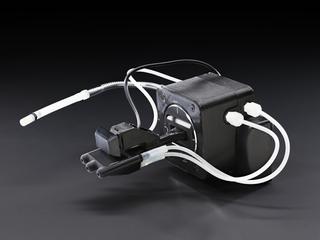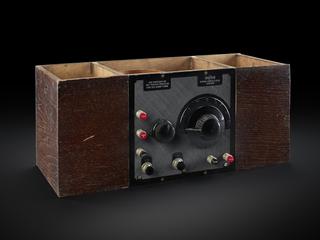
Mullard pure music cone loud speaker


 This image is released under a CC BY-NC-SA 4.0
Licence
This image is released under a CC BY-NC-SA 4.0
Licence
License this image for commercial use at Science and Society Picture Library
LicenseThis image is released under a CC BY-NC-SA 4.0
Licence
License this image for commercial use at Science and Society Picture Library
LicenseThis image is released under a CC BY-NC-SA 4.0
Licence
License this image for commercial use at Science and Society Picture Library
LicenseThis image is released under a CC BY-NC-SA 4.0
Licence
License this image for commercial use at Science and Society Picture Library
License
Science Museum Group
© The Board of Trustees of the Science Museum
Science Museum Group
© The Board of Trustees of the Science Museum
Science Museum Group
© The Board of Trustees of the Science Museum
Science Museum Group
© The Board of Trustees of the Science Museum
Science Museum Group
© The Board of Trustees of the Science Museum
Mullard pure music cone loud speaker, 1928.
After the introduction of the amplifying valve, which meant that radio signals could be shared via speakers, rather than heard only on headsets, the market for “high fidelity” loudspeakers to be used with radio sets, and also electric gramophones, grew rapidly. Adverts for the Mullard Pure Music speaker claimed it gave “such extraordinary realism that you can almost see the performer”.
Details
- Category:
- Radio Communication
- Object Number:
- 1956-81
- Materials:
- metal (unknown), textile and plastic (unidentified)
- Measurements:
-
main body (i.e., circular speaker): 364 mm,
overall (with stand): 384 mm x 150 mm 2.55 kg
- type:
- loudspeaker
- credit:
- H L Smith