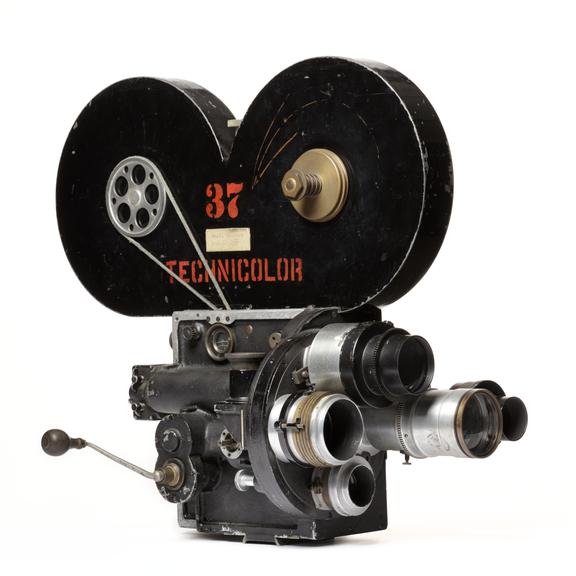
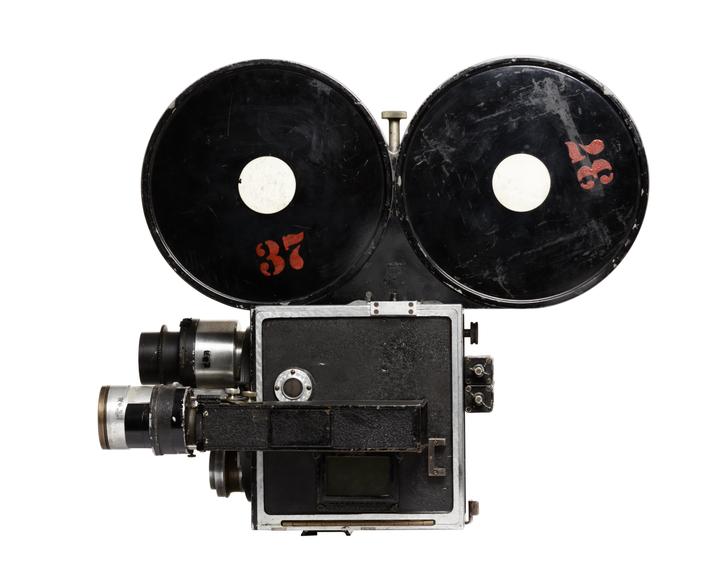

Technicolor Two-colour Cine Camera

Technicolor two-colour camera Technicolor two-colour camera Technicolor two-colour camera Technicolor two-colour camera Technicolor two-colour camera Technicolor two-colour camera Technicolor two-colour camera Technicolor two-colour camera

Creative Commons LicenseThis image is released under a CC BY-NC-ND 4.0 Licence

License this image for commercial use at Science and Society Picture Library

License

Creative Commons LicenseThis image is released under a CC BY-NC-ND 4.0 Licence

License this image for commercial use at Science and Society Picture Library

License

Creative Commons LicenseThis image is released under a CC BY-NC-ND 4.0 Licence

License this image for commercial use at Science and Society Picture Library

License

Creative Commons LicenseThis image is released under a CC BY-NC-ND 4.0 Licence

License this image for commercial use at Science and Society Picture Library

License

Creative Commons LicenseThis image is released under a CC BY-NC-ND 4.0 Licence

License this image for commercial use at Science and Society Picture Library

License

Creative Commons LicenseThis image is released under a CC BY-NC-ND 4.0 Licence

License this image for commercial use at Science and Society Picture Library

License

Creative Commons LicenseThis image is released under a CC BY-NC-ND 4.0 Licence

License this image for commercial use at Science and Society Picture Library

License

Creative Commons LicenseThis image is released under a CC BY-NC-ND 4.0 Licence

License this image for commercial use at Science and Society Picture Library

License

Technicolor two-colour camera
Science Museum Group
© The Board of Trustees of the Science Museum, London

Technicolor two-colour camera
Science Museum Group
© The Board of Trustees of the Science Museum, London

Technicolor two-colour camera
Science Museum Group
© The Board of Trustees of the Science Museum, London

Technicolor two-colour camera
Science Museum Group
© The Board of Trustees of the Science Museum, London

Technicolor two-colour camera
Science Museum Group
© The Board of Trustees of the Science Museum, London

Technicolor two-colour camera
Science Museum Group
© The Board of Trustees of the Science Museum, London

Technicolor two-colour camera
Science Museum Group
© The Board of Trustees of the Science Museum, London

Technicolor two-colour camera
Science Museum Group
© The Board of Trustees of the Science Museum, London

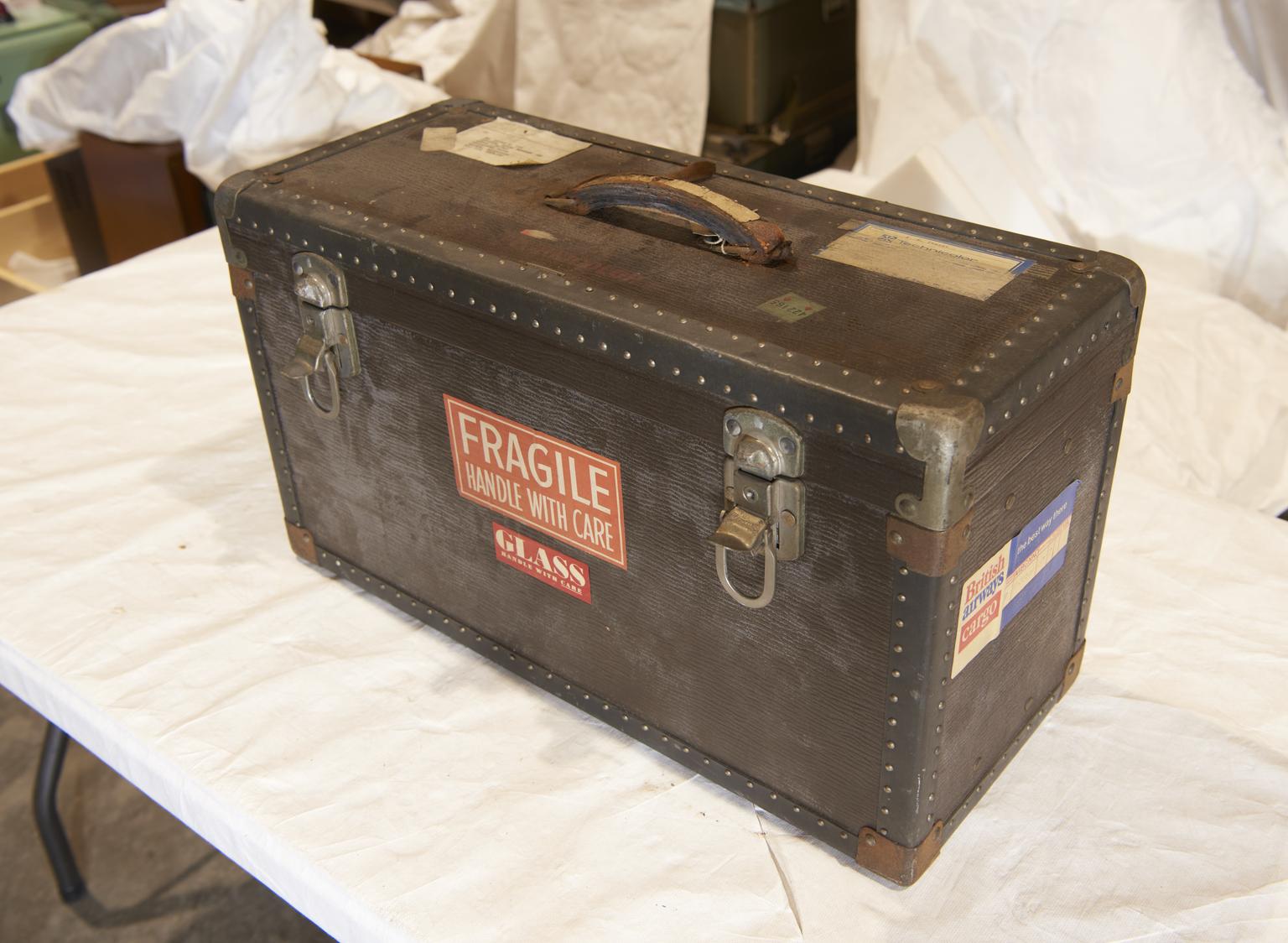
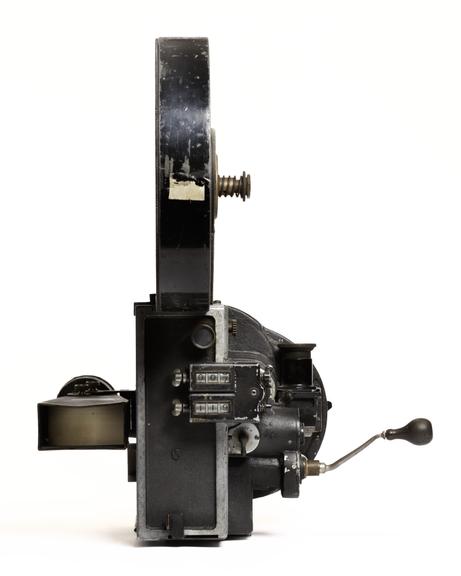
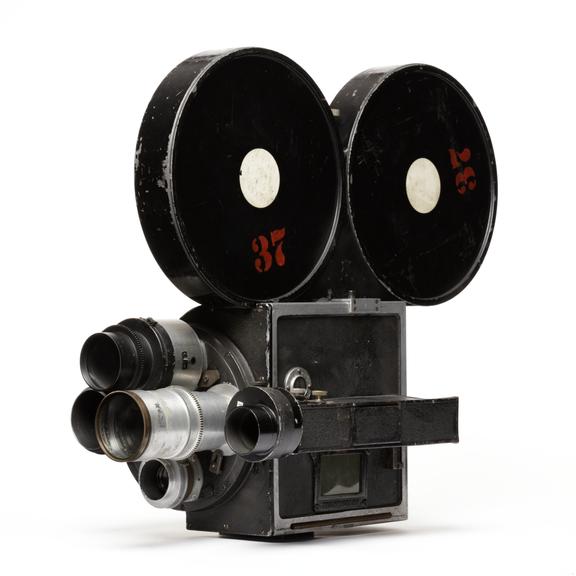
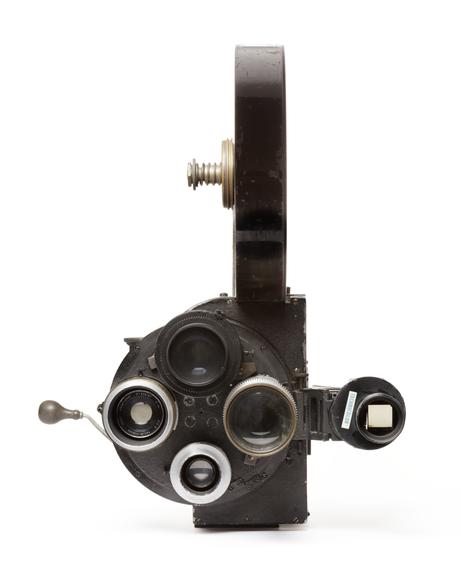
Technicolor two-colour camera, manufactured for Technicolor by Bell & Howell, about 1930. 35mm camera for two-colour separations, modified for experimental three-colour work. three-lens turret; critical reflex focusing; optical view finder. Single film running behind beam-splitter, giving two images 'head to tail' two-frame pull-down. Rotating filter wheel behind lens for three-colour separation (see Cornwell-Clyne). Frame and footage counters; hand turned; single frame shaft. Serial No 4. In transit cases with tripod and spare gate. Sticker on side reads: Traps relined 10-26-34. 37 and Technicolor painted stamps on side of Film Camster. Lens: Cooke. Anastigmat. Serial No. 202167. 3 inch. Lens: kinic: Cooke. Anastigmat. Serial No. 192231. 2mm.

Technicolor’s two-color subtractive camera was designed by 27-year-old Joseph Arthur Ball in 1921. It used a beam-splitting prism behind the lens to divide light into two paths; half was filtered red and the other half green. These two color records were then captured onto black-and-white film one above the other, vertically flipped. Because this technique used only two color separations, the process was incapable of replicating accurate blues, purples, and yellows, although pleasing results could be obtained with careful color coordination.

In making the film prints, the two color records captured by the camera were printed onto separate rolls of film, which were then treated to remove the silver image. These film strips were glued together, back-to-back, by a special cementing machine, creating a film stock with emulsions on both sides. Either side of this new thicker film was dyed the corresponding color: the red record was dyed green and the green record dyed red. This created a subtractive color print because the dyes removed certain colors from the projector’s beam of white light. These new cemented prints could be run on any standard projector around the world.

Details

Category:
Cinematography
Collection:
Kodak Collection
Object Number:
1990-5036/6938
Materials:
metal (unknown), glass, brass (copper, zinc alloy) and rubber (unidentified)
Measurements:
overall: 530 mm x 330 mm x 610 mm, 22.18 kg
type:
motion picture camera
credit:
The Kodak Collection at the National Media Museum, Bradford

Parts

Case for Technicolour Two-colour Camera

Case for Technicolour Two-colour Camera

Case for 35mm Technicolour Two-colour camera

More

Technicolor’s two-color subtractive camera was designed by 27-year-old Joseph Arthur Ball in 1921. It used a beam-splitting prism behind the lens to divide light into two paths; half was filtered red and the other half green. These two color records were then captured onto black-and-white film one above the other, vertically flipped. Because this technique used only two color separations, the process was incapable of replicating accurate blues, purples, and yellows, although pleasing results could be obtained with careful color coordination.

In making the film prints, the two color records captured by the camera were printed onto separate rolls of film, which were then treated to remove the silver image. These film strips were glued together, back-to-back, by a special cementing machine, creating a film stock with emulsions on both sides. Either side of this new thicker film was dyed the corresponding color: the red record was dyed green and the green record dyed red. This created a subtractive color print because the dyes removed certain colors from the projector’s beam of white light. These new cemented prints could be run on any standard projector around the world.

Object Number:
1990-5036/6938/1
type:
case for motion picture camera
Image ©
The Board of Trustees of the Science Museum
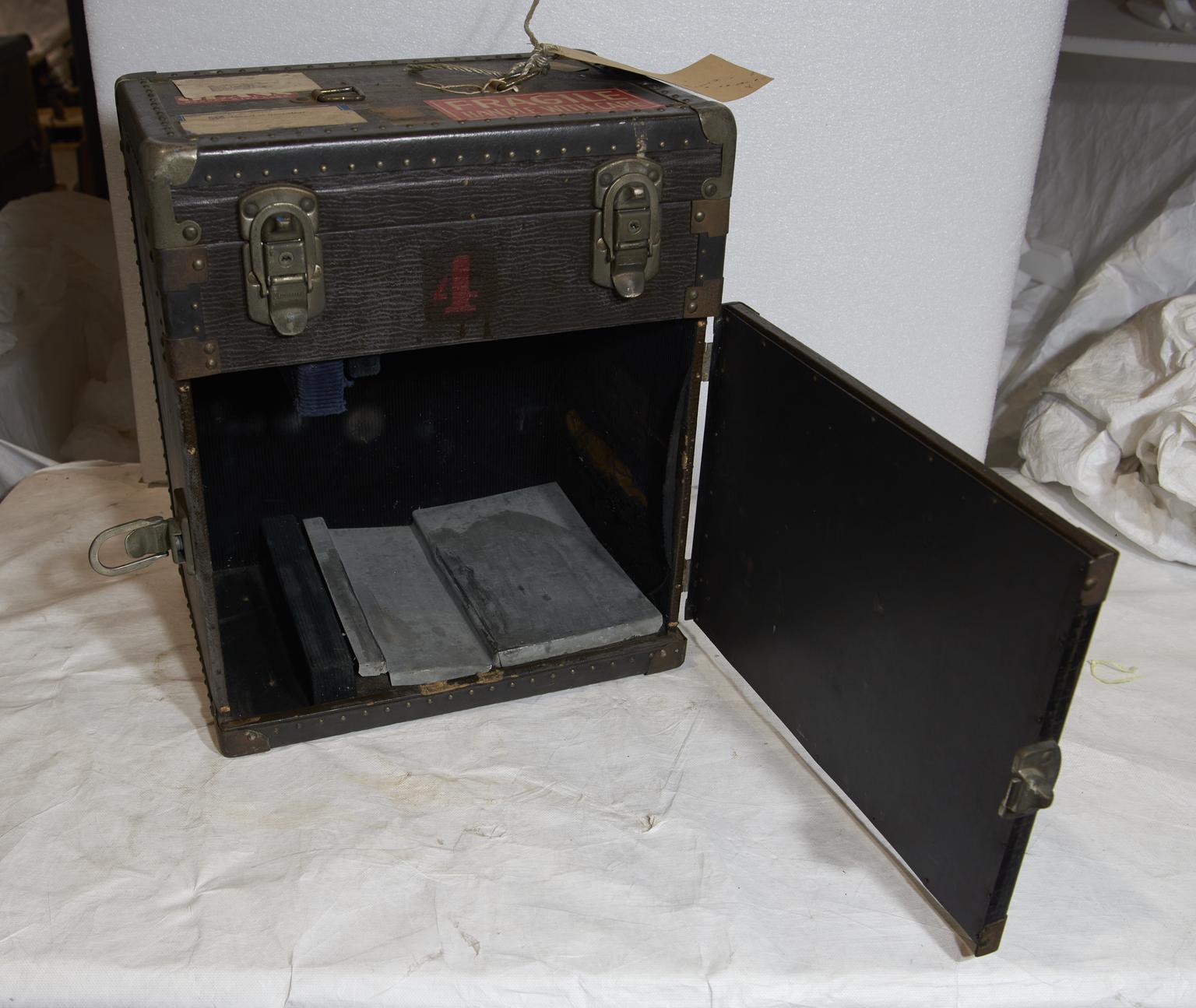
Case for Technicolour two-colour camera

Case for Technicolour two-colour camera

Case for Technicolour Two-colour 35mm camera.

More

Technicolor’s two-color subtractive camera was designed by 27-year-old Joseph Arthur Ball in 1921. It used a beam-splitting prism behind the lens to divide light into two paths; half was filtered red and the other half green. These two color records were then captured onto black-and-white film one above the other, vertically flipped. Because this technique used only two color separations, the process was incapable of replicating accurate blues, purples, and yellows, although pleasing results could be obtained with careful color coordination.

In making the film prints, the two color records captured by the camera were printed onto separate rolls of film, which were then treated to remove the silver image. These film strips were glued together, back-to-back, by a special cementing machine, creating a film stock with emulsions on both sides. Either side of this new thicker film was dyed the corresponding color: the red record was dyed green and the green record dyed red. This created a subtractive color print because the dyes removed certain colors from the projector’s beam of white light. These new cemented prints could be run on any standard projector around the world.

Object Number:
1990-5036/6938/2
type:
case for motion picture camera
Image ©
The Board of Trustees of the Science Museum