Folland Gnat T MK1 Aircraft
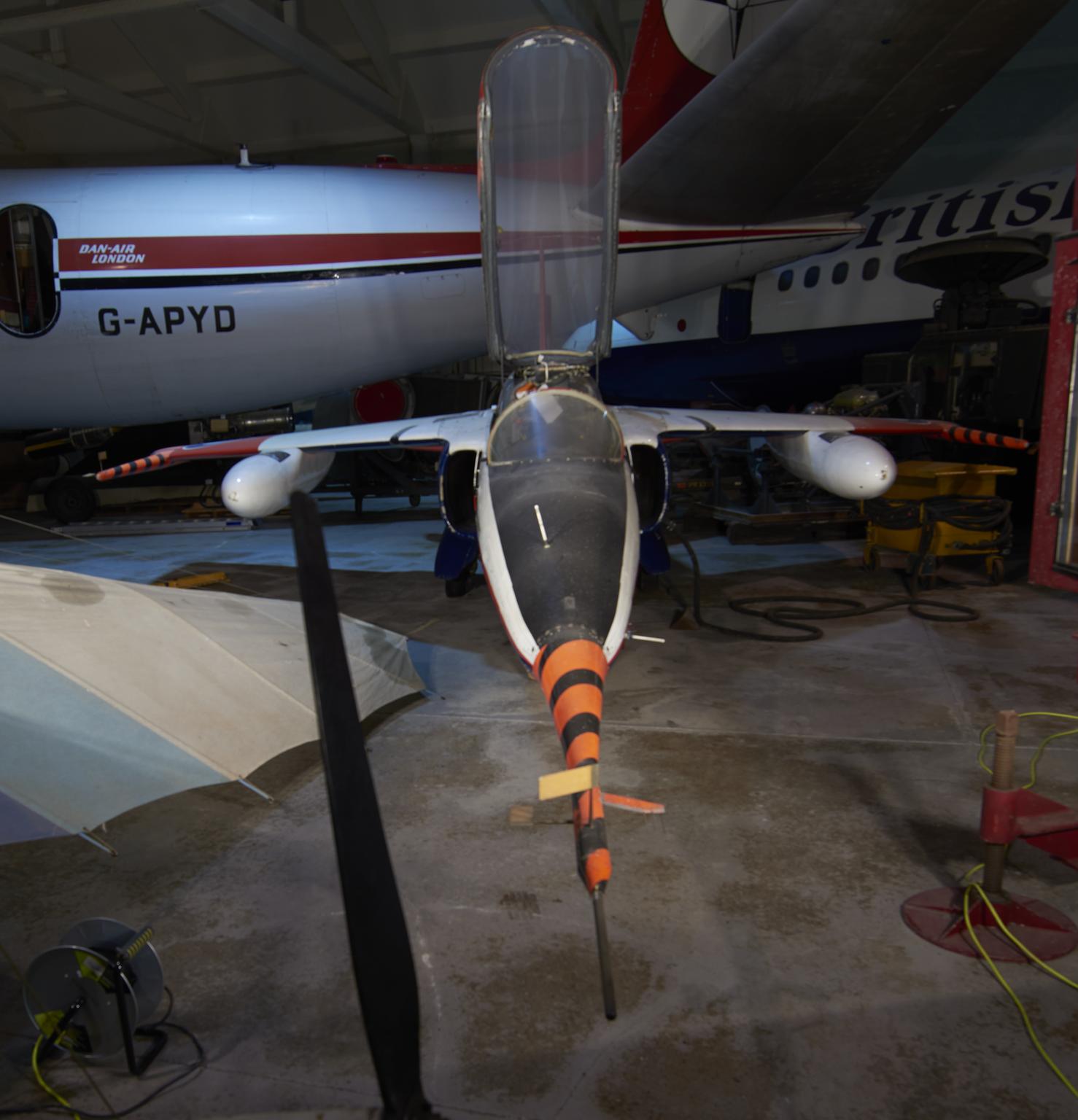
Aircraft, Folland Gnat T. MK.1, serial number XP505, built by Folland Aircraft Ltd, Hamble, Hampshire, England, September 1962. Used by Royal Aircraft Establishment Bedford 1970-1983
More
The Folland Gnat T MK 1 was introduced in 1959, with the first prototype single-seater variant being displayed at the 1957 Paris Air Salon.
The brainchild of aeronautic pioneer Sir William Petter, who played a major role in the designing of Second World War and Cold War era British fighter planes, notably the Westland Lysander and Canberra (an early design of the Lightning fighter). The Folland Gnat T Mk 1 was Sir William Petter’s last complete design before his retirement.
The Gnat was produced in small numbers and exported across the world, almost exclusively to militaries as a test and training vehicle, though some Gnats saw combat in the Indo-Pakistani Wat of 1971 and Bangladesh Liberation War.
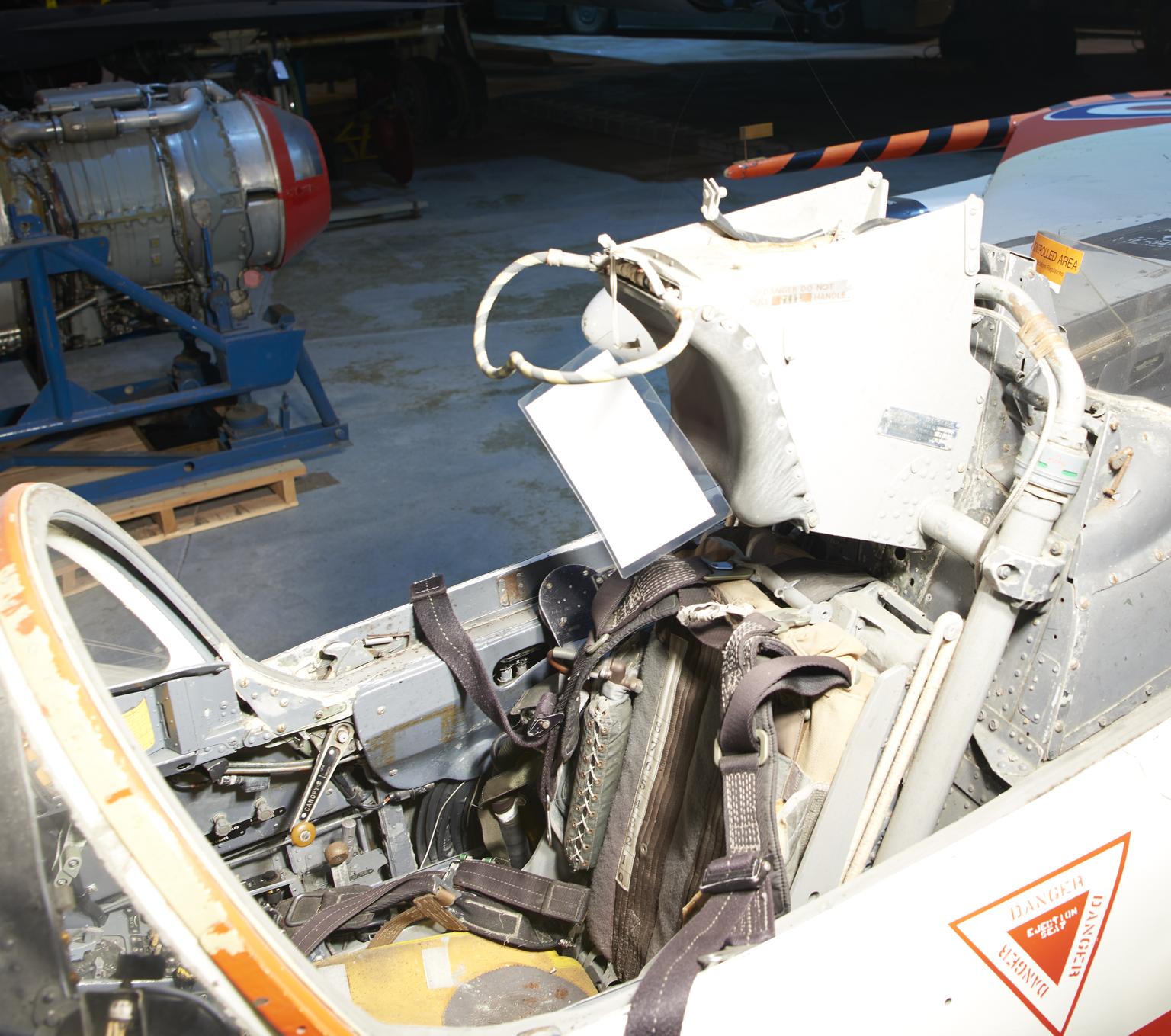
In the UK, the Gnat was used by the RAF to train their pilots in high speed maneuvers, and this particular example was acquire by the Royal Aircraft Establishment at Bedford, becoming one of its key test vehicles between 1970 and 1983. For its role, this Gnat underwent significant modifications to allow it to accurately record the stability of the vehicle under different test conditions. This included installing a host of new sensors and recording instruments, most notably replacing the original A13 photographic paper trace recorder with a digital magnetic tape-recording system housed in the rear cockpit, turning the craft into a single seater. These modifications made this particular Gnat extremely useful in recording low altitude atmospheric turbulences.
This Gnat was then used to investigate how attack aircraft are affected by high-speed maneuvers when attacking from low approaches between ground level and 250 feet. This included the study of the effect of ‘Dutch rolls’ and ‘wing rock’ oscillations during steady turns. The results of these studies were critical in the later design of wings and fuselages to help minimize turbulence for both combat and high-performance airplanes.
The Gnat Mk1 was continued use across the UK as a test and training airplane before eventually being replace in its role by the Hawker Siddeley Hawk, though some Gnats found fame as part of aerobatic teams such as the 'Yellow Jacks' and the ‘Red Arrows’.
- Measurements:
-
overall: 3460 mm x 7200 mm x 11900 mm,
- Object Number:
- 1984-1650 Pt1
- type:
- aircraft
- Image ©
- The Board of Trustees of the Science Museum