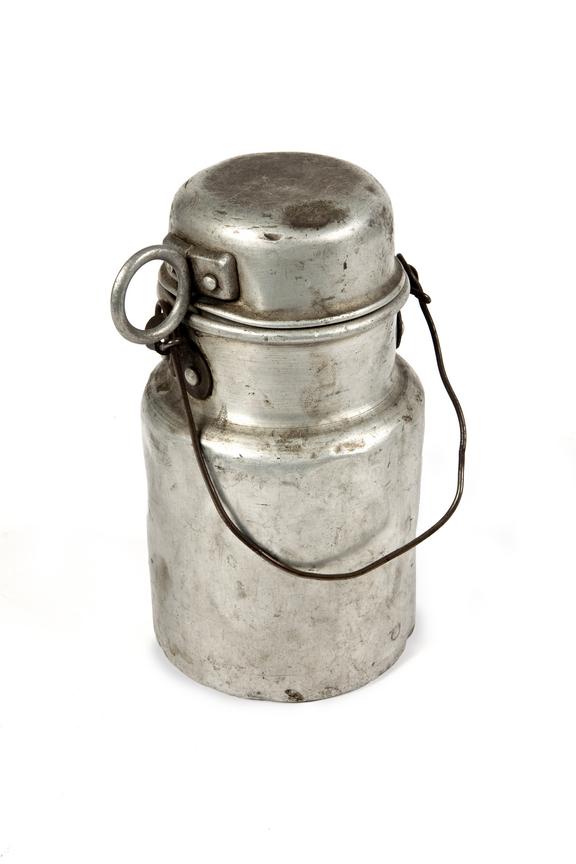
Flask
- Made:
- 1880-1950 in unknown
- maker:
- Unknown
 This image is released under a CC BY-NC-SA 4.0
Licence
This image is released under a CC BY-NC-SA 4.0
Licence
License this image for commercial use at Science and Society Picture Library
LicenseWater flask, coal mining. Manufacturer unknown.
Science Museum Group Collection
© The Board of Trustees of the Science Museum
Water flask, around 1920, used by coal miners to take water or tea underground.
Miners were responsible for their own food and drink while they were working; they didn’t come to the surface to eat their lunch or take a break. They took all the provisions they needed down into the mine with them at the start of their shift and didn’t come up again until it ended.
In the UK, the Coal Mines Regulation Act 1908 put into law that the maximum hours a worker could be underground was 8 hours. In the 19th century, whole families worked for up to 12 hours each day, and for 6 days a week.
Mines were often deep underground. Getting in and out could take considerable time and any time spent moving around would mean less time working. Historically, miners were paid according to how much coal was produced, not how many hours they worked.
When working underground, conditions were difficult and dangerous. Mines were often very hot and wet or hot and dusty. Flasks like this one would have provided the worker with a small amount of water or tea to refresh them while in the uncomfortable environment.
Details
- Category:
- Coal Mining
- Collection:
- Lancashire Coal Mining Collection
- Object Number:
- Y2002.19/T270.1
- Materials:
- metal (unknown)
- type:
- flask
- credit:
- Gift of Salford Museum and Art Gallery