Bark Dye Sample
- Made:
- 1910-1930 in unknown
- maker:
- Unknown

 This image is released under a CC BY-NC-SA 4.0
Licence
This image is released under a CC BY-NC-SA 4.0
Licence
License this image for commercial use at Science and Society Picture Library
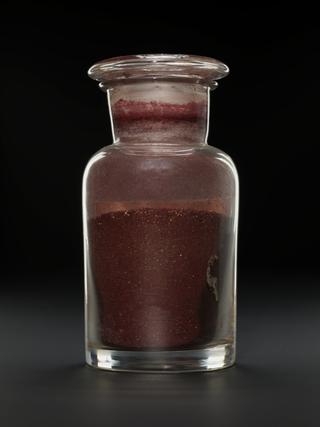
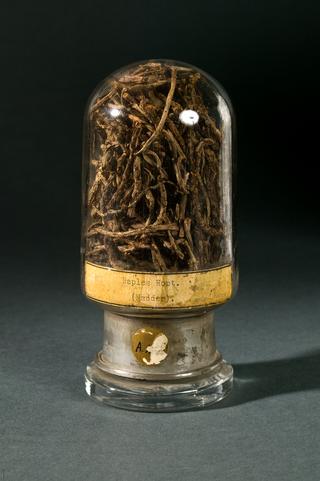
LicenseOuter quercitron bark dye sample
Science Museum Group Collection
© The Board of Trustees of the Science Museum
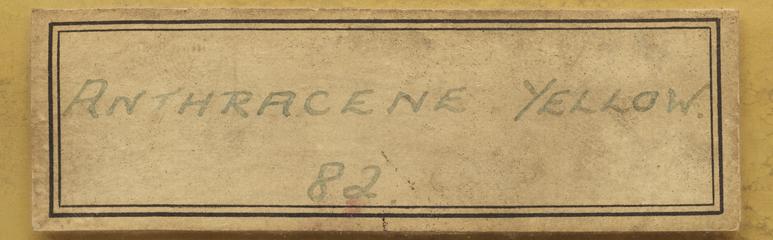
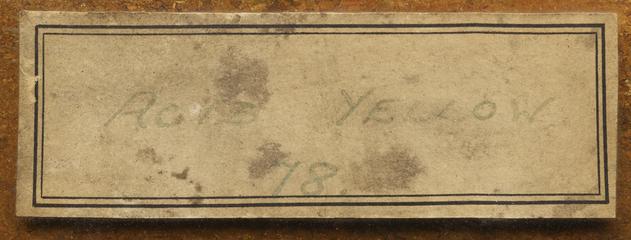
Natural dyes from research carried out by Leeds University Colour Chemistry department, c.1920s. Outer quercitron bark dye sample.
This is one of a collection of samples of early aniline and natural dyes from research carried out by Leeds University Colour Chemistry department during the 1920s.
For thousands of years, and in cultures all over the world, people have been using plant and animal products to colour textiles. Without dyes, we wouldn’t see the full spectrum of colours in our wardrobes and around our homes that we see today.
Manchester’s textiles industry needed quality dyes that were consistent and stable. During the 1800s, much research into natural dyes for use in the textile industry was carried out. Then, in London in the 1850s, William Perkin discovered the first successful artificial dye, the purple colour ‘Mauveine’. His discovery kick-started a new chemical industry producing brighter, cheaper and longer-lasting colouring products that changed the textile industry forever.
Aniline is a starting material for many industrial chemical products, including synthetic dyes. It can be extracted from coal tar, a waste product generated in large quantities in the 19th century, making it readily available to chemists. Aniline dyes are also called coal tar dyes. However, there was a crucial problem with the aniline dyes: they were liable to fade.
The textile industry today continues to use chemicals that are harmful to the environment. Up to 20% of global water pollution is attributed to textile dyeing and treatment. Research in Universities and within the textile dye industry continues today to develop dyes that are non-toxic, biodegradable and durable, lessening their negative impact.
Details
- Category:
- Industrial Chemistry
- Object Number:
- Y1970.90.28
- Materials:
- glass
- Measurements:
-
Overall: 220 mm 90 mm,
- type:
- dye sample
- credit:
- Gift of Leeds University