'Tabloid' medicine chest used by Teddy Roosevelt in 1909

'Tabloid' medicine chest used by Teddy Roosevelt in 1909 'Tabloid' medicine chest used by Teddy Roosevelt in 1909 'Tabloid' medicine chest used by Teddy Roosevelt in 1909 'Tabloid' medicine chest used by Teddy Roosevelt in 1909 'Tabloid' medicine chest used by Teddy Roosevelt in 1909 'Tabloid' medicine chest used by Teddy Roosevelt in 1909 'Tabloid' medicine chest used by Teddy Roosevelt in 1909 'Tabloid' medicine chest used by Teddy Roosevelt in 1909 'Tabloid' medicine chest used by Teddy Roosevelt in 1909

Creative Commons LicenseThis image is released under a CC BY-NC-SA 4.0 Licence

License this image for commercial use at Science and Society Picture Library

License

Creative Commons LicenseThis image is released under a CC BY-NC-SA 4.0 Licence

License this image for commercial use at Science and Society Picture Library

License

Creative Commons LicenseThis image is released under a CC BY-NC-SA 4.0 Licence

License this image for commercial use at Science and Society Picture Library

License

Creative Commons LicenseThis image is released under a CC BY-NC-SA 4.0 Licence

License this image for commercial use at Science and Society Picture Library

License

Creative Commons LicenseThis image is released under a CC BY-NC-SA 4.0 Licence

License this image for commercial use at Science and Society Picture Library

License

Creative Commons LicenseThis image is released under a CC BY-NC-SA 4.0 Licence

License this image for commercial use at Science and Society Picture Library

License

Creative Commons LicenseThis image is released under a CC BY-NC-SA 4.0 Licence

License this image for commercial use at Science and Society Picture Library

License

Creative Commons LicenseThis image is released under a CC BY-NC-SA 4.0 Licence

License this image for commercial use at Science and Society Picture Library

License

Creative Commons LicenseThis image is released under a CC BY-NC-SA 4.0 Licence

License this image for commercial use at Science and Society Picture Library

License

Science Museum Group
© The Board of Trustees of the Science Museum

Science Museum Group
© The Board of Trustees of the Science Museum

Science Museum Group
© The Board of Trustees of the Science Museum

Science Museum Group
© The Board of Trustees of the Science Museum

Science Museum Group
© The Board of Trustees of the Science Museum

Science Museum Group Collection
© The Board of Trustees of the Science Museum

Science Museum Group Collection
© The Board of Trustees of the Science Museum

Science Museum Group Collection
© The Board of Trustees of the Science Museum

Science Museum Group Collection
© The Board of Trustees of the Science Museum

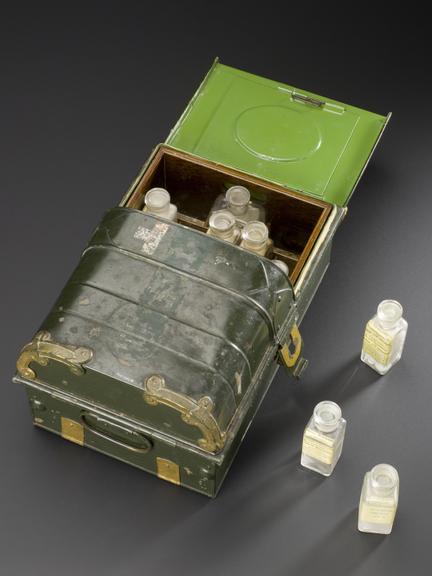
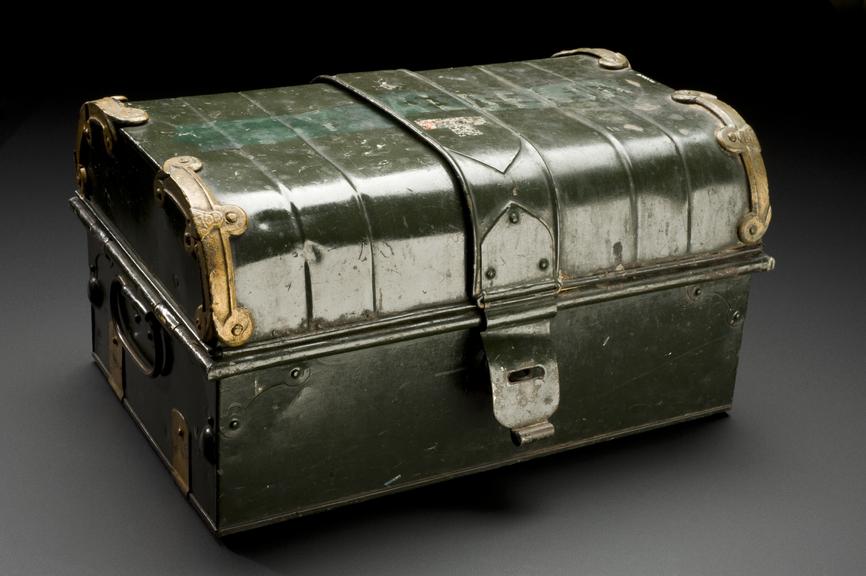
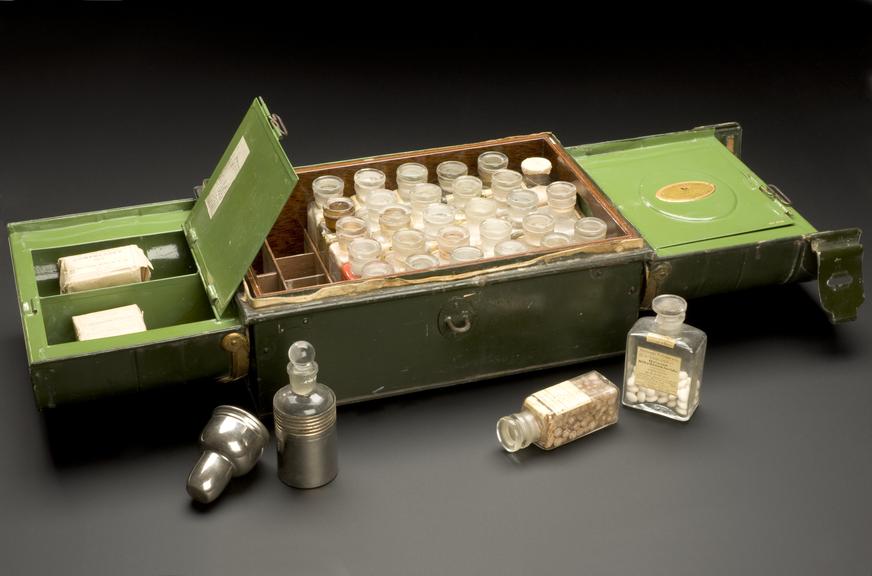
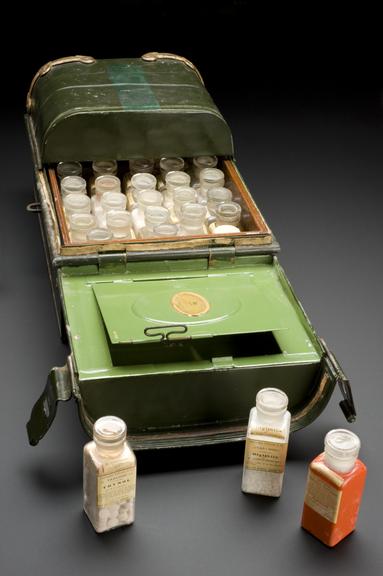
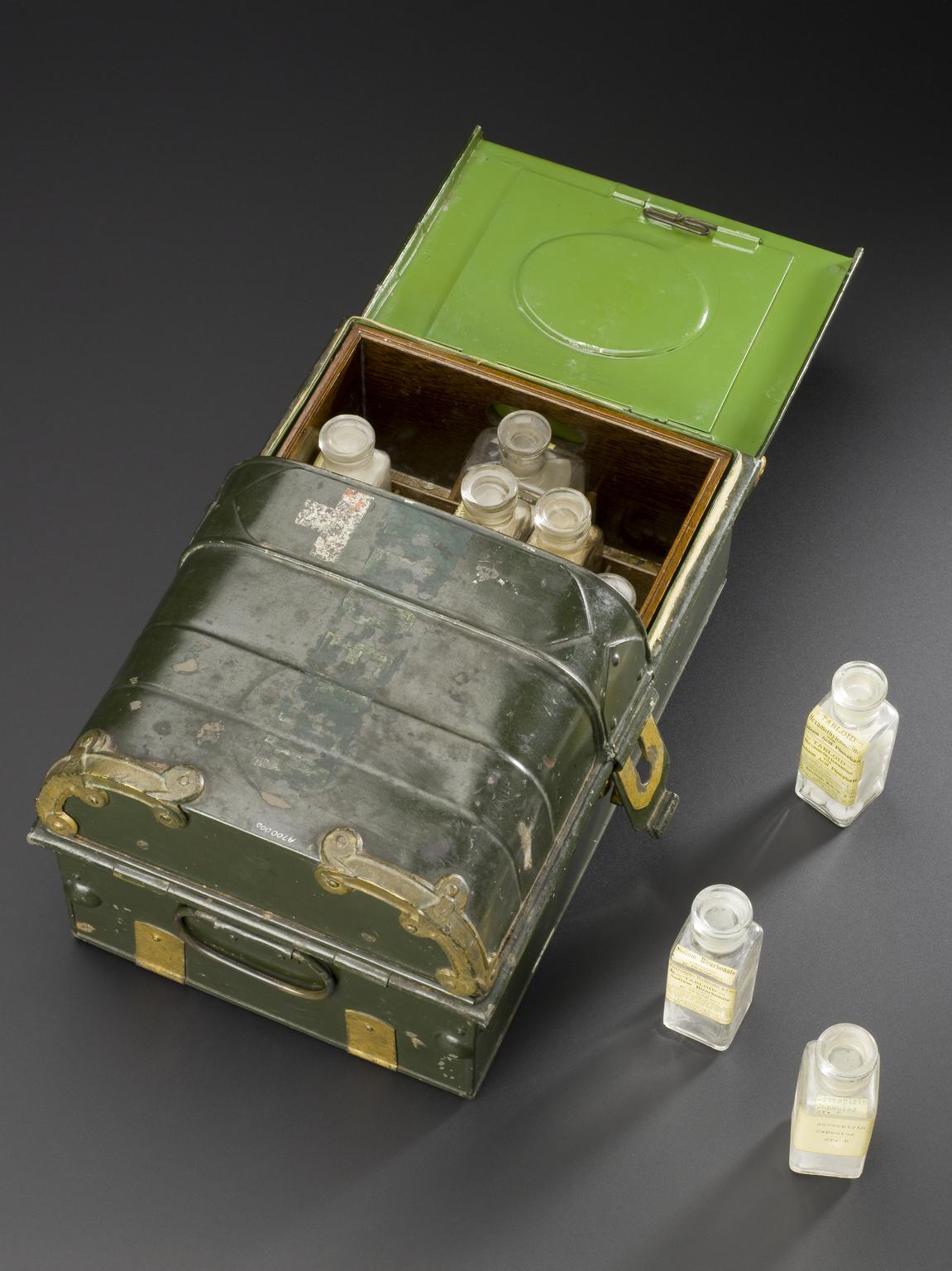
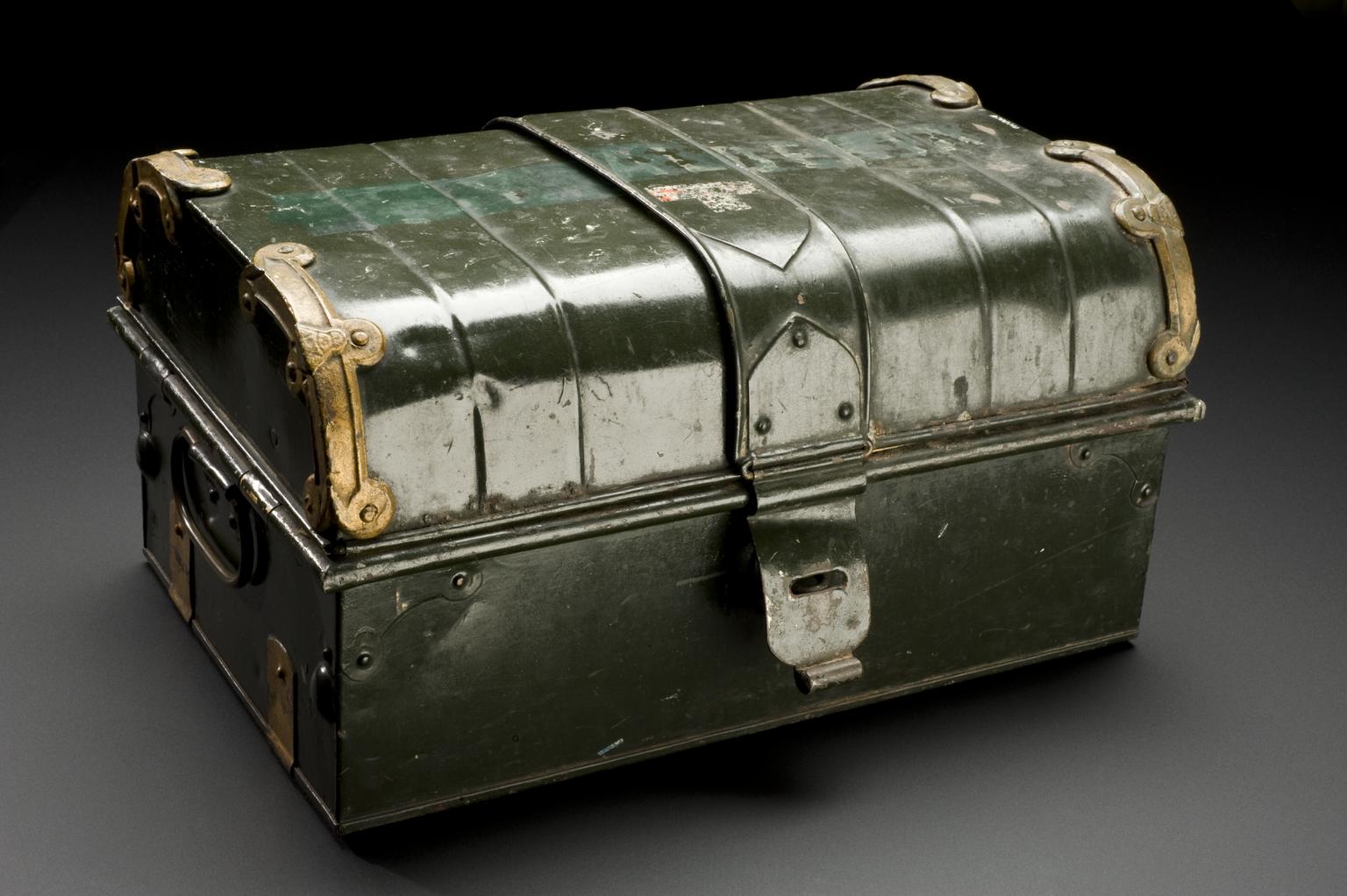
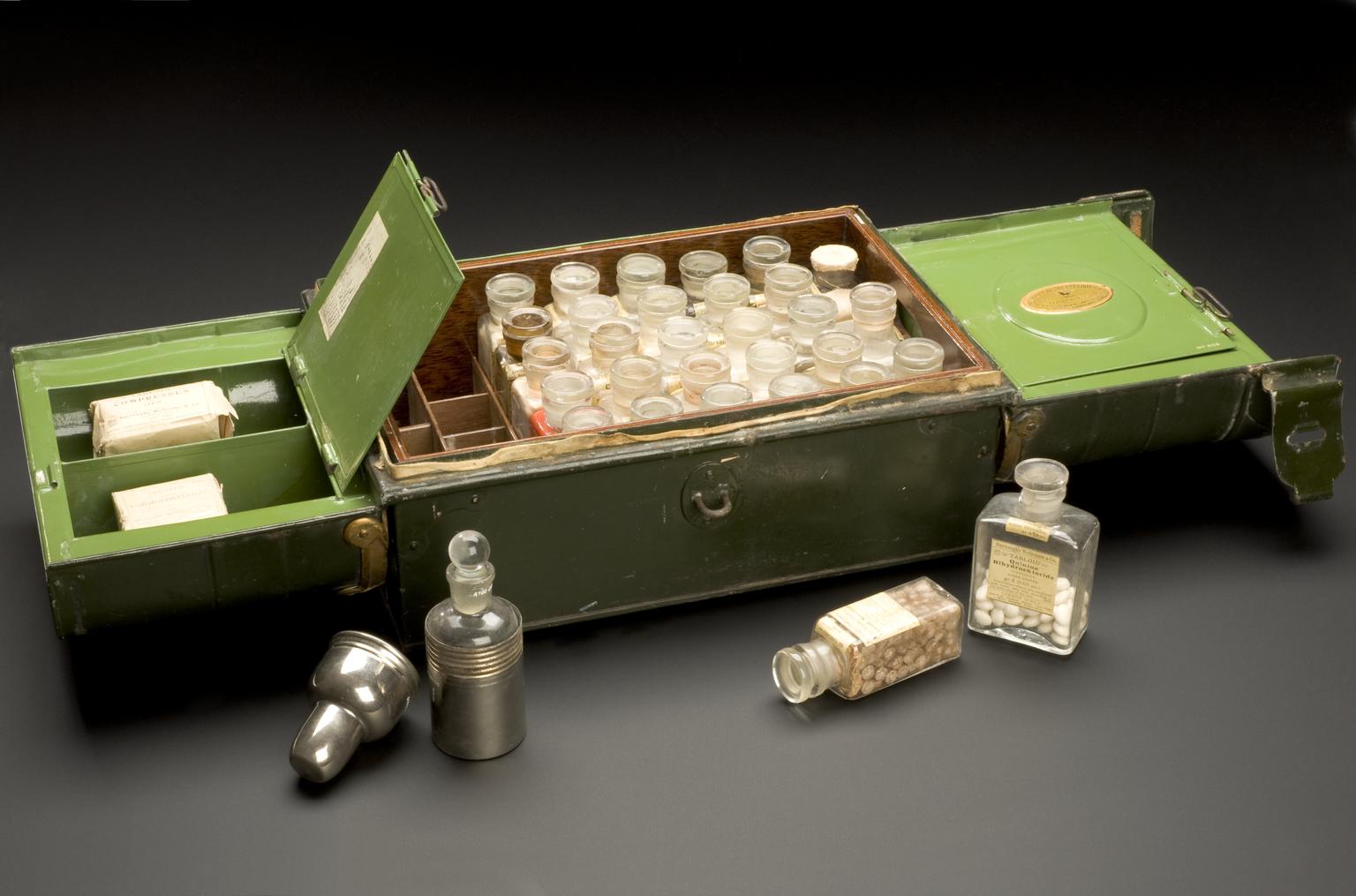
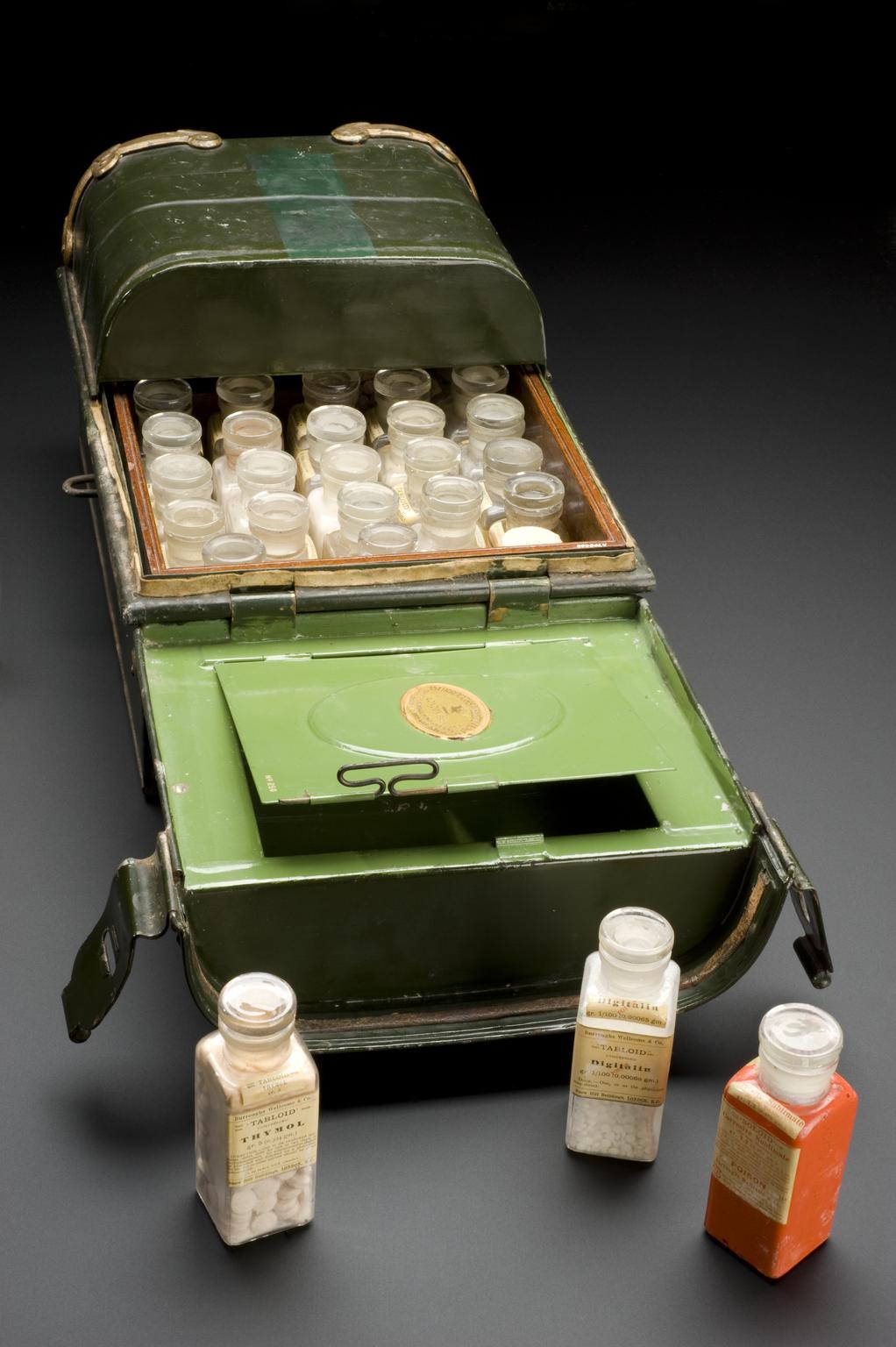
`Tabloid' medicine chest in metal case used by Teddy Roosevelt on African Expedition, 1909 (originally catalogued as 1911), made by Burroughs Wellcome and Co., 1900-1909

What is more dangerous, a lion or a mosquito? If you went big game hunting in Africa a hundred years ago you took plenty of guns and ammunition, but also a good supply of quinine. The drug had long been essential for travellers braving malaria-infested parts of the world and this medicine chest was particularly well stocked.

It was taken to Africa by former US President Theodore ‘Teddy’ Roosevelt and his expedition in 1909. How do we know they encountered malaria? The chest originally contained six bottles of plain and ‘sugar coated’ quinine tablets, an anti-malarial drug used to treat established infections. Four bottles remain but only two have any contents left, suggesting the expedition got through the rest.

Another bottle of pills bears the curious name ‘Livingstone Rouser’, based on an original recipe developed by the missionary and explorer David Livingstone sixty years earlier. By combining quinine with laxatives such as rhubarb, Livingstone found that the drug helped to ‘rouse’ his body against the fever. It probably just relieved the main side effect of quinine – constipation.

With malarial mosquitoes tackled, how did the lions fare? Roosevelt and his companions were meant to be on a scientific collecting expedition for the Smithsonian Institute, but they hunted on a grand scale. He’d spared the life of a bear during a trip in 1902, sparking the soft toy trend we know as the teddy bear. But among the thousands of animals killed on this trip were several white rhinos – rare even then – one of which Roosevelt shot as it slept.

Details

Category:
Materia Medica & Pharmacology
Collection:
Sir Henry Wellcome's Museum Collection
Object Number:
A700000
Materials:
case, metal and bottles, glass
Measurements:
overall: 210 mm x 400 mm x 250 mm, 27.5 kg
type:
medicine chest
credit:
Loan, Wellcome Trust

Parts

Clear glass, square-based bottle, with glass stopper and paper labels, containing 'Tabloid' brand Opium, gr.1. Manufactured by Burroughs, Welcome and Company. The directions state; 'One to two may be swallowed with a little water'. The label warns be taken with great Caution'. The bottle is labelled a poison.

"Tabloid" opium from medicine chest used by Teddy Roosevelt

Clear glass, square-based bottle, with glass stopper and paper labels, containing 'Tabloid' brand Opium, gr.1. Manufactured by Burroughs, Welcome and Company. The directions state; 'One to two may be swallowed with a little water'. The label warns be taken with great Caution'. The bottle is labelled a poison.

More

Opium is an addiciive painkiller that is now tightly controlled. However, its dangerous qualities have long been recognised and several laws passed in Britain and worldwide aimed at restricting its use. The International Opium Convention at The Hague in 1912 committed many countries including Britain to preventing trade in morphine, opium and cocaine.

Materials:
bottle, glass
Object Number:
A700000 Pt1
type:
bottle and opium
Glass bottle with round glass stopper full of `Tabloid' brand Dover powder tablets (opium and ipecac). 110 mm x 40 mm x 40 mm, 177 g. Produced by Burroughs Wellcome and Co., London, 1900-1909.

Glass bottle of Dover Powder tablets

Glass bottle with round glass stopper full of `Tabloid' brand Dover powder tablets (opium and ipecac). 110 mm x 40 mm x 40 mm, 177 g. Produced by Burroughs Wellcome and Co., London, 1900-1909.

More

Developed in 1732 by English doctor, Thomas Dover, his eponymous powder, had an enduring appeal for nearly 200 hundred years. The main ingredients of ipecacuanha, the root of a South American plant, and opium, induced sweating and acted as a pain-killer. When illness was thought to be caused by an imbalance of the body's four humours: blood, black bile, yellow bile and phlegm, action was taken to restore a person's own equilibrium. Colds were believed to be caused by an excess of phlegm, which could be removed by diet or by sweating.

Opium is an addictive painkiller that is now tightly controlled. However, its dangerous qualities have long been recognised and several laws passed in Britain and worldwide aimed at restricting its use. The International Opium Convention at The Hague in 1912 committed many countries including Britain to preventing trade in morphine, opium and cocaine.

Measurements:
overall: 110 mm x 40 mm x 40 mm, 177g
Materials:
glass , complete , opium and ipecac
Object Number:
A700000 Pt2
type:
bottle and opium

Medicine chest used by Teddy Roosevelt.

`Tabloid' medicine chest in metal case, containing materia medica in glass stoppered jars (Pts 4 - 38), by Burroughs Wellcome & Company, London, England, 1900-190, used by Teddy Roosevelt on African Expedition, 1909

More

This chest was given to Teddy (Theodore) Roosevelt (1858-1919), the 26th President of the United States. When Roosevelt’s presidential term ended in 1909, he went on safari to Africa to hunt game. He also brought back specimens for the Smithsonian Museum in Washington DC. As malaria was common in Africa, the case is full of quinine based anti-malaria products – many of which have been used.

Burroughs, Wellcome & Co gave ‘Tabloid’ medicine chests filled with the company’s products to influential people and high profile expeditions in a shrewd attempt to advertise their product.

Measurements:
overall: 210 mm x 400 mm x 305 mm, 12.38 kg
Materials:
steel (metal) , glass , materia medica , mahogany (wood) , cotton (thread) , brass (copper alloy) , paper (fibre product) , nickel plated and incomplete
Object Number:
A700000 Pt3
type:
medicine chest
Image ©
The Board of Trustees of the Science Museum
Steel medicine shaker from `Tabloid' medicine chest in metal case, used by Teddy Roosevelt on African Expedition, 1909

Medicine shaker from chest used by Teddy Roosevelt.

Steel medicine shaker from `Tabloid' medicine chest in metal case, used by Teddy Roosevelt on African Expedition, 1909

More

To make transporting medicines easier, many preparations were dissolved in water or solutions of alcohol when they were needed.

Measurements:
Base: 76 mm x 54 mm x 54 mm,
Lid: 85 mm x 58 mm x 58 mm,
Materials:
steel (metal)
Object Number:
A700000 Pt4
type:
drug delivery device
Glass bottle for steel medicine shaker from `Tabloid' medicine chest in metal case, by Burroughs Wellcome & Company, London, England, 1900-1909

Glass bottle for medicine shaker from chest used by Teddy Roosevelt.

Glass bottle for steel medicine shaker from `Tabloid' medicine chest in metal case, by Burroughs Wellcome & Company, London, England, 1900-1909

More

To make transporting medicines easier, many preparations were dissolved in water or solutions of alcohol when they were needed.

Measurements:
overall: 135 mm x 47 mm x 47 mm,
Materials:
glass
Object Number:
A700000 Pt5
type:
medicine bottle
Pleated compressed Iodoform gauze from by Burroughs Wellcome & Company, London, England, 1900-1909, used by Teddy Roosevelt on African Expedition, 1909

Iodoform gauze from chest used by Teddy Roosevelt.

Pleated compressed Iodoform gauze from by Burroughs Wellcome & Company, London, England, 1900-1909, used by Teddy Roosevelt on African Expedition, 1909

More

Tightly packed to save space, this gauze unravels to 2.7 metres long. Treated with iodoform, an organic compound with antiseptic and antimicrobial properties, this bandage could help would healing.

Measurements:
overall: 35 mm x 60 mm x 60 mm,
Materials:
paper (fibre product) , cardboard and wool (textile)
Object Number:
A700000 Pt6
type:
gauze and poison
Two compresses by Burroughs Wellcome & Company, London, England, 1900-1909, used by Teddy Roosevelt on African Expedition, 1909

Two compresses from chest used by Teddy Roosevelt.

Two compresses by Burroughs Wellcome & Company, London, England, 1900-1909, used by Teddy Roosevelt on African Expedition, 1909

More

Made from absorbent cotton, compresses are used to control bleeding and cover wounds temporarily.

Measurements:
overall: 35 mm x 60 mm x 60 mm,
Materials:
cardboard , paper (fibre product) and wool (unspecified)
Object Number:
A700000 Pt7
type:
dressings
Larger sized cuboid bottle containing 'Tabloid' Quinine Bihydrochloride sugar coated tablets, by Burroughs Wellcome & Company, London, England, 1900-1909, used by Teddy Roosevelt on African Expedition, 1909.

Bottle of Tabloid Quinine Bihydrochloride sugar-coated tablets

Larger sized cuboid bottle containing 'Tabloid' Quinine Bihydrochloride sugar coated tablets, by Burroughs Wellcome & Company, London, England, 1900-1909, used by Teddy Roosevelt on African Expedition, 1909.

More

According to the maker's 1920s publication ''Tabloid': A brief medical guide for explorers, missionaries, travellers, colonists, planters and others', quinine based tablets were used as a preventaive measure against malaria or as a general treatment for fevers. It was also recommended to aid recovery from toothache.

Quinine tablets featured in many of the medicine chests developed by Burroughs, Wellcome and Co.

Measurements:
overall: 115 mm x 67 mm x 40 mm,
Materials:
glass , paper (fibre product) , materia medica and sellotape
Object Number:
A700000 Pt8
type:
medicine bottle , materia medica and quinine
Larger sized cuboid bottle that once contained 'Tabloid' Quinine Bihydrochlor. (Acid quinine hydrochloride) by Burroughs Wellcome & Company, London, England, 1900-1909, used by Teddy Roosevelt on African Expedition, 1909.

Bottle of Tabloid Quinine Bihydrochlor. from chest used by Teddy Roosevelt.

Larger sized cuboid bottle that once contained 'Tabloid' Quinine Bihydrochlor. (Acid quinine hydrochloride) by Burroughs Wellcome & Company, London, England, 1900-1909, used by Teddy Roosevelt on African Expedition, 1909.

More

According to the maker's 1920s publication ''Tabloid': A brief medical guide for explorers, missionaries, travellers, colonists, planters and others', quinine based tablets were used as a preventaive measure against malaria or as a general treatment for fevers. It was also recommended to aid recovery from toothache.

Quinine tablets featured in many of the medicine chests developed by Burroughs, Wellcome and Co.

Measurements:
overall: 117 mm x 65 mm x 40 mm,
Materials:
glass and paper (fibre product)
Object Number:
A700000 Pt9
type:
medicine bottle , materia medica and quinine
Cuboid bottle containing 'Tabloid' bismuth subnitrate by Burroughs Wellcome & Company, London, England, 1900-1909, used by Teddy Roosevelt on African Expedition, 1909

Bottle of Tabloid bismuth subnitrate from chest used by Teddy Roosevelt.

Cuboid bottle containing 'Tabloid' bismuth subnitrate by Burroughs Wellcome & Company, London, England, 1900-1909, used by Teddy Roosevelt on African Expedition, 1909

More

Bismuth subnitrate was advertised by its makers as being useful for treatment of stomach and intestinal illnesses including dysentery.

Measurements:
overall: 118 mm x 37 mm x 40 mm,
Materials:
glass , paper (fibre product) and materia medica
Object Number:
A700000 Pt10
type:
medicine bottle , materia medica and bismuth
Cuboid bottle containing 'Tabloid' "Empirin" (Acetylsalicylic Acid), by Burroughs Wellcome & Company, London, England, 1900-1909, used by Teddy Roosevelt on African Expedition, 1909

Bottle of Tabloid "Empirin"

Cuboid bottle containing 'Tabloid' "Empirin" (Acetylsalicylic Acid), by Burroughs Wellcome & Company, London, England, 1900-1909, used by Teddy Roosevelt on African Expedition, 1909

More

Empirin was Burroughs, Wellcome & Co's brand name for aspirin - itself a brand name for acetylsalicylic acid - a painkiller, and an anti-inflammtory. The maker's advertisied their medicine as 'more effective than aspirin.'

Measurements:
overall: 112 mm x 40 mm x 39 mm,
Materials:
glass , paper (fibre product) and materia medica
Object Number:
A700000 Pt11
type:
medicine bottle and materia medica
Cuboid bottle containing 'Tabloid' compressed digitalin from by Burroughs Wellcome & Company, London, England, 1900-1909, used by Teddy Roosevelt on African Expedition, 1909

Bottle of Tabloid compressed digitalin from chest used by Teddy Roosevelt.

Cuboid bottle containing 'Tabloid' compressed digitalin from by Burroughs Wellcome & Company, London, England, 1900-1909, used by Teddy Roosevelt on African Expedition, 1909

More

Digitalin from was used for heart conditions, excess fluid in the body causing swelling, pneumonia, and as an antidote to aconite. Extracted from foxglove leaves and seeds, digitalin is one of a number of compounds from the plant found across Europe, Asia and Africa.

Measurements:
overall: 116 mm x 40 mm x 40 mm,
Materials:
glass , paper (fibre product) and materia medica
Object Number:
A700000 Pt12
type:
medicine bottle , materia medica and digitalin
Cuboid bottle containing 'Tabloid' calomel from 'Tabloid' medicine chest in metal case, containing materia medica in glass stoppered jars (Pts 4 - 38), by Burroughs Wellcome & Company, London, England, 1900-1909. Used by Teddy Roosevelt on African Expedition, 1909.

Bottle of Tabloid calomel

Cuboid bottle containing 'Tabloid' calomel from 'Tabloid' medicine chest in metal case, containing materia medica in glass stoppered jars (Pts 4 - 38), by Burroughs Wellcome & Company, London, England, 1900-1909. Used by Teddy Roosevelt on African Expedition, 1909.

More

Calomel is another name mercurous chloride and was used as a violent purgative for hundreds of years. Recommended for conditions including fevers, syphilis, cholera, diarrhoea, and vomiting.

It is unclear how the medicine got its name, but it did disguise the mercury content – which is dangerous to human health.

Calomel featured many of the medicine chests developed by Burroughs, Wellcome and Co.

Measurements:
overall: 115 mm x 40 mm x 40 mm,
Materials:
glass , paper (fibre product) and materia medica
Object Number:
A700000 Pt13
type:
medicine bottle , materia medica and calomel
Cuboid bottle containing 'Tabloid' capiscum tablets, containing the solid ingredients of capiscum tincture, USP, by Burroughs Wellcome & Company, London, England, 1900-1909. Used by Teddy Roosevelt on African Expedition, 1909

Bottle of Tabloid capiscum from chest used by Teddy Roosevelt.

Cuboid bottle containing 'Tabloid' capiscum tablets, containing the solid ingredients of capiscum tincture, USP, by Burroughs Wellcome & Company, London, England, 1900-1909. Used by Teddy Roosevelt on African Expedition, 1909

More

Advertised as a stimulant and to relieve bloating or a build up of gas in the stomach and intestines, nerve pain, and chillblains, capiscum is a preparation made from peppers.

The letters USP refer to the United States Pharmacoepia. Each country used to sets and publish its own standards for medical preparations, but some are now shared globally.

Measurements:
overall: 115 mm x 40 mm x 40 mm,
Materials:
glass , paper (fibre product) and materia medica
Object Number:
A700000 Pt14
type:
medicine bottle and materia medica
Cuboid bottle containing 'Tabloid' arsenious iodide gr 1/21 and mecuric iodide gr 1/2, by Burroughs Wellcome & Company, London, England, 1900-1909, used by Teddy Roosevelt on African Expedition, 1909.

Bottle of Tabloid brand Donovan's solution

Cuboid bottle containing 'Tabloid' arsenious iodide gr 1/21 and mecuric iodide gr 1/2, by Burroughs Wellcome & Company, London, England, 1900-1909, used by Teddy Roosevelt on African Expedition, 1909.

More

Developed in 1839, by Irish pharmacist and chemist, Michael Donovan (1790-1876), this combination of arsenic and mercury iodide was used for skin treatments all over the world.

Arsenic and mercury are dangerous to human health and are no longer used in medical preparations.

Measurements:
overall: 115 mm x 40 mm x 40 mm,
Materials:
glass , paper (fibre product) and materia medica
Object Number:
A700000 Pt15
type:
medicine bottle and materia medica
Cuboid bottle containing 'Tabloid' compressed Thymol, by Burroughs Wellcome & Company, London, England, 1900-1909, used by Teddy Roosevelt on African Expedition, 1909.

Bottle of Tabloid compressed thymol

Cuboid bottle containing 'Tabloid' compressed Thymol, by Burroughs Wellcome & Company, London, England, 1900-1909, used by Teddy Roosevelt on African Expedition, 1909.

More

Thymol is found in the thyme plant. It was used as a treatment for intestinal parasites or as a solution or lotion as a germicide. According to the publication Wellcome’s Medical Diary 1899, thymol was used in India for the treatment of hookworm (ancylostomiasis), which impacted may tea-workers working in Assam. Side effects could affect a person’s bowels so it was recommended to take another medication before and after the treatment.

Measurements:
overall: 115 mm x 40 mm x 40 mm,
Materials:
glass , paper (fibre product) and materia medica
Object Number:
A700000 Pt16
type:
medicine bottle and materia medica
Cuboid bottle containing 'Soloid' corrosive sublimate (antiseptic), by Burroughs Wellcome & Company, London, England, 1900-1909, used by Teddy Roosevelt on African Expedition, 1909.

Bottle of Soloid corrosive sublimate (antiseptic) from medicine chest used by Teddy Roosevelt.

Cuboid bottle containing 'Soloid' corrosive sublimate (antiseptic), by Burroughs Wellcome & Company, London, England, 1900-1909, used by Teddy Roosevelt on African Expedition, 1909.

More

Known also as mercury perchloride, this preparation was used as a powerful anti-infection treatment on the skin or internally as a treatment for syphilis or liver conditions.

Measurements:
overall: 116 mm x 40 mm x 40 mm,
Materials:
glass , paper (fibre product) , materia medica and paint
Object Number:
A700000 Pt17
type:
mercuric chloride
Cuboid bottle containing 'Tabloid' quinine and rhubarb compound, 'Livingstone Rouser', by Burroughs Wellcome & Company, London, England, 1900-1909. Used by Teddy Roosevelt on African Expedition, 1909.

Bottle of 'Livingstone Rousers'

Cuboid bottle containing 'Tabloid' quinine and rhubarb compound, 'Livingstone Rouser', by Burroughs Wellcome & Company, London, England, 1900-1909. Used by Teddy Roosevelt on African Expedition, 1909.

More

‘Livingstone Rousers’ are named after the man who invented them – the explorer and missionary David Livingstone (1813-1873). Exploring and exploiting Africa’s lands meant Europeans encountered illnesses that they were unused to, such as malaria. Livingstone prepared a treatment from quinine, jalap (root of a Mexican and Brazilian plant), rhubarb and calomel (mercurous chloride) to combat fevers and malaria and to purge the body. His 1860 recipe for was made and marketed by Burroughs, Wellcome & Co, who included it in many of their medicine chests.

In his 1875 book ‘A popular account of Dr. Livingstone's expedition to the Zambesi and its tributaries : and of the discovery of Lakes Shirwa and Nyassa, 1858-1864, Livingstone wrote “they received from our men the name of “rousers” from their efficacy in rousing up those most prostrated.”

Measurements:
overall: 115 mm x 40 mm x 40 mm,
Materials:
glass , paper (fibre product) and materia medica
Object Number:
A700000 Pt18
type:
medicine bottle and materia medica
Cuboid bottle containing 'Tabloid' bismuth subnitrate. From 'Tabloid' medicine chest in metal case, containing materia medica in glass stoppered jars (Pts 4 - 38), by Burroughs Wellcome & Company, London, England, 1900-1909. Used by Teddy Roosevelt on African Expedition, 1909.

Bottle of Tabloid bismuth subnitrate from medicine chest used by Teddy Roosevelt.

Cuboid bottle containing 'Tabloid' bismuth subnitrate. From 'Tabloid' medicine chest in metal case, containing materia medica in glass stoppered jars (Pts 4 - 38), by Burroughs Wellcome & Company, London, England, 1900-1909. Used by Teddy Roosevelt on African Expedition, 1909.

More

Bismuth subnitrate was advertised by its makers as being useful for treatment of stomach and intestinal illnesses including dysentery.

Measurements:
overall: 115 mm x 40 mm x 40 mm,
Materials:
glass , paper (fibre product) and materia medica
Object Number:
A700000 Pt19
type:
medicine bottle and materia medica
Cuboid bottle containing 'Tabloid' sodium bromide compound. From 'Tabloid' medicine chest in metal case, containing materia medica in glass stoppered jars (Pts 4 - 38), by Burroughs Wellcome & Company, London, England, 1900-1909. Used by Teddy Roosevelt on African Expedition, 1909.

Bottle of Tabloid sodium bromide compound from medicine chest used by Teddy Roosevelt.

Cuboid bottle containing 'Tabloid' sodium bromide compound. From 'Tabloid' medicine chest in metal case, containing materia medica in glass stoppered jars (Pts 4 - 38), by Burroughs Wellcome & Company, London, England, 1900-1909. Used by Teddy Roosevelt on African Expedition, 1909.

More

Made from a combination of strontium, sodium and ammonium salts, its makers, Burroughs, Wellcome & Co, advertised their sodium bromide compound for treatment of epilepsy.

Measurements:
overall: 115 mm x 40 mm x 40 mm,
Materials:
glass , paper (fibre product) and materia medica
Object Number:
A700000 Pt20
type:
medicine bottle and materia medica
Two loose pills from 'Tabloid' medicine chest in metal case, containing materia medica in glass stoppered jars (Pts 4 - 38), by Burroughs Wellcome & Company, London, England, 1900-1909. Used by Teddy Roosevelt on African Expedition, 1909.

Two loose pills from medicine chest used by Teddy Roosevelt.

Two loose pills from 'Tabloid' medicine chest in metal case, containing materia medica in glass stoppered jars (Pts 4 - 38), by Burroughs Wellcome & Company, London, England, 1900-1909. Used by Teddy Roosevelt on African Expedition, 1909.

Measurements:
overall: .5 mm x 12 mm x 12 mm,
Materials:
materia medica
Object Number:
A700000 Pt21
type:
medicine bottle and materia medica
Bottle of 'Tabloid' Aconite Tincture USP by Burroughs Wellcome & Company, London, England, 1900-1909. Used by Teddy Roosevelt on African Expedition, 1909.

Bottle of 'Tabloid' aconite tincture U.S.P

Bottle of 'Tabloid' Aconite Tincture USP by Burroughs Wellcome & Company, London, England, 1900-1909. Used by Teddy Roosevelt on African Expedition, 1909.

More

Aconite is also known by names including monkshood and wolfbane. A tincture is a preparation that used alcohol as an ingredient. It's makers recommended using with caution as a sedative, to cause sweating, or to treat fevers and pain.

The letters USP refer to the United States Pharmacoepia. Each country used to set and publish its own standards for medical preparations, but some are now shared globally.

Measurements:
overall: 115 mm x 40 mm x 40 mm,
Materials:
glass , paper (fibre product) and materia medica
Object Number:
A700000 Pt22
type:
medicine bottle and materia medica
Bottle of 'Tabloid' potassium iodide from 'Tabloid' medicine chest in metal case, by Burroughs Wellcome & Company, London, England, 1900-1909, used by Teddy Roosevelt on African Expedition, 1909.

Bottle of 'Tabloid' potassium iodide

Bottle of 'Tabloid' potassium iodide from 'Tabloid' medicine chest in metal case, by Burroughs Wellcome & Company, London, England, 1900-1909, used by Teddy Roosevelt on African Expedition, 1909.

More

According to the maker's 1920s publication ''Tabloid': A brief medical guide for explorers, missionaries, travellers, colonists, planters and others', potassium iodide was recommended as a treatment for syphilis or used in to treat rheumatism and poisoning by lead or mercury.

Measurements:
overall: 116 mm x 40 mm x 40 mm,
Materials:
glass , paper (fibre product) and materia medica
Object Number:
A700000 Pt23
type:
medicine bottle and materia medica
Bottle of 'Tabloid' calomel from 'Tabloid' medicine chest in metal case, by Burroughs Wellcome & Company, London, England, 1900-1909, ued by Teddy Roosevelt on African Expedition, 1909.

Bottle of 'Tabloid' calomel

Bottle of 'Tabloid' calomel from 'Tabloid' medicine chest in metal case, by Burroughs Wellcome & Company, London, England, 1900-1909, ued by Teddy Roosevelt on African Expedition, 1909.

More

Calomel is another name mercurous chloride and was used as a violent purgative for hundreds of years. Recommended for conditions including fevers, syphilis, cholera, diarrhoea, and vomiting.

It is unclear how the medicine got its name, but it did disguise the mercury content – which is dangerous to human health.

Calomel featured many of the medicine chests developed by Burroughs, Wellcome and Co.

Measurements:
overall: 116 mm x 40 mm x 40 mm,
Materials:
glass , paper (fibre product) and materia medica
Object Number:
A700000 Pt24
type:
medicine bottle and materia medica
Bottle of 'Tabloid' trinitrin from 'Tabloid' medicine chest in metal case, containing materia medica in glass stoppered jars (Pts 4 - 38), by Burroughs Wellcome & Company, London, England, 1900-1909. Used by Teddy Roosevelt on African Expedition, 1909.

Bottle of 'Tabloid' trinitrin from medicine chest used by Teddy Roosevelt.

Bottle of 'Tabloid' trinitrin from 'Tabloid' medicine chest in metal case, containing materia medica in glass stoppered jars (Pts 4 - 38), by Burroughs Wellcome & Company, London, England, 1900-1909. Used by Teddy Roosevelt on African Expedition, 1909.

More

Trinitrin is another name for nitroglycerin. While more commonly associated with making explosives, nitroglycerin preparations are used to treat chest pain, including angina. Its makers also advertised it for epilepsy, sea-sickness, asthma and sciatica.

Measurements:
overall: 116 mm x 40 mm x 40 mm,
Materials:
glass , paper (fibre product) and materia medica
Object Number:
A700000 Pt25
type:
medicine bottle and materia medica
Bottle of 'Tabloid' Blaud pill compound from 'Tabloid' medicine chest in metal case, by Burroughs Wellcome & Company, London, England, 1900-1909, used by Teddy Roosevelt on African Expedition, 1909

Bottle of 'Tabloid' Blaud pill compound

Bottle of 'Tabloid' Blaud pill compound from 'Tabloid' medicine chest in metal case, by Burroughs Wellcome & Company, London, England, 1900-1909, used by Teddy Roosevelt on African Expedition, 1909

More

According to the maker's 1920s publication ''Tabloid': A brief medical guide for explorers, missionaries, travellers, colonists, planters and others', Blaud pills were used as a treatment for low iron (anaemia) and was often used in combination with other treatments.

The name ‘Blaud’ comes from the medication’s developer Dr Pierre Blaud (1774-1858), who first published his recipe for potassium carbonate and ferrous sulphate in 1866.

In their advertising, Burroughs, Wellcome & Co claimed that their preparation of Blaud pills were the first time that both ingredients could be taken together successfully in one pill.

Blaud pills featured in many of the medicine chests developed by Burroughs, Wellcome and Co.

Measurements:
overall: 116 mm x 40 mm x 40 mm,
Materials:
glass , paper (fibre product) and materia medica
Object Number:
A700000 Pt26
type:
medicine bottle and materia medica
Bottle of 'Tabloid' Empirin (acetylsalicylic acid) from 'Tabloid' medicine chest in metal case, containing materia medica in glass stoppered jars (Pts 4 - 38), by Burroughs Wellcome & Company, London, England, 1900-1909. Used by Teddy Roosevelt on African Expedition, 1909.

Bottle of 'Tabloid' Empirin (Acetylsalicylic acid) from medicine chest used by Teddy Roosevelt.

Bottle of 'Tabloid' Empirin (acetylsalicylic acid) from 'Tabloid' medicine chest in metal case, containing materia medica in glass stoppered jars (Pts 4 - 38), by Burroughs Wellcome & Company, London, England, 1900-1909. Used by Teddy Roosevelt on African Expedition, 1909.

More

Empirin was Burroughs, Wellcome & Co's brand name for aspirin - itself a brand name for acetylsalicylic acid - a painkiller, and an anti-inflammtory. The maker's advertisied their medicine as 'more effective than aspirin.'

Measurements:
overall: 117 mm x 40 mm x 40 mm,
Materials:
glass , paper (fibre product) and materia medica
Object Number:
A700000 Pt27
type:
medicine bottle and materia medica
Bottle of 'Tabloid' compressed keratin-coated ipecacuanha from 'Tabloid' medicine chest in metal case, containing materia medica in glass stoppered jars (Pts 4 - 38), by Burroughs Wellcome & Company, London, England, 1900-1909. Used by Teddy Roosevelt on African Expedition, 1909.

Bottle of 'Tabloid' compressed keratin-coated ipecacuanha from medicine chest used by Teddy Roosevelt.

Bottle of 'Tabloid' compressed keratin-coated ipecacuanha from 'Tabloid' medicine chest in metal case, containing materia medica in glass stoppered jars (Pts 4 - 38), by Burroughs Wellcome & Company, London, England, 1900-1909. Used by Teddy Roosevelt on African Expedition, 1909.

More

Made from the roots of a South American plant, ipecacuanha was used as a treatment for stomach and intestinal conditions including dysentery. It acted by purging the body by vomiting and is sometimes still used after a suspected poisoning. A spray version mixed with win was also recommended in the treatment of asthma and bronchitis.

Measurements:
overall: 117 mm x 40 mm x 40 mm,
Materials:
glass , paper (fibre product) and materia medica
Object Number:
A700000 Pt28
type:
medicine bottle and materia medica
Empty bottle for novaspirin capsules from 'Tabloid' medicine chest in metal case, containing materia medica in glass stoppered jars (Pts 4 - 38), by Burroughs Wellcome & Company, London, England, 1900-1909. Used by Teddy Roosevelt on African Expedition, 1909.

Empty bottle for novaspirin capsules from medicine chest used by Teddy Roosevelt.

Empty bottle for novaspirin capsules from 'Tabloid' medicine chest in metal case, containing materia medica in glass stoppered jars (Pts 4 - 38), by Burroughs Wellcome & Company, London, England, 1900-1909. Used by Teddy Roosevelt on African Expedition, 1909.

More

Unlike the other medicine bottles in Teddy Roosevelt's medicine chest, this bottle has a type-writer printed label for novaspirin - a form of aspirin used as a pain killer and anti-inflammatory.

Measurements:
overall: 114 mm x 40 mm x 40 mm,
Materials:
glass and paper (fibre product)
Object Number:
A700000 Pt29
type:
medicine bottle and materia medica
Empty bottle for compressed sodium bicarbonate from 'Tabloid' medicine chest in metal case, containing materia medica in glass stoppered jars (Pts 4 - 38), by Burroughs Wellcome & Company, London, England, 1900-1909. Used by Teddy Roosevelt on African Expedition, 1909.

Empty bottle for compressed sodium bicarbonate from medicine chest used by Teddy Roosevelt.

Empty bottle for compressed sodium bicarbonate from 'Tabloid' medicine chest in metal case, containing materia medica in glass stoppered jars (Pts 4 - 38), by Burroughs Wellcome & Company, London, England, 1900-1909. Used by Teddy Roosevelt on African Expedition, 1909.

More

Sodium bicarbonate was recommended for liver conditions such as hepatitis, as an antacid for an upset stomach or indigestion.

Measurements:
overall: 119 mm x 40 mm x 40 mm,
Materials:
glass and paper (fibre product)
Object Number:
A700000 Pt30
type:
medicine bottle and materia medica
Empty bottle for novaspirin capsules from 'Tabloid' medicine chest in metal case, containing materia medica in glass stoppered jars (Pts 4 - 38), by Burroughs Wellcome & Company, London, England, 1900-1909. Used by Teddy Roosevelt on African Expedition, 1909.

Empty bottle for novaspirin capsules from medicine chest used by Teddy Roosevelt.

Empty bottle for novaspirin capsules from 'Tabloid' medicine chest in metal case, containing materia medica in glass stoppered jars (Pts 4 - 38), by Burroughs Wellcome & Company, London, England, 1900-1909. Used by Teddy Roosevelt on African Expedition, 1909.

More

Unlike the other medicine bottles in Teddy Roosevelt's medicine chest, this bottle has a type-writer printed label for novaspirin - a form of aspirin used as a pain killer and anti-inflammatory.

Measurements:
overall: 120 mm x 40 mm x 40 mm,
Materials:
glass and paper (fibre product)
Object Number:
A700000 Pt31
type:
medicine bottle and materia medica
Bottle of 'Tabloid' antifebrin capsules (acetanilide) from 'Tabloid' medicine chest in metal case, containing materia medica in glass stoppered jars (Pts 4 - 38), by Burroughs Wellcome & Company, London, England, 1900-1909. Used by Teddy Roosevelt on African Expedition, 1909.

Bottle of 'Tabloid' antifebrin capsules (acetanilide) from medicine chest used by Teddy Roosevelt.

Bottle of 'Tabloid' antifebrin capsules (acetanilide) from 'Tabloid' medicine chest in metal case, containing materia medica in glass stoppered jars (Pts 4 - 38), by Burroughs Wellcome & Company, London, England, 1900-1909. Used by Teddy Roosevelt on African Expedition, 1909.

More

Antifebrin was a brand name for a preparation used to reduce fevers and as a pain killer. Made from acetanilide, it was recommended for headaches, nerve pain and resulted in excessive sweating and sleep.

Measurements:
overall: 116 mm x 40 mm x 40 mm,
Materials:
glass , paper (fibre product) and materia medica
Object Number:
A700000 Pt32
type:
medicine bottle and materia medica
Bottle of 'Tabloid' Blaud Pills from 'Tabloid' medicine chest in metal case, containing materia medica in glass stoppered jars (Pts 4 - 38), by Burroughs Wellcome & Company, London, England, 1900-1909. Used by Teddy Roosevelt on African Expedition, 1909.

Bottle of 'Tabloid' Blaud Pills from medicine chest used by Teddy Roosevelt.

Bottle of 'Tabloid' Blaud Pills from 'Tabloid' medicine chest in metal case, containing materia medica in glass stoppered jars (Pts 4 - 38), by Burroughs Wellcome & Company, London, England, 1900-1909. Used by Teddy Roosevelt on African Expedition, 1909.

More

According to the maker's 1920s publication ''Tabloid': A brief medical guide for explorers, missionaries, travellers, colonists, planters and others', Blaud pills were used as a treatment for low iron (anaemia) and was often used in combination with other treatments.

The name ‘Blaud’ comes from the medication’s developer Dr Pierre Blaud (1774-1858), who first published his recipe for potassium carbonate and ferrous sulphate in 1866.

In their advertising, Burroughs, Wellcome & Co claimed that their preparation of Blaud pills were the first time that both ingredients could be taken together successfully in one pill.

Blaud pills featured in many of the medicine chests developed by Burroughs, Wellcome and Co.

Measurements:
overall: 117 mm x 40 mm x 40 mm,
Materials:
glass , paper (fibre product) and materia medica
Object Number:
A700000 Pt33
type:
medicine bottle and materia medica
Bottle of 'Tabloid' hexamethylenamine with sodium acid phosphate from 'Tabloid' medicine chest in metal case, containing materia medica in glass stoppered jars (Pts 4 - 38), by Burroughs Wellcome & Company, London, England, 1900-1909. Used by Teddy Roosevelt on African Expedition, 1909.

Bottle of 'Tabloid' hexamethylenamine with sodium acid phosphate from medicine chest used by Teddy Roosevelt.

Bottle of 'Tabloid' hexamethylenamine with sodium acid phosphate from 'Tabloid' medicine chest in metal case, containing materia medica in glass stoppered jars (Pts 4 - 38), by Burroughs Wellcome & Company, London, England, 1900-1909. Used by Teddy Roosevelt on African Expedition, 1909.

Measurements:
overall: 117 mm x 40 mm x 40 mm,
Materials:
glass , paper (fibre product) and materia medica
Object Number:
A700000 Pt34
type:
medicine bottle and materia medica
Bottle of 'Soloid' potassium permanganate from 'Tabloid' medicine chest in metal case, containing materia medica in glass stoppered jars (Pts 4 - 38), by Burroughs Wellcome & Company, London, England, 1900-1909. Used by Teddy Roosevelt on African Expedition, 1909.

Bottle of 'Soloid' potassium permanganate from medicine chest used by Teddy Roosevelt.

Bottle of 'Soloid' potassium permanganate from 'Tabloid' medicine chest in metal case, containing materia medica in glass stoppered jars (Pts 4 - 38), by Burroughs Wellcome & Company, London, England, 1900-1909. Used by Teddy Roosevelt on African Expedition, 1909.

More

When dissolved in water, potassium permanganate is a pink-purple colour. It's makers recommended drinking it dissolved in water for treating gonorrhoea and scurvy and as a disinfectant and antiseptic.

Measurements:
overall: 117 mm x 40 mm x 40 mm,
Materials:
glass , paper (fibre product) and materia medica
Object Number:
A700000 Pt35
type:
medicine bottle and materia medica
Bottle of 'Tabloid' antifebrin compound (acetanilide) from 'Tabloid' medicine chest in metal case, containing materia medica in glass stoppered jars (Pts 4 - 38), by Burroughs Wellcome & Company, London, England, 1900-1909. Used by Teddy Roosevelt on African Expedition, 1909.

Bottle of 'Tabloid' antifebrin compound (acetanilide) from medicine chest used by Teddy Roosevelt.

Bottle of 'Tabloid' antifebrin compound (acetanilide) from 'Tabloid' medicine chest in metal case, containing materia medica in glass stoppered jars (Pts 4 - 38), by Burroughs Wellcome & Company, London, England, 1900-1909. Used by Teddy Roosevelt on African Expedition, 1909.

More

Antifebrin was a brand name for a preparation used to reduce fevers and as a pain killer. Made from acetanilide, it was recommended for headaches, nerve pain and resulted in excessive sweating and sleep.

Measurements:
overall: 114 mm x 40 mm x 40 mm,
Materials:
glass , paper (fibre product) and materia medica
Object Number:
A700000 Pt36
type:
medicine bottle and materia medica
Empty bottle for quinine bihydrochloride from 'Tabloid' medicine chest in metal case, containing materia medica in glass stoppered jars (Pts 4 - 38), by Burroughs Wellcome & Company, London, England, 1900-1909. Used by Teddy Roosevelt on African Expedition, 1909.

Empty bottle for quinine bihydrochloride from medicine chest used by Teddy Roosevelt.

Empty bottle for quinine bihydrochloride from 'Tabloid' medicine chest in metal case, containing materia medica in glass stoppered jars (Pts 4 - 38), by Burroughs Wellcome & Company, London, England, 1900-1909. Used by Teddy Roosevelt on African Expedition, 1909.

More

According to the maker's 1920s publication ''Tabloid': A brief medical guide for explorers, missionaries, travellers, colonists, planters and others', quinine based tablets were used as a preventaive measure against malaria or as a general treatment for fevers. It was also recommended to aid recovery from toothache.

Quinine tablets featured in many of the medicine chests developed by Burroughs, Wellcome and Co.

Measurements:
overall: 108 mm x 65 mm x 37 mm,
Materials:
glass , paper (fibre product) and textile
Object Number:
A700000 Pt37
type:
medicine bottle and materia medica
Bottle of 'Tabloid' quinine bihydrochlor. (Acid qunine bihydrochloride) from 'Tabloid' medicine chest in metal case, by Burroughs Wellcome & Company, London, England, 1900-1909, used by Teddy Roosevelt on African Expedition, 1909.

Bottle of 'Tabloid' Acid quinine bihydrochloride

Bottle of 'Tabloid' quinine bihydrochlor. (Acid qunine bihydrochloride) from 'Tabloid' medicine chest in metal case, by Burroughs Wellcome & Company, London, England, 1900-1909, used by Teddy Roosevelt on African Expedition, 1909.

More

According to the maker's 1920s publication ''Tabloid': A brief medical guide for explorers, missionaries, travellers, colonists, planters and others', quinine based tablets were used as a preventaive measure against malaria or as a general treatment for fevers. It was also recommended to aid recovery from toothache.

Quinine tablets featured in many of the medicine chests developed by Burroughs, Wellcome and Co.

Measurements:
overall: 120 mm x 65 mm x 34 mm,
Materials:
glass , paper (fibre product) and materia medica
Object Number:
A700000 Pt38
type:
medicine bottle and materia medica