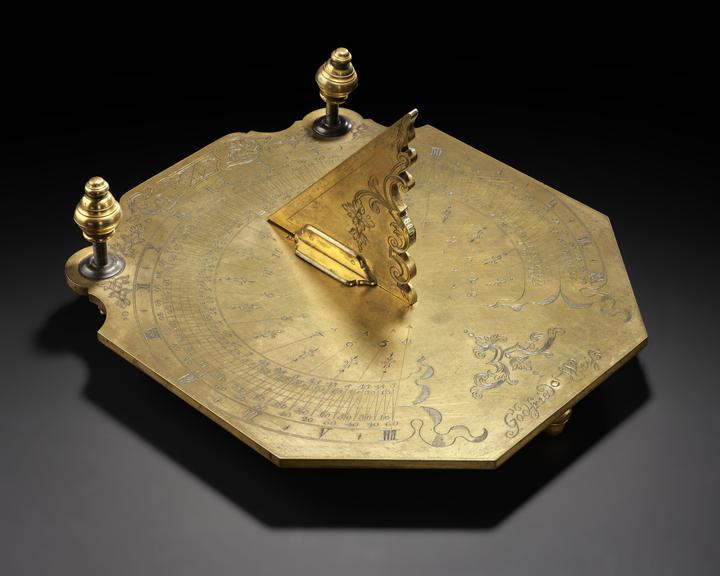
Horizontal Sundial, by Weiss 1671-1730




 This image is released under a CC BY-NC-SA 4.0
Licence
License this image for commercial use at Science and Society Picture Library
LicenseThis image is released under a CC BY-NC-SA 4.0
Licence
License this image for commercial use at Science and Society Picture Library
LicenseThis image is released under a CC BY-NC-SA 4.0
Licence
License this image for commercial use at Science and Society Picture Library
LicenseThis image is released under a CC BY-NC-SA 4.0
Licence
License this image for commercial use at Science and Society Picture Library
LicenseThis image is released under a CC BY-NC-SA 4.0
Licence
License this image for commercial use at Science and Society Picture Library
LicenseThis image is released under a CC BY-NC-SA 4.0
Licence
License this image for commercial use at Science and Society Picture Library
LicenseThis image is released under a CC BY-NC-SA 4.0
Licence
License this image for commercial use at Science and Society Picture Library
License
Science Museum Group
© The Board of Trustees of the Science Museum
Science Museum Group
© The Board of Trustees of the Science Museum
Science Museum Group
© The Board of Trustees of the Science Museum
Science Museum Group
© The Board of Trustees of the Science Museum
Science Museum Group
© The Board of Trustees of the Science Museum
Science Museum Group
© The Board of Trustees of the Science Museum
Science Museum Group
© The Board of Trustees of the Science Museum
Sundial, brass gilt 8 5/8" by 7 1/2", by Godfried Weiss, German, 1671-1730.
Sundials are timekeeping instruments that use sunlight to indicate the time of day. As the Earth rotates around its axis, the Sun’s apparent movement across the sky casts a moving shadow across the face of the dial.
The triangular component of the sundial is called a gnomon, which is aligned to the North Pole in the Northern hemisphere, and to the South Pole in the Southern hemisphere. As the Earth rotates, the gnomon casts a shadow over the face of the dial pointing towards its numbers and indicating the time.
Details
- Category:
- Time Measurement
- Object Number:
- 1880-34/1
- Materials:
- brass (copper, zinc alloy)
- Measurements:
-
overall: 120 mm x 193 mm x 220 mm,
- type:
- sundial
- credit:
- Fulgence, Mons. (Paris)