Universal Bridge
Universal Marconi Instruments Universal Bridge TF1313A for the Microbiological Research Establishment, Porton Down, comprising a grey box of electrical equipment with dials and switches
Continuous fermentation lets scientists grow large batches of bacteria for research or industrial purposes. Carefully controlled conditions allow the bacteria to grow quickly in a culture medium which contains the nutrients they need to thrive. This continuous fermentation apparatus was used at the Microbiological Research Establishment at Porton Down, the UK government’s research facility for biological and chemical defence.
Much of this equipment was specially designed by scientists at Porton Down, including the ‘Porton pot’. This flask was designed to stop harmful bacteria from leaking into the laboratory, or unwanted bacteria from getting into the equipment. The many valves and tubes attached to the flask allowed the fermentation process to be strictly controlled, so scientists could study only the bacteria they needed.
Interest in chemical and biological warfare began in earnest during the First World War, when both sides infamously used mustard gas on the battlefield. In the 1930s, as war with Germany began to look more likely, the British government increased funding for research into chemical and biological weaponry and defence. These were never used, and after the war the UK’s focus shifted purely to defending its civilian and military populations against attacks, while much of its research had industrial and medical applications outside its original military context.
Today, chemical and biological weapons are banned by international law, and the UK’s old supplies have been destroyed. The UK government still conducts defence research at Porton Down, at what is now the Defence Science and Technology Laboratory.
Details
Related Objects
Ligno-cellulose components: Glucose. In squared plastic jar. Manufactured by ICI Bio-Products

Bottle for Amoxil syrup (amoxicillin/amoxycillin), 1976
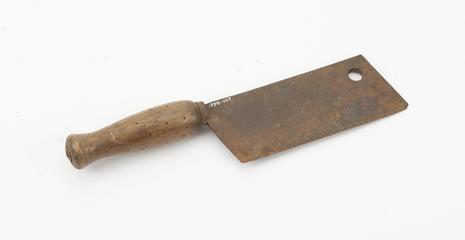
Cleaver used in slaughtering, 20th century
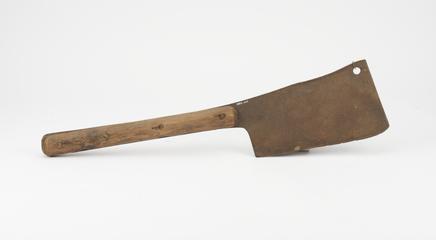
Chopper used in slaughtering, 20th century