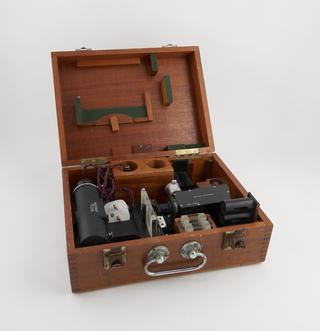
HiSeq genome sequencer
- Made:
- 2010 in United Kingdom


 This image is released under a CC BY-NC-SA 4.0
Licence
This image is released under a CC BY-NC-SA 4.0
Licence
License this image for commercial use at Science and Society Picture Library
LicenseThis image is released under a CC BY-NC-SA 4.0
Licence
License this image for commercial use at Science and Society Picture Library
LicenseThis image is released under a CC BY-NC-SA 4.0
Licence
License this image for commercial use at Science and Society Picture Library
LicenseThis image is released under a CC BY-NC-SA 4.0
Licence
License this image for commercial use at Science and Society Picture Library
LicenseThis image is released under a CC BY-NC-SA 4.0
Licence
License this image for commercial use at Science and Society Picture Library
LicenseThis image is released under a CC BY-NC-SA 4.0
Licence
License this image for commercial use at Science and Society Picture Library
LicenseThis image is released under a CC BY-NC-SA 4.0
Licence
License this image for commercial use at Science and Society Picture Library
LicenseThis image is released under a CC BY-NC-SA 4.0
Licence
License this image for commercial use at Science and Society Picture Library
LicenseThis image is released under a CC BY-NC-SA 4.0
Licence
License this image for commercial use at Science and Society Picture Library
LicenseThis image is released under a CC BY-NC-SA 4.0
Licence
License this image for commercial use at Science and Society Picture Library
LicenseThis image is released under a CC BY-NC-SA 4.0
Licence
License this image for commercial use at Science and Society Picture Library
LicenseThis image is released under a CC BY-NC-SA 4.0
Licence
License this image for commercial use at Science and Society Picture Library
LicenseThis image is released under a CC BY-NC-SA 4.0
Licence
License this image for commercial use at Science and Society Picture Library
LicenseThis image is released under a CC BY-NC-SA 4.0
Licence
License this image for commercial use at Science and Society Picture Library
LicenseThis image is released under a CC BY-NC-SA 4.0
Licence
License this image for commercial use at Science and Society Picture Library
License
Science Museum Group
© The Board of Trustees of the Science Museum
Science Museum Group
© The Board of Trustees of the Science Museum
Science Museum Group
© The Board of Trustees of the Science Museum
Science Museum Group
© The Board of Trustees of the Science Museum
Science Museum Group
© The Board of Trustees of the Science Museum
Science Museum Group
© The Board of Trustees of the Science Museum
Science Museum Group
© The Board of Trustees of the Science Museum
Science Museum Group
© The Board of Trustees of the Science Museum
Science Museum Group
© The Board of Trustees of the Science Museum
Science Museum Group
© The Board of Trustees of the Science Museum
Science Museum Group
© The Board of Trustees of the Science Museum
Science Museum Group
© The Board of Trustees of the Science Museum
Science Museum Group
© The Board of Trustees of the Science Museum
Science Museum Group
© The Board of Trustees of the Science Museum
Science Museum Group
© The Board of Trustees of the Science Museum
HiSeq genome sequencer, made by Illumina, United Kingdom, c.2010. This machine scaled up the volume of sequence data that could be produced. This next-generation sequencer uses the technique 'sequencing by synthesis' (SBS) developed by Solexa and scientists at the University of Cambridge.
DNA sequencing allows scientists to read, understand, and compare genomic and genetic information. DNA sequencers are instruments used to automate the DNA sequencing process. Today, sequencing technologies play an important role in everything from disease treatment to agriculture.
This is a HiSeq genome sequencer, a 'next-generation' DNA sequencer, made by the Amercian life sciences manufacturer illumina c.2010. The HiSeq was a model that enabled larger volumes of sequence data to be produced at lower costs, which proved popular with laboratories perfroming large amounts of sequencing projects. It had a unique feature to allow it to switch between a rapid output mode and a more detailed level of data mode at a slower pace.
It sequences DNA using a technique called ‘sequencing by synthesis’. British scientists Shankar Balasubramanian and David Klenerman, at the University of Cambridge, developed this technique. They set up a company called Solexa, which was bought by illumina in 2007.
Details
- Category:
- Biochemistry
- Object Number:
- 2026-138
- Materials:
- plastic (unidentified) and electronics
- Measurements:
-
overall: 940 mm x 1186 mm x 760 mm, 221.4 kg
- type:
- dna sequencer
- credit:
- Illlumina
Related Objects

Grey clear plastic component of Model 362 Gene Scanner, United States, 1989

White plastic component of Model 362 Gene Scanner, United States, 1989
Specimen of compound derived from the constituents of natural substances belonging to F. B. Power
Model of hen egg white lysozyme