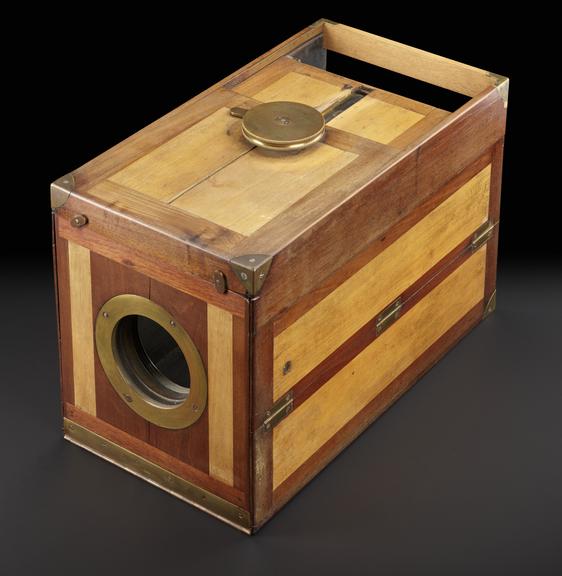
Whole Plate Folding Daguerreotype Camera
- Made:
- circa 1840 in Paris
- maker:
- Charles Louis Chevalier



 This image is released under a CC BY-NC-SA 4.0
Licence
This image is released under a CC BY-NC-SA 4.0
Licence
License this image for commercial use at Science and Society Picture Library
LicenseThis image is released under a CC BY-NC-SA 4.0
Licence
License this image for commercial use at Science and Society Picture Library
LicenseThis image is released under a CC BY-NC-SA 4.0
Licence
License this image for commercial use at Science and Society Picture Library
LicenseThis image is released under a CC BY-NC-SA 4.0
Licence
License this image for commercial use at Science and Society Picture Library
LicenseThis image is released under a CC BY-NC-SA 4.0
Licence
License this image for commercial use at Science and Society Picture Library
LicenseThis image is released under a CC BY-NC-SA 4.0
Licence
License this image for commercial use at Science and Society Picture Library
LicenseThis image is released under a CC BY-NC-SA 4.0
Licence
License this image for commercial use at Science and Society Picture Library
License
Science Museum Group
© The Board of Trustees of the Science Museum
Science Museum Group
© The Board of Trustees of the Science Museum
Science Museum Group
© The Board of Trustees of the Science Museum
Science Museum Group
© The Board of Trustees of the Science Museum
Science Museum Group
© The Board of Trustees of the Science Museum
Science Museum Group
© The Board of Trustees of the Science Museum
Science Museum Group
© The Board of Trustees of the Science Museum
A whole plate folding daguerreotype camera, by Charles Chevalier. Introduced 1840.
In 1839 French inventor Louis Daguerre announced his new photographic process: the daguerreotype. He used chemicals to make a copper plate coated with highly polished silver light-sensitive, producing a unique ‘positive’ image showing the scene in front of the camera. The finished image was beautifully detailed, but very fragile. It had to be sealed in an airtight case. This camera was made just a year later. The first cameras took up to 20 minutes to capture an image. Special lenses were made for landscapes, portraits and close-ups.
Details
- Category:
- Photographic Technology
- Object Number:
- 1983-375/1
- Materials:
- wood (unidentified) and copper (alloy)
- Measurements:
-
overall: 280 mm x 230 mm x 420 mm, 4.68 kg
- type:
- daguerreotype camera
- credit:
- The National Media Museum, Bradford