Technicolor three-colour 35mm Camera

Technicolor three-colour 35mm Camera Technicolor three-colour 35mm Camera Technicolor three-colour 35mm Camera

License this image for commercial use at Science and Society Picture Library

License

License this image for commercial use at Science and Society Picture Library

License

License this image for commercial use at Science and Society Picture Library

License

The Kodak Collection at the National Media Museum, Bradford
Science Museum Group Collection

The Kodak Collection at the National Media Museum, Bradford
Science Museum Group Collection

The Kodak Collection at the National Media Museum, Bradford
Science Museum Group Collection

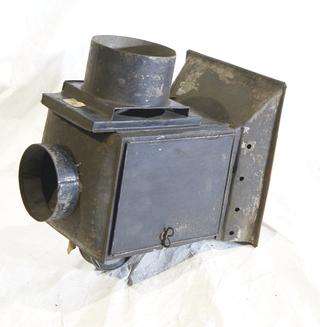
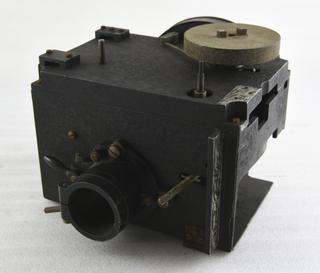
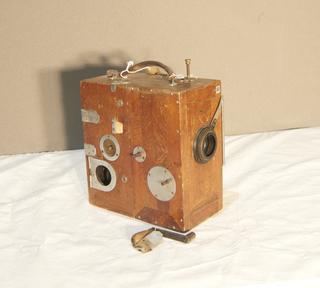
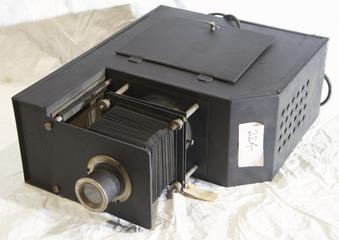
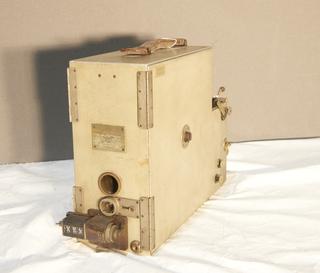
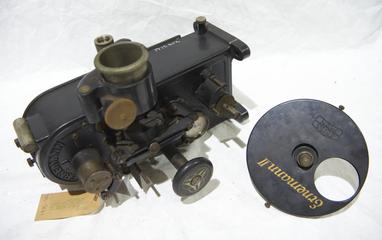
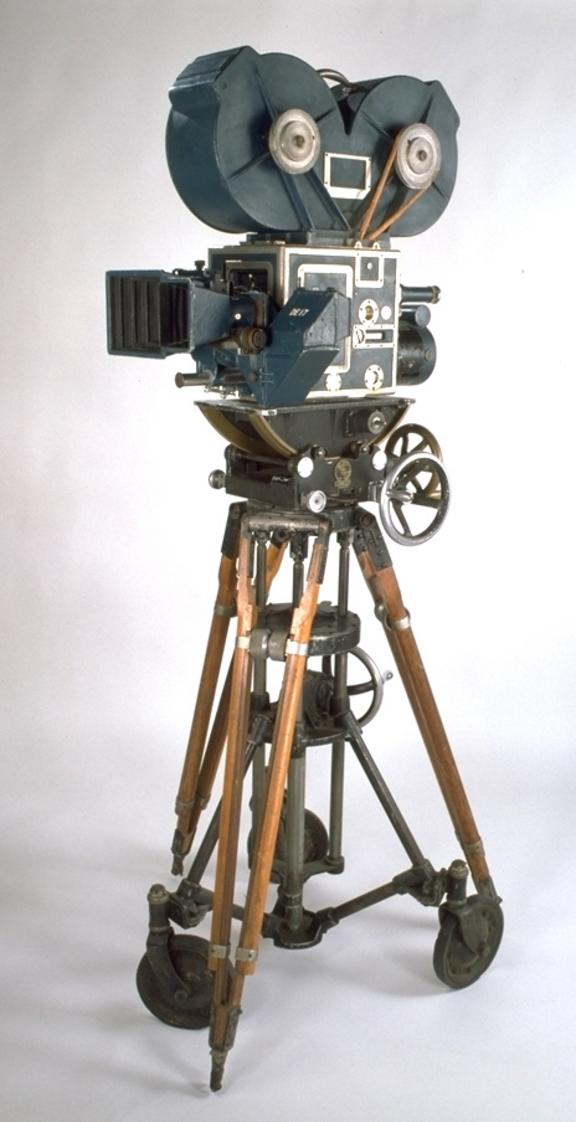
Technicolor three-colour 35mm Camera, made by Technicolor Corporation, USA c. 1932. Serial number DE17. With tripod.

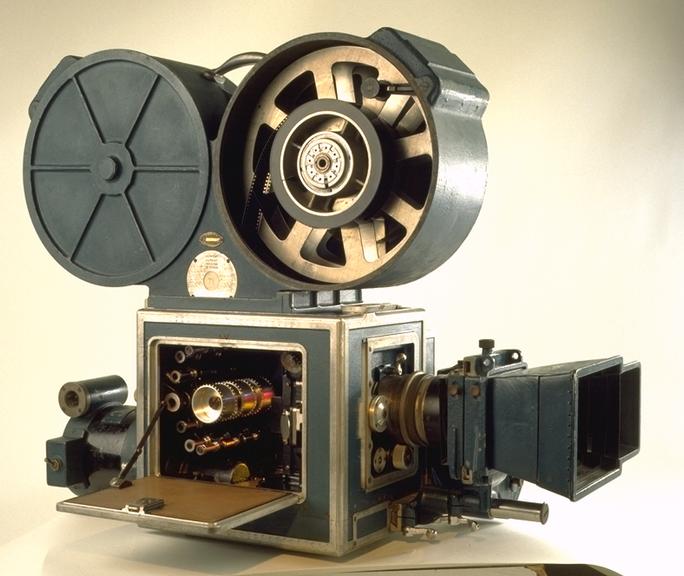
Technicolor, introduced in 1915, is regarded as the finest colour motion picture process. It evolved through four versions, culminating in this three-colour camera, which used a beam splitter behind the lens with red, green and blue filters to record the primary colours on three separate monochrome films.

The camera has two film gates. The green separation is recorded onto a negative through a green filter directly behind the lens. At right-angles to the lens were two additional negatives placed back to back (a bi-pack arrangment) that received light through a magenta (i.e. a combination of red and blue) filter. The film which recorded the red separation was panchromatic, like that used to recorded the green separation, but the other was orthochromatic, only sensitive to blue and green, so it only recorded the blue part of the magenta light. Its base was dyed orange to filter out the blue so that only red light was received by the panchromatic film behind it.

Subsequently, a dye matrix positive was made from each processed negative on bichromated gelatin film. These reproduced all the tones as different levels of hardened gelatin - the highlights were clear of gelatin. These matrices were then dyed with the subtractive primaries, yellow (for blue negative), magenta (for green negative) and cyan (for red negative) and used to make the colour print.

The first three colour Technicolor production was Walt Disney's cartoon 'Flowers and Trees' in 1932.

The letter D engraved on the camera designated Technicolor Process Number Four, which had been preceded by three other systems since 1915, all two color. Only 28 Model D cameras were created after 1932, numbered from D1 to D12, then D14 to D29 (D13 was not made due to superstition). Six other modified cameras were made after this, three for animation and three for high-speed films (series E). And of the 28 original D-series cameras, 11 were later modified for use in Technirama and Vistavision.

Details

Category:
Cinematography
Collection:
Kodak Collection
Object Number:
1990-5036/8828
Materials:
steel (metal), rubber (unidentified), glass, canvas and electronic components
Measurements:
overall: 650 mm x 410 mm x 765 mm,
type:
cine camera
rights:
National Science and Media Museum
credit:
The Kodak Collection at the National Media Museum, Bradford

Parts

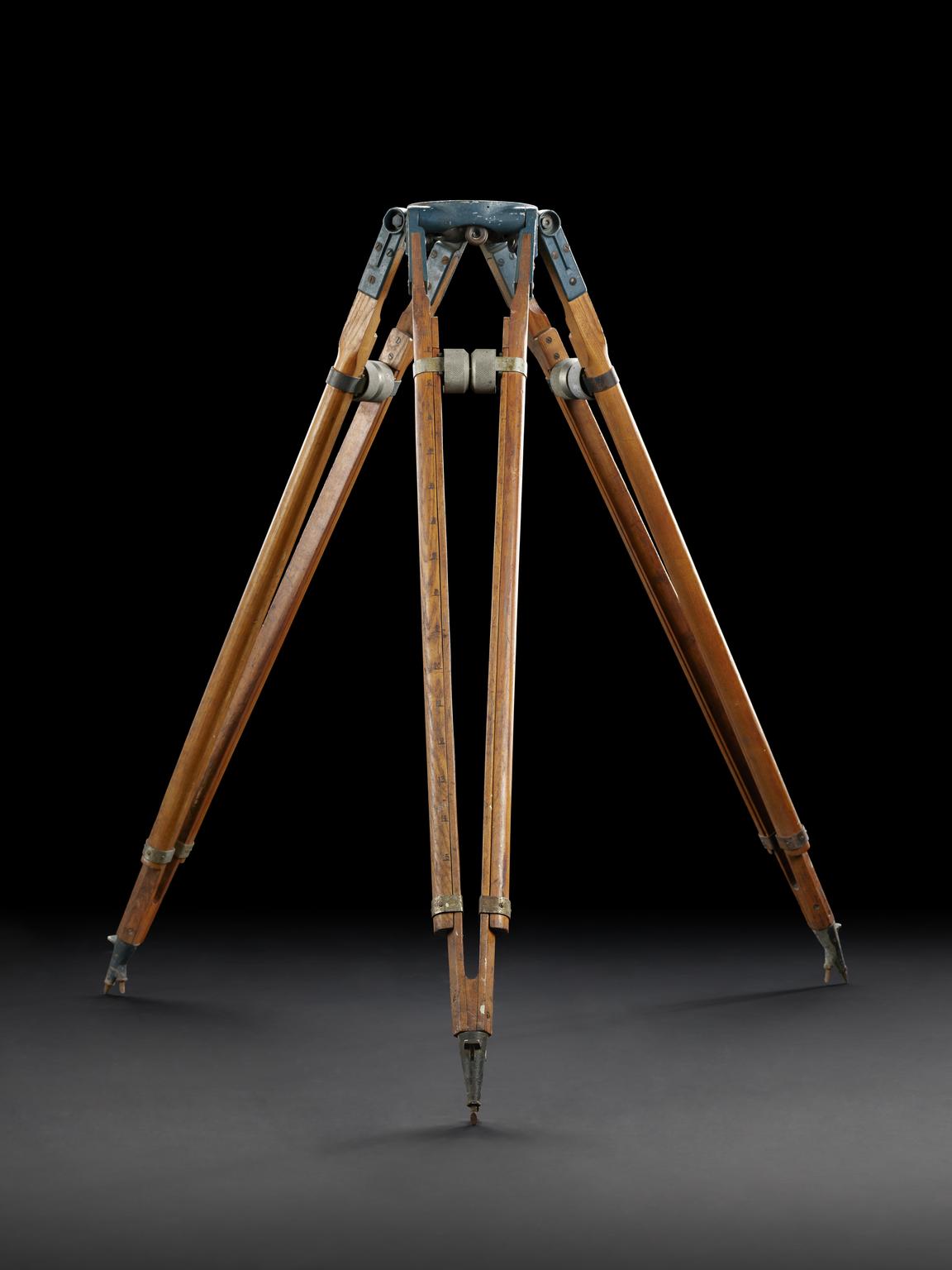
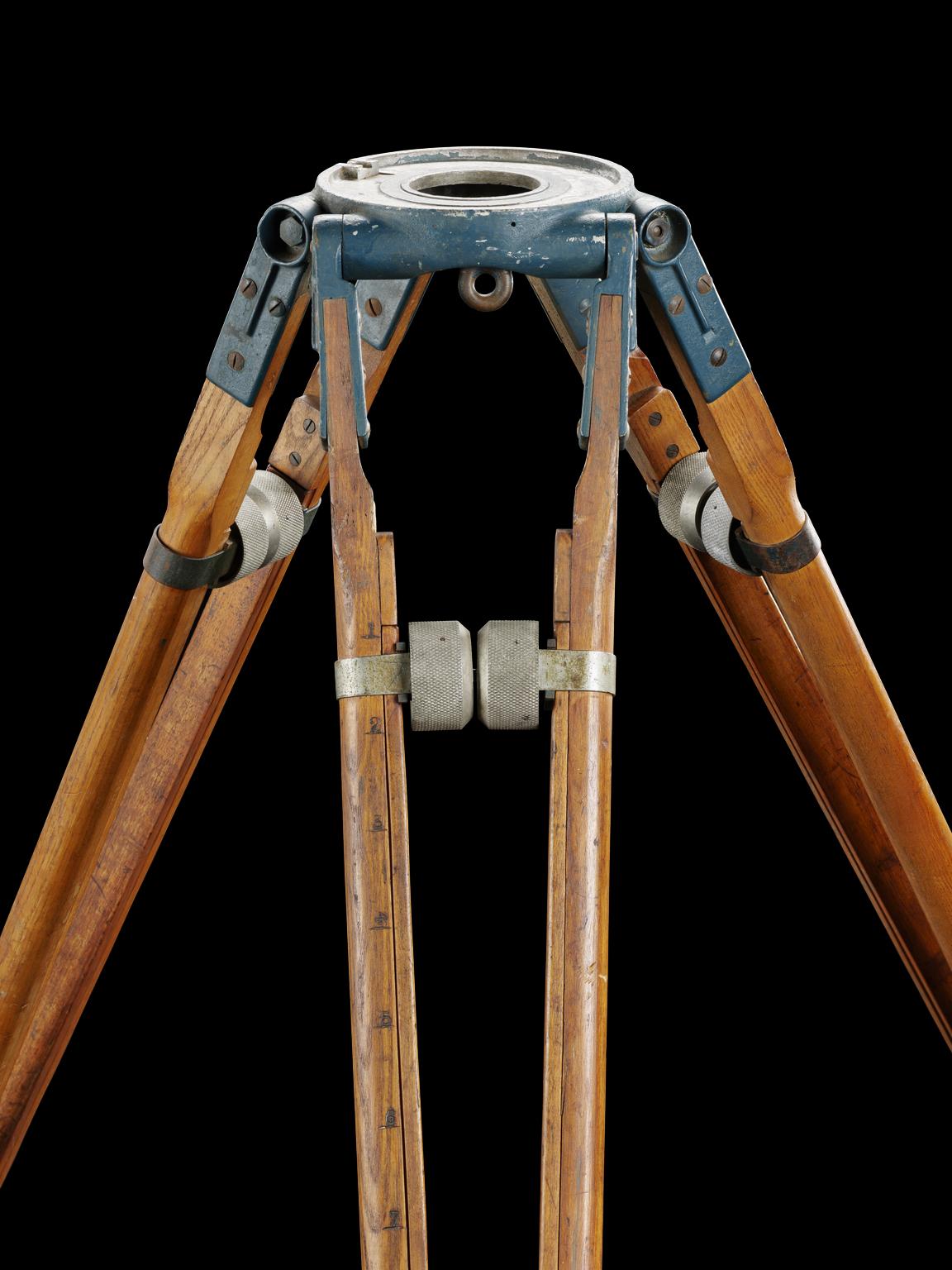
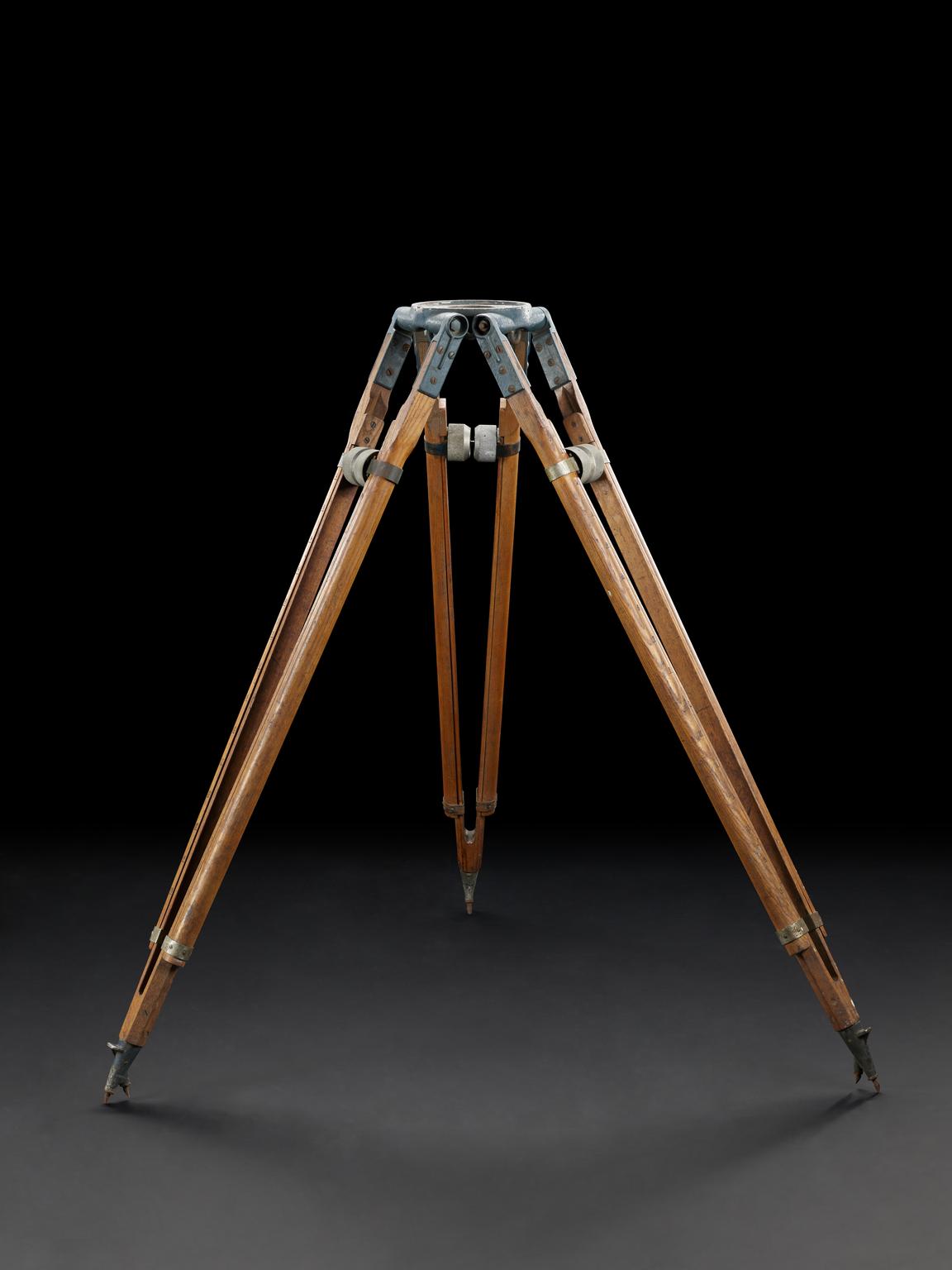
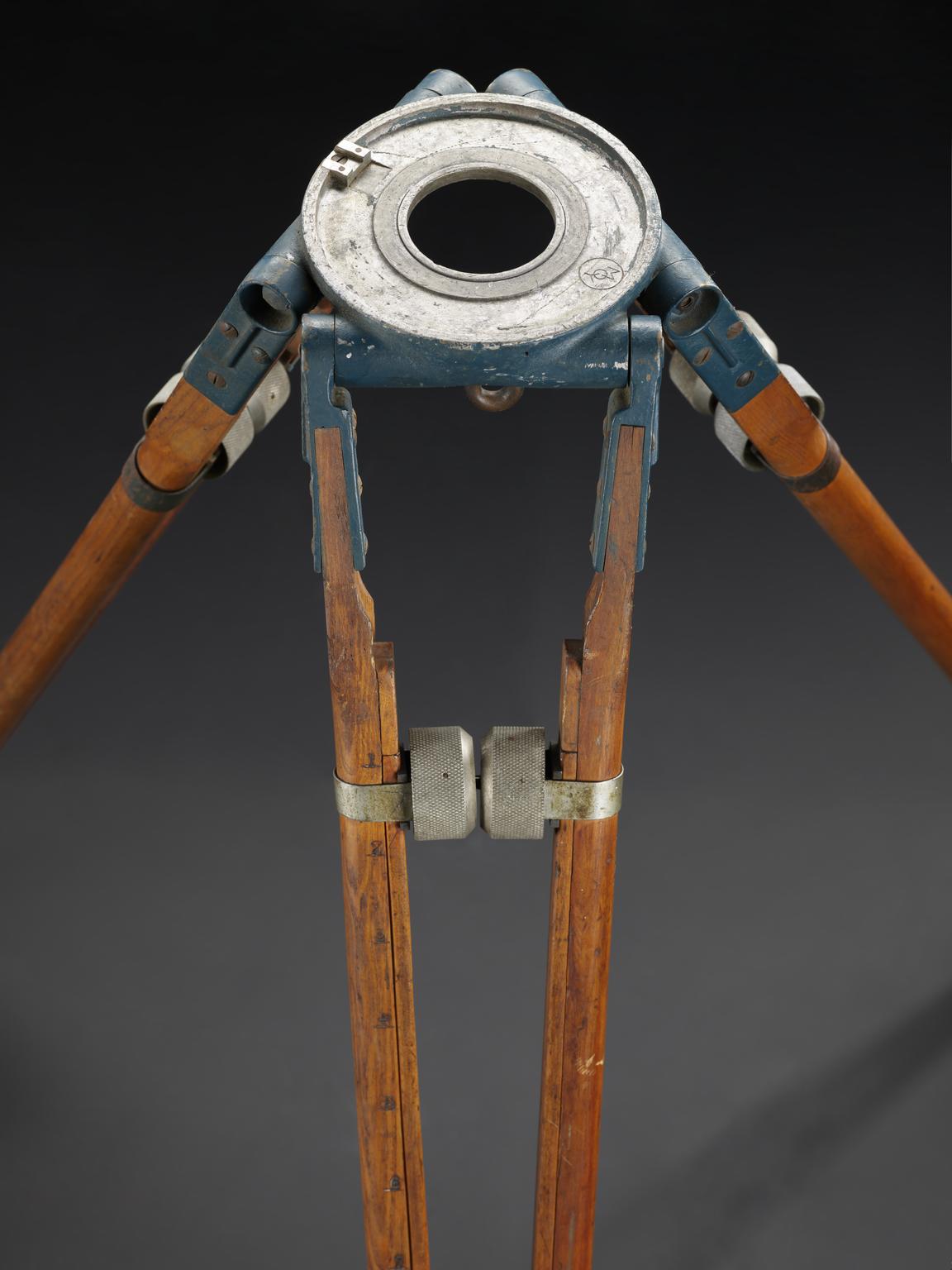
Cine Camera Tripod

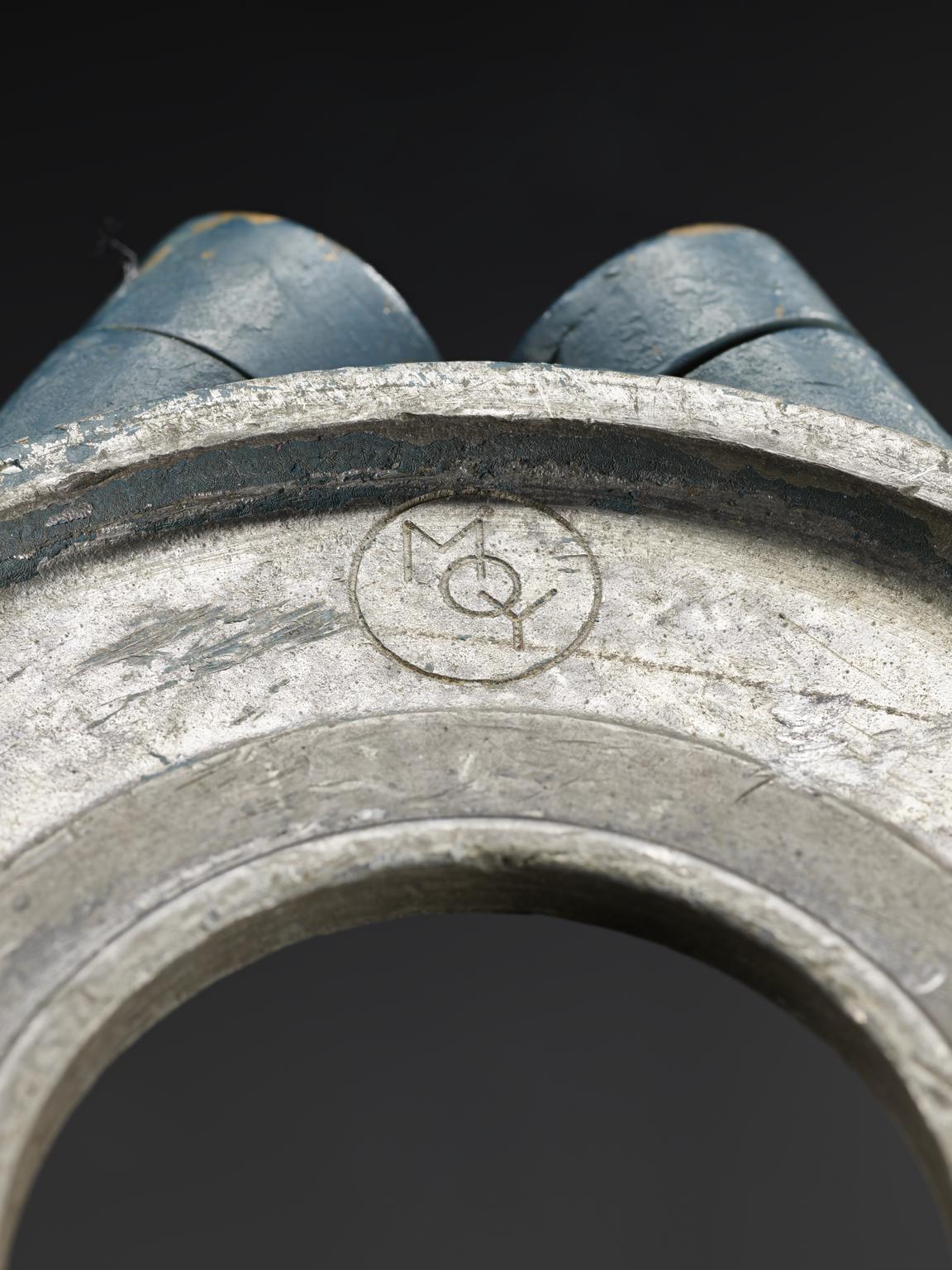
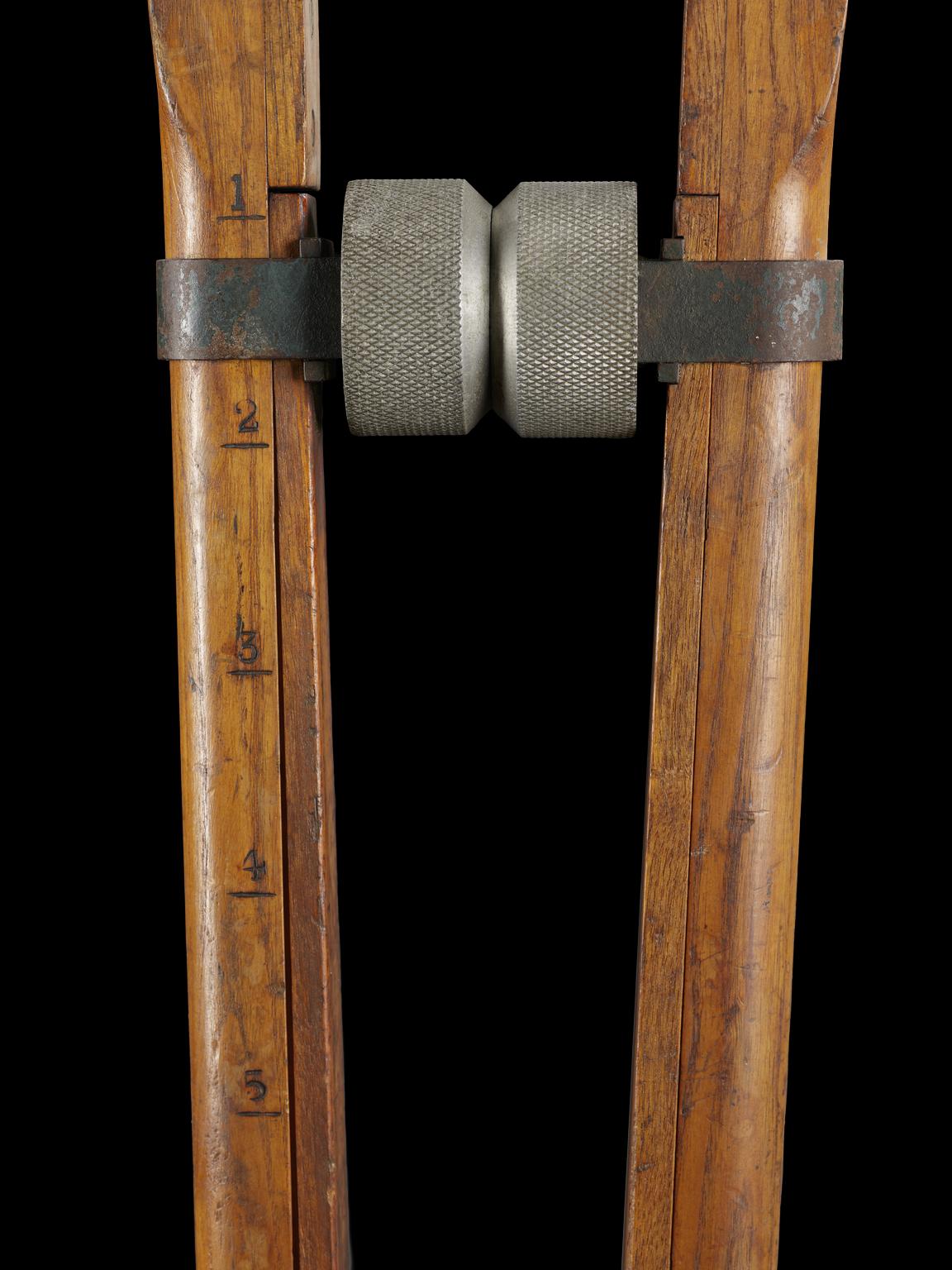
Camera tripod for Technicolor three-colour 35mm Camera. The logo 'MOY' in a circle is engraved on the tripod head and the number '7' is engraved on one of the legs. Each leg has gradations numbering from 1 to 15 marked along its length.

More

Technicolor, introduced in 1915, is regarded as the finest colour motion picture process. It evolved through four versions, culminating in this three-colour camera, which used a beam splitter behind the lens with red, green and blue filters to record the primary colours on three separate monochrome films.

The camera has two film gates. The green separation is recorded onto a negative through a green filter directly behind the lens. At right-angles to the lens were two additional negatives placed back to back (a bi-pack arrangment) that received light through a magenta (i.e. a combination of red and blue) filter. The film which recorded the red separation was panchromatic, like that used to recorded the green separation, but the other was orthochromatic, only sensitive to blue and green, so it only recorded the blue part of the magenta light. Its base was dyed orange to filter out the blue so that only red light was received by the panchromatic film behind it.

Subsequently, a dye matrix positive was made from each processed negative on bichromated gelatin film. These reproduced all the tones as different levels of hardened gelatin - the highlights were clear of gelatin. These matrices were then dyed with the subtractive primaries, yellow (for blue negative), magenta (for green negative) and cyan (for red negative) and used to make the colour print.

The first three colour Technicolor production was Walt Disney's cartoon 'Flowers and Trees' in 1932.

Measurements:
overall (legs not extended): 1277 mm x 230 mm x 205 mm,
Materials:
wood (unidentified) and steel (metal)
Object Number:
1990-5036/8828/1
type:
tripod
Image ©
The Board of Trustees of the Science Museum
Technicolor three-colour 35mm Camera

Technicolor three-colour 35mm Camera

Technicolor three-colour 35mm Camera, made by Technicolor Corporation, USA c. 1932. Serial number DE17.

More

Technicolor, introduced in 1915, is regarded as the finest colour motion picture process. It evolved through four versions, culminating in this three-colour camera, which used a beam splitter behind the lens with red, green and blue filters to record the primary colours on three separate monochrome films.

The camera has two film gates. The green separation is recorded onto a negative through a green filter directly behind the lens. At right-angles to the lens were two additional negatives placed back to back (a bi-pack arrangment) that received light through a magenta (i.e. a combination of red and blue) filter. The film which recorded the red separation was panchromatic, like that used to recorded the green separation, but the other was orthochromatic, only sensitive to blue and green, so it only recorded the blue part of the magenta light. Its base was dyed orange to filter out the blue so that only red light was received by the panchromatic film behind it.

Subsequently, a dye matrix positive was made from each processed negative on bichromated gelatin film. These reproduced all the tones as different levels of hardened gelatin - the highlights were clear of gelatin. These matrices were then dyed with the subtractive primaries, yellow (for blue negative), magenta (for green negative) and cyan (for red negative) and used to make the colour print.

The first three colour Technicolor production was Walt Disney's cartoon 'Flowers and Trees' in 1932.

The number DE17 on this camera implies that this was camera No 17 at Denham Film Studios, Buckinghamshire.

Measurements:
overall: 650 mm x 410 mm x 765 mm,
Materials:
steel (metal) , rubber (unidentified) , glass , canvas (textile) and paint
Object Number:
1990-5036/8828/2
type:
cine camera
Image ©
Science Museum Group Collection