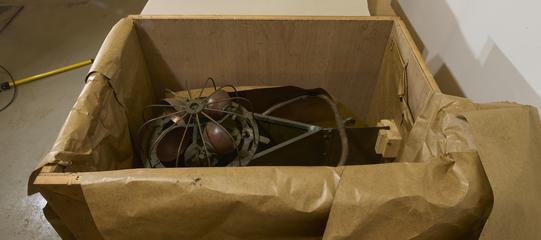
Sample of ‘blue mud' collected by HMS Challenger, 1872-1876
Sample of ‘blue mud’ collected by HMS Challenger from the South Atlantic Ocean at a depth of 1900 fathoms, 1872-1876. Collection site was station 323.
The Challenger Expedition (1872-1876), organised by the Royal Society and UK Hydrographic Office, circumnavigated the globe in order to study the physical, chemical and biological characteristics of the deep sea. Culminating in a series of detailed scientific reports, the expedition has sometimes been claimed to be the origin of modern oceanography. HMS Challenger, after which the expedition was named, was captained by Captain George Strong Nares; Scottish naturalist Charles Wyville Thomson led the six-man scientific team.
Prior to the expedition, HMS Challenger was specially fitted out in order to accommodate the many thousands of specimens and samples collected en route. Geological samples collected from the sea floor, such as this one, were carefully labelled with information about the depth and location from which they had been gathered.
Details
- Category:
- Oceanography
- Object Number:
- 1893-112/14
- Materials:
- mud
- Measurements:
-
overall: 60 mm x 140 mm x 140 mm,
- type:
- geology samples
- credit:
- Royal College of Science (Geological Laboratory)
Related Objects
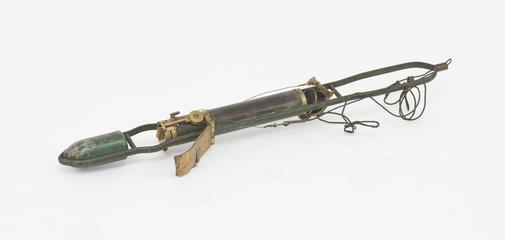
Insulated Waterbottle
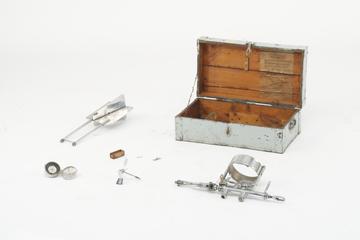
Ekman Current Meter
Globe showing land and submarine topography