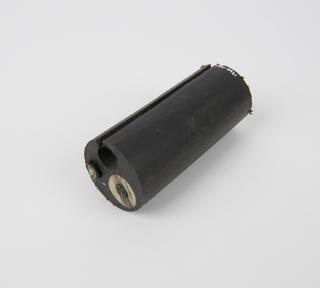
Omori seismograph no.2, 1898

Made:
1898 in Tokyo

Seismograph, marked no. 2, designed by Omori Fusakichi for the Earthquake Investigation Committee, Tokyo, Japan, 1898. It combines a horizontal pendulum mechanism with an auxiliary inverted pendulum, and employs a smoked-paper recording system. The instrument was constructed in Japan, and in 1910 displayed at the Japan-British Exhibition, White City, London. Afterwards it was transferred to Eskdalemuir Observatory, Dumfriesshire, Scotland and operated intermittently until 1925, when the observatory’s seismological programme, administered by the Meteorological Office, was transferred to Kew.

This seismograph is an early example of a design by Japanese seismologist Omori Fusakichi (1868-1923).

Omori designed a variety of seismographs during his career. One of his designs was modified and commercialised by Strasburg maker J. & A. Bosch brothers, who created an affordable instrument which both performed reliably and was relatively easy to operate. These Bosch-Omori instruments became widely adopted in seismograph stations around the world from the early decades of the 1900s. However, this earlier Omori device in the Science Museum collections was transferred to Britain in 1910 for its display at the Japan-British exhibition, intended to exemplify both Japanese innovation and the fruitful collaboration between scientific practitioners from both nations.

After the exhibition, British seismologist John Milne negotiated with Mano Bunji, the Japanese Commissioner and President of the Earthquake Investigation Committee, to arrange a two-year loan of the seismograph to Eskdalemuir Observatory following its display. When the agreed loan period expired, it was permanently gifted to the observatory by the Japanese Education Department in exchange for an English watch.

Eskdalemuir’s seismological programme was transferred to Kew Observatory in 1925 and no further seismological work undertaken there until the 1960s, when the site became a node in the World-Wide Standardized Seismograph Network, or WWSSN.

Details

Category:
Geophysics
Object Number:
1928-279
Measurements:
overall (estimate): 1320 mm x 2895 mm x 810 mm,
type:
seismograph
credit:
Meteorological Office

Parts

Omori seismograph no.2, 1898

Omori seismograph no.2, 1898

Two adjustable wire hooks, recording arm and fork which would be attached to the base plate, a metal a- frame, a conical steel socket fixed to a stand, a bent metal bar that attaches to the recording arm, a straight pole with a spherical section, smoke glazed paper, a square block of lead with a threaded adjustable bar, and a small card box of spares from Seismograph, marked no. 2, designed by Omori Fusakichi for the Earthquake Investigation Committee, Tokyo, Japan, 1898. It combines a horizontal pendulum mechanism with an auxiliary inverted pendulum, and employs a smoked-paper recording system. The instrument was constructed in Japan, and in 1910 displayed at the Japan-British Exhibition, White City, London. Afterwards it was transferred to Eskdalemuir Observatory, Dumfriesshire, Scotland and operated intermittently until 1925, when the observatory’s seismological programme, administered by the Meteorological Office, was transferred to Kew.

This seismograph is an early example of a design by Japanese seismologist Omori Fusakichi (1868-1923).

Omori designed a variety of seismographs during his career. One of his designs was modified and commercialised by Strasburg maker J. & A. Bosch brothers, who created an affordable instrument which both performed reliably and was relatively easy to operate. These Bosch-Omori instruments became widely adopted in seismograph stations around the world from the early decades of the 1900s. However, this earlier Omori device in the Science Museum collections was transferred to Britain in 1910 for its display at the Japan-British exhibition, intended to exemplify both Japanese innovation and the fruitful collaboration between scientific practitioners from both nations.

After the exhibition, British seismologist John Milne negotiated with Mano Bunji, the Japanese Commissioner and President of the Earthquake Investigation Committee, to arrange a two-year loan of the seismograph to Eskdalemuir Observatory following its display. When the agreed loan period expired, it was permanently gifted to the observatory by the Japanese Education Department in exchange for an English watch.

Eskdalemuir’s seismological programme was transferred to Kew Observatory in 1925 and no further seismological work undertaken there until the 1960s, when the site became a node in the World-Wide Standardized Seismograph Network, or WWSSN.

Object Number:
1928-279/3
type:
seismograph
Hooks from Omori seismograph no.2, 1898

Hooks from Omori seismograph no.2, 1898

Two adjustable wire hooks from Seismograph, marked no. 2, designed by Omori Fusakichi for the Earthquake Investigation Committee, Tokyo, Japan, 1898. It combines a horizontal pendulum mechanism with an auxiliary inverted pendulum, and employs a smoked-paper recording system. The instrument was constructed in Japan, and in 1910 displayed at the Japan-British Exhibition, White City, London. Afterwards it was transferred to Eskdalemuir Observatory, Dumfriesshire, Scotland and operated intermittently until 1925, when the observatory’s seismological programme, administered by the Meteorological Office, was transferred to Kew.

More

This seismograph is an early example of a design by Japanese seismologist Omori Fusakichi (1868-1923).

Omori designed a variety of seismographs during his career. One of his designs was modified and commercialised by Strasburg maker J. & A. Bosch brothers, who created an affordable instrument which both performed reliably and was relatively easy to operate. These Bosch-Omori instruments became widely adopted in seismograph stations around the world from the early decades of the 1900s. However, this earlier Omori device in the Science Museum collections was transferred to Britain in 1910 for its display at the Japan-British exhibition, intended to exemplify both Japanese innovation and the fruitful collaboration between scientific practitioners from both nations.

After the exhibition, British seismologist John Milne negotiated with Mano Bunji, the Japanese Commissioner and President of the Earthquake Investigation Committee, to arrange a two-year loan of the seismograph to Eskdalemuir Observatory following its display. When the agreed loan period expired, it was permanently gifted to the observatory by the Japanese Education Department in exchange for an English watch.

Eskdalemuir’s seismological programme was transferred to Kew Observatory in 1925 and no further seismological work undertaken there until the 1960s, when the site became a node in the World-Wide Standardized Seismograph Network, or WWSSN.

Object Number:
1928-279/3/1
type:
hook - fastener
Part of:
1928-279/3
Square base from Omori seismograph no.2, 1898

Square base from Omori seismograph no.2, 1898

Metal square base with sliding platform adjusted with a threaded bar with a knurled knob on one end from Seismograph, marked no. 2, designed by Omori Fusakichi for the Earthquake Investigation Committee, Tokyo, Japan, 1898. It combines a horizontal pendulum mechanism with an auxiliary inverted pendulum, and employs a smoked-paper recording system. The instrument was constructed in Japan, and in 1910 displayed at the Japan-British Exhibition, White City, London. Afterwards it was transferred to Eskdalemuir Observatory, Dumfriesshire, Scotland and operated intermittently until 1925, when the observatory’s seismological programme, administered by the Meteorological Office, was transferred to Kew.

More

This seismograph is an early example of a design by Japanese seismologist Omori Fusakichi (1868-1923).

Omori designed a variety of seismographs during his career. One of his designs was modified and commercialised by Strasburg maker J. & A. Bosch brothers, who created an affordable instrument which both performed reliably and was relatively easy to operate. These Bosch-Omori instruments became widely adopted in seismograph stations around the world from the early decades of the 1900s. However, this earlier Omori device in the Science Museum collections was transferred to Britain in 1910 for its display at the Japan-British exhibition, intended to exemplify both Japanese innovation and the fruitful collaboration between scientific practitioners from both nations.

After the exhibition, British seismologist John Milne negotiated with Mano Bunji, the Japanese Commissioner and President of the Earthquake Investigation Committee, to arrange a two-year loan of the seismograph to Eskdalemuir Observatory following its display. When the agreed loan period expired, it was permanently gifted to the observatory by the Japanese Education Department in exchange for an English watch.

Eskdalemuir’s seismological programme was transferred to Kew Observatory in 1925 and no further seismological work undertaken there until the 1960s, when the site became a node in the World-Wide Standardized Seismograph Network, or WWSSN.

Object Number:
1928-279/3/2
type:
base - object component
Part of:
1928-279/3
Conical component from Omori seismograph no.2, 1898

Conical component from Omori seismograph no.2, 1898

Black conical component with three adjustable feet and a metal bar protruding from the top, from Seismograph, marked no. 2, designed by Omori Fusakichi for the Earthquake Investigation Committee, Tokyo, Japan, 1898. It combines a horizontal pendulum mechanism with an auxiliary inverted pendulum, and employs a smoked-paper recording system. The instrument was constructed in Japan, and in 1910 displayed at the Japan-British Exhibition, White City, London. Afterwards it was transferred to Eskdalemuir Observatory, Dumfriesshire, Scotland and operated intermittently until 1925, when the observatory’s seismological programme, administered by the Meteorological Office, was transferred to Kew.

More

This seismograph is an early example of a design by Japanese seismologist Omori Fusakichi (1868-1923).

Omori designed a variety of seismographs during his career. One of his designs was modified and commercialised by Strasburg maker J. & A. Bosch brothers, who created an affordable instrument which both performed reliably and was relatively easy to operate. These Bosch-Omori instruments became widely adopted in seismograph stations around the world from the early decades of the 1900s. However, this earlier Omori device in the Science Museum collections was transferred to Britain in 1910 for its display at the Japan-British exhibition, intended to exemplify both Japanese innovation and the fruitful collaboration between scientific practitioners from both nations.

After the exhibition, British seismologist John Milne negotiated with Mano Bunji, the Japanese Commissioner and President of the Earthquake Investigation Committee, to arrange a two-year loan of the seismograph to Eskdalemuir Observatory following its display. When the agreed loan period expired, it was permanently gifted to the observatory by the Japanese Education Department in exchange for an English watch.

Eskdalemuir’s seismological programme was transferred to Kew Observatory in 1925 and no further seismological work undertaken there until the 1960s, when the site became a node in the World-Wide Standardized Seismograph Network, or WWSSN.

Materials:
metal (unknown)
Object Number:
1928-279/3/3
type:
component - object
Part of:
1928-279/3
Metal rod from Omori seismograph no.2, 1898

Metal rod from Omori seismograph no.2, 1898

Metal rod with adjustable spherical weight and a rectangular base on one end, from Seismograph, marked no. 2, designed by Omori Fusakichi for the Earthquake Investigation Committee, Tokyo, Japan, 1898. It combines a horizontal pendulum mechanism with an auxiliary inverted pendulum, and employs a smoked-paper recording system. The instrument was constructed in Japan, and in 1910 displayed at the Japan-British Exhibition, White City, London. Afterwards it was transferred to Eskdalemuir Observatory, Dumfriesshire, Scotland and operated intermittently until 1925, when the observatory’s seismological programme, administered by the Meteorological Office, was transferred to Kew.

More

This seismograph is an early example of a design by Japanese seismologist Omori Fusakichi (1868-1923).

Omori designed a variety of seismographs during his career. One of his designs was modified and commercialised by Strasburg maker J. & A. Bosch brothers, who created an affordable instrument which both performed reliably and was relatively easy to operate. These Bosch-Omori instruments became widely adopted in seismograph stations around the world from the early decades of the 1900s. However, this earlier Omori device in the Science Museum collections was transferred to Britain in 1910 for its display at the Japan-British exhibition, intended to exemplify both Japanese innovation and the fruitful collaboration between scientific practitioners from both nations.

After the exhibition, British seismologist John Milne negotiated with Mano Bunji, the Japanese Commissioner and President of the Earthquake Investigation Committee, to arrange a two-year loan of the seismograph to Eskdalemuir Observatory following its display. When the agreed loan period expired, it was permanently gifted to the observatory by the Japanese Education Department in exchange for an English watch.

Eskdalemuir’s seismological programme was transferred to Kew Observatory in 1925 and no further seismological work undertaken there until the 1960s, when the site became a node in the World-Wide Standardized Seismograph Network, or WWSSN.

Materials:
metal (unknown)
Object Number:
1928-279/3/4
type:
component - object
Part of:
1928-279/3
Thin metal rod from Omori seismograph no.2, 1898

Thin metal rod from Omori seismograph no.2, 1898

Thin metal rod with black square bracket on one end and pointed on the other likely used as a recording fork, from Seismograph, marked no. 2, designed by Omori Fusakichi for the Earthquake Investigation Committee, Tokyo, Japan, 1898. It combines a horizontal pendulum mechanism with an auxiliary inverted pendulum, and employs a smoked-paper recording system. The instrument was constructed in Japan, and in 1910 displayed at the Japan-British Exhibition, White City, London. Afterwards it was transferred to Eskdalemuir Observatory, Dumfriesshire, Scotland and operated intermittently until 1925, when the observatory’s seismological programme, administered by the Meteorological Office, was transferred to Kew.

More

This seismograph is an early example of a design by Japanese seismologist Omori Fusakichi (1868-1923).

Omori designed a variety of seismographs during his career. One of his designs was modified and commercialised by Strasburg maker J. & A. Bosch brothers, who created an affordable instrument which both performed reliably and was relatively easy to operate. These Bosch-Omori instruments became widely adopted in seismograph stations around the world from the early decades of the 1900s. However, this earlier Omori device in the Science Museum collections was transferred to Britain in 1910 for its display at the Japan-British exhibition, intended to exemplify both Japanese innovation and the fruitful collaboration between scientific practitioners from both nations.

After the exhibition, British seismologist John Milne negotiated with Mano Bunji, the Japanese Commissioner and President of the Earthquake Investigation Committee, to arrange a two-year loan of the seismograph to Eskdalemuir Observatory following its display. When the agreed loan period expired, it was permanently gifted to the observatory by the Japanese Education Department in exchange for an English watch.

Eskdalemuir’s seismological programme was transferred to Kew Observatory in 1925 and no further seismological work undertaken there until the 1960s, when the site became a node in the World-Wide Standardized Seismograph Network, or WWSSN.

Materials:
metal (unknown)
Object Number:
1928-279/3/5
type:
rod
Part of:
1928-279/3
"A" Frame from Omori seismograph no.2, 1898

"A" Frame from Omori seismograph no.2, 1898

Black "A" frame, from Seismograph, marked no. 2, designed by Omori Fusakichi for the Earthquake Investigation Committee, Tokyo, Japan, 1898. It combines a horizontal pendulum mechanism with an auxiliary inverted pendulum, and employs a smoked-paper recording system. The instrument was constructed in Japan, and in 1910 displayed at the Japan-British Exhibition, White City, London. Afterwards it was transferred to Eskdalemuir Observatory, Dumfriesshire, Scotland and operated intermittently until 1925, when the observatory’s seismological programme, administered by the Meteorological Office, was transferred to Kew.

More

This seismograph is an early example of a design by Japanese seismologist Omori Fusakichi (1868-1923).

Omori designed a variety of seismographs during his career. One of his designs was modified and commercialised by Strasburg maker J. & A. Bosch brothers, who created an affordable instrument which both performed reliably and was relatively easy to operate. These Bosch-Omori instruments became widely adopted in seismograph stations around the world from the early decades of the 1900s. However, this earlier Omori device in the Science Museum collections was transferred to Britain in 1910 for its display at the Japan-British exhibition, intended to exemplify both Japanese innovation and the fruitful collaboration between scientific practitioners from both nations.

After the exhibition, British seismologist John Milne negotiated with Mano Bunji, the Japanese Commissioner and President of the Earthquake Investigation Committee, to arrange a two-year loan of the seismograph to Eskdalemuir Observatory following its display. When the agreed loan period expired, it was permanently gifted to the observatory by the Japanese Education Department in exchange for an English watch.

Eskdalemuir’s seismological programme was transferred to Kew Observatory in 1925 and no further seismological work undertaken there until the 1960s, when the site became a node in the World-Wide Standardized Seismograph Network, or WWSSN.

Materials:
metal (unknown)
Object Number:
1928-279/3/6
type:
frame
Part of:
1928-279/3
Bracket from Omori seismograph no.2, 1898

Bracket from Omori seismograph no.2, 1898

Bracket with two bolts threaded with a washer and a nut each, from Seismograph, marked no. 2, designed by Omori Fusakichi for the Earthquake Investigation Committee, Tokyo, Japan, 1898. It combines a horizontal pendulum mechanism with an auxiliary inverted pendulum, and employs a smoked-paper recording system. The instrument was constructed in Japan, and in 1910 displayed at the Japan-British Exhibition, White City, London. Afterwards it was transferred to Eskdalemuir Observatory, Dumfriesshire, Scotland and operated intermittently until 1925, when the observatory’s seismological programme, administered by the Meteorological Office, was transferred to Kew.

More

This seismograph is an early example of a design by Japanese seismologist Omori Fusakichi (1868-1923).

Omori designed a variety of seismographs during his career. One of his designs was modified and commercialised by Strasburg maker J. & A. Bosch brothers, who created an affordable instrument which both performed reliably and was relatively easy to operate. These Bosch-Omori instruments became widely adopted in seismograph stations around the world from the early decades of the 1900s. However, this earlier Omori device in the Science Museum collections was transferred to Britain in 1910 for its display at the Japan-British exhibition, intended to exemplify both Japanese innovation and the fruitful collaboration between scientific practitioners from both nations.

After the exhibition, British seismologist John Milne negotiated with Mano Bunji, the Japanese Commissioner and President of the Earthquake Investigation Committee, to arrange a two-year loan of the seismograph to Eskdalemuir Observatory following its display. When the agreed loan period expired, it was permanently gifted to the observatory by the Japanese Education Department in exchange for an English watch.

Eskdalemuir’s seismological programme was transferred to Kew Observatory in 1925 and no further seismological work undertaken there until the 1960s, when the site became a node in the World-Wide Standardized Seismograph Network, or WWSSN.

Materials:
metal (unknown)
Object Number:
1928-279/3/7
type:
bracket - structural element
Part of:
1928-279/3
Box of components from Omori seismograph no.2, 1898

Box of components from Omori seismograph no.2, 1898

Cardboard box containing 4 metal components consisting of: One flat head screw, one cylindrical component pointed at one end, one cyclidrical omponent with a threaded bar and one knurled knob with a threaded bar, from Seismograph, marked no. 2, designed by Omori Fusakichi for the Earthquake Investigation Committee, Tokyo, Japan, 1898. It combines a horizontal pendulum mechanism with an auxiliary inverted pendulum, and employs a smoked-paper recording system. The instrument was constructed in Japan, and in 1910 displayed at the Japan-British Exhibition, White City, London. Afterwards it was transferred to Eskdalemuir Observatory, Dumfriesshire, Scotland and operated intermittently until 1925, when the observatory’s seismological programme, administered by the Meteorological Office, was transferred to Kew.

More

This seismograph is an early example of a design by Japanese seismologist Omori Fusakichi (1868-1923).

Omori designed a variety of seismographs during his career. One of his designs was modified and commercialised by Strasburg maker J. & A. Bosch brothers, who created an affordable instrument which both performed reliably and was relatively easy to operate. These Bosch-Omori instruments became widely adopted in seismograph stations around the world from the early decades of the 1900s. However, this earlier Omori device in the Science Museum collections was transferred to Britain in 1910 for its display at the Japan-British exhibition, intended to exemplify both Japanese innovation and the fruitful collaboration between scientific practitioners from both nations.

After the exhibition, British seismologist John Milne negotiated with Mano Bunji, the Japanese Commissioner and President of the Earthquake Investigation Committee, to arrange a two-year loan of the seismograph to Eskdalemuir Observatory following its display. When the agreed loan period expired, it was permanently gifted to the observatory by the Japanese Education Department in exchange for an English watch.

Eskdalemuir’s seismological programme was transferred to Kew Observatory in 1925 and no further seismological work undertaken there until the 1960s, when the site became a node in the World-Wide Standardized Seismograph Network, or WWSSN.

Materials:
metal (unknown) and cardboard
Object Number:
1928-279/3/8
type:
components
Part of:
1928-279/3
Recording stand of components from Omori seismograph no.2, 1898

Recording stand of components from Omori seismograph no.2, 1898

Stand with platform for recording fork from Seismograph, marked no. 2, designed by Omori Fusakichi for the Earthquake Investigation Committee, Tokyo, Japan, 1898. It combines a horizontal pendulum mechanism with an auxiliary inverted pendulum, and employs a smoked-paper recording system. The instrument was constructed in Japan, and in 1910 displayed at the Japan-British Exhibition, White City, London. Afterwards it was transferred to Eskdalemuir Observatory, Dumfriesshire, Scotland and operated intermittently until 1925, when the observatory’s seismological programme, administered by the Meteorological Office, was transferred to Kew.

More

This seismograph is an early example of a design by Japanese seismologist Omori Fusakichi (1868-1923).

Omori designed a variety of seismographs during his career. One of his designs was modified and commercialised by Strasburg maker J. & A. Bosch brothers, who created an affordable instrument which both performed reliably and was relatively easy to operate. These Bosch-Omori instruments became widely adopted in seismograph stations around the world from the early decades of the 1900s. However, this earlier Omori device in the Science Museum collections was transferred to Britain in 1910 for its display at the Japan-British exhibition, intended to exemplify both Japanese innovation and the fruitful collaboration between scientific practitioners from both nations.

After the exhibition, British seismologist John Milne negotiated with Mano Bunji, the Japanese Commissioner and President of the Earthquake Investigation Committee, to arrange a two-year loan of the seismograph to Eskdalemuir Observatory following its display. When the agreed loan period expired, it was permanently gifted to the observatory by the Japanese Education Department in exchange for an English watch.

Eskdalemuir’s seismological programme was transferred to Kew Observatory in 1925 and no further seismological work undertaken there until the 1960s, when the site became a node in the World-Wide Standardized Seismograph Network, or WWSSN.

Materials:
metal (unknown) and cardboard
Object Number:
1928-279/3/9
type:
stand - support furniture
Part of:
1928-279/3
Omori seismograph no.2, 1898

Omori seismograph no.2, 1898

Main structure of the seismograph, marked no. 2, designed by Omori Fusakichi for the Earthquake Investigation Committee, Tokyo, Japan, 1898. Consisting of the vertical stand, two wires, rotating drum, and horizontal suspension frame. The seismograph combines a horizontal pendulum mechanism with an auxiliary inverted pendulum, and employs a smoked-paper recording system. The instrument was constructed in Japan, and in 1910 displayed at the Japan-British Exhibition, White City, London. Afterwards it was transferred to Eskdalemuir Observatory, Dumfriesshire, Scotland and operated intermittently until 1925, when the observatory’s seismological programme, administered by the Meteorological Office, was transferred to Kew.

More

This seismograph is an early example of a design by Japanese seismologist Omori Fusakichi (1868-1923).

Omori designed a variety of seismographs during his career. One of his designs was modified and commercialised by Strasburg maker J. & A. Bosch brothers, who created an affordable instrument which both performed reliably and was relatively easy to operate. These Bosch-Omori instruments became widely adopted in seismograph stations around the world from the early decades of the 1900s. However, this earlier Omori device in the Science Museum collections was transferred to Britain in 1910 for its display at the Japan-British exhibition, intended to exemplify both Japanese innovation and the fruitful collaboration between scientific practitioners from both nations.

After the exhibition, British seismologist John Milne negotiated with Mano Bunji, the Japanese Commissioner and President of the Earthquake Investigation Committee, to arrange a two-year loan of the seismograph to Eskdalemuir Observatory following its display. When the agreed loan period expired, it was permanently gifted to the observatory by the Japanese Education Department in exchange for an English watch.

Eskdalemuir’s seismological programme was transferred to Kew Observatory in 1925 and no further seismological work undertaken there until the 1960s, when the site became a node in the World-Wide Standardized Seismograph Network, or WWSSN.

Measurements:
overall (crate): 480 mm x 1450 mm x 470 mm,
Object Number:
1928-279/1
type:
seismograph
Stand for Omori seismograph no.2, 1898

Stand for Omori seismograph no.2, 1898

Black vertical stand with two connecting wires attached from seismograph, marked no. 2, designed by Omori Fusakichi for the Earthquake Investigation Committee, Tokyo, Japan, 1898. It combines a horizontal pendulum mechanism with an auxiliary inverted pendulum, and employs a smoked-paper recording system. The instrument was constructed in Japan, and in 1910 displayed at the Japan-British Exhibition, White City, London. Afterwards it was transferred to Eskdalemuir Observatory, Dumfriesshire, Scotland and operated intermittently until 1925, when the observatory’s seismological programme, administered by the Meteorological Office, was transferred to Kew.

More

This seismograph is an early example of a design by Japanese seismologist Omori Fusakichi (1868-1923).

Omori designed a variety of seismographs during his career. One of his designs was modified and commercialised by Strasburg maker J. & A. Bosch brothers, who created an affordable instrument which both performed reliably and was relatively easy to operate. These Bosch-Omori instruments became widely adopted in seismograph stations around the world from the early decades of the 1900s. However, this earlier Omori device in the Science Museum collections was transferred to Britain in 1910 for its display at the Japan-British exhibition, intended to exemplify both Japanese innovation and the fruitful collaboration between scientific practitioners from both nations.

After the exhibition, British seismologist John Milne negotiated with Mano Bunji, the Japanese Commissioner and President of the Earthquake Investigation Committee, to arrange a two-year loan of the seismograph to Eskdalemuir Observatory following its display. When the agreed loan period expired, it was permanently gifted to the observatory by the Japanese Education Department in exchange for an English watch.

Eskdalemuir’s seismological programme was transferred to Kew Observatory in 1925 and no further seismological work undertaken there until the 1960s, when the site became a node in the World-Wide Standardized Seismograph Network, or WWSSN.

Object Number:
1928-279/1/1
type:
stand - support furniture
Part of:
1928-279/1
Recording Drum for Omori seismograph no.2, 1898

Recording Drum for Omori seismograph no.2, 1898

Recording drum from seismograph, marked no. 2, designed by Omori Fusakichi for the Earthquake Investigation Committee, Tokyo, Japan, 1898. It combines a horizontal pendulum mechanism with an auxiliary inverted pendulum, and employs a smoked-paper recording system. The instrument was constructed in Japan, and in 1910 displayed at the Japan-British Exhibition, White City, London. Afterwards it was transferred to Eskdalemuir Observatory, Dumfriesshire, Scotland and operated intermittently until 1925, when the observatory’s seismological programme, administered by the Meteorological Office, was transferred to Kew.

More

This seismograph is an early example of a design by Japanese seismologist Omori Fusakichi (1868-1923).

Omori designed a variety of seismographs during his career. One of his designs was modified and commercialised by Strasburg maker J. & A. Bosch brothers, who created an affordable instrument which both performed reliably and was relatively easy to operate. These Bosch-Omori instruments became widely adopted in seismograph stations around the world from the early decades of the 1900s. However, this earlier Omori device in the Science Museum collections was transferred to Britain in 1910 for its display at the Japan-British exhibition, intended to exemplify both Japanese innovation and the fruitful collaboration between scientific practitioners from both nations.

After the exhibition, British seismologist John Milne negotiated with Mano Bunji, the Japanese Commissioner and President of the Earthquake Investigation Committee, to arrange a two-year loan of the seismograph to Eskdalemuir Observatory following its display. When the agreed loan period expired, it was permanently gifted to the observatory by the Japanese Education Department in exchange for an English watch.

Eskdalemuir’s seismological programme was transferred to Kew Observatory in 1925 and no further seismological work undertaken there until the 1960s, when the site became a node in the World-Wide Standardized Seismograph Network, or WWSSN.

Object Number:
1928-279/1/2
type:
recording drum
Part of:
1928-279/1
Base for Recording Drum for Omori seismograph no.2, 1898

Base for Recording Drum for Omori seismograph no.2, 1898

Base for recording drum from seismograph, marked no. 2, designed by Omori Fusakichi for the Earthquake Investigation Committee, Tokyo, Japan, 1898. It combines a horizontal pendulum mechanism with an auxiliary inverted pendulum, and employs a smoked-paper recording system. The instrument was constructed in Japan, and in 1910 displayed at the Japan-British Exhibition, White City, London. Afterwards it was transferred to Eskdalemuir Observatory, Dumfriesshire, Scotland and operated intermittently until 1925, when the observatory’s seismological programme, administered by the Meteorological Office, was transferred to Kew.

More

This seismograph is an early example of a design by Japanese seismologist Omori Fusakichi (1868-1923).

Omori designed a variety of seismographs during his career. One of his designs was modified and commercialised by Strasburg maker J. & A. Bosch brothers, who created an affordable instrument which both performed reliably and was relatively easy to operate. These Bosch-Omori instruments became widely adopted in seismograph stations around the world from the early decades of the 1900s. However, this earlier Omori device in the Science Museum collections was transferred to Britain in 1910 for its display at the Japan-British exhibition, intended to exemplify both Japanese innovation and the fruitful collaboration between scientific practitioners from both nations.

After the exhibition, British seismologist John Milne negotiated with Mano Bunji, the Japanese Commissioner and President of the Earthquake Investigation Committee, to arrange a two-year loan of the seismograph to Eskdalemuir Observatory following its display. When the agreed loan period expired, it was permanently gifted to the observatory by the Japanese Education Department in exchange for an English watch.

Eskdalemuir’s seismological programme was transferred to Kew Observatory in 1925 and no further seismological work undertaken there until the 1960s, when the site became a node in the World-Wide Standardized Seismograph Network, or WWSSN.

Object Number:
1928-279/1/3
type:
base
Part of:
1928-279/1
Horizontal frame for Omori seismograph no.2, 1898

Horizontal frame for Omori seismograph no.2, 1898

Horizontal frame from seismograph, marked no. 2, designed by Omori Fusakichi for the Earthquake Investigation Committee, Tokyo, Japan, 1898. It combines a horizontal pendulum mechanism with an auxiliary inverted pendulum, and employs a smoked-paper recording system. The instrument was constructed in Japan, and in 1910 displayed at the Japan-British Exhibition, White City, London. Afterwards it was transferred to Eskdalemuir Observatory, Dumfriesshire, Scotland and operated intermittently until 1925, when the observatory’s seismological programme, administered by the Meteorological Office, was transferred to Kew.

More

This seismograph is an early example of a design by Japanese seismologist Omori Fusakichi (1868-1923).

Omori designed a variety of seismographs during his career. One of his designs was modified and commercialised by Strasburg maker J. & A. Bosch brothers, who created an affordable instrument which both performed reliably and was relatively easy to operate. These Bosch-Omori instruments became widely adopted in seismograph stations around the world from the early decades of the 1900s. However, this earlier Omori device in the Science Museum collections was transferred to Britain in 1910 for its display at the Japan-British exhibition, intended to exemplify both Japanese innovation and the fruitful collaboration between scientific practitioners from both nations.

After the exhibition, British seismologist John Milne negotiated with Mano Bunji, the Japanese Commissioner and President of the Earthquake Investigation Committee, to arrange a two-year loan of the seismograph to Eskdalemuir Observatory following its display. When the agreed loan period expired, it was permanently gifted to the observatory by the Japanese Education Department in exchange for an English watch.

Eskdalemuir’s seismological programme was transferred to Kew Observatory in 1925 and no further seismological work undertaken there until the 1960s, when the site became a node in the World-Wide Standardized Seismograph Network, or WWSSN.

Object Number:
1928-279/1/4
type:
frame - furnishing
Part of:
1928-279/1
Weight for Omori seismograph no.2, 1898

Weight for Omori seismograph no.2, 1898

Weight for seismograph, marked no. 2, designed by Omori Fusakichi for the Earthquake Investigation Committee, Tokyo, Japan, 1898. It combines a horizontal pendulum mechanism with an auxiliary inverted pendulum, and employs a smoked-paper recording system. The instrument was constructed in Japan, and in 1910 displayed at the Japan-British Exhibition, White City, London. Afterwards it was transferred to Eskdalemuir Observatory, Dumfriesshire, Scotland and operated intermittently until 1925, when the observatory’s seismological programme, administered by the Meteorological Office, was transferred to Kew.

Measurements:
overall: 180 mm x 70 mm x 70 mm,
Object Number:
1928-279/2
type:
seismograph
Weight for Omori seismograph no.2, 1898

Weight for Omori seismograph no.2, 1898

A cylindrical adjustable weight that would be hung from two wires from the vertical stand and attached the horizontal beam. From seismograph, marked no. 2, designed by Omori Fusakichi for the Earthquake Investigation Committee, Tokyo, Japan, 1898. It combines a horizontal pendulum mechanism with an auxiliary inverted pendulum, and employs a smoked-paper recording system. The instrument was constructed in Japan, and in 1910 displayed at the Japan-British Exhibition, White City, London. Afterwards it was transferred to Eskdalemuir Observatory, Dumfriesshire, Scotland and operated intermittently until 1925, when the observatory’s seismological programme, administered by the Meteorological Office, was transferred to Kew.

More

This seismograph is an early example of a design by Japanese seismologist Omori Fusakichi (1868-1923).

Omori designed a variety of seismographs during his career. One of his designs was modified and commercialised by Strasburg maker J. & A. Bosch brothers, who created an affordable instrument which both performed reliably and was relatively easy to operate. These Bosch-Omori instruments became widely adopted in seismograph stations around the world from the early decades of the 1900s. However, this earlier Omori device in the Science Museum collections was transferred to Britain in 1910 for its display at the Japan-British exhibition, intended to exemplify both Japanese innovation and the fruitful collaboration between scientific practitioners from both nations.

After the exhibition, British seismologist John Milne negotiated with Mano Bunji, the Japanese Commissioner and President of the Earthquake Investigation Committee, to arrange a two-year loan of the seismograph to Eskdalemuir Observatory following its display. When the agreed loan period expired, it was permanently gifted to the observatory by the Japanese Education Department in exchange for an English watch.

Eskdalemuir’s seismological programme was transferred to Kew Observatory in 1925 and no further seismological work undertaken there until the 1960s, when the site became a node in the World-Wide Standardized Seismograph Network, or WWSSN.

Measurements:
overall: 60 kg
Object Number:
1928-279/4
type:
weight