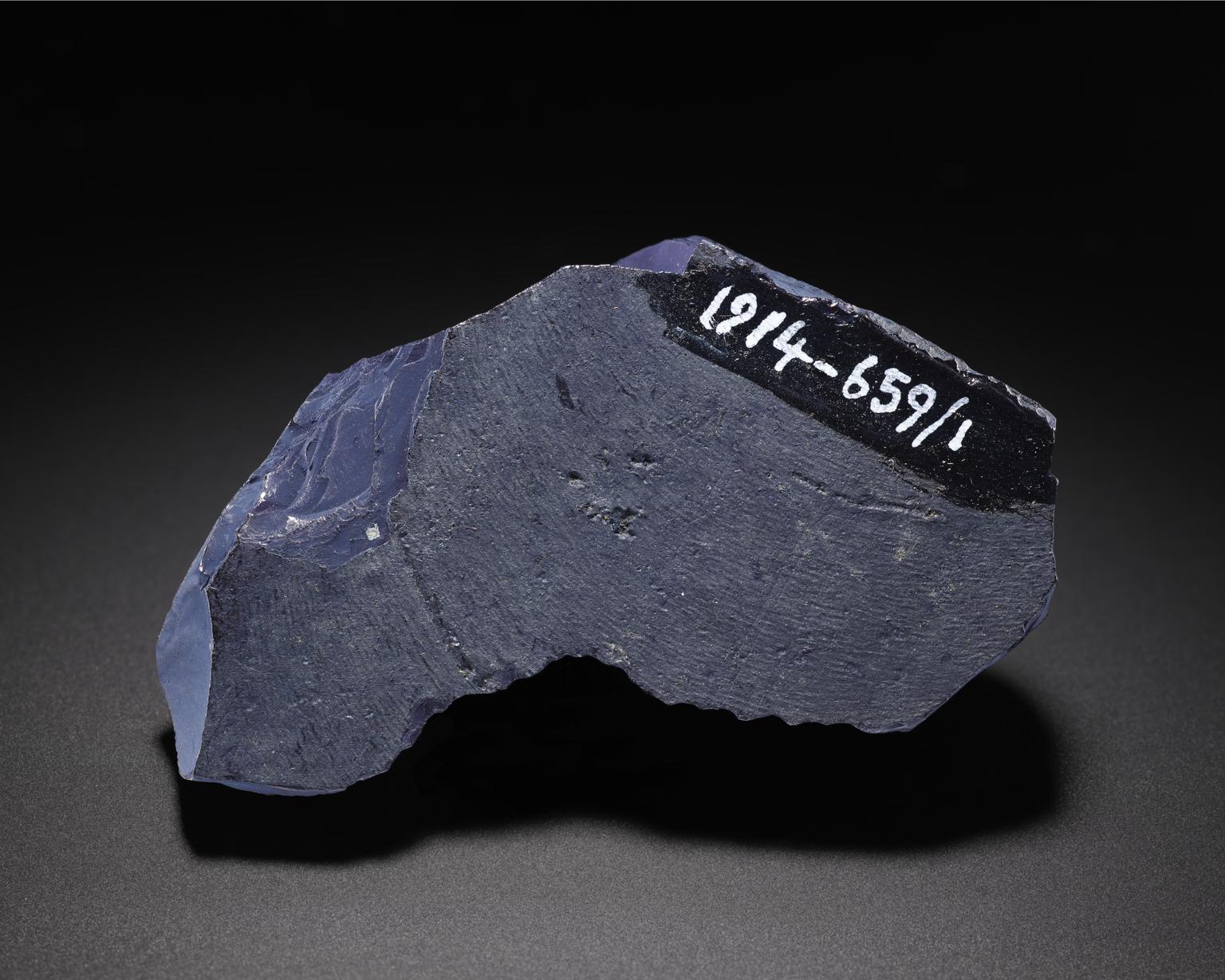
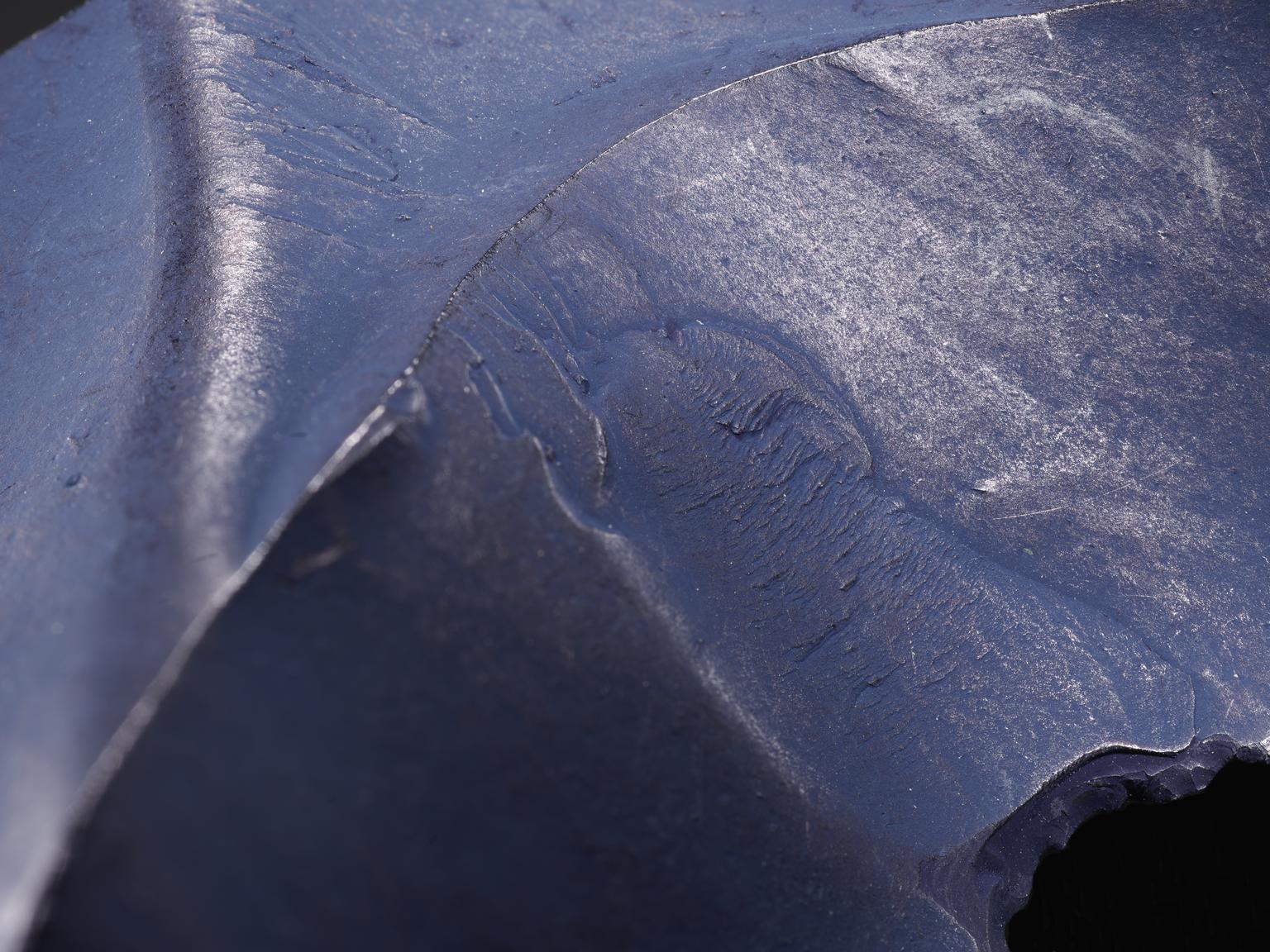
Natural indigo dye specimen no.7

Made:
unknown date in unknown
maker:
Unknown

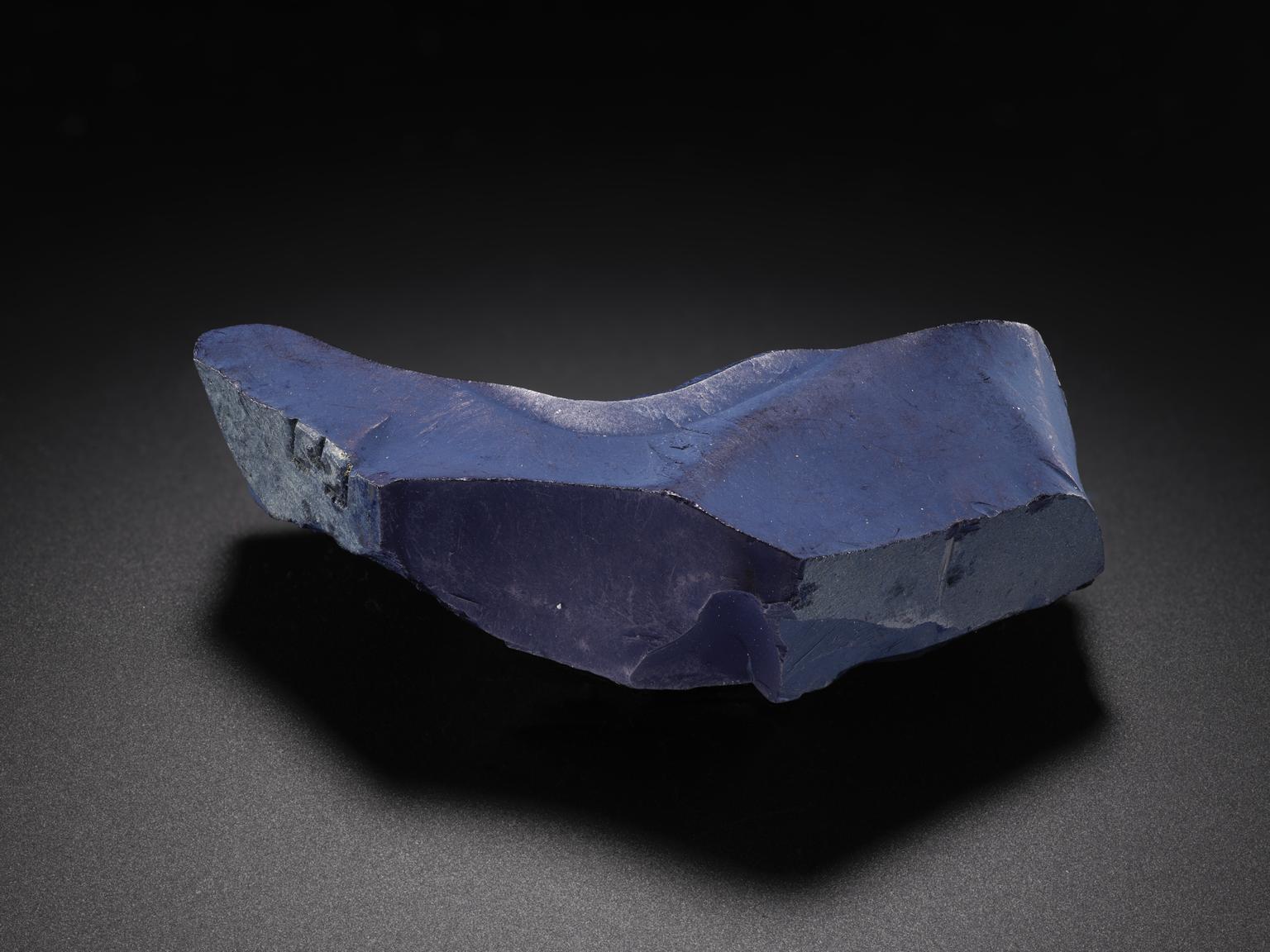
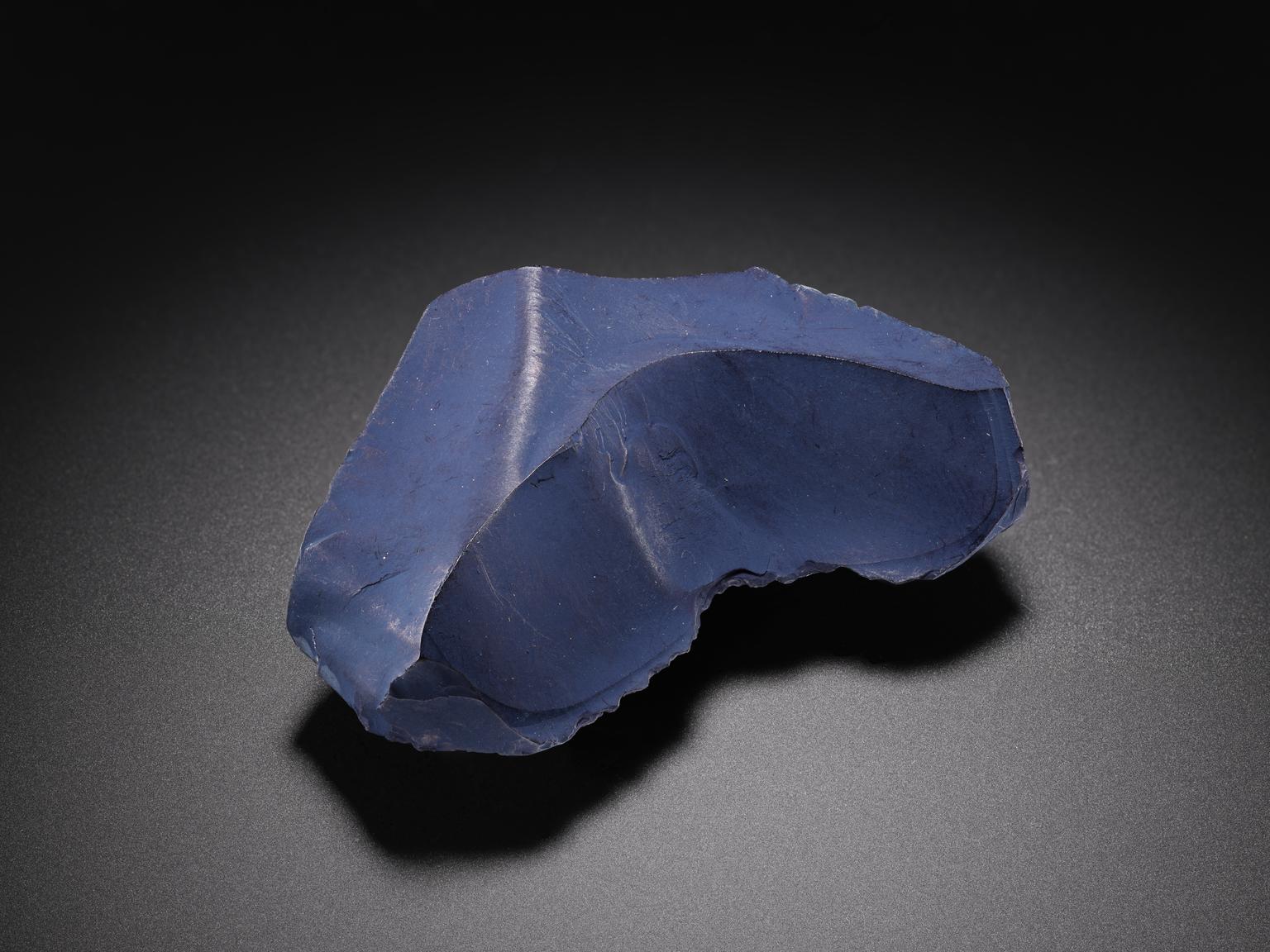
Specimen of natural indigo with inscriptions: "E.M. / DABEEPOR / No. 7", produced from the leaves of indigofera tinctoria.

Indigo refers to the blue substance, used as a dye or pigment, extracted from the leaves of various plants. There are hundreds of plants that can be used to produce indigo dye, including the Indigofera tinctoria plant which was used to produce this sample. Woad, Isatis tinctoria, also produces an indigo dye, but is often differentiated from dye produced by tropical and subtropical plants which produce much higher concentrations and are better suited to dying less absorbent fibers such as cotton.

Large-scale indigo plantations began to emerge in the 17th century and could eventually be found in locations including the Caribbean, South and Central America, South Asia and the American South. These plantations were key in the global trade of indigo and the supply of this dye to Europe. They were often owned and supervised by Europeans and relied on the labour of enslaved people or local indentured workers. Many Indian farmers were also coerced into growing indigo instead of food crops.

To produce a block of indigo, such as this, cuttings from the plant would be bundled together and put into vats, covered with water and beaten until they began to ferment. Once fermentation began, the liquid was moved into another vat where it was churned until the dying particles separated from the liquid and formed a mass. The liquid would then be drained away and the residue would be dried, placed into boxes, cut into squares and left to fully dry and harden. This process converted the indigo into a usable pigment that could be exported and shipped.

By the start of the 19th century, the province of Bengal (now Bangladesh and the Indian state of West Bengal) had emerged as the main global supplier. However, due to developments in synthetic dyes, by around the end of WWI (1918), synthetic indigo became more popular than its plant-based counterpart, reducing investment in natural indigo production.

This indigo sample was gifted to the Science Museum by indigo importers Parsons and Keith.

Details

Category:
Industrial Chemistry
Object Number:
1914-659/1
Materials:
pigment
type:
dye, natural dye and indigo
credit:
Parsons and Keith

Parts

Fragment of natural indigo specimen no. 7

Fragment of natural indigo specimen with inscriptions: "E.M. / DABEEPOR / No. 7", produced from the leaves of indigofera tinctoria.

More

Indigo refers to the blue substance, used as a dye or pigment, extracted from the leaves of various plants. There are hundreds of plants that can be used to produce indigo dye, including the Indigofera tinctoria plant which was used to produce this sample. Woad, Isatis tinctoria, also produces an indigo dye, but is often differentiated from dye produced by tropical and subtropical plants which produce much higher concentrations and are better suited to dying less absorbent fibers such as cotton.

Large-scale indigo plantations began to emerge in the 17th century and could eventually be found in locations including the Caribbean, South and Central America, South Asia and the American South. These plantations were key in the global trade of indigo and the supply of this dye to Europe. They were often owned and supervised by Europeans and relied on the labour of enslaved people or local indentured workers. Many Indian farmers were also coerced into growing indigo instead of food crops.

To produce a block of indigo, such as this, cuttings from the plant would be bundled together and put into vats, covered with water and beaten until they began to ferment. Once fermentation began, the liquid was moved into another vat where it was churned until the dying particles separated from the liquid and formed a mass. The liquid would then be drained away and the residue would be dried, placed into boxes, cut into squares and left to fully dry and harden. This process converted the indigo into a usable pigment that could be exported and shipped.

By the start of the 19th century, the province of Bengal (now Bangladesh and the Indian state of West Bengal) had emerged as the main global supplier. However, due to developments in synthetic dyes, by around the end of WWI (1918), synthetic indigo became more popular than its plant-based counterpart, reducing investment in natural indigo production.

This indigo sample was gifted to the Science Museum by indigo importers Parsons and Keith.

Measurements:
overall: 25 x 80 x 50 mm
Materials:
pigment
Object Number:
1914-659/1/1
type:
dye , natural dye and indigo
Image ©
The Board of Trustees of the Science Museum
Fragment of natural indigo specimen with inscriptions: "E.M. / DABEEPOR / No. 7", produced from the leaves of indigofera tinctoria.

Fragment of natural indigo specimen no. 7

Fragment of natural indigo specimen with inscriptions: "E.M. / DABEEPOR / No. 7", produced from the leaves of indigofera tinctoria.

More

Indigo refers to the blue substance, used as a dye or pigment, extracted from the leaves of various plants. There are hundreds of plants that can be used to produce indigo dye, including the Indigofera tinctoria plant which was used to produce this sample. Woad, Isatis tinctoria, also produces an indigo dye, but is often differentiated from dye produced by tropical and subtropical plants which produce much higher concentrations and are better suited to dying less absorbent fibers such as cotton.

Large-scale indigo plantations began to emerge in the 17th century and could eventually be found in locations including the Caribbean, South and Central America, South Asia and the American South. These plantations were key in the global trade of indigo and the supply of this dye to Europe. They were often owned and supervised by Europeans and relied on the labour of enslaved people or local indentured workers. Many Indian farmers were also coerced into growing indigo instead of food crops.

To produce a block of indigo, such as this, cuttings from the plant would be bundled together and put into vats, covered with water and beaten until they began to ferment. Once fermentation began, the liquid was moved into another vat where it was churned until the dying particles separated from the liquid and formed a mass. The liquid would then be drained away and the residue would be dried, placed into boxes, cut into squares and left to fully dry and harden. This process converted the indigo into a usable pigment that could be exported and shipped.

By the start of the 19th century, the province of Bengal (now Bangladesh and the Indian state of West Bengal) had emerged as the main global supplier. However, due to developments in synthetic dyes, by around the end of WWI (1918), synthetic indigo became more popular than its plant-based counterpart, reducing investment in natural indigo production.

This indigo sample was gifted to the Science Museum by indigo importers Parsons and Keith.

Measurements:
overall: x x , , .02kg
Materials:
pigment
Object Number:
1914-659/1/2
type:
dye and natural dye
Left section of natural indigo specimen with inscriptions: "E.M. / DABEEPOR / No. 7", produced from the leaves of indigofera tinctoria.

Left section of natural indigo dye specimen no.7

Left section of natural indigo specimen with inscriptions: "E.M. / DABEEPOR / No. 7", produced from the leaves of indigofera tinctoria.

More

Indigo refers to the blue substance, used as a dye or pigment, extracted from the leaves of various plants. There are hundreds of plants that can be used to produce indigo dye, including the Indigofera tinctoria plant which was used to produce this sample. Woad, Isatis tinctoria, also produces an indigo dye, but is often differentiated from dye produced by tropical and subtropical plants which produce much higher concentrations and are better suited to dying less absorbent fibers such as cotton.

Large-scale indigo plantations began to emerge in the 17th century and could eventually be found in locations including the Caribbean, South and Central America, South Asia and the American South. These plantations were key in the global trade of indigo and the supply of this dye to Europe. They were often owned and supervised by Europeans and relied on the labour of enslaved people or local indentured workers. Many Indian farmers were also coerced into growing indigo instead of food crops.

To produce a block of indigo, such as this, cuttings from the plant would be bundled together and put into vats, covered with water and beaten until they began to ferment. Once fermentation began, the liquid was moved into another vat where it was churned until the dying particles separated from the liquid and formed a mass. The liquid would then be drained away and the residue would be dried, placed into boxes, cut into squares and left to fully dry and harden. This process converted the indigo into a usable pigment that could be exported and shipped.

By the start of the 19th century, the province of Bengal (now Bangladesh and the Indian state of West Bengal) had emerged as the main global supplier. However, due to developments in synthetic dyes, by around the end of WWI (1918), synthetic indigo became more popular than its plant-based counterpart, reducing investment in natural indigo production.

This indigo sample was gifted to the Science Museum by indigo importers Parsons and Keith.

Measurements:
left and right sections: 75 mm x 75 mm x 75 mm,
left section: 75 mm x 60 mm x 75 mm,
Materials:
pigment
Object Number:
1914-659/1/3
type:
dye and natural dye
Right section of natural indigo specimen with inscriptions: "E.M. / DABEEPOR / No. 7", produced from the leaves of indigofera tinctoria.

Right section of natural indigo dye specimen no.7

Right section of natural indigo specimen with inscriptions: "E.M. / DABEEPOR / No. 7", produced from the leaves of indigofera tinctoria.

More

Indigo refers to the blue substance, used as a dye or pigment, extracted from the leaves of various plants. There are hundreds of plants that can be used to produce indigo dye, including the Indigofera tinctoria plant which was used to produce this sample. Woad, Isatis tinctoria, also produces an indigo dye, but is often differentiated from dye produced by tropical and subtropical plants which produce much higher concentrations and are better suited to dying less absorbent fibers such as cotton.

Large-scale indigo plantations began to emerge in the 17th century and could eventually be found in locations including the Caribbean, South and Central America, South Asia and the American South. These plantations were key in the global trade of indigo and the supply of this dye to Europe. They were often owned and supervised by Europeans and relied on the labour of enslaved people or local indentured workers. Many Indian farmers were also coerced into growing indigo instead of food crops.

To produce a block of indigo, such as this, cuttings from the plant would be bundled together and put into vats, covered with water and beaten until they began to ferment. Once fermentation began, the liquid was moved into another vat where it was churned until the dying particles separated from the liquid and formed a mass. The liquid would then be drained away and the residue would be dried, placed into boxes, cut into squares and left to fully dry and harden. This process converted the indigo into a usable pigment that could be exported and shipped.

By the start of the 19th century, the province of Bengal (now Bangladesh and the Indian state of West Bengal) had emerged as the main global supplier. However, due to developments in synthetic dyes, by around the end of WWI (1918), synthetic indigo became more popular than its plant-based counterpart, reducing investment in natural indigo production.

This indigo sample was gifted to the Science Museum by indigo importers Parsons and Keith.

Measurements:
left and right sections: 75 mm x 75 mm x 75 mm,
right section: 63 mm x 44 mm x 67 mm,
Materials:
pigment
Object Number:
1914-659/1/4
type:
dye and natural dye