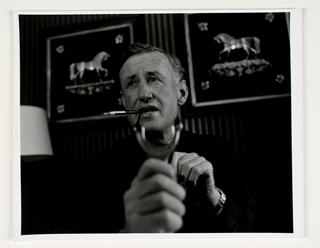
Lewis Frederick Morley 1925 - 2013
- born in:
- Hong Kong
Lewis Frederick Morley (known to his close friends as "Fred") was born in Hong Kong on 13th June 1925. He was one of the three children of a Chinese mother, Lucie Chan, and an English father, also named Lewis, who was chief pharmacist to the colony. During the second world war he was held with his family in the Stanley internment camp by the occupying Japanese army. Watercolours he produced in the camp later won him a place at the Twickenham College of Art (1949-52), in south-west London, where he studied after serving with the RAF once the family had moved back to Britain.
In 1952 he moved to Paris where he studied painting at the Académie de la Grande Chaumière. In 1954 Morley married Patricia "Pat" Clifford. A portfolio of Morley's early photographs were published by the picture editor Norman Hall in 'Photography' magazine in 1957 as the latest "Young Britain" discovery. Introductions by friends led to Morley working on assignments for Tatler magazine from 1958 onwards, photographing subjects such as the newly married Peter Hall and Leslie Caron in 1961.
A 1960 Tatler commission, The Day of the Swot at Cambridge, included a photograph of William Donaldson which was to lead to Morley photographing the satire boom of the 1960s and the early days of Private Eye magazine, particularly when he moved his studio to an upper floor in the building in which Peter Cook ran the Establishment Club in Soho, London.
Morley's friendship with Cook resulted in him becoming a regular photographic contributor to Private Eye in its early days where he produced spoof portraits. Morley also dabbled in real fashion stories, working with models including Marie-Lise Gres and Jenny Boyd for magazines such as She and Harper's Bazaar and, most notably, taking the first published photographs as a fashion model of Jean Shrimpton for Go! Magazine in 1961. Another first was his photographs of Twiggy in an old fur coat, published in London Life magazine in 1965, before she officially became "the face of 1966".
Morley was introduced to theatre photography at the Royal Court by Lindsay Anderson who commissioned him to photograph Serjeant Musgrave's Dance in 1959, the first of more than 100 stage plays he photographed for impresarios such as Oscar Lewenstein and Michael Codron. Highlights include his portrait of Albert Finney as Billy Liar. Morley also photographed the stage actors Tom Courtenay, Peter O'Toole, Alan Badel and John Hurt. His work on films included a shot of Judi Dench in Four in the Morning (1965) and Clint Eastwood on the set of Where Eagles Dare (1968).
In 1963, Morley took one of his most famous images when he photographed Christine Keeler at the height of the British scandal known as the "Profumo Affair." Keeler was contracted to take some publicity shots for an upcoming film about the scandal (the film was eventually scrapped) and the producers insisted she take some nude shots. Noticing that Keeler was reluctant to do so, Morley suggested she could fulfil her contract with the studio without having to appear fully nude. By using the now famous Arne Jacobson style chair, Morley was able to help Keeler fulfil her contract but maintain her modesty. Eventually the photograph was leaked to the press and became one of the defining images of the decade. The image continues to be imitated to this day in other forms of media
In 1971, persuaded by friends who had already left Britain, Morley and his family emigrated to Australia where he began a new career specialising in interiors photography as well as some portraiture. He retired in 1987.
Throughout his life, Morley continued to attend and run exhibitions of his work. In 1999, he appeared in the Contemporary Australian Photographers series. It was followed in 2003 with the release of a film about his life and an exhibition Myself and Eye at the National Portrait Gallery in Canberra. In 2006, an extensive exhibition showcasing 50 years of Lewis Morley work was displayed at the Art Gallery of New South Wales. This included 150 of his works covering fashion, theatre and reportage, many of which had never been seen before.
Related Documents