G. Cussons Limited 1876
- industry:
- Scientific instrument makers
George Cussons was born in Ramsbottom, Lancashire, in 1828. His father was a carpenter who had moved there in the early 1820s. Nothing is known of the young George's education. However, he had become a teacher of science by the 1870s. In 1876, George Cussons opened a business for the ‘manufacture of Educational and Scientific Apparatus’ for use in teaching mechanical engineering, physics, mathematics, art and machine drawing. He drew on his own teaching experience to make good quality, practical apparatus. Five years later, his son, George Wilfred, was born.
In its early years, the company probably specialised in making art and geometric models. It won a prize medal at the Health Exhibition in London for wooden art vases for drawing. By 1886, Cussons was working from 104, Great Clowes Street, Salford, where he lived, with workshops on the premises.
At around the turn of the twentieth century, the company underwent considerable expansion. It took over adjoining premises on Great Clowes Street and later put up a building at the back, on John Street. Here there were showrooms and a model laboratory that could be visited by prospective customers. The company also acquired offices and showrooms in London, at Thanet House on the Strand.
The company also expanded the range of equipment manufactured to include many types of mechanical and technical laboratory apparatus. In 1906, Cussons introduced the Capstan Block and Tripod system of apparatus for practical experimental work in mechanics, physics and maths. This apparatus was still being used in schools and colleges in the early 1960s. It was followed later by the Ribbon Atwood machine for experiments on gravity, acceleration and retardation. Apparatus could be purchased from a variety of catalogues or could be made to the specific requirements of individual teachers. Occasionally, these individual orders were developed by the company and later appeared in the catalogues.
During this period, the company exhibited at several international exhibitions where it won many prizes. These included the New Zealand International Exhibition in Christchurch (Gold Medal), the United Provinces Exhibition in Allahabad (Gold Medal), and the Brussels Exhibition (Grand Prix, Diploma of Honour and three gold medals). The company supplied technical apparatus to engineering and mechanical laboratories at many British universities and technical colleges including Manchester and Salford, Royal Naval and Military academies and colonial technical colleges in Africa, Australia and India, as well as many provincial education authorities.
In 1923, George Cussons' son, George Wilfred, took over the management of the firm. He had attended the Wesleyan Day School in Lower Broughton, and then went to the Royal Technical Institute in Salford at the age of 16. He spent two years there and studied Electricity, Electric Lighting and Higher Mathematics. After this, he probably worked in his father's firm to learn the trade. He was elected a member of the Manchester Literary & Philosophical Society in 1923, and later became a council member.
In the 1940s, Cussons began to supply measuring and indicating equipment to industry as well as to educational organisations.
George Cussons died in 1961. One of the staff ran the company for three years before it became a subsidiary of Ricardo Consulting Engineers. Ricardo was a specialist in the field of internal combustion engine design, development and testing. The company built a new factory on the old Great Clowes Street site in 1980. In 1987, local management acquired the controlling interest. The company still makes engineering teaching equipment but also makes specialist testing equipment for the automotive, internal combustion engine and fuel industries.
Related Objects
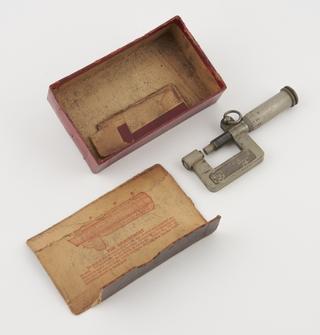
Micrometer Caliper
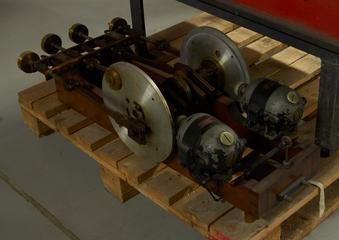
Professor Dalby's Engine Model
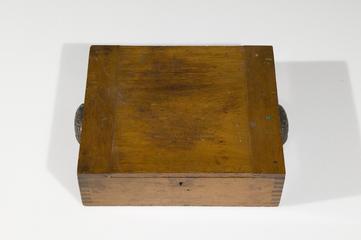
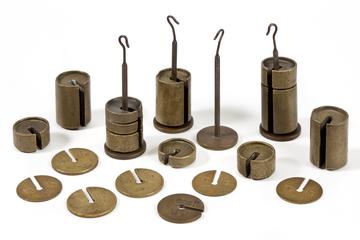
Box of Weights

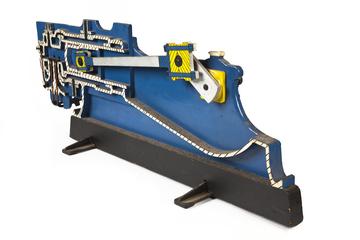
Inclined plane demonstration apparatus

Micrometer

Two-Dial Revolution Counter
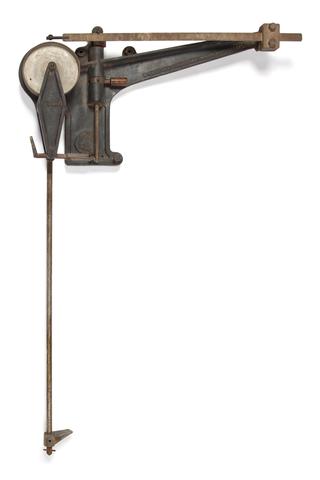
Ribbon Atwood machine in case

Springs for Model