
Sir Humphry Davy (1778-1829) was an English chemist and physicist. Born in Penzance, Cornwall, on December 17, 1778, he received his early education at local grammar schools. After the death of his father, Robert, in 1795, he was apprenticed to a surgeon and apothecary with the ambition of pursuing a medical career. A significant influence on his scientific path was Davies Gilbert, who lodged with him and provided access to a library and chemical laboratory.
Davy's early experiments focused on gases, leading him to prepare and inhale nitrous oxide, which he investigated for its physiological effects. This work resulted in his appointment as chemical superintendent of the Pneumatic Institution in 1798, where he explored oxides, nitrogen, and ammonia. His findings were published in "Researches, Chemical and Philosophical" in 1800, earning him recognition and an appointment as professor of chemistry at the Royal Institution of Great Britain in 1802.
His research expanded into electricity, particularly the chemical applications of electrolytic cells. In 1806, he delivered a lecture on "On Some Chemical Agencies of Electricity," detailing discoveries of sodium, potassium, and boron. He also elucidated the bleaching properties of chlorine and conducted research for the Society for Preventing Accidents in Coal Mines, leading to the invention of the Davy lamp for coal miners.
For his services to science, he was knighted in 1812 and six years later he was made a a 1st Baronet. From 1820 to 1827 he was president of the Royal Society. His health declined in the late 1820s, contributing to his resignation from the Royal Society. He was partly paralyzed by a stroke and died in Geneva, Switzerland, on May 29, 1829.
Related Objects

Scientific Researches! - New Discoveries in Pneumaticks! - or, an Experimental Lecture on the Powers of Air
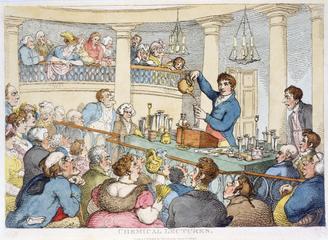
Chemical Lectures
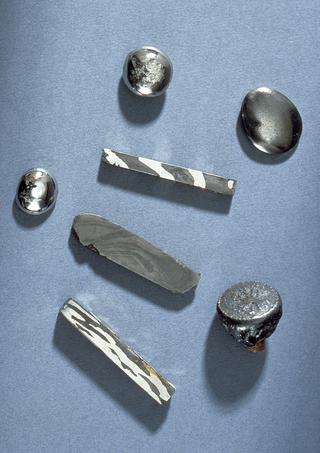
Experimental steel alloys made by Michael Faraday (1820-1824)
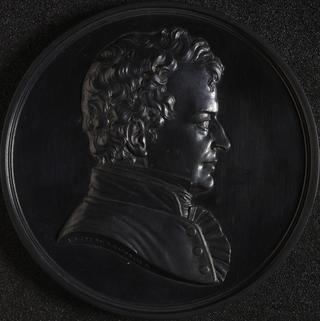
Royal Society's Davy Medal
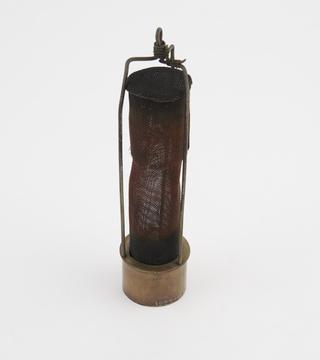
Davy lamp, made 1820
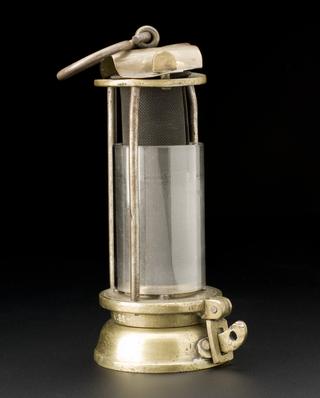
Safety lamp

Davy's small electrolysis trough, 1810, replica
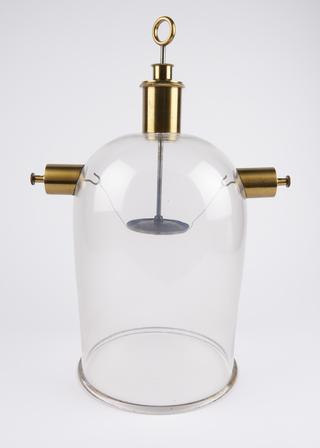
Davy Infra-red Reflection Apparatus.

Mug commemorating Sir Humphry Davy
