Image
Category
Collection
Object type
Material
Maker
Place
Date
Antimony cup, Europe, 1501-1700

Antimony cup, Europe, 1501-1700

1501-1700

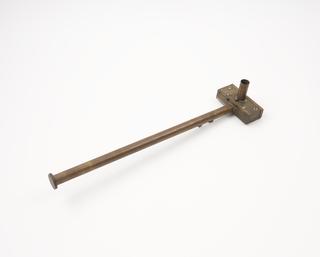
Thermopile by Elliott Brothers, 1872

Thermopile by Elliott Brothers, 1872

1872

Boys' Radiomicrometer, 1887-1900

Boys' Radiomicrometer, 1887-1900

1887-1900

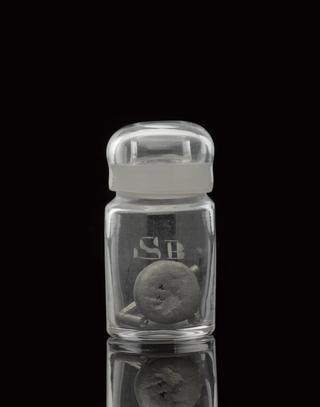
Glass-stoppered bottle containing antimony

Glass-stoppered bottle containing antimony

1801-1892 (prepared)

Antimony from Boneschau

Antimony from Boneschau

1 box Stibium

Box of stibium

1790-1819

Glass bottle with metal lid full of Compound Syrup of Cocillana (contains opium, morphine hydrochloride and antimony). 162 mm x 51 mm x 30 mm, 309 g. Label reads, ' Expectorand, Sedative and Tonic Laxative...A soothing rememdy for irritating Coughs, Bronchitis and Chest and Lung troubles.' Produced by Wright, Layman and Umney Limited, early twentieth century.

Bottle of Compound Syrup of Cocillana

1901-1950

Square glass bottle with chamois-covered stopper full of 'Brown Compound Mixture' tablets (opium, benzoic acid, camphor, antimony, anise and ammonia chloride). 95 mm x 44 mm x 50 mm, 209g. Ferris & Co. Ltd , English, 1893-1900.

Bottle of Brown Mixture Compound tablets

1893-1900

500ml amber glass dispensing bottle of 'Cosylan' compound cocillana syrup (cocillana, squill extract, cascara, antimony tartrate, ethylmorphine hydrochloride, menthol), full. 200 mm x 70 mm diameter, 973 g. Manufactured by Parke Davis, Welsh, 1970-1985.

500ml amber glass dispensing bottle of 'Cosylan' compound cocillana syrup

1970-1985

Glass bottle with metal screw top full of Compound Syrup of Cocillana (contains cocillana, opium, antrimony and morphine). 164 mm x 53 mm x 30 mm, 308 g. Prepared by Wright, Leyman and Umney Ltd., London, 1940-1960.

Bottle of Compound Syrup of Cocillana

1940-1960

A bottle of 'Syrup of Poppies' with trace residues remaining, unsigned, England, 1870

Bottle of 'Syrup of Poppies' with trace residues remaining

1870

Small hide or leather bottle, globular base, cone-shaped body long slender tubular neck, contains antimony powder resembling iron filings, North African(?), 1880-1910

Bottle contaiing antimony

1880-1910

Small rectangular pocket dispensary with hinged metal segments, 7 of which contain pills (including opium, Dover's powder, quinine, and lead with opium), 2 contain packets of powder (calomel and antimony), with an informational leaflet. 84 mm x 57 mm x 13 mm. Made by Flockhart and Company, Edinburgh, Scotland, 1837-1870.

Small pocket dispensary containing drugs

1837-1870

Veterinary medicine chest, oak, with main storage compartment in three sections and a drawer, formerly the property of the Hawkins family, Staunton Court, nr. Gloucester, with various contents of the medicine chest including instruments, glassware, ointment jars, paper packets of medicine, and other medical preparations. The top drawer of the chest contains glass medicine bottles, mostly with glass stoppers. Some of the bottles are empty, although some still contain medical preparations. Other substances present in the glassware include antimony, digitalis, tobacco, ipecacuanha powder, ammonium hydrochloride, strychnine (in a green glass poison bottle), and calomel (mercury chloride). The removable bottom shelf contains metal ointment pots, and various medicines in paper packets, including aresnic. Unknown maker, English, c. 1870.

Veterinary medicine chest

circa 1860

Green glass poison bottle with bakelite lid full of white powdered antimony tartrate. English, twentieth century

Poison bottle containing powdered antimony tartrate

Pocket dispensary with metal tabs for various drugs (including morphine and opium), tinned steel, with traces remaining. 67 mm x 87 mm x 17 mm, 116 g. Unknown maker, English, 1880-1920.

Tin steel pocket dispendary

1880-1920

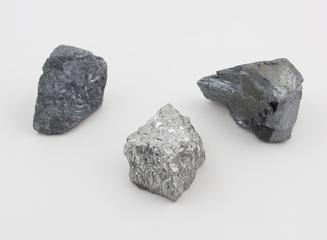
Native antimony from Borneo

Native antimony from Borneo

before 1889

7 phials of source material for electromagnetic separator, one labelled: 'Cd Cl2' (cadmium chloride), one labelled: 'W Cl6' (tungstenate chloride), one labelled: 'Cr Cl3' (chromium chloride), one labelled: 'Ag I' (silver iodine), one labelled: 'Se' (selenium metal), one labelled: 'Zn' (zinc), and one labelled: 'Sb' (antimony), unsigned, Europe, 1970-1980

Source material for electromagnetic separator in 7 phials

1970-1980

A phial of source material for electromagnetic separator, labelled: 'Sb' (antimony), unsigned, Europe, 1970-1980

Antimony for electromagnetic separator

1970-1980

Accessories for Melloni's apparatus, by Elliott Bros., London, England, 1888. Consisting of leslie cube, spirit burner and wood, rock salt plates, four mica polarising plates, line thermopile containing antimony (toxic), three screens and extra oil lamp covers.

Melloni's Apparatus, 1888

1888

Paper packet of 'Fever Powder' or antimony powder. 75 mm x 33 mm, 6g. Prepared by Kiddle, London, 1836-1900.

Packet of 'Fever Powder'

1836-1900