Image
Category
Collection
On Display
Object type
Material
Maker
Place
Date
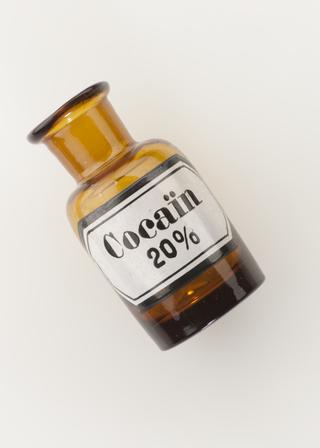
Bottle for cocaine solution

Bottle for cocaine solution

1910-1920
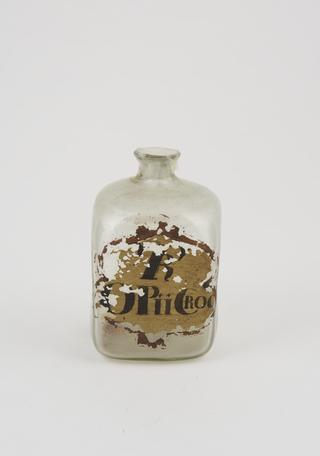
Empty bottle for aromatic chalk powder with opium

Empty bottle for aromatic chalk powder with opium

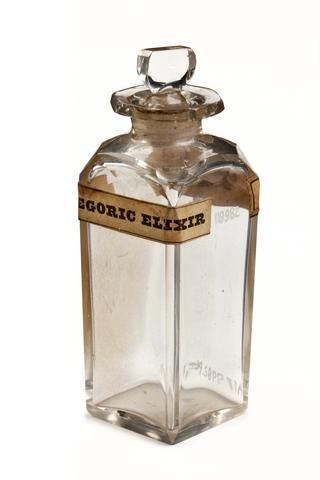
Glass bottle for paregoric elixir

Glass bottle for paregoric elixir

1786-1795
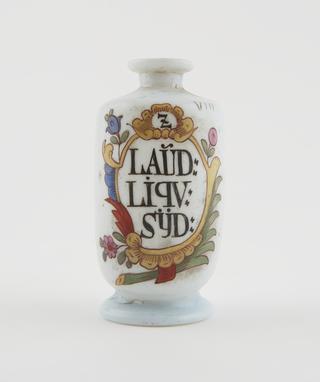
Drug jar for Laundaum

Drug jar for Laundaum

1740-1840

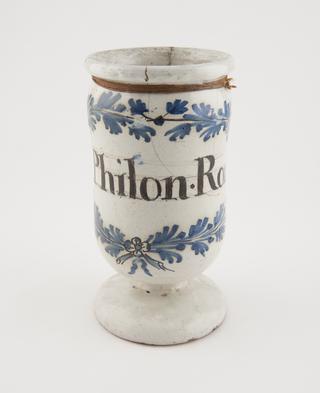
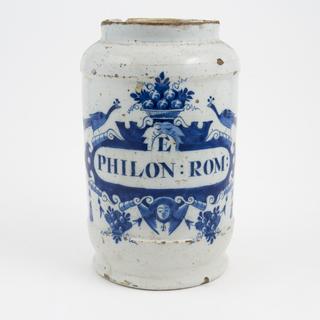
Drug jar for Philonium Romanum

Drug jar for Philonium Romanum

1700-1770

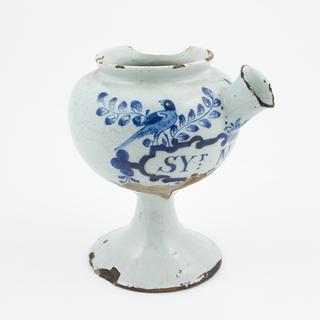
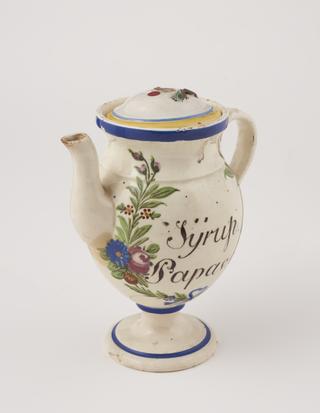
Syrup jar for poppy capsule syrup

Syrup jar for poppy capsule syrup

1760-1860

Earthenware drug jar for extract of poppy

Earthenware drug jar for extract of poppy

1590-1800

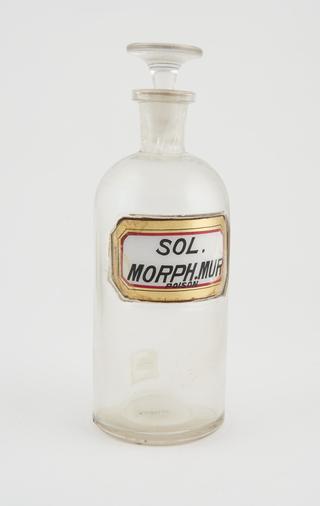
Clear glass shop round for liquid morphine, United States, 1862-1863

Clear glass shop round for liquid morphine, United States, 1862-1863

1862-1863
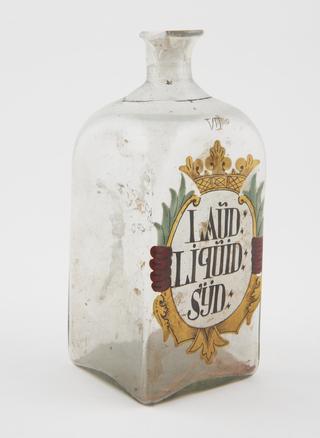
Drug jar for Philonium Romanum

Drug jar for Philonium Romanum

1751-1780

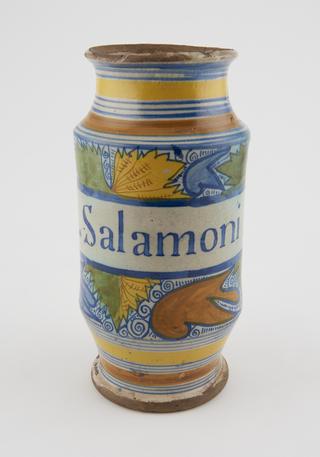
Drug jar for Salomonis opiate

Drug jar for Salomonis opiate

1601-1650

Drug jar for Philonium Romanum

Drug jar for Philonium Romanum

1650-1750

Earthenware albarello for opium extract

Earthenware albarello for opium extract

1701-1800

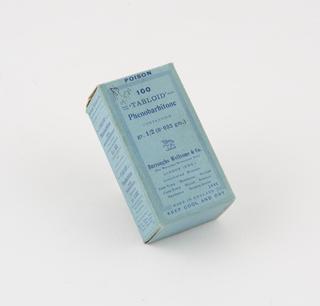
Bottle for ‘Tabloid’ Phenobarbitone, England, 1933

Bottle for ‘Tabloid’ Phenobarbitone, England, 1933

1933

Storage bottle for opium tincture

Storage bottle for opium tincture

1801-1850

Syrup jar for poppy syrup

Syrup jar for poppy syrup

1720-1750

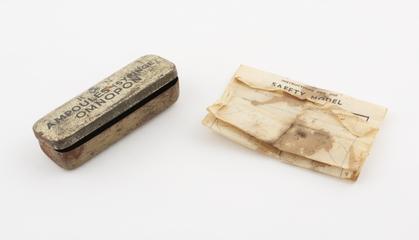
Tinned box for an ampoule of omnopon

Tinned box for an ampoule of omnopon

1940-1955

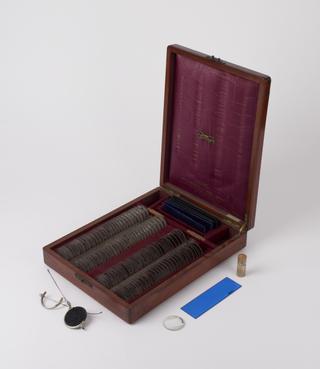
Wooden carton for Ophthalmic Disks (homatropine and cocaine)

Wooden carton for Ophthalmic Disks (homatropine and cocaine)

1870-1901

Dispensing pot for laudanum, Italy, 1771-1830

Dispensing pot for laudanum, Italy, 1771-1830

1771-1830

Drug jar for Salomonis opiate

Drug jar for Salomonis opiate

1750-1850

Glass bottle for Sydenham's laudanum

Glass bottle for Sydenham's laudanum

1701-1800

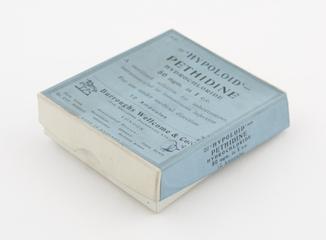
Box for ampoules of Pethidine, Welwyn Garden City, England, 1981

Box for ampoules of Pethidine, Welwyn Garden City, England, 1981

1981

Glass bottle for Sydenham's laudanum

Glass bottle for Sydenham's laudanum

1701-1800
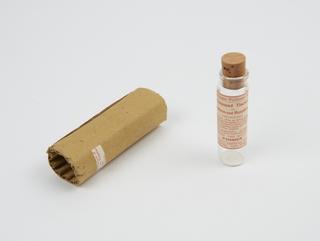
Syrup jar for poppy syrup

Syrup jar for poppy syrup

1810-1830

Syrup jar for poppy syrup

Syrup jar for poppy syrup

1801-1900

Dark glass carboy for Soapwart and opium

Dark glass carboy for Soapwart and opium

1840-1890

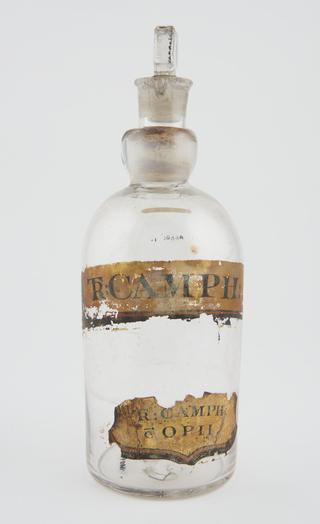
Glass shop round for Camphorated tincture of opium

Glass shop round for Camphorated tincture of opium

1801-1900

Empty glass bottle for Opium tincture

Empty glass bottle for Opium tincture

1800-1901

Carton for twelve ampoules of pethidine hydrochloride

Carton for twelve ampoules of pethidine hydrochloride

1942

Empty bottle of compound tincture of chloroform and morphine

Empty bottle of compound tincture of chloroform and morphine

1910
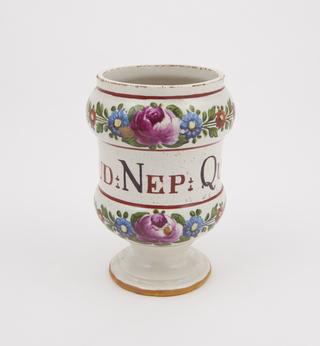
Clear glass bottle for Mrs Winslows soothing syrup. This syrup formula was intended for use by children and was based on laudanum (opium tincture). Made by Curtis and Perkins, English, probably late nineteenth century.

Bottle for Mrs. Winslow's Soothing Syrup

1870-1930

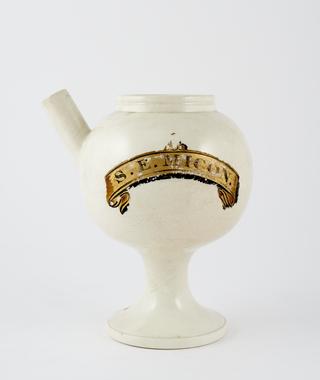
Handleless syrup jar, tin-glazed earythenware, cherub and shell motif, used for opium syrup (S.E. MECON), empty. 185 mm x 138 mm diamter (foot), 797 g. Unknown maker, English, 1740-1760.

Syrup jar for opium

1740-1760

Glass bottle with ground glass stopper for Paregoric Elixir, now empty. 87 mm x 30 mm x 17 mm, 51g. Produced by the Junior Army and Navy Stores and dispensed by J. Fuller, English, c. 1870.

Bottle for Paregoric Elixir

1858-1900

Wooden drawer for opium (one of four), now empty. 38 mm x 120mm x 110mm. Fogelbert Chawner, English, c. 1789.

Drawer for opium

1765-1795

Black guetta percha tube for Opium and Lead tablets, now empty. 88 mm x 20 mm diameter, 19g. Burroughs Wellcome and Co., London, 1910-1924.

Bakelite tube for opium and lead tablets

1910-1924

Glass bottle with stopper missing for 'Alcool camphre' (camphorated alcohol). 121 mm x 46 mm x 32 mm, 130 g. Prepared by Mapcotte Chemists, Paris, 1820-1900.

Bottle of camphorated alcohol

1820-1900

Glass specimen phial of homeopathic opium pills, now empty. 55mm. Homeopathic medicine is based on the 'law of similars' that 'like is cured by like'. Dispensed by Dr. William Schwabe, German, 1870-1930.

Phial of homeopathic opium

1870-1930

Empty metal canister with slide bolt secured lid, intended to contain morphine hydrochloride tablets .01 g. 63 mm x 40 mm x 43 mm; 45 g. Painted inscription reads, ' MORPH./ HYDROCHL/ i. Tablz., 0,01 g.' Unknown maker, German, World War I (1914-1918)

Tin carton for morphine hydrochloride tablets

1914-1918

Rectangular glass bottle with a glass stopper for paregoric elixir, empty. 109 mm x 33 mm x 25 mm, 90g. A. Foss Dispensing Chemists, Sydney, c. 1860.

Bottle for paregoric elixir

1840-1870

Narrow rectangular glass bottle with glass stopper, empty, originally contained chlorodyne. 89 mm x 32 mm x 20 mm, 73 g. English, 19th century.

Bottle for chlorodyne

1801-1900

Glass dispensing bottle, used for dover's powder (ipecacuanha and opium), English, 1850-1900. empty.

Glass dispensing bottle, used for dover's powder (ipecacuanha and opium), English, 1850-1900. empty.

1850-1900

Glass bottle with metal screw cap used for tablets of ipecacuanha and opium powder, now empty. 79 mm x 37 mm x 37 mm, 66 g. Handwritten note on label reads, 'TABLETS./ PULV. IPECAC et OPII 5 grains/...' Prepared by William Morrell, Kew, Surrey, 1910-1930.

Bottle for Ipecac and Opium tablets

1910-1930