Image
Category
Object type
Material
Maker
Place
Date
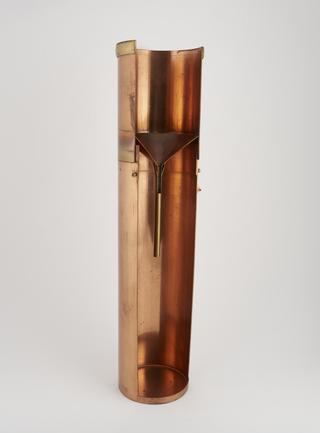
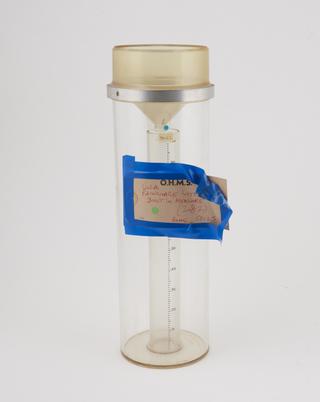
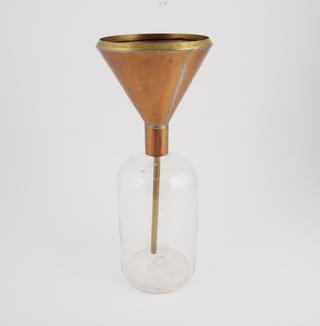
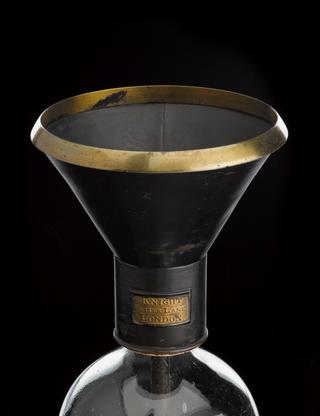
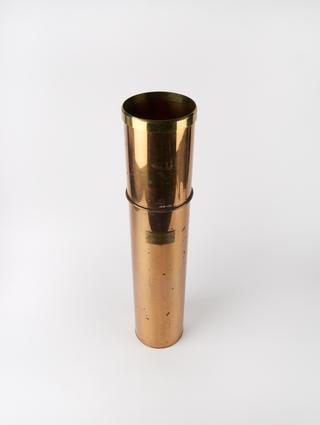
Base and funnel for rain gauge designed for use at Bradford waterworks

Base and funnel for rain gauge designed for use at Bradford waterworks

1893

Standard five-inch rain gauge

Standard five-inch rain gauge

1940-1950

Snowdon rain gauge, by Negretti and Zambra

Snowdon rain gauge, by Negretti and Zambra

1908

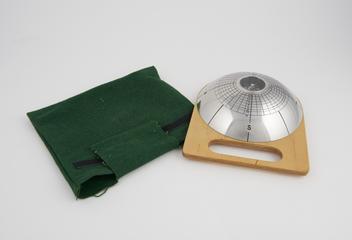
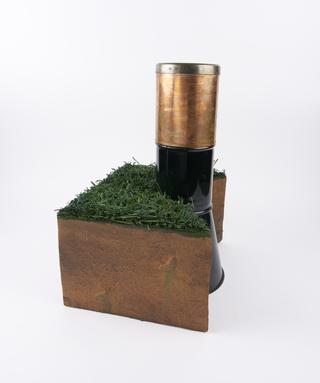
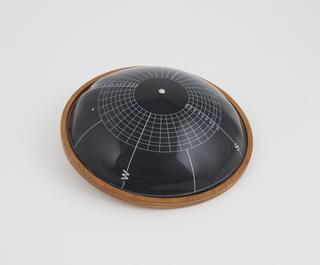
'Kiff Mushroom' raingauge exposure meter

'Kiff Mushroom' raingauge exposure meter

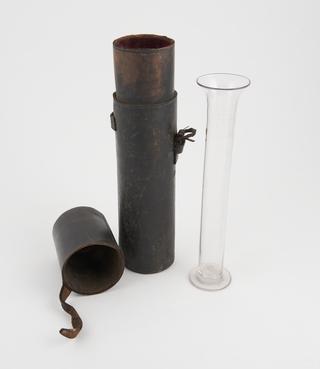
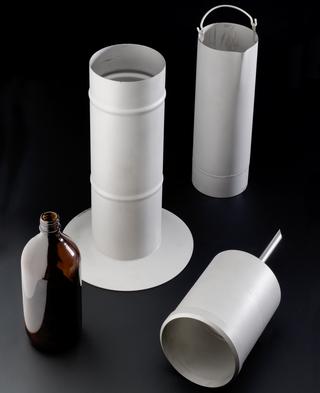
George James Symons designed rain gauge, with bottle, pail and measuring cylinder, 1871

George James Symons designed rain gauge, with bottle, pail and measuring cylinder, 1871

1871

Rain-gauge, by George James Symons, 1860-1899

Rain-gauge, by George James Symons, 1860-1899

1860-1899

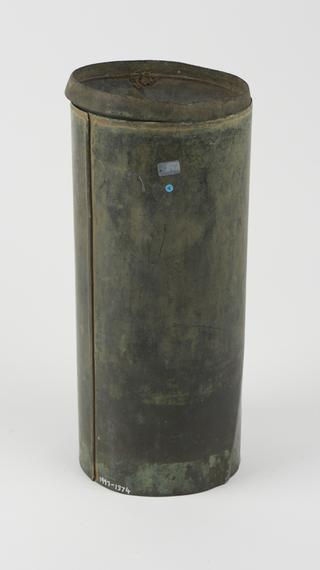
Rain gauge designed by Alexander Binnie for use at Bradford waterworks

Rain gauge designed by Alexander Binnie for use at Bradford waterworks

1893

Sectioned rain gauge with Nipher shield, 1920.

Sectioned rain gauge with Nipher shield, 1920.

1920

Rain gauge with receiver and measuring glass

Rain gauge with receiver and measuring glass

1921

Crossley rain gauge, modified, East India Company

Crossley rain gauge, modified, East India Company

'Kiff Mushroom' raingauge exposure meter

'Kiff Mushroom' raingauge exposure meter

Standard pattern Meteorological Office rain gauge, 1998

Standard pattern Meteorological Office rain gauge, 1998

1998

Met. Office impulse counter. 5 inch rain gauge

Met. Office impulse counter. 5 inch rain gauge

1959

Rain gauge, 5 inch

Rain gauge, 5 inch

1931-1970

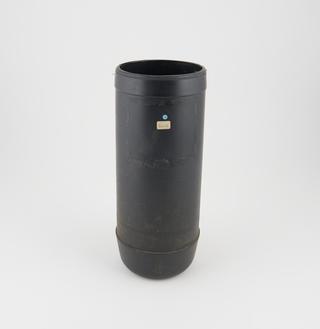
Met Office pattern tipping bucket rain gauge

Met Office pattern tipping bucket rain gauge

1997

Brannan rain gauge, 4 inch. 1931-1970.

Brannan rain gauge, 4 inch. 1931-1970.

1931-1970

Narrow diameter rain-gauge, British, 1900-1906

Narrow diameter rain-gauge, British, 1900-1906

1900-1906

Rain gauge

Rain gauge

1888

Two parts of Beckley recording rain gauge

Two parts of Beckley recording rain gauge

1868

Rain gauge.

Rain gauge.

1900-1930

Copper rain gauge, by Ginge, with indicator float.

Copper rain gauge, by Ginge, with indicator float.

1970-1980

Aerodynamic tipping bucket rain gauge, 1997

Aerodynamic tipping bucket rain gauge, 1997

1997

Plastic rain gauges with inbuilt measures

Plastic rain gauges with inbuilt measures

1950-1970

Measuring glass for Rollason rain gauge

Measuring glass for Rollason rain gauge

1921

Glaisher Type Rain Gauge

Glaisher Type Rain Gauge

1860

Watson rain gauge

Watson rain gauge

1845

Two 5 inch fibreglass & plastic rain gauges by Wes

Two 5 inch fibreglass & plastic rain gauges by Wes

1950-1970

Two 5 inch fibreglass & plastic rain gauges by Wes

Two 5 inch fibreglass & plastic rain gauges by Wes

1950-1970

Plastic rain gauges with inbuilt measures

Plastic rain gauges with inbuilt measures

1950-1970

Reproduction of an early (1821) Korean rain gauge

Reproduction of an early (1821) Korean rain gauge

1911-1923

Rain gauge 5 inch funnel and collecting jar

Rain gauge 5 inch funnel and collecting jar

1840-1860

Rain gauge, by Newton & Co., 1860-1865

Rain gauge, by Newton & Co., 1860-1865

1860-1865

George James Symons designed rain gauge, 1871

George James Symons designed rain gauge, 1871

1871

Rain gauge designed by Luke Howard, c. 1818

Rain gauge designed by Luke Howard, c. 1818

1818

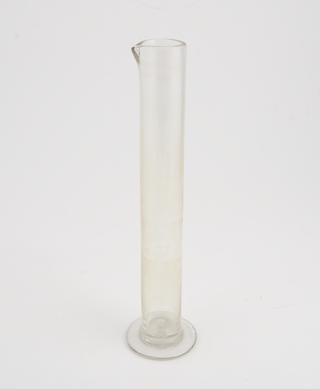
Glass measuring cylinder from Luke Howard's rain-gauge

Glass measuring cylinder from Luke Howard's rain-gauge

1818

Luke Howard's rain-gauge, by Richard & George Knight, 1818

Luke Howard's rain-gauge, by Richard & George Knight, 1818

1818

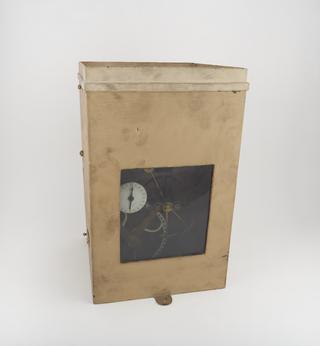
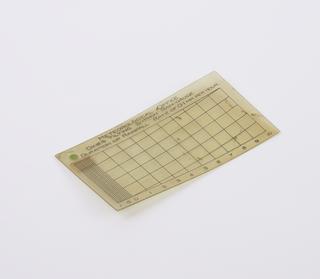
M.O.  scale for Dines Tilting Syphon rain-gauge

M.O. scale for Dines Tilting Syphon rain-gauge

Octapent rain gauge Mark IIB, 1959, by L & P Ltd.

Octapent rain gauge Mark IIB, 1959, by L & P Ltd.

1959

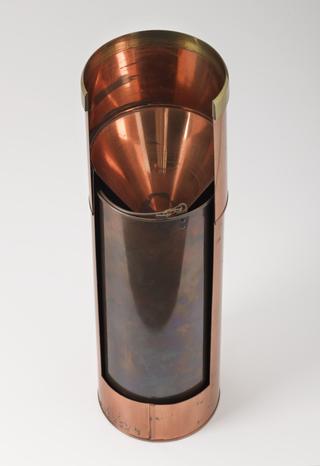
Rain gauge with five-inch diameter, of the type adopted in the 1860s by the British Rainfall Organisation and later the Meteorological Office, made in Britain, 1900s. The gauge consists of a copper funnel, an outer can and an internal collector. The rim is one foot off the ground to prevent in-splashing.

Standard five-inch rain gauge

1940-1950

Funnel for rain gauge with five-inch diameter, of the type adopted in the 1860s by the British Rainfall Organisation and later the Meteorological Office, made in Britain, 1900s. The gauge consists of a copper funnel, an outer can and an internal collector. The rim is one foot off the ground to prevent in-splashing.

Funnel for standard five-inch rain gauge

1940-1950

Dines tilting siphon rain gauge, Met Ref 562, 1997.

Dines tilting siphon rain gauge

1997

Hellman rain gauge, 1885, with small model.

Hellman rain gauge

1885

Glaisher type rain gauge, by Pastorelli, 1860

Glaisher type rain gauge, by Pastorelli, 1860

1860

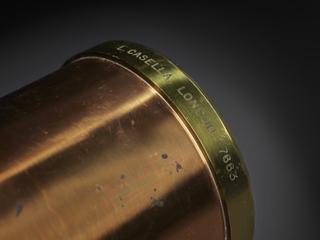
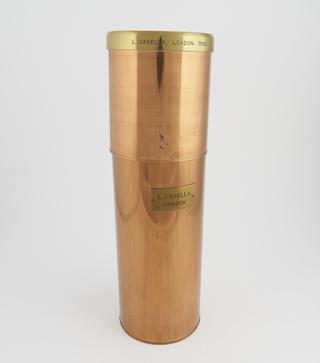
8-inch rain gauge with collecting can and measuring glass, by L. Casella, 1892.

8-inch rain gauge with collecting can and measuring glass

1892

Reproduction in plaster of an early Korean rain gauge (circa 1821) which is a copy of an older one of 1770 at the Korean observatory in Incheon (formerly known as Chemulpo). (see note)

Reproduction of early Korean rain gauge, 1821, with base

1911-1923

5 inch Snowdon rain gauge with funnel, can and cylinder (lacks measuring glass) by Negretti and Zambra.

5 Inch Snowdon Rain Gauge with Funnel

Watson rain gauge and evaporimeter, designed by John Dalton, c. 1845.

Watson rain gauge and evaporimeter

1845

Rain Gauge, copper and brass funnel & glass bottle with measuring cylinder and evaporating dish, supplied by Newton & Co., 3 Fleet Street, Temple Bar, London, 1860-1865

Rain gauge, 1860-1865

1860-1865

Rain gauge receiver jar, stoneware, by L. Casella, 1850, incorporated with 1893-130.

Rain gauge receiver jar

1850

Rain gauge square section and measuring glass cylinder, as used in Norway, second half of 19th century, Christiania, Norway

Rain gauge square section and measuring glass cylinder

1851