Skip to main content
Collection
Collection
Learning
The group
Visit us
Expand child menu
Locomotion
National Railway Museum
National Science and Media Museum
Science and Industry Museum
Science and Innovation Park
Science Museum
Collection
Search
About
Search
About
Collection
Learning
The group
Visit us
Expand child menu
Locomotion
National Railway Museum
National Science and Media Museum
Science and Industry Museum
Science and Innovation Park
Science Museum
Search our collection
All
9
People
0
Objects
9
Documents
0
View:
Filter search
Clear all filters
Image
Has Image
8
Non-Commercial Use
5
Category
Road Transport
8
Orthopaedics
1
Maker
Maker unknown
1
Nelco Ltd. (maker)
1
Waude and Co.
1
Object type
carriages
9
Place
London
1
Shalford
1
Material
leather
1
metal (unknown)
1
wood (unidentified)
1
Date
From year
To year
filter
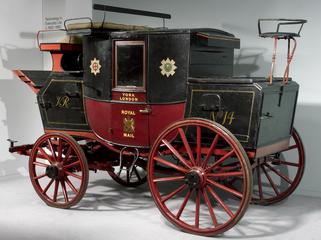
Royal Mail Coach
1815-1830
"Solocar" Electric Powered Invalid Carriage
1947
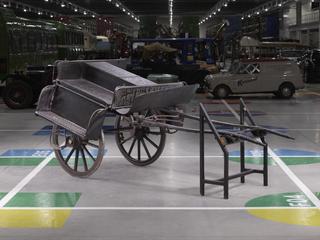
Irish Jaunting Carriage
1853
Early Child's Carriage
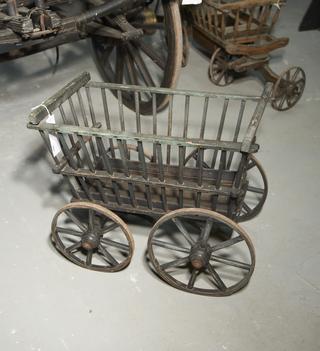
Georgian Child's Carriage
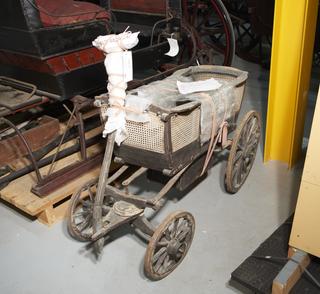
Four-Wheeled Child's Carriage
circa 1845
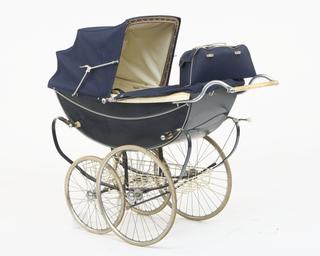
Marmet Queen Coachbuilt Baby Carriage
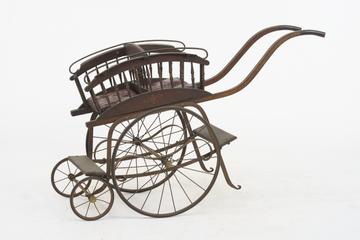
Child's carriage (or "go-cart"), c.1895
circa 1895
Britzska travelling carriage, c. 1820
Britzska travelling carriage, c. 1820
circa 1820