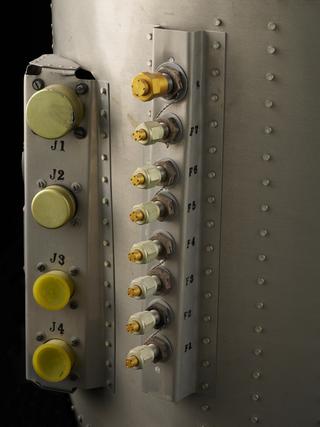
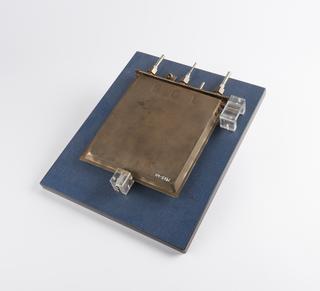
Apollo fuel cell power plant (plus container). This type of fuel cell provided electricity and water for astronauts during the Apollo missions. The fuel cells ran on hydrogen and oxygen. As long as there is a continuous supply of hydrogen and oxygen, then electricity and water are produced. This technology was essential to the space programme. Three fuel cells like this one were located in the Service Module (SM).The Command Module (CM) and SM were connected during the mission. The CM operations were reliant upon the SM's systems. Fuel cells were also used on NASA's Space Shuttle programme from 1981 - 2011. Frances Thomas Bacon, a British engineer from Cambridge, developed the fuel cell. His contribution to the Apollo programme earned him a personal thank you from US President Richard Nixon. Bacon continues to inspire engineers working on renewable energy sources today. Apollo fuel cell power plant 1972
Large hydrogen-oxygen fuel cell consisting of seven plates which have been 'exploded' to show the inner structure: 1) diaphragm of nickel-plated copper; 2) high-density polyethylene mesh; 3) electrode of microporous PVC silver plated and coated with supported platinum catalyst; 4) poly methyl meth acrylate alkaline electrolyte six normal potassium hydroxide; 5) electrode of microporous PVC silver plated and coated with supported platinum catalyst; 6) high-density polyethylene mesh; 7) outer current collector Large hydrogen-oxygen fuel cell 1965-1979
Hydrogen fuel cell used in the UK's first hydrogen train, HydroFLEX. A fuel cell is a device that takes in hydrogen fuel as a gas and combines this with oxygen from the air to generate electricity: it is an electrochemical reaction – there is no combustion. The only emissions are pure water & waste heat. The advantages versus an equivalent diesel generator are that it’s clean & quiet and the fuel can be generated from multiple sources, including zero carbon electricity. HydroFLEX, Hydrogen Fuel Cell 2021