Image
Category
Collection
Maker
Object type
Place
Material
Date
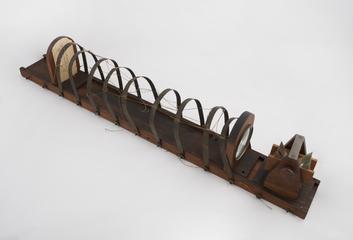
Spectroscope apparatus for Solar spectrum research

Spectroscope apparatus for Solar spectrum research

1839-1860

Rock salt prism used in pioneering work on the infra-red spectrum, 1920-1940

Rock salt prism used in pioneering work on the infra-red spectrum, 1920-1940

circa 1930

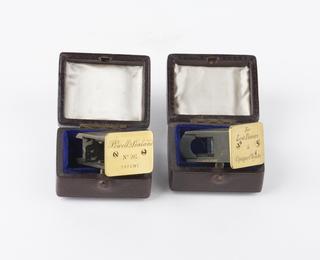
John Browning’s, 1875 'Popular' single prism student spectroscope, with case

John Browning’s, 1875 'Popular' single prism student spectroscope, with case

1875

Prism for AGA Thermovision 680

Prism for AGA Thermovision 680

1977

Prism of Thallium glass on wooden plinth

Prism of Thallium glass on wooden plinth

1865-1875

Microscope Prism

Microscope Prism

1900-1910

Hollow Prism of natural quartz with mounting lug on base

Hollow Prism of natural quartz with mounting lug on base

1900-1905

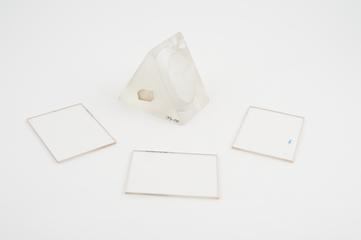
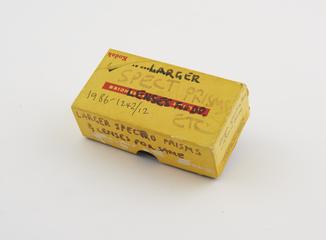
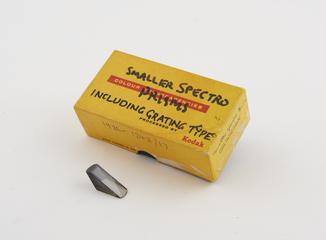
Spectro-prisms, used by Horace Dall

Spectro-prisms, used by Horace Dall

Spectro-prisms, used by Horace Dall

Spectro-prisms, used by Horace Dall

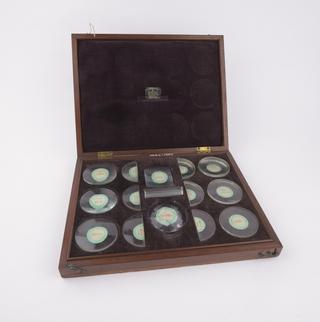
Lenses and prisms, boxed

Lenses and prisms, boxed

Centre separating prism for Barr and Stroud rangefinder

Centre separating prism for Barr and Stroud rangefinder

1920

Watson and Sons, Right Angle Prism

Watson and Sons, Right Angle Prism

Prism type LF 2349 optically polished by Barr and Stroud Ltd.

Prism type LF 2349 optically polished by Barr and Stroud Ltd.

1986

Fused Silica Prism by Adam Hilger Ltd.

Fused Silica Prism by Adam Hilger Ltd.

1900-1905

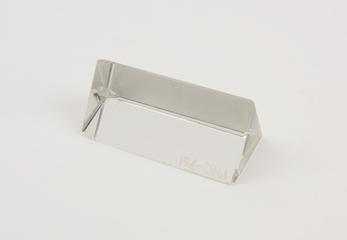
Equilateral prism

Equilateral prism

1900-1980

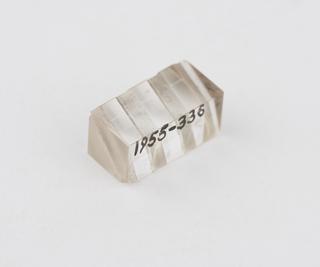
'Barred' type glass optical field-prism

'Barred' type glass optical field-prism

1920-1950

Equilateral prism

Equilateral prism

1900-1980

Potassium Bromide prism for IR wavelengths

Potassium Bromide prism for IR wavelengths

1945-1955

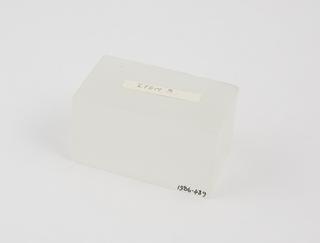
Rough ground blank for mfr. of prism type LF 2349

Rough ground blank for mfr. of prism type LF 2349

1986

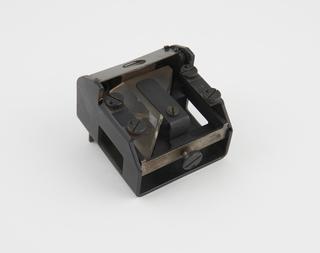
Model showing mounting method for glass roof prism

Model showing mounting method for glass roof prism

1920-1950

Model of the 'Porro' erecting system for binoculars

Model of the 'Porro' erecting system for binoculars

1930-1950

Two prism spectroscope by John Browning,1890

Two prism spectroscope by John Browning,1890

Binocular spectroscope apparatus, Dublin, 1874

Binocular spectroscope apparatus, Dublin, 1874

1874

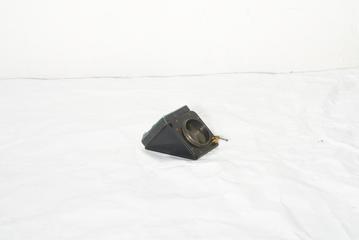
Brass prism holder, from spectroscopic microscope

Brass prism holder, from spectroscopic microscope

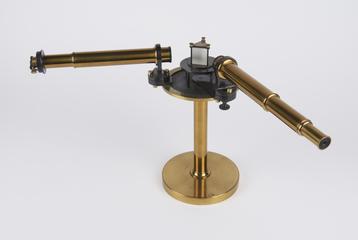
Solar spectroscope with stand by T. Cooke and Sons

Solar spectroscope with stand by T. Cooke and Sons

1881

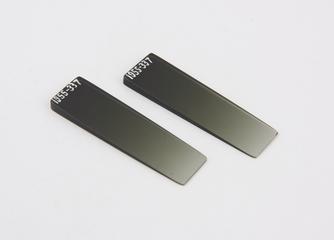
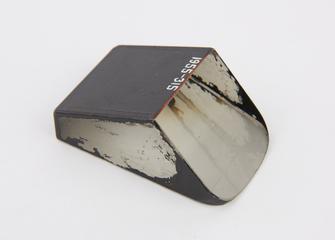
Wedge-shaped glass prism with variable density tint

Wedge-shaped glass prism with variable density tint

1930-1950

Fused Silica Prism (compound - 4 segments) by Adam Hilger Ltd.

Fused Silica Prism (compound - 4 segments) by Adam Hilger Ltd.

1900-1905

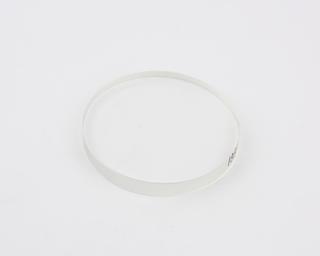
'Fresnel' type circular glass biprism

'Fresnel' type circular glass biprism

1920-1950

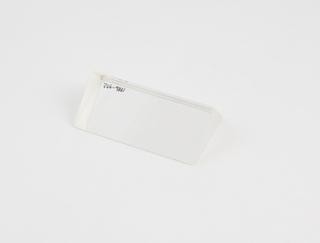
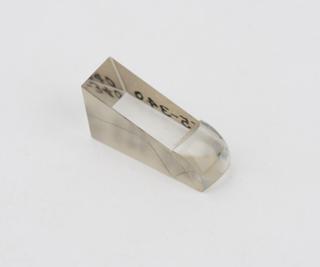
Small wedge-shaped glass prism

Small wedge-shaped glass prism

1920-1950

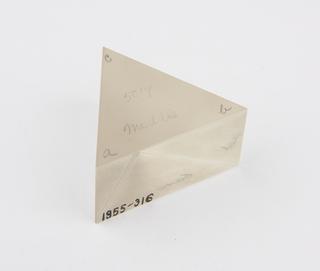
Glass triangular astrolable prism

Glass triangular astrolable prism

1930-1950

'Half-penta' type glass erecting prism

'Half-penta' type glass erecting prism

1920-1950

four-prism spectroscope (only two prisms present), by J. Duboscq of Paris, France, c. 1870. It was used by the third Marquis of Salisbury, British Prime Minister four times between 1885 and 1902, an enthusiastic amateur scientist.

Four-prism spectroscope

1865-1875

two-prism spectroscope, with accessories, in case (damaged), made by Browning, London, c.1890.

Two-prism spectroscope

1885-1895

Binocular spectroscope apparatus by Spencer and Son, Dublin, 1874. Two parallel spectroscopes each with a prism in wooden mount), in a wooden case. The spectroscope was taken by the Transit of Venus Expedition to the Cape of Good Hope in 1874-75. It is probably unique.

Binocular spectroscope apparatus with case

1874

Automatic spectroscope by G. and S. Merz (unsigned). Two micrometer slits in a mahogany box, drum of each divided into 100 parts. a) Sorby eyepiece in box by "A Hilger London", with position micrometer; 1 small screw missing, in mahogany box. Spectroscope is heavily constructed, height about 16", diam. of plate 12 1/2", 6 prisms, 3 eyepieces with washleather cover at eye end

Automatic spectroscope by G. and S. Merz (unsigned)

Calcite Prism, in case, by Adam Hilger Ltd., used by the late Col. J. W. Gifford, c. 1902

Calcite Prism

Equilateral prism, flint glass, by Ladd, London, c.1872

Equilateral prism

1872

Polished prism which forms part of a persicope sight, by Chance-Pilkington, St. Asaph,Clwyd, Wales, 1980.

Polished prism which forms part of a persicope sight

1980

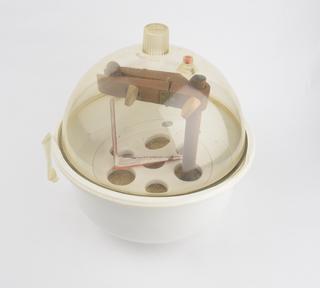
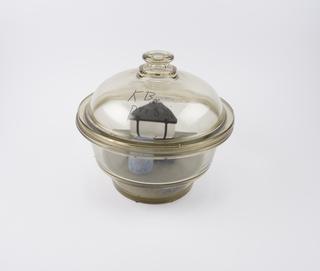
Two prisms for spectrometer: One rock salt, one potassium bromide, in glass dessicator with dessicant; prisms cut from single crystals, c.1960

Two prisms for spectrometer

right-handed quartz prism, by Adam Hilger Ltd., used by the late Col. J. W. Gifford with case.

right-handed quartz prism

Optically worked prism in borosilicate crown glass, by Chance-Pilkington, St. Asaph,Clwyd, Wales, 1980.

Optically worked prism in borosilicate crown glass

1980

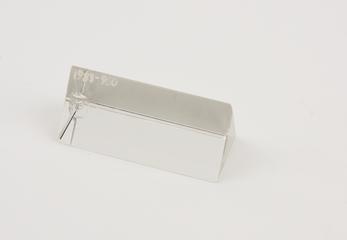
Uranium glass prism angle 60 degrees, length 84 mm, height 47.5 mm

Uranium glass prism angle 60 degrees

Wedge-shaped glass prism, one of two, with a neutral density tint increasing towards the thicker end, unsigned, European, 1930-1950.

Wedge-shaped glass prism with variable density tint

1930-1950

Complementary prisms of flint and crown glass

Complementary prisms of flint and crown glass

Quartz prism with lens in brass tube with brass diaphragm

Quartz prism with lens in brass tube with brass diaphragm

Triangular prism of dense glass; faces 1 1/4 inches square, refracting angle 60 degrees

Triangular prism of dense glass; faces 1 1/4 inches square

Brass astronomical spectroscope from Norman Lockyer Observatory with eleven prism train.

Brass astronomical spectroscope from Norman Lockyer Observatory with eleven prism train

1870-1890

Prismatic apparatus for photographic researches on the solar spectrum. Consists of 2 glass prisms in mount, large objective glass lens and long, hooped framework and vertical bracket for paper scale. Used by John Herschel in his investigations of the solar spectrum's affects on photosensitive material using a waterfilled prim (See note)

Spectroscope apparatus for Solar spectrum research

1839-1860

Complementary prisms of flint and crown glass

Complementary prisms of flint and crown glass

Abney's colour photometer with rotating sector apparatus, telescope with adjustable slit, focusing screen and lens, two pillars for prisms, by Adam Hilger, London, 1888 [Mounted on a new base in 1986 for display in the Optics Gallery.]

Abney's colour photometer with rotating sector apparatus

1888