Image
Category
Collection
Maker
Object type
Place
Material
Date
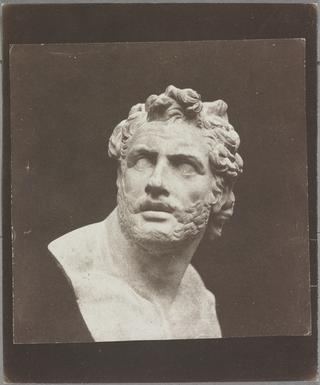
Bust of Patroclus

Bust of Patroclus

1841-1845

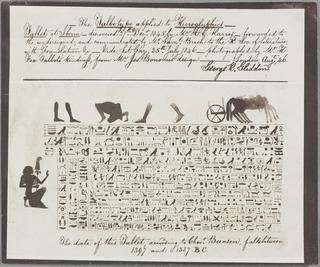
The Talbotype applied to Hieroglyphics, London

The Talbotype applied to Hieroglyphics, London

1846-08

The Reading Establishment Panorama (Right Half)

The Reading Establishment Panorama (Right Half)

1845-1847

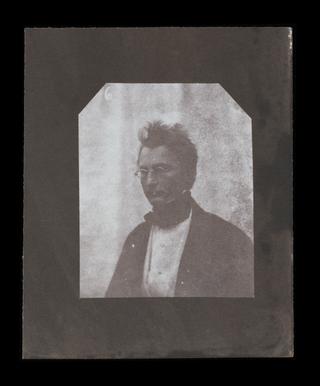
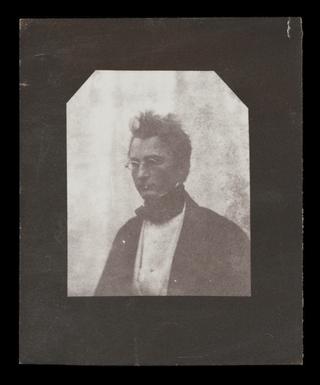
Man wearing spectacles in front of light background, photograph by William Henry Fox Talbot

Man wearing spectacles in front of light background, photograph by William Henry Fox Talbot

Salt print of a Cuneiform clay tablet

Salt print of a Cuneiform clay tablet

1854

Chess players

Chess players

circa 1844

Lady Elizabeth Feilding standing against a backdrop

Lady Elizabeth Feilding standing against a backdrop

8 April 1842

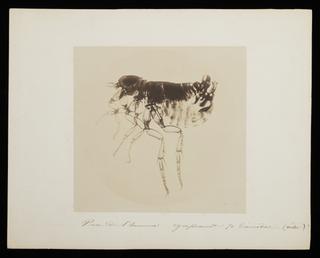
Puce de l'homme grossiment 50 diametres by A A Bertsch

Puce de l'homme grossiment 50 diametres by A A Bertsch

circa 1857

Pou de l'abeille domestique grossiment 300 diametres by A A Bertsch

Pou de l'abeille domestique grossiment 300 diametres by A A Bertsch

circa 1857

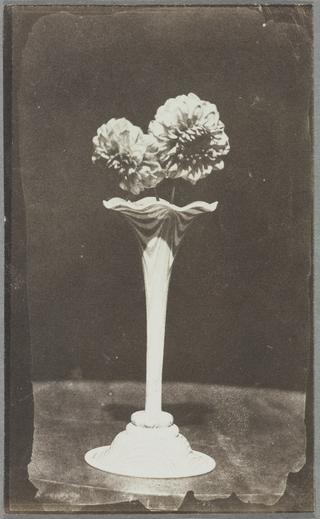
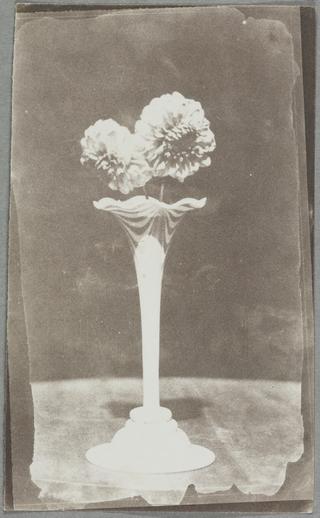
Paper salt print of two dahlias in a vase

Paper salt print of two dahlias in a vase

1840-1849

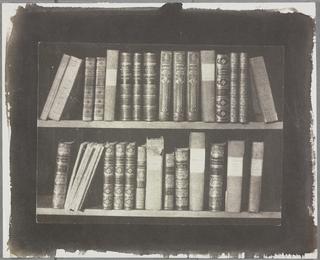
A scene in a library

A scene in a library

1841-1844

Pou de coq domestique grossiment 200 diametres by A A Bertsch

Pou de coq domestique grossiment 200 diametres by A A Bertsch

circa 1857

Paper salt print of a pineapple in a basket

Paper salt print of a pineapple in a basket

1840-1849

Bas relief, Adam and Eve (assigned)

Bas relief, Adam and Eve (assigned)

1841

Paper salt print of two dahlias in a vase

Paper salt print of two dahlias in a vase

1840-1849

salt print of a bookplate

salt print of a bookplate

1844

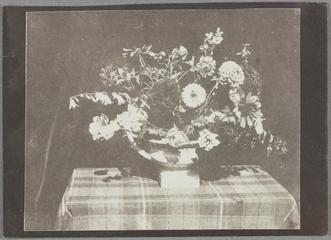
Paper salt print of a still life flower arrangement

Paper salt print of a still life flower arrangement

1840-1849

Man wearing spectacles in front of light background, photograph by William Henry Fox Talbot

Man wearing spectacles in front of light background, photograph by William Henry Fox Talbot

Bridge over the Rhine at Coblentz [Koblenz]

Bridge over the Rhine at Coblentz [Koblenz]

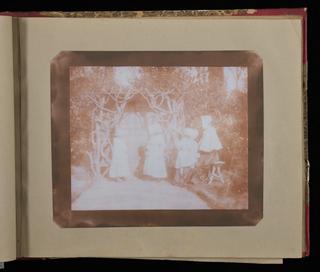
Constance Talbot with her daughters by a rustic gazebo by WHF Talbot

Constance Talbot with her daughters by a rustic gazebo by WHF Talbot

19 April 1842

Copy of a Drawing 'His Portrait, Pedro Orrente', by Tessin

Copy of a Drawing 'His Portrait, Pedro Orrente', by Tessin

1847-08-31

Salted paper print

Salted paper print

1825-1846

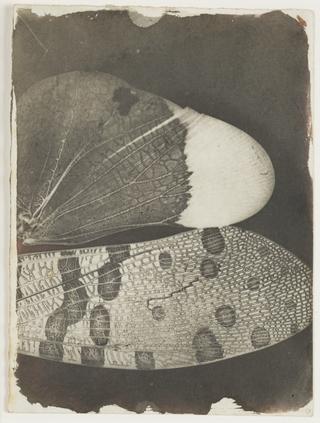
Wings of a lantern fly, as seen in a solar microscope

Wings of a lantern fly, as seen in a solar microscope

circa 1840

Salt Print of Church of Holy Trinity

Salt Print of Church of Holy Trinity

Salted paper print

Salted paper print

1844

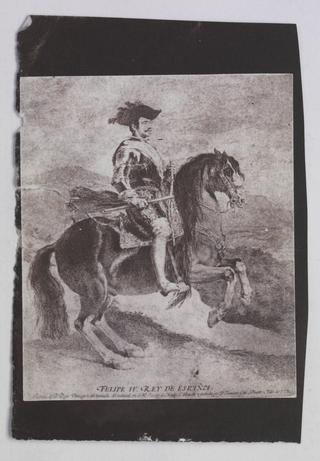
Diego Velasquez: Portrait of Philip IV'

Diego Velasquez: Portrait of Philip IV'

1847-08-31

Tête d'une larve de cousin, grossement 200 diametres by A A Bertsch

Tête d'une larve de cousin, grossement 200 diametres by A A Bertsch

circa 1857

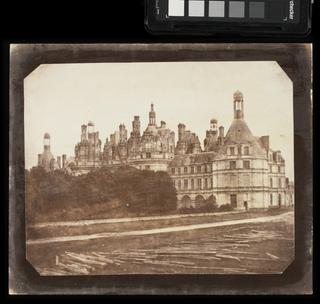
Le Château de Chambord, photograph by William Henry Fox Talbot

Le Château de Chambord, photograph by William Henry Fox Talbot

1843

A photograph of a young girl holding a doll, taken by John Dillwyn Llewelyn (1810-1882), in about 1856. The subject is possibly of Elinor, one of Llewelyn's six children. The central portrait is framed with a wreath of ferns. Llewelyn took a series of botanical daguerreotypes for Kew Gardens as early as 1842. A photographic pioneer, Llewelyn was related by marriage to William Henry Fox Talbot (1800-1877). He developed his own photographic process, the oxymel process, and was a founding member of the Photographic Society of London.

Elinor

circa 1856

Positive salt print from a calotype, hypo fixed, possibly by William Henry Fox Talbot, 1844, entitled 'Nelson's Column Under Construction, Trafalgar Square, London'.

Nelson's Column Under Construction, Trafalgar Square, London

1844

One of five salted paper prints by various photographers 1844-1852, exhibited at the Society of Arts Exhibition 1852. Victorian Britain witnessed a period of innnovation and industrial expansion. One of the greatest symbols of progress was the Great Exhibition of 1851. Photography was exhibited here to great acclaim begining a chain of events that led to the founding of the Photographic Society in 1853, later to become the Royal Photographic Society in 1894. Of particular importance to its success was the waving of patent rights by Talbot. This allowed Society members to pursue photography as an art and science without paying fees to its inventor. These five prints were probably assembled for display in the 1874 Special Loans Exhibition at the South Kensington Museum - part of which became the Science Museum around 1911. Some years later, Alexander Barclay, the Keeper of Chemistry, would travel to Lacock Abbey with the President of the Royal Photographic society, John Dudley Johnston. The purpose of this trip was to divide the contents of Talbot's estate between the RPS and the Science Museum. In 1983 the Science Museum's photographic collection moved to Bradford to form the new national museum, and now the RPS collection is set to join it, bringing together elements from their very different but shared histories.

Interior of the Great Exhibition, Crystal Palace

1851

Juan De Yciar: His Portrait (1550)', calotype photographed by Nicolaas Henneman about 1847. Caligrapher Juan de Iciar (c 1523 - died after 1570) or Yciar, also known by the nickname of 'El Vizcaino', is considered to be the first to use printing and engraving techniques in Spain. Plate 2 in 'Annals of the Artists of Spain', published by Sir William Sterling Maxwell (1818-1878) in 1848.

Juan De Yciar: His Portrait (1550)'

Microphotograph salt print entitled 'Antennes de la mouche volucelle grossissement 100 diametres', by Auguste Adolphe Bertsch, c. 1857. Antennae of a volucella fly magnified 100 times. Salt print.

Antennes de la mouche volucelle grossissement 100 diametres

circa 1857

One of five salted paper prints by various photographers 1844-1852, exhibited at the Society of Arts Exhibition 1852. Victorian Britain witnessed a period of innnovatiobn and industrial expansion. One of the greatest symbols of progress was the Great Exhibition of 1851. Photography was exhibited here to great aclaim begining a chain of events that led to the founding of the Photographic Society in 1853, later to becoome the Royal Photographic Society in 1894. Of particular importance to its succes was the waving of patent rights by Talbot. This allowed Society members to pursue photography as an art and science without paying fees to its inventor. These five prints were probably assembled for display in the 1874 Special Loans Exhibition at the South Kensington Museum - part of which became the Science Museum around 1911. Some years later, Alexander Barclay, the Keeper of Chemistry, would travel to Lacock Abbey with the President of the Royal Photographic society, John Dudley Johnston. The purpose of this trip was to divide the contents of Talbot's estate between the RPS and the Science Museum. In 1983 the Science Museum's photographic collection moved to Bradford to fom the new national museum, and now the RPS collection is set to join it, bringing together elements from their very different but shared histories.

Statues at the Great Exhibition

1851-06

One of five salted paper prints by various photographers 1844-1852, exhibited at the Society of Arts Exhibition 1852. Victorian Britain witnessed a period of innnovation and industrial expansion. One of the greatest symbols of progress was the Great Exhibition of 1851. Photography was exhibited here to great aclaim beginning a chain of events that led to the founding of the Photographic Society in 1853, later to becoome the Royal Photographic Society in 1894. Of particular importance to its success was the waving of patent rights by Talbot. This allowed Society members to pursue photography as an art and science without paying fees to its inventor. These five prints were probably assembled for display in the 1874 Special Loans Exhibition at the South Kensington Museum - part of which became the Science Museum around 1911. Some years later, Alexander Barclay, the Keeper of Chemistry, would travel to Lacock Abbey with the President of the Royal Photographic society, John Dudley Johnston. The purpose of this trip was to divide the contents of Talbot's estate between the RPS and the Science Museum. In 1983 the Science Museum's photographic collection moved to Bradford to form the new national museum, and now the RPS collection is set to join it, bringing together elements from their very different but shared histories.

Hall of the Great Exhibition

1851

Salt print photomicrograph of diatoms as seen through a solar microscope, by William Henry Fox Talbot, c 1840.

Photomicrograph of diatoms as seen through a solar microscope

circa 1840

A salt paper print photograph entitled 'Cuneiform Clay Tablet', taken by Roger Fenton, c. 1854.

Cuneiform Clay Tablet

circa 1854

Diego Velasquez: His wife, Juana Pacheco (from a lithograph)', calotype photographed by Nicolaas Henneman 31 August 1847. Print from trimmed negative. Plate 24 in 'Annals of the Artists of Spain', published by Sir William Sterling Maxwell (1818-1878) in 1848. Spainsh painter Diego Rodríguez de Silva y Velázquez (baptised 1599 - 1660) was a leading artist at the court of the Spainsh King Philip IV.

Diego Velasquez: His wife

1847-08-31

Positive salt print from a calotype negative, hypo fixed, by Talbot, William Henry Fox, salt print of a photomicrograph of insect wings.

Salt print of a photomicrograph of insect wings

1839-1840

Salt print entitled 'View of the Boulevards at Paris' by Talbot, William Henry Fox, May or June 1843

View of the Boulevards at Paris

May or June 1843

Salt print from a calotype negative entitled 'The Ladder', by William Henry Fox Talbot, April 1844. This print is Plate XIV from The Pencil of Nature. Published in part III, May 1845.

The Ladder

1844-04

Second of two calotype prints, Capuchin Monks, Valenta (Valletta?), Malta, Rev Richard Calvert Jones, 1846. 'No 8, Capucin Friars, Second View'.

Capuchin Friars, Valenta, Malta

1846

Calotype postiive, copy of 'The Virgin and Child', photographed by Nicolaas Henneman, about 1847.

Copy of a print 'The Virgin and Child'

Salt print from Calotype (paper negative) of the left hand side of a two part panorama of, ‘The Reading establishment’, photographed by William Henry Fox Talbot and Nicolaas Henneman in 1846

The Reading Establishment Panorama (Left Half)

1845-1847

Salt print entitled 'Square at Orleans' by talbot, William Henry Fox, c. 1843

Square at Orleans

circa 1843

Murillo: St Francis (from an etching by Murillo)', calotype photographed by Nicolaas Henneman 31 August 1847. Printed from trimmed negative. Plate 58 in 'Annals of the Artists of Spain', published by Sir William Sterling Maxwell (1818-1878) in 1848. Spanish artist Bartolomé Esteban Murillo (1617-1682).

Murillo: St Francis (from an etching by Murillo)'

1847-08-31

Salt print, 'Interior of the Colosseum, Rome', Calvert Richard Jones, 1846

Interior of the Colosseum, Rome

1846

Positive salt print from a calotype, hypo fixed, possibly by Talbot, William Henry Fox, Scotland, 1844

Sir Walter Scott's monument, Edinburgh, as it appeared when nearly finished (assigned)

1844

Salt print, 'Panorama of the Castel dell’Ovo, Naples', Calvert Richard Jones, 1846

Panorama of the Castel dell’Ovo, Naples

1846

Salt print photomicrograph of a botanical specimen, by William Henry Fox Talbot, 1840.

Photomicrograph of a Botanical Specimen

1840