Image
Category
Object type
Place
Material
Date
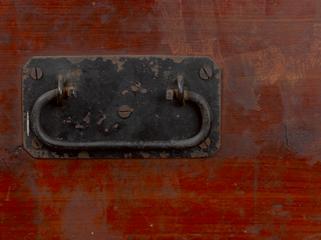
Wooden chest, "South Kensington Lecture Cabinet"

Wooden chest, "South Kensington Lecture Cabinet"

1895

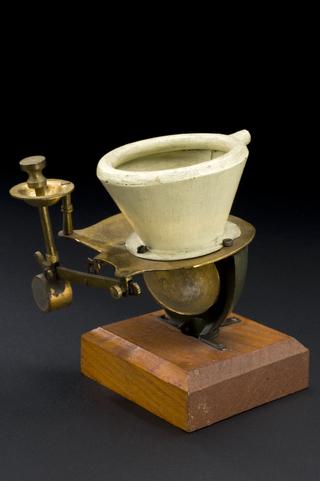
Model toilet cross section

Model toilet cross section

1895

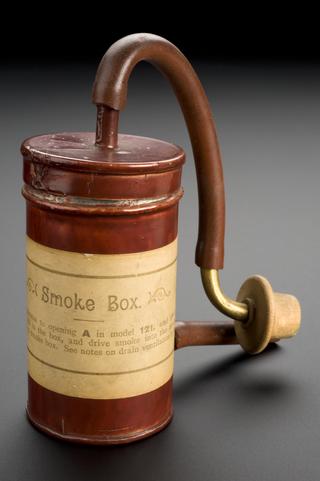
Model smokebox

Model smokebox

1895

Model pipe with funnel top

Model pipe with funnel top

1895

Model of hygienic sanitary appliance

Model of hygienic sanitary appliance

1895

Model of hygienic sanitary appliance

Model of hygienic sanitary appliance

1895

Model of toilet bowl section

Model of toilet bowl section

1895

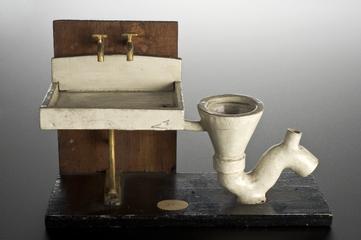
Model sink and drainage system

Model sink and drainage system

1895

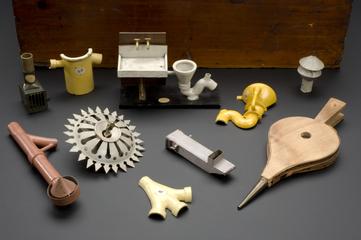
Collection of models of hygienic sanitary appliances

Collection of models of hygienic sanitary appliances

1895

Model soil stack vent and pipe

Model soil stack vent and pipe

1895

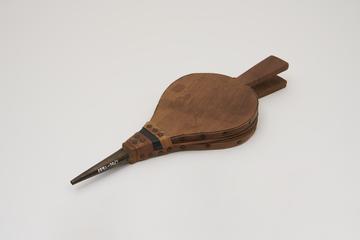
Model bellows

Model bellows

1895

Model label for ventilating cornice

Model label for ventilating cornice

1895

Model of hygienic sanitary appliance

Model of hygienic sanitary appliance

1895

Model of metal pipe passing through a block of wood, with sticker marked with the number 122. One of many models contained in a lidded wooden ‘Hygiene Cabinet’, one of a possible series of so-called ‘South Kensington Lecture Cabinets’, to be used for instruction and demonstration in the general principles of hygiene and sanitary science, designed by Charles Campbell, a member of the Sanitary Institute, London, c.1895.

Model of hygienic sanitary appliances

1895

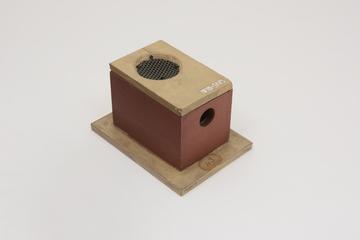
Wooden model of a vent with metal mesh, with sticker marked with the number 5. One of many models contained in a lidded wooden ‘Hygiene Cabinet’, one of a possible series of so-called ‘South Kensington Lecture Cabinets’, to be used for instruction and demonstration in the general principles of hygiene and sanitary science, designed by Charles Campbell, a member of the Sanitary Institute, London, c.1895.

Model vent

1895

Black painted metal model of a cross sction of a bucket. One of many models contained in a lidded wooden ‘Hygiene Cabinet’, one of a possible series of so-called ‘South Kensington Lecture Cabinets’, to be used for instruction and demonstration in the general principles of hygiene and sanitary science, designed by Charles Campbell, a member of the Sanitary Institute, London, c.1895.

Model bucket cross section

1895

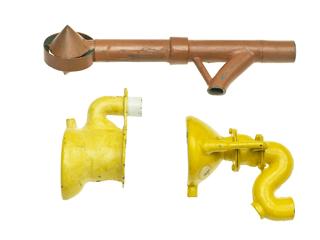
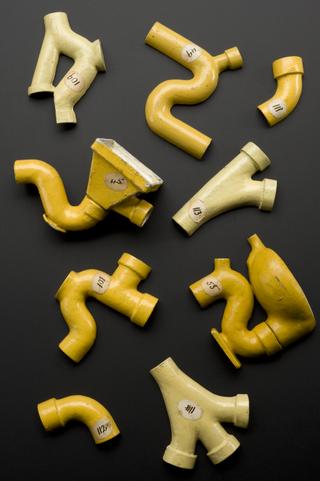
Yellow painted metal model of cross section of 's' shaped piping, with sticker marked with the number 49. One of many models contained in a lidded wooden ‘Hygiene Cabinet’, one of a possible series of so-called ‘South Kensington Lecture Cabinets’, to be used for instruction and demonstration in the general principles of hygiene and sanitary science, designed by Charles Campbell, a member of the Sanitary Institute, London, c.1895.

Model pipe cross section

1895

Yellow painted metal model of a cross section of pipes feeding into a cistern, with sticker marked with the number 48. One of many models contained in a lidded wooden ‘Hygiene Cabinet’, one of a possible series of so-called ‘South Kensington Lecture Cabinets’, to be used for instruction and demonstration in the general principles of hygiene and sanitary science, designed by Charles Campbell, a member of the Sanitary Institute, London, c.1895.

Model of pipes feeding into cistern

1895

Cream painted metal model of a cross section of a cistern, with sticker marked with the number 44. One of many models contained in a lidded wooden ‘Hygiene Cabinet’, one of a possible series of so-called ‘South Kensington Lecture Cabinets’, to be used for instruction and demonstration in the general principles of hygiene and sanitary science, designed by Charles Campbell, a member of the Sanitary Institute, London, c.1895.

Model of cistern cross section

1895

Yellow painted model of a cross section of a pipe, with sticker marked with the number 112. One of many models contained in a lidded wooden ‘Hygiene Cabinet’, one of a possible series of so-called ‘South Kensington Lecture Cabinets’, to be used for instruction and demonstration in the general principles of hygiene and sanitary science, designed by Charles Campbell, a member of the Sanitary Institute, London, c.1895.

Model pipe cross section

1895

Wooden box lid, held in a wooden ‘Hygiene Cabinet’, one of a possible series of so-called ‘South Kensington Lecture Cabinets’, to be used for instruction and demonstration in the general principles of hygiene and sanitary science, designed by Charles Campbell, a member of the Sanitary Institute, London, c.1895.

Box lid

1895

Grey painted metal model of cross section of pipe going into a cistern, with sticker marked with the number 47. One of many models contained in a lidded wooden ‘Hygiene Cabinet’, one of a possible series of so-called ‘South Kensington Lecture Cabinets’, to be used for instruction and demonstration in the general principles of hygiene and sanitary science, designed by Charles Campbell, a member of the Sanitary Institute, London, c.1895.

Model pipe connected to cistern, cross section

1895

Wooden object that looks like a bottle stop, with a base made of cork. One of many objects contained in a lidded wooden ‘Hygiene Cabinet’, one of a possible series of so-called ‘South Kensington Lecture Cabinets’, to be used for instruction and demonstration in the general principles of hygiene and sanitary science, designed by Charles Campbell, a member of the Sanitary Institute, London, c.1895.

Model of hygienic sanitary appliance

1895

Green and grey painted metal model of a vent, with sticker marked with the number 22. One of many models contained in a lidded wooden ‘Hygiene Cabinet’, one of a possible series of so-called ‘South Kensington Lecture Cabinets’, to be used for instruction and demonstration in the general principles of hygiene and sanitary science, designed by Charles Campbell, a member of the Sanitary Institute, London, c.1895.

Model vent

1895

Wooden model with 8 engraved lines on the base, 2 holes on the top and 2 holes on the sides. One of many models contained in a lidded wooden ‘Hygiene Cabinet’, one of a possible series of so-called ‘South Kensington Lecture Cabinets’, to be used for instruction and demonstration in the general principles of hygiene and sanitary science, designed by Charles Campbell, a member of the Sanitary Institute, London, c.1895.

Model of hygienic sanitary appliance

1895

Cream painted metal model of a junction pipe, with sticker marked in ink with the number 105, crossed out and replaced by 106 in pencil. One of many models contained in a lidded wooden ‘Hygiene Cabinet’, one of a possible series of so-called ‘South Kensington Lecture Cabinets’, to be used for instruction and demonstration in the general principles of hygiene and sanitary science, designed by Charles Campbell, a member of the Sanitary Institute, London, c.1895.

Model pipe

1895

Black painted metal model of a cross section of a vent. One of many models contained in a lidded wooden ‘Hygiene Cabinet’, one of a possible series of so-called ‘South Kensington Lecture Cabinets’, to be used for instruction and demonstration in the general principles of hygiene and sanitary science, designed by Charles Campbell, a member of the Sanitary Institute, London, c.1895.

Model vent cross section

1895

Khaki green painted metal circle, possibly part of a larger object. One of many items contained in a lidded wooden ‘Hygiene Cabinet’, one of a possible series of so-called ‘South Kensington Lecture Cabinets’, to be used for instruction and demonstration in the general principles of hygiene and sanitary science, designed by Charles Campbell, a member of the Sanitary Institute, London, c.1895.

Model of hygienic sanitary appliance

1895

Grey painted metal model of an 's' shaped pipe with a small brass coloured cyclinder at the bottom, with sticker marked with the number 42. One of many models contained in a lidded wooden ‘Hygiene Cabinet’, one of a possible series of so-called ‘South Kensington Lecture Cabinets’, to be used for instruction and demonstration in the general principles of hygiene and sanitary science, designed by Charles Campbell, a member of the Sanitary Institute, London, c.1895.

Model 's' shaped pipe

1895

Arch-shaped metal object, painted cream, metal model of an arch. One of many models contained in a lidded wooden ‘Hygiene Cabinet’, one of a possible series of so-called ‘South Kensington Lecture Cabinets’, to be used for instruction and demonstration in the general principles of hygiene and sanitary science, designed by Charles Campbell, a member of the Sanitary Institute, London, c.1895.

Model arch

1895

Bronze coloured metal model of a grate with 6 openings. One of many models contained in a lidded wooden ‘Hygiene Cabinet’, one of a possible series of so-called ‘South Kensington Lecture Cabinets’, to be used for instruction and demonstration in the general principles of hygiene and sanitary science, designed by Charles Campbell, a member of the Sanitary Institute, London, c.1895.

Model grate

1895

Black wooden block with hole in one end, one of many models contained in a lidded wooden ‘Hygiene Cabinet’, one of a possible series of so-called ‘South Kensington Lecture Cabinets’, to be used for instruction and demonstration in the general principles of hygiene and sanitary science, designed by Charles Campbell, a member of the Sanitary Institute, London, c.1895.

Wooden block from hygiene instruction cabinet

1895

Wooden box base, part of a ‘Hygiene Cabinet’, one of a possible series of so-called ‘South Kensington Lecture Cabinets’, to be used for instruction and demonstration in the general principles of hygiene and sanitary science, designed by Charles Campbell, a member of the Sanitary Institute, London, c.1895.

Box base

1895

Beige coloured metal model of a funnel, with a tube feeding into the side, with a sticker marked with the number 57. One of many models contained in a lidded wooden ‘Hygiene Cabinet’, one of a possible series of so-called ‘South Kensington Lecture Cabinets’, to be used for instruction and demonstration in the general principles of hygiene and sanitary science, designed by Charles Campbell, a member of the Sanitary Institute, London, c.1895.

Model of a funnel

1895

Green painted metal model of a vent-like structure with two flaps, pencil marked with the number 21. One of many models contained in a lidded wooden ‘Hygiene Cabinet’, one of a possible series of so-called ‘South Kensington Lecture Cabinets’, to be used for instruction and demonstration in the general principles of hygiene and sanitary science, designed by Charles Campbell, a member of the Sanitary Institute, London, c.1895.

Model of hygienic sanitary appliance

1895

Green painted metal model of a vent-like structure, with a flap behind the grate, with sticker marked with the number 6. One of many models contained in a lidded wooden ‘Hygiene Cabinet’, one of a possible series of so-called ‘South Kensington Lecture Cabinets’, to be used for instruction and demonstration in the general principles of hygiene and sanitary science, designed by Charles Campbell, a member of the Sanitary Institute, London, c.1895.

Model of hygienic sanitary appliance

1895

Cream yellow painted metal model of a cross-section of a three-way junction pipe, with a sticker marked with the number 114. One of many models contained in a lidded wooden ‘Hygiene Cabinet’, one of a possible series of so-called ‘South Kensington Lecture Cabinets’, to be used for instruction and demonstration in the general principles of hygiene and sanitary science, designed by Charles Campbell, a member of the Sanitary Institute, London, c.1895.

Model three-way pipe

1895

Purple, grey and green painted metal model of rectangular shaped chimney, with sticker marked with the number 1. One of many models contained in a lidded wooden ‘Hygiene Cabinet’, one of a possible series of so-called ‘South Kensington Lecture Cabinets’, to be used for instruction and demonstration in the general principles of hygiene and sanitary science, designed by Charles Campbell, a member of the Sanitary Institute, London, c.1895.

Model metal chimney

1895

Green painted metal model of a chimney-like structure, with sticker marked with the number 256. One of many models contained in a lidded wooden ‘Hygiene Cabinet’, one of a possible series of so-called ‘South Kensington Lecture Cabinets’, to be used for instruction and demonstration in the general principles of hygiene and sanitary science, designed by Charles Campbell, a member of the Sanitary Institute, London, c.1895.

Model of hygienic sanitary appliance

1895

White painted metal model of a chimney-like structure with a spike on top. One of many models contained in a lidded wooden ‘Hygiene Cabinet’, one of a possible series of so-called ‘South Kensington Lecture Cabinets’, to be used for instruction and demonstration in the general principles of hygiene and sanitary science, designed by Charles Campbell, a member of the Sanitary Institute, London, c.1895.

Model chimney

1895

Model of green chimney like structure, made of metal, marked in pencil with the number 24. One of many models contained in a lidded wooden ‘Hygiene Cabinet’, one of a possible series of so-called ‘South Kensington Lecture Cabinets’, to be used for instruction and demonstration in the general principles of hygiene and sanitary science, designed by Charles Campbell, a member of the Sanitary Institute, London, c.1895.

Model of hygienic sanitary appliance

1895

Black painted metal model of a cross section of pipe, with sticker marked with the number 46. One of many models contained in a lidded wooden ‘Hygiene Cabinet’, one of a possible series of so-called ‘South Kensington Lecture Cabinets’, to be used for instruction and demonstration in the general principles of hygiene and sanitary science, designed by Charles Campbell, a member of the Sanitary Institute, London, c.1895.

Model pipe cross section

1895

Beige painted metal model of a junction pipe, with sticker,marked in ink with the number 106, crossed out and replaced in pencil by the number 107. One of many models contained in a lidded wooden ‘Hygiene Cabinet’, one of a possible series of so-called ‘South Kensington Lecture Cabinets’, to be used for instruction and demonstration in the general principles of hygiene and sanitary science, designed by Charles Campbell, a member of the Sanitary Institute, London, c.1895.

Model pipe with two heads

1895

Cream coloured painted metal model of a pipe, with paper sticker marked in ink with the number 108, crossed out and replaced by 105 written in pencil. One of many models contained in a lidded wooden ‘Hygiene Cabinet’, one of a possible series of so-called ‘South Kensington Lecture Cabinets’, to be used for instruction and demonstration in the general principles of hygiene and sanitary science, designed by Charles Campbell, a member of the Sanitary Institute, London, c.1895.

Model pipe

1895

Green painted metal model of a chimney-like structure, damaged into pieces, with sticker marked with the number 25. One of many models contained in a lidded wooden ‘Hygiene Cabinet’, one of a possible series of so-called ‘South Kensington Lecture Cabinets’, to be used for instruction and demonstration in the general principles of hygiene and sanitary science, designed by Charles Campbell, a member of the Sanitary Institute, London, c.1895.

Model of hygienic sanitary appliance

1895

Khaki green painted model of a funnel-like pipe., with sticker marked with the number 41. One of many models contained in a lidded wooden ‘Hygiene Cabinet’, one of a possible series of so-called ‘South Kensington Lecture Cabinets’, to be used for instruction and demonstration in the general principles of hygiene and sanitary science, designed by Charles Campbell, a member of the Sanitary Institute, London, c.1895.

Model pipe with funnel top

1895

Wooden tray with two leather handles and faded pink card insert. Part of a lidded wooden ‘Hygiene Cabinet’, one of a possible series of so-called ‘South Kensington Lecture Cabinets’, to be used for instruction and demonstration in the general principles of hygiene and sanitary science, designed by Charles Campbell, a member of the Sanitary Institute, London, c.1895.

Wooden tray from hygiene instruction cabinet

1895

Yellow and cream painted metal model of a cross section of a junction pipe, lower case 'r' shaped, with sticker marked with the number 115. One of many models contained in a lidded wooden ‘Hygiene Cabinet’, one of a possible series of so-called ‘South Kensington Lecture Cabinets’, to be used for instruction and demonstration in the general principles of hygiene and sanitary science, designed by Charles Campbell, a member of the Sanitary Institute, London, c.1895.

Model 'r' shaped pipe cross section

1895

Cream painted metal square shape with central whole, with sticker marked with the number 123. One of many models contained in a lidded wooden ‘Hygiene Cabinet’, one of a possible series of so-called ‘South Kensington Lecture Cabinets’, to be used for instruction and demonstration in the general principles of hygiene and sanitary science, designed by Charles Campbell, a member of the Sanitary Institute, London, c.1895.

Model of hygienic sanitary appliance

1895

Cream painted metal model of a cross section of connected pipes, with sticker marked with the number 109. One of many models contained in a lidded wooden ‘Hygiene Cabinet’, one of a possible series of so-called ‘South Kensington Lecture Cabinets’, to be used for instruction and demonstration in the general principles of hygiene and sanitary science, designed by Charles Campbell, a member of the Sanitary Institute, London, c.1895.

Model pipes cross section

1895