Image
Category
Collection
Maker
Object type
Place
Material
Date
Artificial mercury horizon.

Artificial mercury horizon.

1860-1869

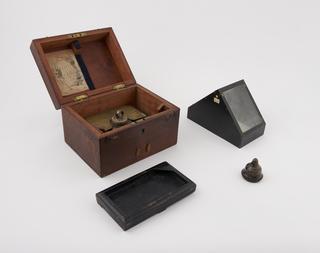
Artificial mercury horizon in case.

Artificial mercury horizon in case.

1860-1870

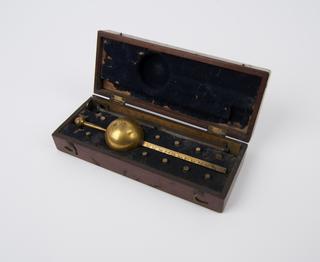
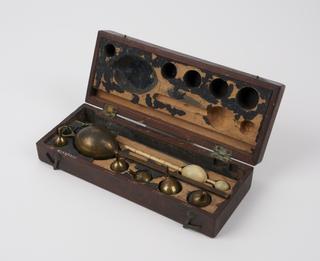
Sikes hydrometer, cased, by Loftus of London

Sikes hydrometer, cased, by Loftus of London

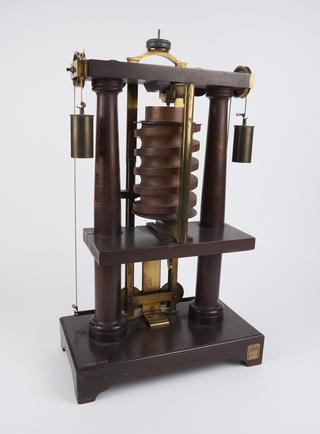
Apparatus to demonstrate the mechanical advantage of a screw

Apparatus to demonstrate the mechanical advantage of a screw

1808-1847

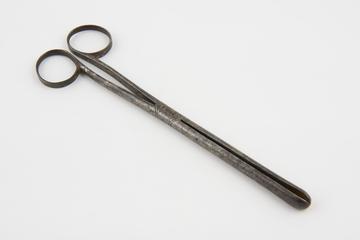
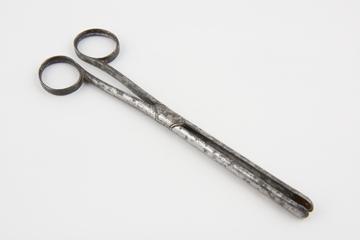
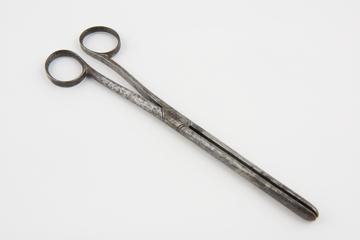
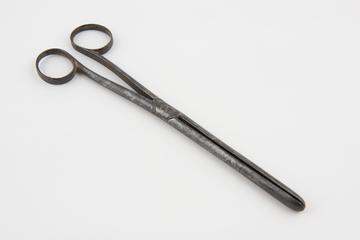
Bullet forceps

Bullet forceps

1748-1856

Double reflecting circle.

Double reflecting circle.

1850-1869

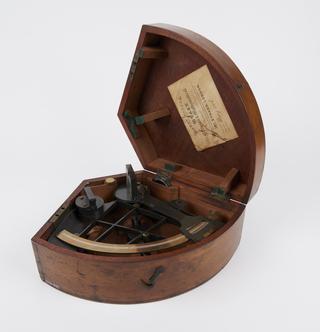
Brass framed sounding quintant.

Brass framed sounding quintant.

1855-1865

Bullet forceps by W. Pepys of Poultry

Bullet forceps by W. Pepys of Poultry

1748-1856

Two hygrometers in a wooden case

Two hygrometers in a wooden case

Brass scarificator with 16 lancets

Brass scarificator with 16 lancets

1770-1856

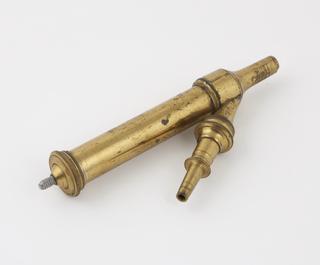
Enema syringe by Pepys and Co.

Enema syringe by Pepys and Co.

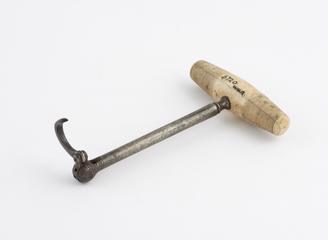
Dental key with swivelling claw

Dental key with swivelling claw

1820-1856

Bullet forceps

Bullet forceps

1748-1856

Case for reflecting circle.

Case for reflecting circle.

1845-1852

Lancet, steel, in tortoiseshell sheath

Lancet, steel, in tortoiseshell sheath

1840-1863

Bullet forceps

Bullet forceps

1748-1856

Reflecting circle, 8-inch diameter

Reflecting circle, 8-inch diameter

1845-1852

Pocket Box Sextant, 1830-1869

Pocket Box Sextant, 1830-1869

1855-1865

Sikes hydrometer in case, by R.B. Bate, London

Sikes hydrometer in case, by R.B. Bate, London

Bullet forceps

Bullet forceps

1748-1856

Repeating circle (Borda circle) made by George Dollond, London, abut 1850. Circular anodized brass frame, polished limb, a wooden handle; a detached U-shaped bracket holds a second handle. Signed on the bottom of the index arm: Dollond | London. Inlaid silver scale from 0° to 720° every 20' (the digits are engraved in brass). Two silver verniers to 20", zeros at the centres. The second scale is to 180° every 5° on either side of 0°, engraved in brass. The index arm carries the index glass; the tangent screw, working against a spring-loaded stop, and the clamping screw are on the back of the index arm. Three index arms, moving with a brass scale and the second vernier on the inside of the limb; they carry the telescope and the horizon glass. One arm has a tangent screw, working against a spring-loaded stop, and a clamping screw on the back of the arm. Index-glass adjustment by a screw; adjustment of the horizon glass by screw and capstan screw. Three index shades (two red, one green); three horizon shades (two red, one green). Two magnifiers on 65 mm swivelling arms. Threaded telescope bracket with perpendicular adjustment by rising-piece and a milled knob. Telescope (96 mm) erect image; telescope (158 mm) inverted image, four cross-wires; extra draw tube ( 50 mm) inverted image, four cross-wires; extra draw tube (48 mm) inverted image, four cross-wires. Sight tube 84 mm); shaded eyepiece (red). Square fitted mahogany box containing in the lid a trade label for J.D. Potter, 31 Poultry, London.

Borda type repeating circle with case.

1845-1852

Surveyor's pocket box sextant with leather case, made by John Dennett Potter, Poultry, City of London, London, England, 1855-1865. Consists of two circular lacquered brass plates with lid that acts as a handle when used. Fitted with Inlaid silver 134° scale (-5° to 160°) with 30' divisions and a silver vernier (1' div.). The index arm is rotated by a milled knob on the upper plate with two filter shades (red & green) operated by lever. The index glass is fixed with adjustment for the horizon glass. Fitted with magnifier (single lens) on hinged 40 mm swivel arm and choice of a large and a small pinhole sight but telescope missing. Marked ‘H O’ the property mark of the Hydrographic Office of the British Admiralty.

Box type pocket sextant with case.

1855-1865

Automatic scarificator with 16 blades set in three ranks, by W. Pepys

Automatic scarificator with 16 blades set in three ranks

Leather case for surveyor's pocket box sextant made by John Dennett Potter, Poultry, City of London, London, England, 1855-1865.

Case for pocket sextant.

1855-1865

Quintant made by John Dennett Potter, London, about 1885. Anodized brass diamond-pattern frame, wooden handle. Signed on the limb: J.D. Potter; Poultry & Tower Hill London. Marked at the bottom of the index arm: H O [broad arrow] 10. Inlaid silver scale from -5° to 163° every 10', measuring to 138°. Silver vernier to 10". The tangent screw and clamping screw are on the back of the index arm. Four shades (three grey, one green); three horizon shades (two grey, one green). Index-glass adjustment by screw; adjustment of the horizon glass by capstan screws and a square-headed screw and a detached key. Magnifier on a 90 mm swivelling arm, a frosted glass shade. Threaded telescope bracket in two parts, fitted for correcting collimation error; perpendicular adjustment by rising-piece and a milled knob. Telescope (82 mm) erect image; telescope (184 mm) inverted image, two parallel cross-wires; telescope (155 mm) star finder; extra draw tube (80 mm) inverted image, four cross-wires. Sight-tube (80 mm); three shaded eyepieces (all green); detached threaded telescope bracket for the star finder; adjusting key; adjusting pin. Mahogany keystone box, containing in the lid three certificates of examination of the National Physical Laboratory, for 1885, [illegible, stuck over] and for 1910. The lid also contains a trade label for Cary, Porter Ltd, and a Notice by them explaining how the star finder should be attached to the framed; it was an addition, made by Cary in April 1889. Formerly the property of the Hydrographic Office of the British Admiralty.

Diamond- pattern frame quintant with case.

1860-1889

Three lead discs, from apparatus to demonstrate the mechanical advantage of a screw, by Robert Brettell Bate, Poultry, City of London, England, 1808-1847

Three lead discs

1808-1847