Image
Category
Collection
On Display
Object type
Material
Maker
Place
Date
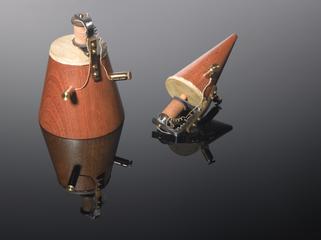
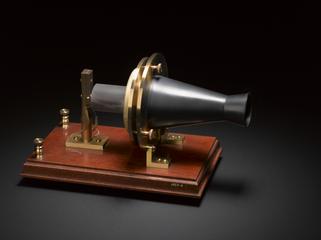
Replica of Bell's 1876 centennial telephone transmitter, 1959

Replica of Bell's 1876 centennial telephone transmitter, 1959

1959

Knochenhauer spirals, 1963

Knochenhauer spirals, 1963

1963

Replicas of Alexander Graham Bell's 1879 'Patent Office' telephone, 1959

Replicas of Alexander Graham Bell's 1879 'Patent Office' telephone, 1959

1959

Replicas of Alexander Graham Bell's 1879 'Patent Office' telephone, 1959

Replicas of Alexander Graham Bell's 1879 'Patent Office' telephone, 1959

1959

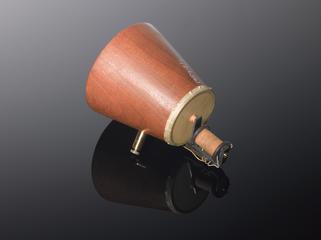
Replica of Bell's 1876 'iron-box' receiver, 1959

Replica of Bell's 1876 'iron-box' receiver, 1959

1876

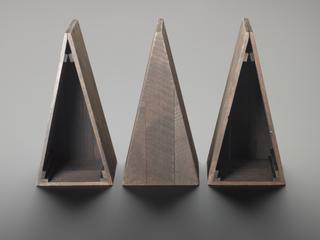
Models of three wooden prisms used by Heinrich Hertz, 1949

Models of three wooden prisms used by Heinrich Hertz, 1949

1949

Model of open oscillator with spherical radiators used by Heinrich Hertz, 1949

Model of open oscillator with spherical radiators used by Heinrich Hertz, 1949

1949

Model of wire screen in octagonal frame used by Heinrich Hertz, 1949

Model of wire screen in octagonal frame used by Heinrich Hertz, 1949

1949

Models of two parabolic zinc reflectors used by Heinrich Hertz, 1949

Models of two parabolic zinc reflectors used by Heinrich Hertz, 1949

1949

Model of plane zinc reflector used by Heinrich Hertz, 1949

Model of plane zinc reflector used by Heinrich Hertz, 1949

1949

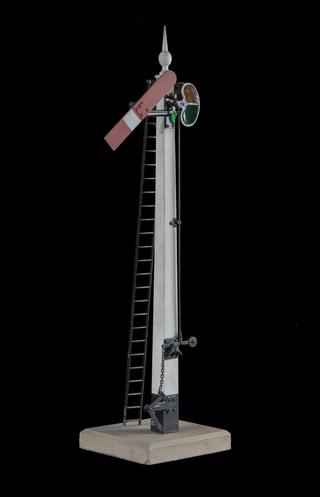
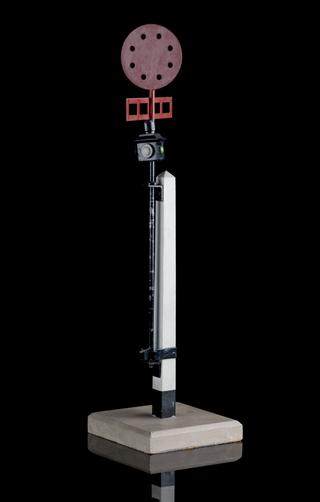
Model Great Northern Railway Centre-pivot Semaphore Signal

Model Great Northern Railway Centre-pivot Semaphore Signal

c.1912

Model of Brunel's Disc and Crossbar Signal

Model of Brunel's Disc and Crossbar Signal

c.1912

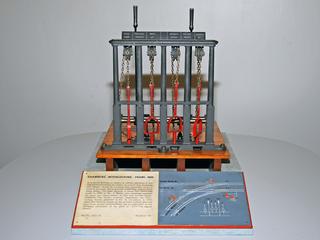
Model of Chambers' Signal Interlocking Frame

Model of Chambers' Signal Interlocking Frame

c.1912

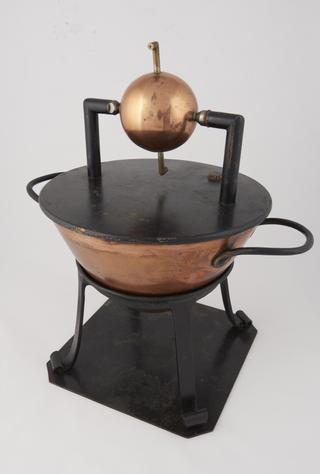
Working model of Hero's Aeolipile

Working model of Hero's Aeolipile

100-1 BCE; 1501-1600; 1914

Replica of Soemmerring's telegraph of 1809-12, 1964

Replica of Soemmerring's telegraph of 1809-12, 1964

1964

Digital copy of Rastrick, John Urpeth: Common Place Book. [Shropshire] [1803?-1809].

Digital copy of Rastrick, John Urpeth: Common Place Book. [Shropshire] [1803?-1809].

digital copy 2015; original [1803?-1809].
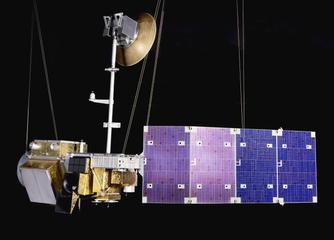
Model of Landsat 5 satellite, 1986

Model of Landsat 5 satellite, 1986

1986

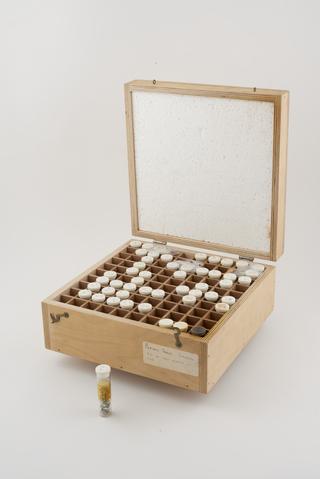
Wooden box containing various elements

Wooden box containing various elements

1960-1990

Replicas of Alexander Graham Bell's 1879 'Patent Office' telephones, 1959

Replicas of Alexander Graham Bell's 1879 'Patent Office' telephones, 1959

1959

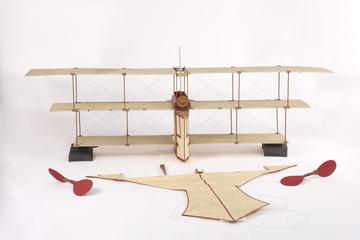
Model Stringfellow's triplane, 1868.

Model Stringfellow's triplane, 1868.

1933

Seven 1/4 scale models of apparatus used by Heinrich Hertz, 1949

Seven 1/4 scale models of apparatus used by Heinrich Hertz, 1949

1949

Copy of 1866 Dallmeyer collodion carte-de-visite camera. Stand also replica. Made by Science Museum workshops. NOTE ScM Inv.No.1920-613 used with Shepherd lens, PHL1456.

Replica of 1866 Dallmeyer carte-de-visite camera

1983 (replica); 1866 (original)

Voltaic pile from replica of Soemmerring's telegraph of 1809-12, made by the Science Museum Workshops, South Kensington, London, England, 1964

Voltaic pile from replica of Soemmerring's telegraph of 1809-12, 1964

1964

Transmitter and indicator (?) from replica of Soemmerring's telegraph of 1809-12, made by Science Museum Workshops, South Kensington, London, England, 1964

Transmitter and indicator from replica of Soemmerring's telegraph of 1809-12, 1964

1964

Sail for 1:6 scale model of Landsat 5 satellite, made by Science Museum workshops, South Kensington, London, England, 1986. Original satellite made by NASA, United States, 1983

Sail for Model of Landsat 5 satellite, 1986

1986

Disk and support for 1:6 scale model of Landsat 5 satellite, made in Science Museum workshops, South Kensington, London, England, 1986. Original satellite made by NASA, United States, 1983

Disk and support for model of Landsat 5 satellite, 1984.

1986

Main body of 1:6 scale model of Landsat 5 satellite, made by Science Museum workshops, South Kensington, London, England, 1986. Original satellite made by NASA, United States, 1983

Main body of model of Landsat 5 satellite, 1986

1986

Model signals, scale 1:16, Great Eastern Railway, home and distant signals.

Model Home and Distant Signals, Great Eastern Railway

c.1913

Reproduction model of Stringfellow's model triplane of 1868

Model Stringfellow's triplane, 1868.

1933

Replica film holder for Lumiere Cinematographe (1975-91). Made by Science Museum about 1970.

Replica Film Holder for Lumiere Cinematographe

1965-1975

Coloured diagram, 9" x 13", showing a sectional arrangement of the Stream Line Renovator 01. Titled 'Section of the stream-line oil renovator'.

Section of the stream-line oil renovator diagram

1934-5

Drawing of Apparatus of Torricelli, 1643 and von Guericke 1654

Early drawing of vacuum apparatus

1897

Oral history interview with Anton Valk, conducted and recorded by Michael Robson at the Science Museum, London on 11 September 2018. Duration: 1 hr. 18 min. 2 sec. Career and experience; setting-up Abellio; Meeting with Sir Alistair Morton; Strategic Rail Authority (SRA); South West bid with First Group; Hatfield accident; Brian Burdsall, join venture with Serco; Mersey Rail and Northern franchises; staff morale; stakeholder involvement; Transport Select Committee hearing; London Overground concession bid; European Foundation for Quality Management (EFQM); change of name from Ned Rail to Abellio; Greater Anglia franchise bid; exchange of best practice; reflections on time in UK

Anton Valk interviewed by Michael Robson

2018-09-11

Wooden storage box to hold collection of elements bequeathed by Prince Louis Lucien Bonaparte. Case constructed in Museum, c. 1926

Wooden storage box to hold elements

1926

Interview with Rob Bullock recorded by Victor Cai on 18 October 2025, at the Dana Research Centre, Science Museum, London. Duration: 1 hour 19 minutes 25 seconds. [Start of interview, track 01] Family background, childhood, education at University of Nottingham studying Geography with Business, interest in human geography, environmental sustainability and the built environment; when he knew he was gay, when he accepted it; university, coming out, diversity at university compared to home. [00:09:30] Joined Network Rail (NR) graduate scheme in 2010, attracted by infrastructure, environmental work and rail investment including CrossRail, London Bridge and King’s Cross redevelopment; completed funded Project Management Master’s Degree at University College London (UCL), and asked at interview about working for NR as a gay man. [00:16:00] diversity and inclusion at NR, how it used to be, how it felt to him, how it has changed; worked on Great Western Railway (GWR) Electrification as Project Management Assistant, including branch lines, Welsh Valley Lines and feasibility studies. [00:24:40] His role as Executive Assistant to the Director of the Region, supporting team management, role of Personal Assistant; coming out during interview for the role, learnt from senior colleagues; background, role and responsibilities of the Director, their work relationship, how RB championed LGBTQIA+ inclusion. [00:30:40] Volunteered during the 2012 London Olympics at Charing Cross Station; after hearing a homophobic slur about people visiting Heaven nightclub, called out the colleague involved, prompting him to explore forming an LGBTQIA+ network at NR and become more vocal about workplace inclusion. [00:36:20] Moved to Stonewall as Project Manager for three years, running LGBTQIA+ inclusion events and conferences and maintaining links with railway companies through the Stonewall Diversity Champions programme; reflects on equal marriage, transgender inclusion, winning hearts and minds, and rising transphobia and homophobia. [00:41:20] Grew Stonewall’s workplace conference and engagement by 50%, bringing public and private sector organisations together to learn about inclusion; reflects on behind-the-scenes inclusive influencing with senior leaders and politicians, toxic debates about transgender rights, and meeting people where they are to take them on a journey. [00:47:50] Joined Department for Transport (DfT) in 2018 as Project Management Specialist on High Speed 2 (HS2), bringing project management expertise to DfT, helping oversee HS2 Limited and considering national benefits, governance, political sensitivity and regeneration; discusses scope reductions under Boris Johnson and Rishi Sunak and Rail's needs more investment. [00:58:50] Reflects on demoralising HS2 reductions, impartial advice to governments, reduced confidence in large projects, need for realistic costs and long-term rail strategy, and value of greater diversity of thought in NR and the Civil Service. [end of track 01] [Track 02] Discusses value of non-STEM backgrounds alongside technical expertise; after six years at DfT moved to Science Museum Group (SMG) to set up a project management office for construction projects, linking back to rail through the National Railway Museum (NRM). [00:06:30] Describes Stonewall as the biggest change to his personal life, helping him embrace the LGBTQIA+ community, develop a gay social circle in London and build lasting friendships. [00:09:10] Concerns about current society going backwards with regard to LGBTQIA+ community, book bans and changes in laws in the USA, rise of far-right in the UK, challenges for politically neutral LGBTQIA+ organisations to potentially work with far-right; hopes LGBTQIA+ communities will respond to adversity and that Stonewall or other organisations will “lead the charge” for LGBTQIA+ equality. [end of interview]

Rob Bullock interviewed by Victor Cai

2025-10-18

Photograph entitled 'Replica of Stephenson's Rocket which has arrived at the Science Museum', 19 February 1935. Gelatin silver print

Replica of Stephenson's famous Rocket which has arrived at the Science Museum

1935-02-19

Replica handle for Lumiere Cinematographe (1975-91). Made by Science Museum about 1970.

Replica Handle for Lumiere Cinematographe

1965-1975

Photograph entitled 'Replica of Stephenson's Rocket which has arrived at the Science Museum', 19 February 1935. Gelatin silver print

Replica of Stephenson's famous Rocket which has arrived at the Science Museum

1935-02-19

Replica of stereoscopic cine camera made by Science Museum Workshops about 1950. Copy of 1950-174, original invented and used by William Friese-Greene and made by William A Légé and Company Limited about 1890.

Replica Friese-Greene Stereoscope Camera

circa 1950; (circa 1890)

Interview with Robert (Bob) Hughes recorded by Claire McHugh on 27 March 2026 at the Dana Research Centre and Library, Science Museum, London. Duration: 1 hour 15 minutes 14 seconds. [Start of interview, track 01] Childhood in Croydon, South London, and teenage years; feeling fortunate to grow up in London; realising he was gay; memories of ‘Gayest Moments on British TV’ with Boy George; working at Switchboard (LGBTQIA+ support helpline in the UK, registered charity); reflections on coming out and how his experience compared with others. Discussion of coming out, attending an LGBTQIA+ Youth Centre, having a positive early life experience and a strong support network. [00:11:41] Teaching abroad, transgender acceptance among children and children’s social awareness; gap year; University of York, socialising, and differences between London and Yorkshire gay nights out; realising others had not had the same positive life experiences. [end of track 01] [Track 02] Studying English Literature at university and A Levels; joining campaigning and social LGBTQIA+ groups; feeling a duty of care towards LGBTQIA+ folk and describing how being part of the community shaped his life. Post-university work in the Students’ Union as Welfare Officer; teaching in China, South Korea and Austria; being closeted, experiencing heterosexism from a head teacher, and learning to hide in less LGBTQIA+ friendly cultures. [00:13:20] Teaching in Wales in a macho environment and feeling guilt about not being a queer role model for students; working in Korea, attending Seoul Pride, seeing protests against Pride, mistaken conflation of tradition with being anti-LGBTQIA+, being closeted and facing the possibility of dismissal for being gay; decisions about which countries felt safe or not to work in. Personal life abroad, dating while hiding, partners’ fears about being outed, and losing carefree feeling about being gay; living and working in Austria and being more open in a relationship with a flight attendant. [00:24:50] Relationship with parents and accepting family; co-chairing the University of York LGBTQIA+ society; becoming a donor parent; reflections on family, social pressure and not feeling pressure to follow traditional life milestones such as marriage and house buying. Having a donor child; moving back to London from Austria in 2017; working for an education charity in fundraising; volunteering at Switchboard from 2020. [00:35:07] Work at Switchboard, hearing other LGBTQIA+ experiences, bringing together queer individuals from different generations and walks of life, and trying to make things better for queer people; the damaging effect on staff morale of a hostile Supreme Court judgement (April 2025). Continued education charity work alongside Switchboard volunteering, including schools work, fundraising and tackling educational disadvantage; reflections on hate crime, shootings, and the contrast between an all-queer team at Switchboard and the education charity. [00:47:05] Reflecting on life path, future jobs and body confidence as a gay man. [00:51:12] Discussion of the impact of Section 28, young people’s understanding, gaps in older teachers’ training, the negative effect of misinformation filling educational voids, and thoughts on passing work on to younger generations. [end of interview]

Robert Hughes interviewed by Claire McHugh

2026-03-27

Photograph entitled 'Replica of Stephenson's Rocket which has arrived at the Science Museum', 19 February 1935. Gelatin silver print

Replica of Stephenson's famous Rocket which has arrived at the Science Museum

1935-02-19

Interview with Warren Scott recorded by Kosma Mrzyglod on 19 April 2026 at the Dana Research Centre and Library, Science Museum, London. Duration: 1 hr 1 min 20 secs. This interview follows a first interview recorded with Warren Scott on 12 February 2025.

Warren Scott interviewed by Kosma Mrzyglod

2026-04-19

Interview with James Goddard recorded by Fiona Slater on 13 March 2026 at the Dana Centre, Science Museum, London. Duration: 1 hour 18 minutes 59 seconds. [Strat of interview] Goddard recalls a middle-class childhood in outer suburban London, private school, family life, and an early interest in trains. He discusses bullying at primary school, growing up with a strong railway interest, volunteering on heritage railways from age 12 to 16, making railway videos on YouTube, and developing interests in history, politics and economics. [00:10:10] Reflects on his railway interest through his grandfather, including a model railway in the loft and heritage railway volunteering ending after his grandfather’s death; mentions possible ASC (Autism Spectrum Condition) in relation to his grandfather, noting this would not have been discussed at the time. He describes friendships at school, beginning to feel more confident in 2010, realising he was gay, losing weight, changing his wardrobe, and later being able to indulge his train hobby more fully. [00:19:00] Discusses GCSEs, sixth form, studying History and Philosophy at York, coming out to friends and family at university, and feeling it was a good time to grow up. After graduating, he worked for a year in a commercial law firm in London before exploring railway career options. He reflects on Alex Warner, head of a TOC (Train Operating Company), setting up a Railway Study Association network and becoming its Secretary, networking, the Shaw Report and decentralisation of rail planning, and applying for graduate schemes before joining Colas Rail in 2016 as part of an infrastructure contractor in rail construction, becoming a Quantity Surveyor (QS). [00:30:46] Reflects on university independence, social life, experimenting with identity, being true to yourself, the impact of leaving university, post-university confidence, student debt and trying to find work. [00:40:45] Describes moving to Brockley in 2019, dating and meeting his partner Duncan in February 2019, lockdown, changing jobs from Colas Rail to Morgan Sindall during Covid-19, Colas Rail redundancies, and moving into civil engineering. He discusses buying a flat with his partner in Crystal Palace in 2022, getting a dog in 2023, and building an LGBTQIA+ friendship network with gay men through a local pub. [00:54:00] Discusses the LGBTQIA+ network at Morgan Sindall, responding to a bulletin to help set it up, changing aims of the network, visibility during Pride months, LGBTQIA+ mental health support, giving talks on LGBTQIA+ issues to colleagues, linking with other networks, and wanting inclusion work to be more than “pink washing”. [00:59:39] Reflects on being out at work, having few bad experiences, workplace banter in rail and construction, supportive allies and HR processes, experiences of homophobic colleagues including offensive language, passing as a straight man, privilege, the lack of a gender transition policy because of legal difficulties creating one, and Morgan Sindall’s supportive policies and processes. [01:06:15] Discusses being an ally within the LGBTQIA+ community, solidarity with groups who have it worse than gay men, listening to 'People, Pride and Progress' project recordings and not recognising some harrowing past experiences because “we’ve moved on”, attending transgender protest marches, solidarity with the transgender community, and political backlash. [01:10:45] Reflects on class and workplace inclusion, rail as a working-class profession, LGBTQIA+ networks as a way to meet people across the industry, next career steps, and continuing railway interests through volunteering, including work in the locomotive department at the Bluebell Railway and exploring volunteering in North Wales. [end of interview]

James Goddard interviewed by Fiona Slater

2026-03-13

Interview with Lee Forster-Kirkham recorded by Scott Foster on 15 October 2025, at the Dana Research Centre, Science Museum, London. Duration: 1 hour 52 minutes 3 seconds. [Start of interview] Railway family background, including grandfather’s raised at Southern Railway Orphanage Woking (now Woking Homes)and 1926 General Strike. Early career in local council, theatre and retail; university experiences, autism and neurodivergence; being gay at work, pressure to tone down his personality, limited job security for LGBTQIA+ people, and creating opportunities for queer people. Discusses HIV/AIDS diagnosis in 1997-1998, antiretroviral treatment and long-term health impacts. [00:15:55] Civil service and Child Support Agency [CSA] work, including homophobic workplace cultures, formal complaint processes, becoming armed forces focal point and Proactive Service Manager for London and the South East, masking as an autistic person, targeted hostility. [00:33:25] Getting new queer friendly job with state pension system, redundancy under the Conservatives & Liberal Democrats coalition government, running seafront gift shop in Hastings as a queer-friendly employer, supporting LGBTQIA+ young people, and moving to Citizen’s Advice as National Housing Policy Lead. At Department for Transport (DfT), he worked on passenger service and rail fares regulation; achievements included the 26–30 Railcard, extending child fares for 16–18 year olds, work on the Veterans Railcard, chairing the DfT LGBTQIA+ staff network, and Trainbow Europe (cross European LGBTQIA+ rail conference”). [00:38:55] Work on transgender passenger safety, misinformation, domestic violence and homophobic abuse on railways; concerns that women’s safety campaigns could exclude LGBTQIA+ experiences and fears among transgender and LGBTQIA+ passengers. He discusses Pride messaging, transgender inclusion, and witnessing transphobic harassment on a train. [00:51:57] Compares openly queer theatre workplaces with conservative benefits agency cultures, pressure to conform, and how homophobia strengthened his resolve to challenge poor behaviour and create safer workplaces. Links HIV/AIDS experience to charity and advocacy, including Patron of a national HIV charity and chair of local Citizen’s Advice. Mentions DfT allyship, rainbow posters/lanyards. A colleague’s complaint to HR (Human Resources) about the use of term bisexual in the workplace, his decreasing tolerance for queerphobia. [01:06:05] Reflects on legal and cultural change from the 1960s–1980s onwards, including HIV/AIDS stigma, conservative hostility to queer people, school homophobia, and rises in racism, Islamophobia, homophobia and transphobia. [01:14:46] Rail industry working environments, including Trainbow Europe at the National Railway Museum, differences between office and frontline/operational spaces, “bantery” male-oriented cultures, closeted colleagues, gendered facilities, transphobia and barriers for transgender workers. [01:19:56] Neurodivergence and autism: childhood experiences of being labelled “weird”, adult autism diagnosis, university struggles, stigma, masking, social barriers, benefits of neurodiversity in questioning assumptions, and differences between queer and neurodiverse journeys. Being in abusive relationship while at university. [01:36:28] Feeling able to be himself at work, being widowed, recognition of same-sex relationships, LGBTQIA+ rights and employment rights, discriminatory age of consent and marriage discrimination. Discusses activism, including arrest in 1991 for kissing a man outside Westminster and a 1999 “Gaytime TV” [television show] wedding after the Admiral Duncan bombing as a statement about lack of marriage rights. [01:47:32] Transition to Great British Railways [GBR], see how GBR implementation develops. [end of interview]

Lee Forster-Kirkham interviewed by Scott Foster

2025-10-15

Two photographs of plates from the "Dictionnaire des Sciences", 1772, illustrating screw taps and dies

Two photographs of plates from the "Dictionnaire des Sciences"

1933

Electric lamp and spare bulb for Thomson mirror speaking galvanometer, made by Science Museum Workshops, South Kensinson, 1960-1985

Electric lamp and sapre bulb for Tomson mirror speaking galvanometer, 1960-1985

1960-1985

Copy of Rudge phantoscope from 1884, made by Science Museum in 1930.

Replica Rudge Phantascope

1930

Two reproduction glass positives made for replica of Rudge's phantascope (wholeplate black and white positives), made by the Science Museum workshops in 1930. Original objects date from 1875.

Two Reproduction Glass Positives Made for Replica of Rudge's Phantascope

1930

Apparatus for stationery wave experiments (a long "cylinder" of 24 copper wires), Science Museum Workshops, South Kensington, 1949

1/4 scale model of appartus for stationary wave experiments (long cylinder of 24 copper wires) used by Heinrich Hertz, 1949

1949

Model, scale 1:16, of an American paddle wheel river steamer vessel beam engine (c.1884), with sectioned hull and superstructure, by Science Museum Workshops, South Kensington, London, England, 1906

Model of American paddle wheel river steamer vessel

1906