Floating barograph used at Liverpool Observatory, 1862

Made:
1862 in England

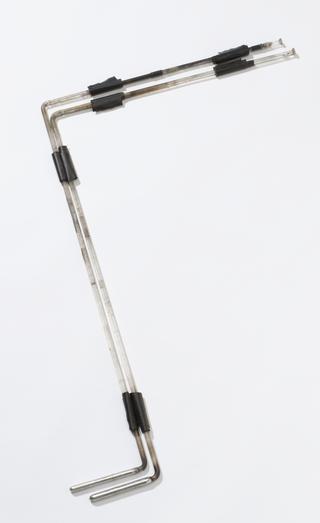
Floating barograph, or self-registering barometer, designed by Alfred King, Liverpool, 1862. The instrument was operated at Liverpool Observatory, Bidston Hill, between 1863 and February 1940. The barometer tube is counterpoised to float in the cast iron cistern, which would have contained mercury when the instrument was operational. When atmospheric pressure falls, the tube rises and causes the frame, which would carry a pencil, to fall. The pencil thus inscribes a continuous record of atmospheric pressure onto a recording cylinder, rotated by clockwork. The record was magnified so that a change of pressure over 1 inch of mercury caused a change of 5 inches on the recording chart.

Liverpool-based engineer Alfred King designed this self-registering barometer, or barograph, which could inscribe a continuous record of atmospheric pressure onto a recording cylinder. While some self-registering instruments at the time used photographic recording mechanisms, King believed his design would be simpler to use, not requiring the skilled manipulation demanded by photographic instruments. The barometer tube was 'floated' in a mercury-containing cistern, and was designed to rise and fall as atmospheric pressure fluctuated. The instrument required over 80 lbs (36 kg) of mercury to operate.
Details

Category:
Meteorology
Object Number:
1940-14
Materials:
glass, cast iron, brass (copper, zinc alloy), paper (fibre product), steel (metal), iron and gunmetal
Measurements:
overall (estimate): 2400 mm
type:
barograph
credit:
Liverpool Observatory & Tidal Institute

Parts

Float piston

Float piston

Float piston for a floating barograph, or self-registering barometer, designed by Alfred King, Liverpool, 1862.

More

Liverpool-based engineer Alfred King designed this self-registering barometer, or barograph, which could inscribe a continuous record of atmospheric pressure onto a recording cylinder. While some self-registering instruments at the time used photographic recording mechanisms, King believed his design would be simpler to use, not requiring the skilled manipulation demanded by photographic instruments. The barometer tube was 'floated' in a mercury-containing cistern, and was designed to rise and fall as atmospheric pressure fluctuated. The instrument required over 80 lbs (36 kg) of mercury to operate.

Materials:
metal (unknown)
Object Number:
1940-14/1
type:
piston
Top metal plate

Top metal plate

Top metal plate for a floating barograph, or self-registering barometer, designed by Alfred King, Liverpool, 1862.

More

Liverpool-based engineer Alfred King designed this self-registering barometer, or barograph, which could inscribe a continuous record of atmospheric pressure onto a recording cylinder. While some self-registering instruments at the time used photographic recording mechanisms, King believed his design would be simpler to use, not requiring the skilled manipulation demanded by photographic instruments. The barometer tube was 'floated' in a mercury-containing cistern, and was designed to rise and fall as atmospheric pressure fluctuated. The instrument required over 80 lbs (36 kg) of mercury to operate.

Measurements:
overall: 8 cm x 46 cm x 78 cm, 42 kg
Materials:
metal (unknown)
Object Number:
1940-14/2
type:
plate
Metal base plate

Metal base plate

Metal base plate for a floating barograph, or self-registering barometer, designed by Alfred King, Liverpool, 1862.

More

Liverpool-based engineer Alfred King designed this self-registering barometer, or barograph, which could inscribe a continuous record of atmospheric pressure onto a recording cylinder. While some self-registering instruments at the time used photographic recording mechanisms, King believed his design would be simpler to use, not requiring the skilled manipulation demanded by photographic instruments. The barometer tube was 'floated' in a mercury-containing cistern, and was designed to rise and fall as atmospheric pressure fluctuated. The instrument required over 80 lbs (36 kg) of mercury to operate.

Measurements:
overall: 5 cm x 59 cm x 91.5 cm, 58 kg
Materials:
metal (unknown)
Object Number:
1940-14/3
type:
plate
Wooden hollow base

Wooden hollow base

Wooden hollow base for a floating barograph, or self-registering barometer, designed by Alfred King, Liverpool, 1862.

More

Liverpool-based engineer Alfred King designed this self-registering barometer, or barograph, which could inscribe a continuous record of atmospheric pressure onto a recording cylinder. While some self-registering instruments at the time used photographic recording mechanisms, King believed his design would be simpler to use, not requiring the skilled manipulation demanded by photographic instruments. The barometer tube was 'floated' in a mercury-containing cistern, and was designed to rise and fall as atmospheric pressure fluctuated. The instrument required over 80 lbs (36 kg) of mercury to operate.

Materials:
wood (unidentified) and paint
Object Number:
1940-14/4
type:
plate
Green section

Green section

Green section for a floating barograph, or self-registering barometer, designed by Alfred King, Liverpool, 1862.

More

Liverpool-based engineer Alfred King designed this self-registering barometer, or barograph, which could inscribe a continuous record of atmospheric pressure onto a recording cylinder. While some self-registering instruments at the time used photographic recording mechanisms, King believed his design would be simpler to use, not requiring the skilled manipulation demanded by photographic instruments. The barometer tube was 'floated' in a mercury-containing cistern, and was designed to rise and fall as atmospheric pressure fluctuated. The instrument required over 80 lbs (36 kg) of mercury to operate.

Measurements:
overall: 70 cm x 30 cm x 24 cm,
Materials:
metal (unknown)
Object Number:
1940-14/5
type:
component - object
Plotter drum

Plotter drum

Plotter drum for a floating barograph, or self-registering barometer, designed by Alfred King, Liverpool, 1862.

More

Liverpool-based engineer Alfred King designed this self-registering barometer, or barograph, which could inscribe a continuous record of atmospheric pressure onto a recording cylinder. While some self-registering instruments at the time used photographic recording mechanisms, King believed his design would be simpler to use, not requiring the skilled manipulation demanded by photographic instruments. The barometer tube was 'floated' in a mercury-containing cistern, and was designed to rise and fall as atmospheric pressure fluctuated. The instrument required over 80 lbs (36 kg) of mercury to operate.

Measurements:
overall: 64 cm 14 cm, 1.8 kg
Materials:
brass (copper, zinc alloy) and paper (fibre product)
Object Number:
1940-14/6
type:
component - object
Top main pulley wheel

Top main pulley wheel

Top main pulley wheel for a floating barograph, or self-registering barometer, designed by Alfred King, Liverpool, 1862.

More

Liverpool-based engineer Alfred King designed this self-registering barometer, or barograph, which could inscribe a continuous record of atmospheric pressure onto a recording cylinder. While some self-registering instruments at the time used photographic recording mechanisms, King believed his design would be simpler to use, not requiring the skilled manipulation demanded by photographic instruments. The barometer tube was 'floated' in a mercury-containing cistern, and was designed to rise and fall as atmospheric pressure fluctuated. The instrument required over 80 lbs (36 kg) of mercury to operate.

Measurements:
overall: 4.75 cm 46.5 mm, 4 kg
Materials:
brass (copper, zinc alloy)
Object Number:
1940-14/7
type:
pulleys
Front tertiary pulley wheel

Front tertiary pulley wheel

Front tertiary pulley wheel for a floating barograph, or self-registering barometer, designed by Alfred King, Liverpool, 1862.

More

Liverpool-based engineer Alfred King designed this self-registering barometer, or barograph, which could inscribe a continuous record of atmospheric pressure onto a recording cylinder. While some self-registering instruments at the time used photographic recording mechanisms, King believed his design would be simpler to use, not requiring the skilled manipulation demanded by photographic instruments. The barometer tube was 'floated' in a mercury-containing cistern, and was designed to rise and fall as atmospheric pressure fluctuated. The instrument required over 80 lbs (36 kg) of mercury to operate.

Measurements:
overall: 1 cm 11 cm, .2 kg
Materials:
brass (copper, zinc alloy)
Object Number:
1940-14/8
type:
pulleys
Front tertiary pulley wheel

Front tertiary pulley wheel

Front tertiary pulley wheel for a floating barograph, or self-registering barometer, designed by Alfred King, Liverpool, 1862.

More

Liverpool-based engineer Alfred King designed this self-registering barometer, or barograph, which could inscribe a continuous record of atmospheric pressure onto a recording cylinder. While some self-registering instruments at the time used photographic recording mechanisms, King believed his design would be simpler to use, not requiring the skilled manipulation demanded by photographic instruments. The barometer tube was 'floated' in a mercury-containing cistern, and was designed to rise and fall as atmospheric pressure fluctuated. The instrument required over 80 lbs (36 kg) of mercury to operate.

Measurements:
overall: 1 cm 11 cm, .2 kg
Materials:
brass (copper, zinc alloy)
Object Number:
1940-14/9
type:
pulleys
Back pulley wheel pivot mount

Back pulley wheel pivot mount

Back pulley wheel pivot mount for a floating barograph, or self-registering barometer, designed by Alfred King, Liverpool, 1862.

More

Liverpool-based engineer Alfred King designed this self-registering barometer, or barograph, which could inscribe a continuous record of atmospheric pressure onto a recording cylinder. While some self-registering instruments at the time used photographic recording mechanisms, King believed his design would be simpler to use, not requiring the skilled manipulation demanded by photographic instruments. The barometer tube was 'floated' in a mercury-containing cistern, and was designed to rise and fall as atmospheric pressure fluctuated. The instrument required over 80 lbs (36 kg) of mercury to operate.

Measurements:
overall: 8.5 cm x 3 cm x 17 cm, .8 kg
Materials:
brass (copper, zinc alloy)
Object Number:
1940-14/10
type:
mount
Front pulley wheel pivot mount

Front pulley wheel pivot mount

Front pulley wheel pivot mount for a floating barograph, or self-registering barometer, designed by Alfred King, Liverpool, 1862.

More

Liverpool-based engineer Alfred King designed this self-registering barometer, or barograph, which could inscribe a continuous record of atmospheric pressure onto a recording cylinder. While some self-registering instruments at the time used photographic recording mechanisms, King believed his design would be simpler to use, not requiring the skilled manipulation demanded by photographic instruments. The barometer tube was 'floated' in a mercury-containing cistern, and was designed to rise and fall as atmospheric pressure fluctuated. The instrument required over 80 lbs (36 kg) of mercury to operate.

Measurements:
overall: 8.5 cm x 3 cm x 17 cm, .8 kg
Materials:
brass (copper, zinc alloy)
Object Number:
1940-14/11
type:
mount
Front secondary pulley wheel

Front secondary pulley wheel

Front secondary pulley wheel for a floating barograph, or self-registering barometer, designed by Alfred King, Liverpool, 1862.

More

Liverpool-based engineer Alfred King designed this self-registering barometer, or barograph, which could inscribe a continuous record of atmospheric pressure onto a recording cylinder. While some self-registering instruments at the time used photographic recording mechanisms, King believed his design would be simpler to use, not requiring the skilled manipulation demanded by photographic instruments. The barometer tube was 'floated' in a mercury-containing cistern, and was designed to rise and fall as atmospheric pressure fluctuated. The instrument required over 80 lbs (36 kg) of mercury to operate.

Measurements:
overall: 6.5 cm 10 cm, .5 kg
Materials:
brass (copper, zinc alloy)
Object Number:
1940-14/12
type:
pulley
Back secondary pulley wheel

Back secondary pulley wheel

Back secondary pulley wheel for a floating barograph, or self-registering barometer, designed by Alfred King, Liverpool, 1862.

More

Liverpool-based engineer Alfred King designed this self-registering barometer, or barograph, which could inscribe a continuous record of atmospheric pressure onto a recording cylinder. While some self-registering instruments at the time used photographic recording mechanisms, King believed his design would be simpler to use, not requiring the skilled manipulation demanded by photographic instruments. The barometer tube was 'floated' in a mercury-containing cistern, and was designed to rise and fall as atmospheric pressure fluctuated. The instrument required over 80 lbs (36 kg) of mercury to operate.

Measurements:
overall: 6.5 cm 10 cm, .5 kg
Materials:
brass (copper, zinc alloy)
Object Number:
1940-14/13
type:
pulley
Front pivot mount

Front pivot mount

Front pivot mount for a floating barograph, or self-registering barometer, designed by Alfred King, Liverpool, 1862.

More

Liverpool-based engineer Alfred King designed this self-registering barometer, or barograph, which could inscribe a continuous record of atmospheric pressure onto a recording cylinder. While some self-registering instruments at the time used photographic recording mechanisms, King believed his design would be simpler to use, not requiring the skilled manipulation demanded by photographic instruments. The barometer tube was 'floated' in a mercury-containing cistern, and was designed to rise and fall as atmospheric pressure fluctuated. The instrument required over 80 lbs (36 kg) of mercury to operate.

Measurements:
overall: 8.5 cm x 17 cm x 3 cm, .8 kg
Materials:
brass (copper, zinc alloy)
Object Number:
1940-14/14
type:
mount
Back tertiary pulley wheel

Back tertiary pulley wheel

Back tertiary pulley wheel for a floating barograph, or self-registering barometer, designed by Alfred King, Liverpool, 1862.

More

Liverpool-based engineer Alfred King designed this self-registering barometer, or barograph, which could inscribe a continuous record of atmospheric pressure onto a recording cylinder. While some self-registering instruments at the time used photographic recording mechanisms, King believed his design would be simpler to use, not requiring the skilled manipulation demanded by photographic instruments. The barometer tube was 'floated' in a mercury-containing cistern, and was designed to rise and fall as atmospheric pressure fluctuated. The instrument required over 80 lbs (36 kg) of mercury to operate.

Measurements:
overall: .8 cm 6.5 cm, .3 kg
Materials:
brass (copper, zinc alloy)
Object Number:
1940-14/15
type:
pulleys
Back tertiary pulley wheel

Back tertiary pulley wheel

Back tertiary pulley wheel for a floating barograph, or self-registering barometer, designed by Alfred King, Liverpool, 1862.

More

Liverpool-based engineer Alfred King designed this self-registering barometer, or barograph, which could inscribe a continuous record of atmospheric pressure onto a recording cylinder. While some self-registering instruments at the time used photographic recording mechanisms, King believed his design would be simpler to use, not requiring the skilled manipulation demanded by photographic instruments. The barometer tube was 'floated' in a mercury-containing cistern, and was designed to rise and fall as atmospheric pressure fluctuated. The instrument required over 80 lbs (36 kg) of mercury to operate.

Measurements:
overall: .8 cm 6.5 cm, .3 kg
Materials:
brass (copper, zinc alloy)
Object Number:
1940-14/16
type:
pulleys
Back pivot mount

Back pivot mount

Back pivot mount for a floating barograph, or self-registering barometer, designed by Alfred King, Liverpool, 1862.

More

Liverpool-based engineer Alfred King designed this self-registering barometer, or barograph, which could inscribe a continuous record of atmospheric pressure onto a recording cylinder. While some self-registering instruments at the time used photographic recording mechanisms, King believed his design would be simpler to use, not requiring the skilled manipulation demanded by photographic instruments. The barometer tube was 'floated' in a mercury-containing cistern, and was designed to rise and fall as atmospheric pressure fluctuated. The instrument required over 80 lbs (36 kg) of mercury to operate.

Measurements:
overall: 10 cm x 6.5 cm x 6.5 cm, .5 kg
Materials:
brass (copper, zinc alloy)
Object Number:
1940-14/17
type:
mount
Pillars steel upper section

Pillars steel upper section

Pillars steel upper section for a floating barograph, or self-registering barometer, designed by Alfred King, Liverpool, 1862.

More

Liverpool-based engineer Alfred King designed this self-registering barometer, or barograph, which could inscribe a continuous record of atmospheric pressure onto a recording cylinder. While some self-registering instruments at the time used photographic recording mechanisms, King believed his design would be simpler to use, not requiring the skilled manipulation demanded by photographic instruments. The barometer tube was 'floated' in a mercury-containing cistern, and was designed to rise and fall as atmospheric pressure fluctuated. The instrument required over 80 lbs (36 kg) of mercury to operate.

Measurements:
overall: 90 cm x 3 cm x 3 cm, 10 kg
Materials:
steel (metal)
Object Number:
1940-14/18
type:
pillar
Pillars steel upper section

Pillars steel upper section

Pillars steel upper section for a floating barograph, or self-registering barometer, designed by Alfred King, Liverpool, 1862.

More

Liverpool-based engineer Alfred King designed this self-registering barometer, or barograph, which could inscribe a continuous record of atmospheric pressure onto a recording cylinder. While some self-registering instruments at the time used photographic recording mechanisms, King believed his design would be simpler to use, not requiring the skilled manipulation demanded by photographic instruments. The barometer tube was 'floated' in a mercury-containing cistern, and was designed to rise and fall as atmospheric pressure fluctuated. The instrument required over 80 lbs (36 kg) of mercury to operate.

Measurements:
overall: 90 cm x 3 cm x 3 cm, 10 kg
Materials:
steel (metal)
Object Number:
1940-14/19
type:
pillar
Chain from pulley wheel to plotter frame

Chain from pulley wheel to plotter frame

Chain from pulley wheel to plotter frame for a floating barograph, or self-registering barometer, designed by Alfred King, Liverpool, 1862.

More

Liverpool-based engineer Alfred King designed this self-registering barometer, or barograph, which could inscribe a continuous record of atmospheric pressure onto a recording cylinder. While some self-registering instruments at the time used photographic recording mechanisms, King believed his design would be simpler to use, not requiring the skilled manipulation demanded by photographic instruments. The barometer tube was 'floated' in a mercury-containing cistern, and was designed to rise and fall as atmospheric pressure fluctuated. The instrument required over 80 lbs (36 kg) of mercury to operate.

Measurements:
overall: 82 cm x 1 cm x 1 cm, .08 kg
Materials:
metal (unknown)
Object Number:
1940-14/20
type:
chains
Chain from pulley wheel to top pf mercury piston

Chain from pulley wheel to top pf mercury piston

Chain from pulley wheel to top pf mercury piston for a floating barograph, or self-registering barometer, designed by Alfred King, Liverpool, 1862.

More

Liverpool-based engineer Alfred King designed this self-registering barometer, or barograph, which could inscribe a continuous record of atmospheric pressure onto a recording cylinder. While some self-registering instruments at the time used photographic recording mechanisms, King believed his design would be simpler to use, not requiring the skilled manipulation demanded by photographic instruments. The barometer tube was 'floated' in a mercury-containing cistern, and was designed to rise and fall as atmospheric pressure fluctuated. The instrument required over 80 lbs (36 kg) of mercury to operate.

Measurements:
overall: 84 cm x 1 cm x 1 cm, .06 kg
Materials:
metal (unknown)
Object Number:
1940-14/21
type:
chains
Screw to support upper column from outer frame of tablature

Screw to support upper column from outer frame of tablature

Screw to support upper column from outer frame of tablature for a floating barograph, or self-registering barometer, designed by Alfred King, Liverpool, 1862.

More

Liverpool-based engineer Alfred King designed this self-registering barometer, or barograph, which could inscribe a continuous record of atmospheric pressure onto a recording cylinder. While some self-registering instruments at the time used photographic recording mechanisms, King believed his design would be simpler to use, not requiring the skilled manipulation demanded by photographic instruments. The barometer tube was 'floated' in a mercury-containing cistern, and was designed to rise and fall as atmospheric pressure fluctuated. The instrument required over 80 lbs (36 kg) of mercury to operate.

Measurements:
overall: 6 cm x 2 cm x 2 cm, .03 kg
Materials:
metal (unknown)
Object Number:
1940-14/22
type:
screw
Screw to support upper column from outer frame of tablature

Screw to support upper column from outer frame of tablature

Screw to support upper column from outer frame of tablature for a floating barograph, or self-registering barometer, designed by Alfred King, Liverpool, 1862.

More

Liverpool-based engineer Alfred King designed this self-registering barometer, or barograph, which could inscribe a continuous record of atmospheric pressure onto a recording cylinder. While some self-registering instruments at the time used photographic recording mechanisms, King believed his design would be simpler to use, not requiring the skilled manipulation demanded by photographic instruments. The barometer tube was 'floated' in a mercury-containing cistern, and was designed to rise and fall as atmospheric pressure fluctuated. The instrument required over 80 lbs (36 kg) of mercury to operate.

Measurements:
overall: 6 cm x 2 cm x 2 cm, .03 kg
Materials:
metal (unknown)
Object Number:
1940-14/23
type:
screw
Screw to support upper column from outer frame of tablature

Screw to support upper column from outer frame of tablature

Screw to support upper column from outer frame of tablature for a floating barograph, or self-registering barometer, designed by Alfred King, Liverpool, 1862.

More

Liverpool-based engineer Alfred King designed this self-registering barometer, or barograph, which could inscribe a continuous record of atmospheric pressure onto a recording cylinder. While some self-registering instruments at the time used photographic recording mechanisms, King believed his design would be simpler to use, not requiring the skilled manipulation demanded by photographic instruments. The barometer tube was 'floated' in a mercury-containing cistern, and was designed to rise and fall as atmospheric pressure fluctuated. The instrument required over 80 lbs (36 kg) of mercury to operate.

Measurements:
overall: 6 cm x 2 cm x 2 cm, .03 kg
Materials:
metal (unknown)
Object Number:
1940-14/24
type:
screw
Screw to support upper column from outer frame of tablature

Screw to support upper column from outer frame of tablature

Screw to support upper column from outer frame of tablature for a floating barograph, or self-registering barometer, designed by Alfred King, Liverpool, 1862.

More

Liverpool-based engineer Alfred King designed this self-registering barometer, or barograph, which could inscribe a continuous record of atmospheric pressure onto a recording cylinder. While some self-registering instruments at the time used photographic recording mechanisms, King believed his design would be simpler to use, not requiring the skilled manipulation demanded by photographic instruments. The barometer tube was 'floated' in a mercury-containing cistern, and was designed to rise and fall as atmospheric pressure fluctuated. The instrument required over 80 lbs (36 kg) of mercury to operate.

Measurements:
overall: 6 cm x 2 cm x 2 cm, .03 kg
Materials:
metal (unknown)
Object Number:
1940-14/25
type:
screw
Clock pendulum

Clock pendulum

Clock pendulum for a floating barograph, or self-registering barometer, designed by Alfred King, Liverpool, 1862.

More

Liverpool-based engineer Alfred King designed this self-registering barometer, or barograph, which could inscribe a continuous record of atmospheric pressure onto a recording cylinder. While some self-registering instruments at the time used photographic recording mechanisms, King believed his design would be simpler to use, not requiring the skilled manipulation demanded by photographic instruments. The barometer tube was 'floated' in a mercury-containing cistern, and was designed to rise and fall as atmospheric pressure fluctuated. The instrument required over 80 lbs (36 kg) of mercury to operate.

Measurements:
overall: 22 cm x 7 cm x 1.5 cm, .3 kg
Materials:
brass (copper, zinc alloy)
Object Number:
1940-14/26
type:
pendulum - timepiece
Clock winder

Clock winder

Clock winder for a floating barograph, or self-registering barometer, designed by Alfred King, Liverpool, 1862.

More

Liverpool-based engineer Alfred King designed this self-registering barometer, or barograph, which could inscribe a continuous record of atmospheric pressure onto a recording cylinder. While some self-registering instruments at the time used photographic recording mechanisms, King believed his design would be simpler to use, not requiring the skilled manipulation demanded by photographic instruments. The barometer tube was 'floated' in a mercury-containing cistern, and was designed to rise and fall as atmospheric pressure fluctuated. The instrument required over 80 lbs (36 kg) of mercury to operate.

Measurements:
overall: 12 cm x 4.5 cm x 5 cm, .04 kg
Materials:
metal (unknown)
Object Number:
1940-14/27
type:
winders
Mercury cistern bolt

Mercury cistern bolt

Mercury cistern bolt, to base plate for a floating barograph, or self-registering barometer, designed by Alfred King, Liverpool, 1862.

More

Liverpool-based engineer Alfred King designed this self-registering barometer, or barograph, which could inscribe a continuous record of atmospheric pressure onto a recording cylinder. While some self-registering instruments at the time used photographic recording mechanisms, King believed his design would be simpler to use, not requiring the skilled manipulation demanded by photographic instruments. The barometer tube was 'floated' in a mercury-containing cistern, and was designed to rise and fall as atmospheric pressure fluctuated. The instrument required over 80 lbs (36 kg) of mercury to operate.

Measurements:
overall: 5 cm x 3.1 cm x 3.1 cm, .1 kg
Materials:
metal (unknown)
Object Number:
1940-14/28
type:
component - object
Mercury cistern bolt

Mercury cistern bolt

Mercury cistern bolt, to base plate for a floating barograph, or self-registering barometer, designed by Alfred King, Liverpool, 1862.

More

Liverpool-based engineer Alfred King designed this self-registering barometer, or barograph, which could inscribe a continuous record of atmospheric pressure onto a recording cylinder. While some self-registering instruments at the time used photographic recording mechanisms, King believed his design would be simpler to use, not requiring the skilled manipulation demanded by photographic instruments. The barometer tube was 'floated' in a mercury-containing cistern, and was designed to rise and fall as atmospheric pressure fluctuated. The instrument required over 80 lbs (36 kg) of mercury to operate.

Measurements:
overall: 5 cm x 3.1 cm x 3.1 cm, .1 kg
Materials:
metal (unknown)
Object Number:
1940-14/29
type:
component - object
Mercury cistern bolt

Mercury cistern bolt

Mercury cistern bolt, to base plate for a floating barograph, or self-registering barometer, designed by Alfred King, Liverpool, 1862.

More

Liverpool-based engineer Alfred King designed this self-registering barometer, or barograph, which could inscribe a continuous record of atmospheric pressure onto a recording cylinder. While some self-registering instruments at the time used photographic recording mechanisms, King believed his design would be simpler to use, not requiring the skilled manipulation demanded by photographic instruments. The barometer tube was 'floated' in a mercury-containing cistern, and was designed to rise and fall as atmospheric pressure fluctuated. The instrument required over 80 lbs (36 kg) of mercury to operate.

Measurements:
overall: 5 cm x 3.1 cm x 3.1 cm, .1 kg
Materials:
metal (unknown)
Object Number:
1940-14/30
type:
component - object
Plotter frame pulley wheel

Plotter frame pulley wheel

Plotter frame pulley wheel for a floating barograph, or self-registering barometer, designed by Alfred King, Liverpool, 1862.

More

Liverpool-based engineer Alfred King designed this self-registering barometer, or barograph, which could inscribe a continuous record of atmospheric pressure onto a recording cylinder. While some self-registering instruments at the time used photographic recording mechanisms, King believed his design would be simpler to use, not requiring the skilled manipulation demanded by photographic instruments. The barometer tube was 'floated' in a mercury-containing cistern, and was designed to rise and fall as atmospheric pressure fluctuated. The instrument required over 80 lbs (36 kg) of mercury to operate.

Measurements:
overall: 8.5 cm x 7.5 cm x 6.5 cm, .5 kg
Materials:
brass (copper, zinc alloy)
Object Number:
1940-14/31
type:
pulleys
Plotter frame pulley wheel

Plotter frame pulley wheel

Plotter frame pulley wheel for a floating barograph, or self-registering barometer, designed by Alfred King, Liverpool, 1862.

More

Liverpool-based engineer Alfred King designed this self-registering barometer, or barograph, which could inscribe a continuous record of atmospheric pressure onto a recording cylinder. While some self-registering instruments at the time used photographic recording mechanisms, King believed his design would be simpler to use, not requiring the skilled manipulation demanded by photographic instruments. The barometer tube was 'floated' in a mercury-containing cistern, and was designed to rise and fall as atmospheric pressure fluctuated. The instrument required over 80 lbs (36 kg) of mercury to operate.

Measurements:
overall: 8.5 cm x 7.5 cm x 6.5 cm, .5 kg
Materials:
brass (copper, zinc alloy)
Object Number:
1940-14/32
type:
pulleys
Plotter frame piston counter weight

Plotter frame piston counter weight

Plotter frame piston counter weight for a floating barograph, or self-registering barometer, designed by Alfred King, Liverpool, 1862.

More

Liverpool-based engineer Alfred King designed this self-registering barometer, or barograph, which could inscribe a continuous record of atmospheric pressure onto a recording cylinder. While some self-registering instruments at the time used photographic recording mechanisms, King believed his design would be simpler to use, not requiring the skilled manipulation demanded by photographic instruments. The barometer tube was 'floated' in a mercury-containing cistern, and was designed to rise and fall as atmospheric pressure fluctuated. The instrument required over 80 lbs (36 kg) of mercury to operate.

Measurements:
overall: 15 cm 10 cm, 7.1 kg
Materials:
metal (unknown)
Object Number:
1940-14/33
type:
counter-weights
Plotter frame brake (mid stage)

Plotter frame brake (mid stage)

Plotter frame brake (mid stage) for a floating barograph, or self-registering barometer, designed by Alfred King, Liverpool, 1862.

More

Liverpool-based engineer Alfred King designed this self-registering barometer, or barograph, which could inscribe a continuous record of atmospheric pressure onto a recording cylinder. While some self-registering instruments at the time used photographic recording mechanisms, King believed his design would be simpler to use, not requiring the skilled manipulation demanded by photographic instruments. The barometer tube was 'floated' in a mercury-containing cistern, and was designed to rise and fall as atmospheric pressure fluctuated. The instrument required over 80 lbs (36 kg) of mercury to operate.

Measurements:
overall: 5 cm x 5 cm x 5 cm, .17 kg
Materials:
brass (copper, zinc alloy)
Object Number:
1940-14/34
type:
brake
Plotter frame brake (mid stage)

Plotter frame brake (mid stage)

Plotter frame brake (mid stage) for a floating barograph, or self-registering barometer, designed by Alfred King, Liverpool, 1862.

More

Liverpool-based engineer Alfred King designed this self-registering barometer, or barograph, which could inscribe a continuous record of atmospheric pressure onto a recording cylinder. While some self-registering instruments at the time used photographic recording mechanisms, King believed his design would be simpler to use, not requiring the skilled manipulation demanded by photographic instruments. The barometer tube was 'floated' in a mercury-containing cistern, and was designed to rise and fall as atmospheric pressure fluctuated. The instrument required over 80 lbs (36 kg) of mercury to operate.

Measurements:
overall: 5 cm x 5 cm x 5 cm, .17 kg
Materials:
brass (copper, zinc alloy)
Object Number:
1940-14/35
type:
brake
Capped rod use unknown poss connected to plotter gear

Capped rod use unknown poss connected to plotter gear

Capped rod use unknown poss connected to plotter gear for a floating barograph, or self-registering barometer, designed by Alfred King, Liverpool, 1862.

More

Liverpool-based engineer Alfred King designed this self-registering barometer, or barograph, which could inscribe a continuous record of atmospheric pressure onto a recording cylinder. While some self-registering instruments at the time used photographic recording mechanisms, King believed his design would be simpler to use, not requiring the skilled manipulation demanded by photographic instruments. The barometer tube was 'floated' in a mercury-containing cistern, and was designed to rise and fall as atmospheric pressure fluctuated. The instrument required over 80 lbs (36 kg) of mercury to operate.

Materials:
metal (unknown)
Object Number:
1940-14/36
type:
rod - object genre
Clock

Clock

Clock for a floating barograph, or self-registering barometer, designed by Alfred King, Liverpool, 1862.

More

Liverpool-based engineer Alfred King designed this self-registering barometer, or barograph, which could inscribe a continuous record of atmospheric pressure onto a recording cylinder. While some self-registering instruments at the time used photographic recording mechanisms, King believed his design would be simpler to use, not requiring the skilled manipulation demanded by photographic instruments. The barometer tube was 'floated' in a mercury-containing cistern, and was designed to rise and fall as atmospheric pressure fluctuated. The instrument required over 80 lbs (36 kg) of mercury to operate.

Measurements:
overall: 22 cm x 19.5 cm x 13 cm, 2.56 kg
Materials:
brass (copper, zinc alloy)
Object Number:
1940-14/37
type:
clock
Bevel drive gear from clock mechanism to top of drum

Bevel drive gear from clock mechanism to top of drum

Bevel drive gear from clock mechanism to top of drum for a floating barograph, or self-registering barometer, designed by Alfred King, Liverpool, 1862.

More

Liverpool-based engineer Alfred King designed this self-registering barometer, or barograph, which could inscribe a continuous record of atmospheric pressure onto a recording cylinder. While some self-registering instruments at the time used photographic recording mechanisms, King believed his design would be simpler to use, not requiring the skilled manipulation demanded by photographic instruments. The barometer tube was 'floated' in a mercury-containing cistern, and was designed to rise and fall as atmospheric pressure fluctuated. The instrument required over 80 lbs (36 kg) of mercury to operate.

Measurements:
overall: 19.5 cm x 12.9 cm x 12.9 cm, .67 kg
Materials:
brass (copper, zinc alloy)
Object Number:
1940-14/38
type:
clock mechanism
Pillars steel upper section

Pillars steel upper section

Pillars steel upper section for a floating barograph, or self-registering barometer, designed by Alfred King, Liverpool, 1862.

More

Liverpool-based engineer Alfred King designed this self-registering barometer, or barograph, which could inscribe a continuous record of atmospheric pressure onto a recording cylinder. While some self-registering instruments at the time used photographic recording mechanisms, King believed his design would be simpler to use, not requiring the skilled manipulation demanded by photographic instruments. The barometer tube was 'floated' in a mercury-containing cistern, and was designed to rise and fall as atmospheric pressure fluctuated. The instrument required over 80 lbs (36 kg) of mercury to operate.

Measurements:
overall: 90 cm x 3 cm x 3 cm, 10 kg
Materials:
steel (metal)
Object Number:
1940-14/39
type:
pillar
Pillars steel upper section

Pillars steel upper section

Pillars steel upper section for a floating barograph, or self-registering barometer, designed by Alfred King, Liverpool, 1862.

More

Liverpool-based engineer Alfred King designed this self-registering barometer, or barograph, which could inscribe a continuous record of atmospheric pressure onto a recording cylinder. While some self-registering instruments at the time used photographic recording mechanisms, King believed his design would be simpler to use, not requiring the skilled manipulation demanded by photographic instruments. The barometer tube was 'floated' in a mercury-containing cistern, and was designed to rise and fall as atmospheric pressure fluctuated. The instrument required over 80 lbs (36 kg) of mercury to operate.

Measurements:
overall: 90 cm x 3 cm x 3 cm, 10 kg
Materials:
steel (metal)
Object Number:
1940-14/40
type:
pillar
Lower cast iron leg

Lower cast iron leg

Lower cast iron leg for a floating barograph, or self-registering barometer, designed by Alfred King, Liverpool, 1862.

More

Liverpool-based engineer Alfred King designed this self-registering barometer, or barograph, which could inscribe a continuous record of atmospheric pressure onto a recording cylinder. While some self-registering instruments at the time used photographic recording mechanisms, King believed his design would be simpler to use, not requiring the skilled manipulation demanded by photographic instruments. The barometer tube was 'floated' in a mercury-containing cistern, and was designed to rise and fall as atmospheric pressure fluctuated. The instrument required over 80 lbs (36 kg) of mercury to operate.

Measurements:
overall: 105 cm x 13 cm x 10 cm, 12 kg
Materials:
cast iron
Object Number:
1940-14/41
type:
component - object
Lower cast iron leg

Lower cast iron leg

Lower cast iron leg for a floating barograph, or self-registering barometer, designed by Alfred King, Liverpool, 1862.

More

Liverpool-based engineer Alfred King designed this self-registering barometer, or barograph, which could inscribe a continuous record of atmospheric pressure onto a recording cylinder. While some self-registering instruments at the time used photographic recording mechanisms, King believed his design would be simpler to use, not requiring the skilled manipulation demanded by photographic instruments. The barometer tube was 'floated' in a mercury-containing cistern, and was designed to rise and fall as atmospheric pressure fluctuated. The instrument required over 80 lbs (36 kg) of mercury to operate.

Measurements:
overall: 105 cm x 13 cm x 10 cm, 12 kg
Materials:
cast iron
Object Number:
1940-14/42
type:
component - object
Lower cast iron leg

Lower cast iron leg

Lower cast iron leg for a floating barograph, or self-registering barometer, designed by Alfred King, Liverpool, 1862.

More

Liverpool-based engineer Alfred King designed this self-registering barometer, or barograph, which could inscribe a continuous record of atmospheric pressure onto a recording cylinder. While some self-registering instruments at the time used photographic recording mechanisms, King believed his design would be simpler to use, not requiring the skilled manipulation demanded by photographic instruments. The barometer tube was 'floated' in a mercury-containing cistern, and was designed to rise and fall as atmospheric pressure fluctuated. The instrument required over 80 lbs (36 kg) of mercury to operate.

Measurements:
overall: 105 cm x 13 cm x 10 cm, 12 kg
Materials:
cast iron
Object Number:
1940-14/43
type:
component - object
Lower cast iron leg

Lower cast iron leg

Lower cast iron leg for a floating barograph, or self-registering barometer, designed by Alfred King, Liverpool, 1862.

More

Liverpool-based engineer Alfred King designed this self-registering barometer, or barograph, which could inscribe a continuous record of atmospheric pressure onto a recording cylinder. While some self-registering instruments at the time used photographic recording mechanisms, King believed his design would be simpler to use, not requiring the skilled manipulation demanded by photographic instruments. The barometer tube was 'floated' in a mercury-containing cistern, and was designed to rise and fall as atmospheric pressure fluctuated. The instrument required over 80 lbs (36 kg) of mercury to operate.

Measurements:
overall: 105 cm x 13 cm x 10 cm, 12 kg
Materials:
cast iron
Object Number:
1940-14/44
type:
component - object
Bolt to base frame

Bolt to base frame

Bolt to base frame for a floating barograph, or self-registering barometer, designed by Alfred King, Liverpool, 1862.

More

Liverpool-based engineer Alfred King designed this self-registering barometer, or barograph, which could inscribe a continuous record of atmospheric pressure onto a recording cylinder. While some self-registering instruments at the time used photographic recording mechanisms, King believed his design would be simpler to use, not requiring the skilled manipulation demanded by photographic instruments. The barometer tube was 'floated' in a mercury-containing cistern, and was designed to rise and fall as atmospheric pressure fluctuated. The instrument required over 80 lbs (36 kg) of mercury to operate.

Materials:
metal (unknown)
Object Number:
1940-14/45
type:
component - object
Bolt to base frame

Bolt to base frame

Bolt to base frame for a floating barograph, or self-registering barometer, designed by Alfred King, Liverpool, 1862.

More

Liverpool-based engineer Alfred King designed this self-registering barometer, or barograph, which could inscribe a continuous record of atmospheric pressure onto a recording cylinder. While some self-registering instruments at the time used photographic recording mechanisms, King believed his design would be simpler to use, not requiring the skilled manipulation demanded by photographic instruments. The barometer tube was 'floated' in a mercury-containing cistern, and was designed to rise and fall as atmospheric pressure fluctuated. The instrument required over 80 lbs (36 kg) of mercury to operate.

Materials:
metal (unknown)
Object Number:
1940-14/46
type:
component - object
Bolt to base frame

Bolt to base frame

Bolt to base frame for a floating barograph, or self-registering barometer, designed by Alfred King, Liverpool, 1862.

More

Liverpool-based engineer Alfred King designed this self-registering barometer, or barograph, which could inscribe a continuous record of atmospheric pressure onto a recording cylinder. While some self-registering instruments at the time used photographic recording mechanisms, King believed his design would be simpler to use, not requiring the skilled manipulation demanded by photographic instruments. The barometer tube was 'floated' in a mercury-containing cistern, and was designed to rise and fall as atmospheric pressure fluctuated. The instrument required over 80 lbs (36 kg) of mercury to operate.

Materials:
metal (unknown)
Object Number:
1940-14/47
type:
component - object
Bolt to base frame

Bolt to base frame

Bolt to base frame for a floating barograph, or self-registering barometer, designed by Alfred King, Liverpool, 1862.

More

Liverpool-based engineer Alfred King designed this self-registering barometer, or barograph, which could inscribe a continuous record of atmospheric pressure onto a recording cylinder. While some self-registering instruments at the time used photographic recording mechanisms, King believed his design would be simpler to use, not requiring the skilled manipulation demanded by photographic instruments. The barometer tube was 'floated' in a mercury-containing cistern, and was designed to rise and fall as atmospheric pressure fluctuated. The instrument required over 80 lbs (36 kg) of mercury to operate.

Materials:
metal (unknown)
Object Number:
1940-14/48
type:
component - object
Plotter frame

Plotter frame

Plotter frame for a floating barograph, or self-registering barometer, designed by Alfred King, Liverpool, 1862.

More

Liverpool-based engineer Alfred King designed this self-registering barometer, or barograph, which could inscribe a continuous record of atmospheric pressure onto a recording cylinder. While some self-registering instruments at the time used photographic recording mechanisms, King believed his design would be simpler to use, not requiring the skilled manipulation demanded by photographic instruments. The barometer tube was 'floated' in a mercury-containing cistern, and was designed to rise and fall as atmospheric pressure fluctuated. The instrument required over 80 lbs (36 kg) of mercury to operate.

Materials:
metal (unknown)
Object Number:
1940-14/49
type:
frame - furnishing
Small screw

Small screw

Small screw for a floating barograph, or self-registering barometer, designed by Alfred King, Liverpool, 1862.

More

Liverpool-based engineer Alfred King designed this self-registering barometer, or barograph, which could inscribe a continuous record of atmospheric pressure onto a recording cylinder. While some self-registering instruments at the time used photographic recording mechanisms, King believed his design would be simpler to use, not requiring the skilled manipulation demanded by photographic instruments. The barometer tube was 'floated' in a mercury-containing cistern, and was designed to rise and fall as atmospheric pressure fluctuated. The instrument required over 80 lbs (36 kg) of mercury to operate.

Materials:
metal (unknown)
Object Number:
1940-14/50
type:
screw