Samples of commercial dyes by Farbenfabriken Bayer AG
Samples of commercial dyes by Farbenfabriken Bayer AG, ICI and W. & J. George.
For thousands of years, and in cultures all over the world, people have been using plant and animal products to colour textiles. Without dyes, we wouldn’t see the full spectrum of colours in our wardrobes and around our homes that we see today.
Manchester has been at the forefront of modern chemistry and chemical engineering since John Dalton presented his pioneering atomic theory around 1810. With Manchester’s strong heritage in chemistry and the region being at the centre of the global textile trade, the development of dyes became a subject of considerable commercial interest.
Manchester’s textiles industry needed quality dyes that were consistent and stable. During the 1800s, much research into natural dyes for use in the textile industry was carried out. Then, in London, the 1850s, William Perkin discovered the first successful artificial dye, the purple colour ‘Mauveine’. His discovery kick-started a new chemical industry producing brighter, cheaper and longer-lasting colouring products that changed the textile industry forever. By the 1920’s Imperial Chemical Industries (ICI) had become a global leader in dyes from their factory in Blackley, north Manchester.
Bury Grammar School, a prestigious private school, founded in 1570, amassed this collection of dye-related samples dating from the 1890s. Until the start of the 1900s, modern chemistry was taught in schools by presenting theories for pupils to learn by recitation, if it was taught at all. The start of the 1900s brought a boom and a shift in chemistry education. For the first time, pupils were given the role of investigators. This prompted the practice of teaching by using a laboratory set-up for demonstration and individual investigation. It is unknown how the pupils and teachers used the dyes at the school but this set of dyes would have been of great interest to a generation of Bury students.
The collection was gifted to the care of the Science and Industry Museum in the 1990s.
Benzoazurine G dye sample
Nitrosodimethyl Aniline dye sample
Orange IIB dye sample
Soluble Blue Green Shade dye sample
Benzo Purpurine 4B dye sample
Diamine fast yellow dye sample
Dye Sample; Anthracene Chrome Red
circa 1890
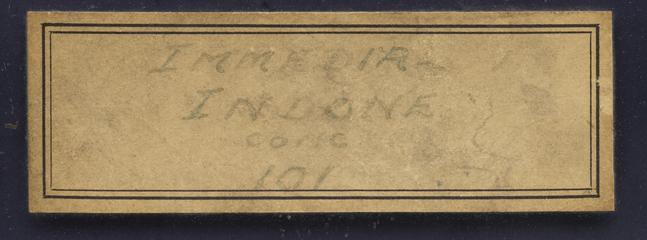
Dye Sample
1880-1900
Anthracene dye sample
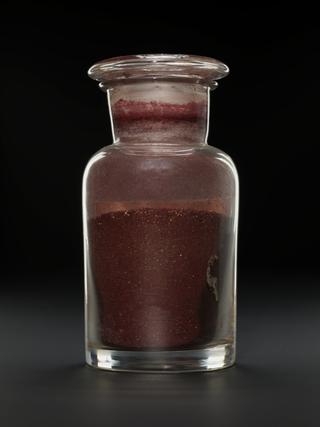
Dye Sample
1880-1900

Dye Sample
circa 1890
Dye Sample; Immedial Indone
circa 1890
Dye Sample; Diamine Red
circa 1890
Dye Sample; Rosacerine B
circa 1890

Dye Sample
circa 1890
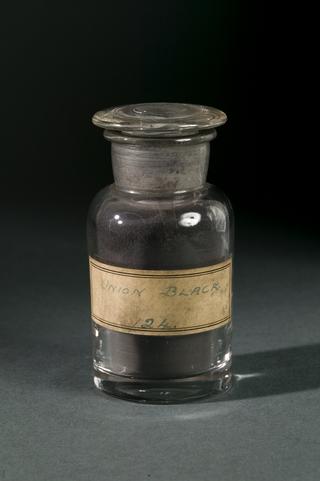
Dye Sample
circa 1890
Dye Sample; Beta Naphtol
circa 1890
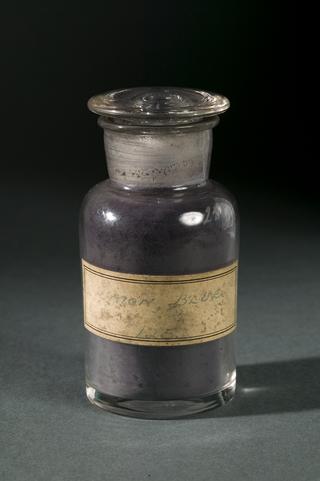
Dye Sample
circa 1890
Naphtylamine Black dye sample
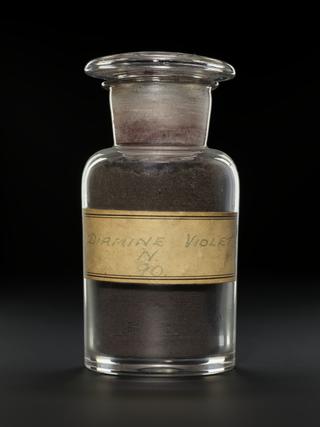
Dye Sample
1880-1900
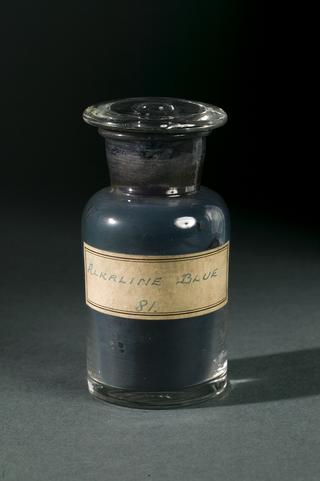
Dye Sample
circa 1890
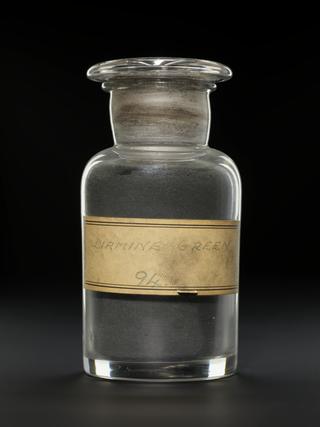
Dye Sample
1880-1900
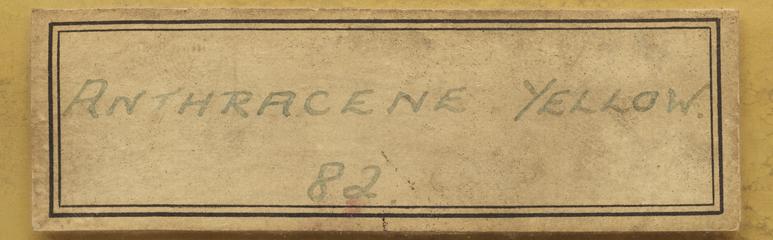
Dye Sample
1880-1900
Dye Sample; Thioflavine
circa 1890
See more
Details
Related Objects

Cheers! Themed packaging for Cussons Aftershave 58 C.C.

Motoring themed packaging for Cussons Aftershave 58 ml

Three examples of Cheers! Themed packaging for Cussons Aftershave 58 ml
Empty cardboard Cussons Darts gift set box prototype
Empty cardboard gift set box "