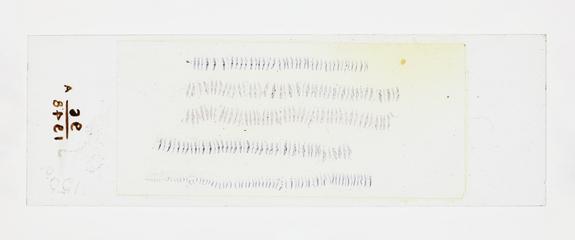
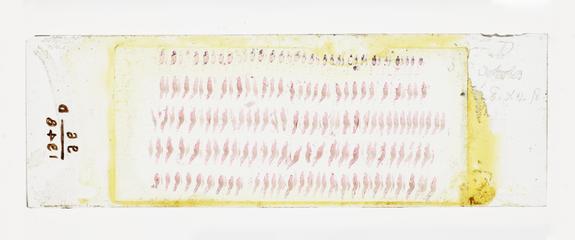
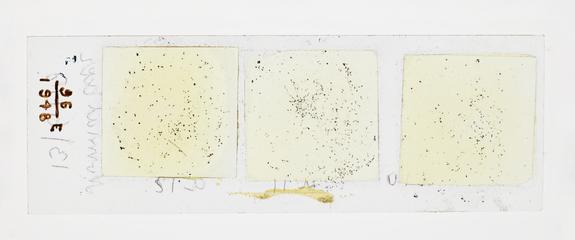
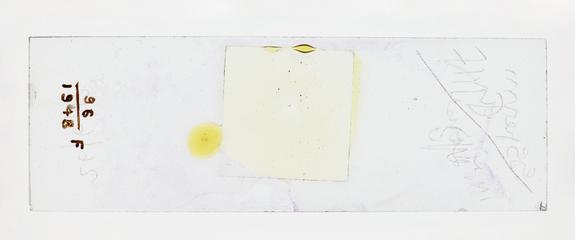
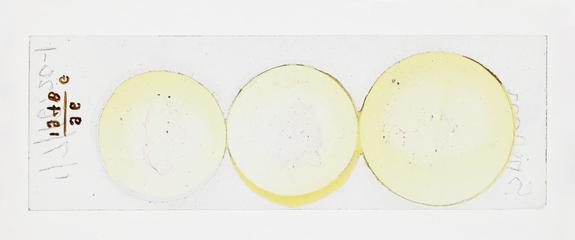
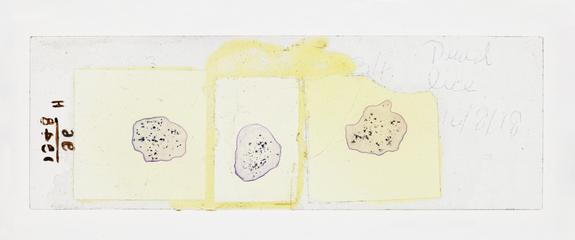
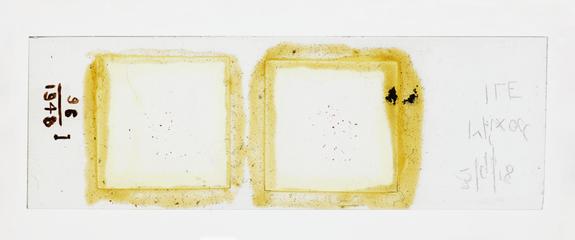
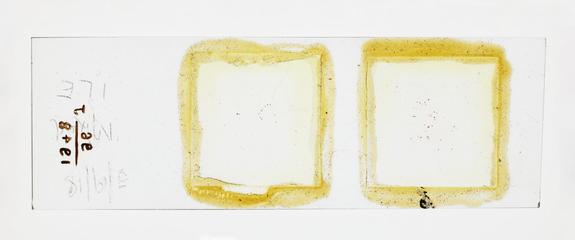
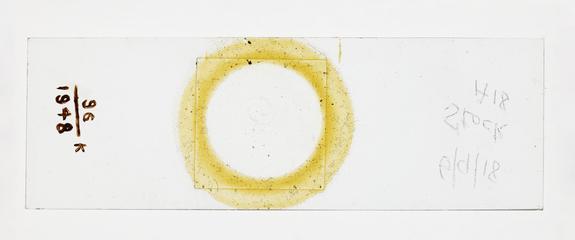
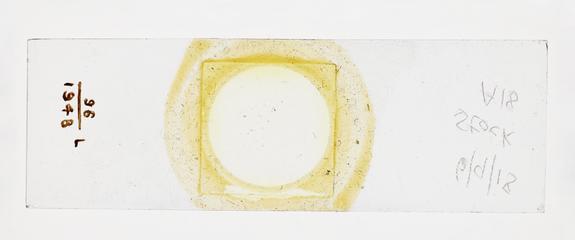
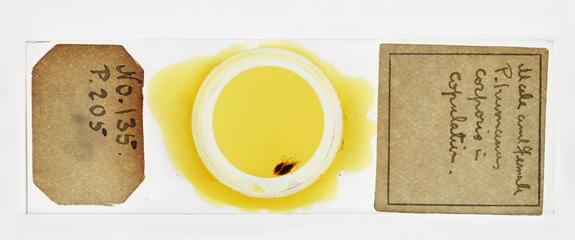
Microscope slide used in research relating to trench fever as transmitted by lice, made by F. Martin Duncan, 1918-19
1918-1919


 This image is released under a CC BY-NC-SA 4.0
Licence
This image is released under a CC BY-NC-SA 4.0
Licence
License this image for commercial use at Science and Society Picture Library
LicenseThis image is released under a CC BY-NC-SA 4.0
Licence
License this image for commercial use at Science and Society Picture Library
License
Science Museum Group
© The Board of Trustees of the Science Museum
Science Museum Group
© The Board of Trustees of the Science Museum
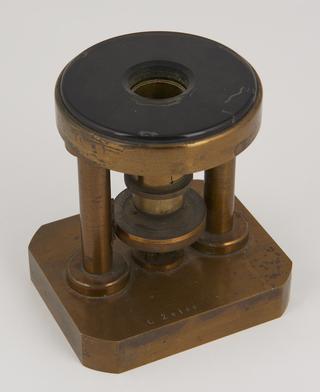
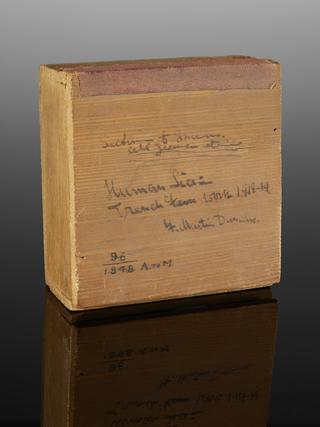
Thirteen microscope slides in wooden box, relating to human lice in trench fever work, by F. Martin Duncan, 1918-19.
In 1915, during the First World War, soldiers began to report symptoms of a new illness which eventually became known as Trench Fever. Headaches, fever, and pain in the muscles of the legs and shins, were just some of the symptoms reported.
As Trench Fever began to have a significant impact on military manpower, in 1917, the War Office Committee on Trench Fever invited physicians and scientists to investigate what could be causing the disease.
These slides were prepared by Francis Martin Duncan (1873–1961), a British naturalist and nature documentary pioneer specialising in micro-cinematography. In the early 1900s he worked with Charles Urban to produce the film series The Unseen World including The Cheese Mites, which includes a scene of a man (played by Duncan himself) horrified by the microorganisms he sees when he views a piece of Stilton through a magnifying glass.
In 1918 Duncan was part of a team who were researching Trench Fever at the Lister Institute for Preventative Medicine, as part of the War Office committee. Studies revealed that Trench fever was caused by a bacterium Bartonella quintana, transmitted to humans through the faeces of infected body lice. Living in clothing and bedding, the lice’s faeces contaminate breaks in the skin when scratched, or could be inhaled.
The slides contain samples of the excreta and guts of lice that had been fed on patients with Trench Fever. Duncan and his colleagues were using these preparations to image and study the incubation periods of B. quintana in the lice’s faeces and stomach. They also showed that infected lice did not transmit the illness by heredity. Findings like these were crucial in understanding and trying to prevent trench fever through improved sanitation and hygiene.
1918-1919
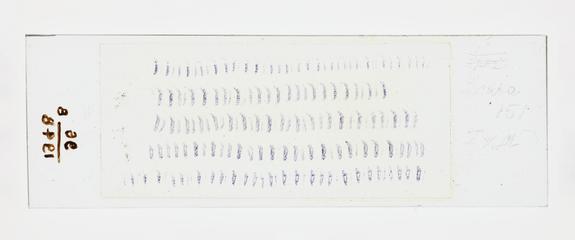
1918-1919
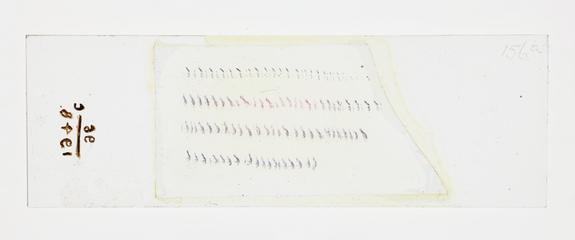
1918-1919
1918-1919
1918-1919
1918-1919
1918-1919
1918-1919
1918-1919
1918-1919
1918-1919
1918-1919
1918-1919
1918-1919